Intersections are where most driving mistakes happen. According to the National Highway Traffic Safety Administration, intersection-related crashes account for roughly 50% of all traffic accidents in the United States.
At floridanewdriver.com, we know that intersection safety rules aren’t just about following signs and signals. They’re about understanding traffic patterns, positioning your vehicle correctly, and staying aware of everything around you.
What Makes Each Intersection Type Different
Four-Way Stops Versus Traffic Lights
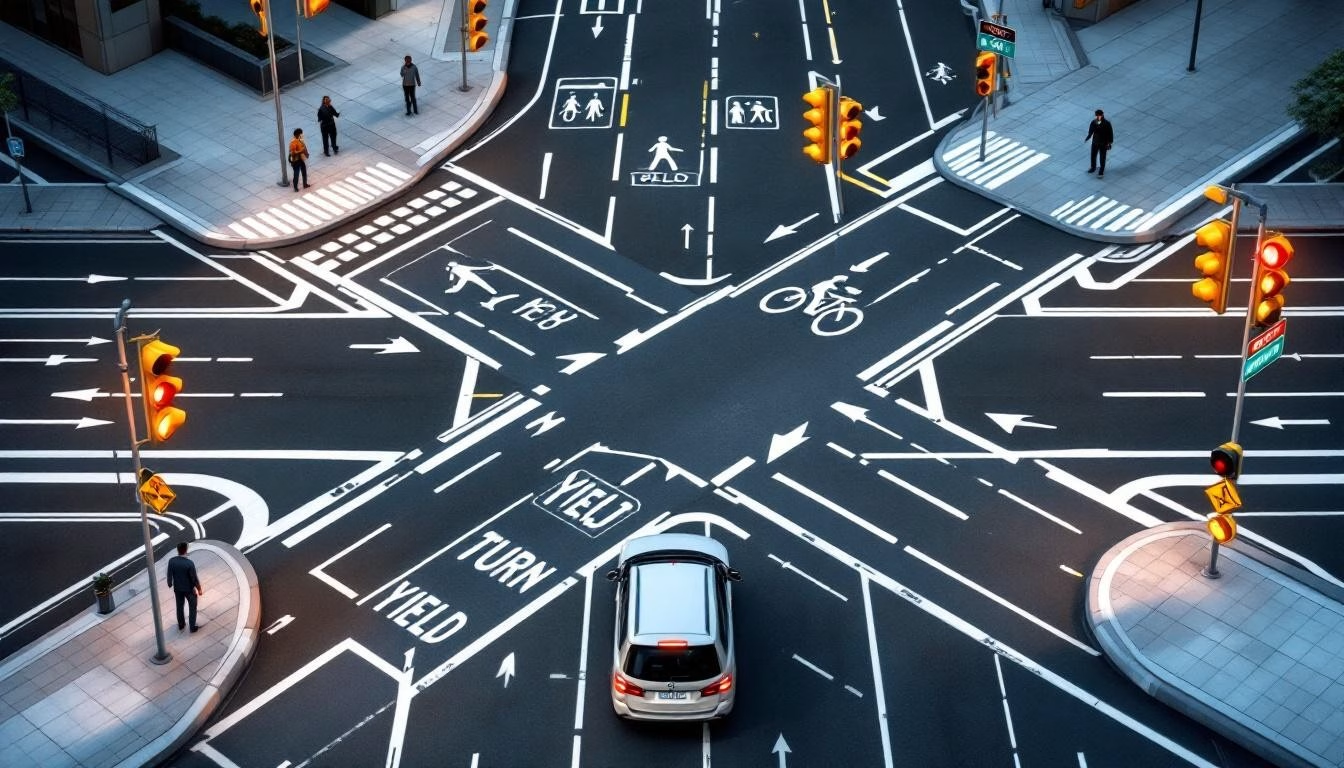
Four-way stops and traffic lights operate on fundamentally different principles, and confusing them costs lives. At a four-way stop, you apply the first-to-arrive rule: the driver who reaches the intersection first proceeds first. If two vehicles arrive simultaneously, the driver on the right has priority. Traffic lights remove this negotiation entirely-they assign movement rights through colored signals, eliminating ambiguity.
The NHTSA reports that red light running killed 1,086 people in 2023, accounting for 16 to 20 percent of collisions at signalized intersections. This happens because drivers misjudge signal timing or deliberately ignore red lights. At a four-way stop, the danger lies in hesitation: drivers who second-guess their right-of-way or fail to establish eye contact with other drivers create confusion that leads to broadside crashes.
California highway safety data shows that broadside collisions represent 28 percent of all signalized-intersection crashes, many preventable through clear communication. At a traffic light, trust the signal and proceed when it’s green. At a four-way stop, make eye contact with other drivers, establish who arrived first, and move decisively once your turn comes.
How Pedestrians and Cyclists Change Your Scanning Strategy
Right-of-way rules change fundamentally when vulnerable road users enter the picture. The FHWA Signalized Intersections guide emphasizes that intersections function as multi-user systems where motorists, bicyclists, and pedestrians share space simultaneously. Pedestrians cross at speeds between 0.8 and 1.8 meters per second, which means a pedestrian crossing a two-lane road takes roughly 6 to 8 seconds. Cyclists require at least 1.0 meter of operating space, with 1.5 meters preferred in high-volume intersections.
Your responsibility is absolute: yield to pedestrians in crosswalks and to cyclists approaching or crossing the intersection. Never assume they will stop or get out of your way. Speed dramatically influences survival rates-at 65 kilometers per hour, pedestrians face an 85 percent fatality risk if struck, while at 30 kilometers per hour that drops to 5 percent. Slowing down in areas with heavy pedestrian and cyclist activity isn’t optional; it’s the difference between a minor injury and a fatal crash.
Position your vehicle to see into crosswalks before you reach them. Scan left, then right, then left again as you approach. If a pedestrian has begun crossing, wait. If a cyclist is in the intersection, wait. The gap you think you have disappears in the time it takes a cyclist to swerve or a pedestrian to change direction-which is why your next move depends on what you spot during these defensive driving scans.
How to Scan and Position Yourself at Any Intersection
Start Scanning Early, Not at the Last Moment
Scanning begins 2 to 3 blocks away, not 50 feet from the intersection. The NHTSA emphasizes that proactive scanning for cross-traffic and pedestrians reduces crash risk significantly.
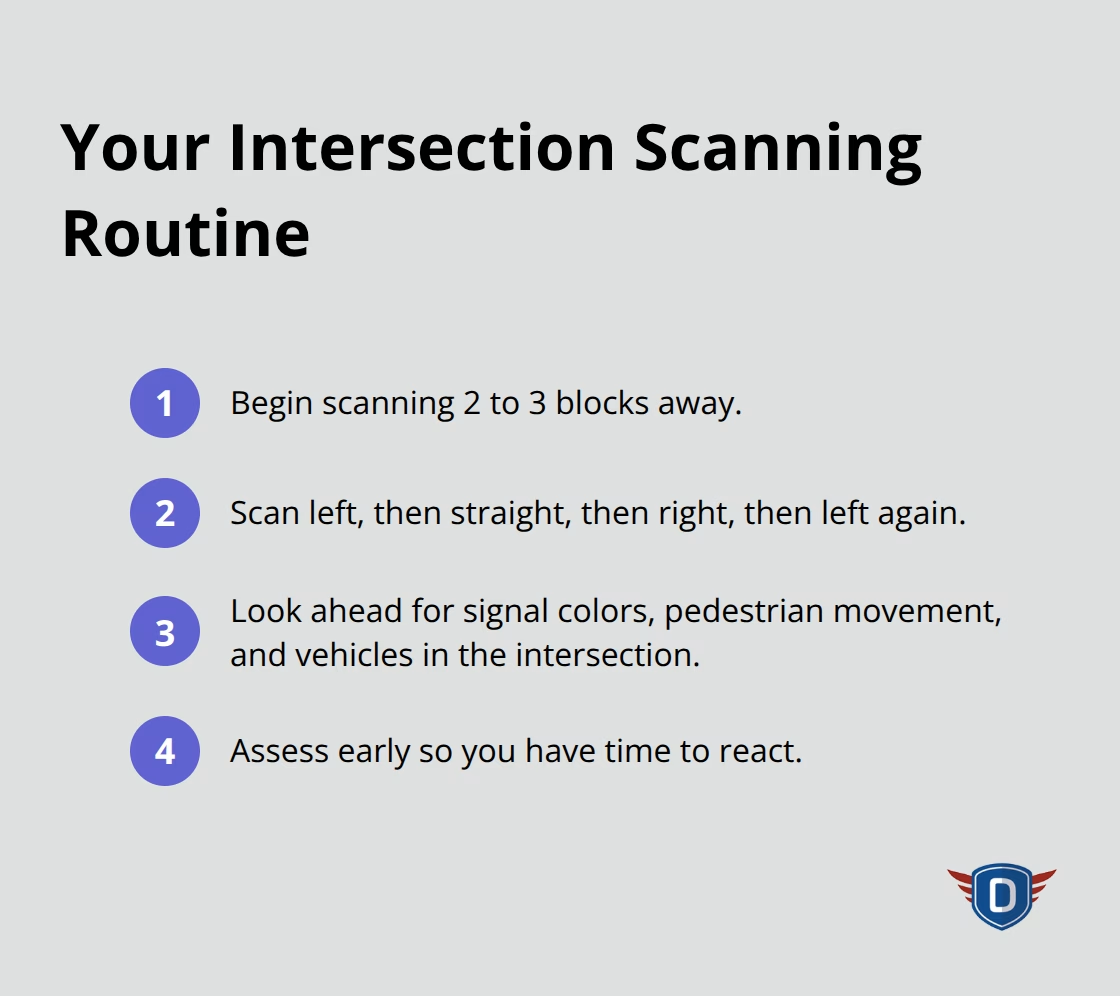
Scan left, then straight, then right, then left again as you approach-this pattern catches vehicles entering from side streets and pedestrians stepping into crosswalks. Look ahead for signal colors, pedestrian movement, and vehicles already in the intersection. Most drivers wait too long to assess what’s ahead, which leaves them no time to react when conditions change.
Position Your Vehicle in the Correct Lane Early
Position your vehicle in the correct lane at least one block before a complex intersection to avoid last-minute lane changes that confuse other drivers and create broadside collision risk. If you’re unsure which lane to use, slow down and read overhead signs or pavement markings from a distance where you can react calmly. Never trust your memory of an intersection layout-each visit may reveal construction, temporary signals, or changed lane configurations. Adjust your mirrors before you enter the intersection zone, not during it. Position yourself where you can see into crosswalks and side streets without craning your neck. If a large vehicle blocks your sightline, increase your following distance further back and wait for a clearer view before proceeding.
Match Your Speed to Visibility and Traffic Density
Speed control at intersections demands matching your approach speed to visibility and traffic density, not maintaining highway speeds into urban areas. Speed has a major impact on crash severity and injury risk; reduce speed to 20 to 30 kilometers per hour in areas with heavy pedestrian or cyclist activity. The 2-second rule applies in good weather, but increase to 3 to 4 seconds in rain, snow, or low-visibility conditions according to NHTSA guidance. Time your arrival so you enter on a green signal rather than accelerating hard to beat a yellow light-yellow means prepare to stop, not floor the accelerator.
Execute Turns and Lane Changes with Decisiveness
When turning, execute the maneuver decisively once you confirm the path is clear. Hesitation causes confusion for following drivers and creates rear-end crash risk. For left turns without a protected signal, create a safe gap in oncoming traffic by waiting in the intersection box if it’s legal, then turn only when the path is absolutely clear. For right turns, check your right mirror and blind spot for cyclists, then turn at a controlled speed that allows you to steer smoothly without skidding. Lane changes within or approaching an intersection are dangerous; signal early, verify blind spots before any lateral movement, but avoid changing lanes inside the intersection itself.
Prepare for the Unexpected at Every Approach
Your scanning and positioning strategy must account for what you cannot predict. Vehicles may run red lights, pedestrians may step into crosswalks without warning, and cyclists may change direction suddenly. The decisions you make during your approach-where you position yourself, how fast you travel, and how early you scan-determine whether you have time to react when the unexpected occurs. These habits form the foundation for navigating the most challenging intersection scenarios, where multiple hazards converge and split-second choices matter.
Common Intersection Mistakes and How to Avoid Them
Misjudging Speed and Distance of Oncoming Vehicles
Misjudging speed and distance stands as the single most common fatal mistake at intersections, and it happens because drivers rely on instinct instead of calculation. When you see an oncoming vehicle, your brain attempts to estimate whether you have time to turn or cross, but human perception fails regularly under pressure. It is estimated that approximately 750 fatalities and 150,000 injuries occur on a yearly basis due to red light running. The problem intensifies at night or in rain, where headlights and wet pavement distort your sense of how fast vehicles approach.
Do not attempt to judge gaps visually. Instead, apply a simple rule: if you cannot confidently name the make and model of an oncoming vehicle before you commit to turning, the gap is too small. This removes emotion from the decision and forces you to wait for absolute clarity. At a four-way stop, hesitation kills as much as aggression does. Once you establish eye contact with other drivers and confirm your right-of-way, move decisively through the intersection. Lingering in the intersection box signals confusion to following drivers, who may accelerate into you expecting the path to clear.
Failing to Check Blind Spots Before Turning
Failing to check blind spots before turning ranks second in severity because the consequences are immediate and often fatal. Cyclists occupy the space directly beside your vehicle where mirrors cannot reach, and a quick shoulder check is the only tool that finds them. The FHWA guidance on signalized intersections stresses that bicyclists require at least 1.0 meter of operating space, yet most drivers fail to account for this space when turning right.
Turn your head physically-not just your eyes-to scan the area your mirrors miss. This takes less than one second and eliminates the leading cause of right-turn crashes involving cyclists. A physical shoulder check catches what side mirrors cannot reveal, especially in vehicles with larger blind spots or when cyclists position themselves at angles that reflect light away from your view.
Ignoring Pedestrians and Cyclist Safety
Ignoring pedestrians and cyclist safety reveals a dangerous assumption: that vulnerable road users will behave predictably or stay out of your path. In reality, pedestrians cross against signals, cyclists swerve unexpectedly, and neither group has the protection a vehicle provides. At 65 kilometers per hour, a pedestrian struck by your vehicle faces an 85 percent fatality risk according to FHWA data; at 30 kilometers per hour, that drops to 5 percent.
This means speed control in pedestrian-heavy areas is not a courtesy-it is the difference between a survivable collision and a fatal one. Scan crosswalks from two blocks away, not 50 feet away. If a pedestrian has begun crossing or is preparing to cross, stop completely. Do not proceed on green if the crosswalk is occupied. These actions transform your intersection approach from reactive to protective, prioritizing the safety of those most vulnerable to your vehicle’s mass and speed.
Final Thoughts
Intersection safety rules transform from abstract concepts into automatic habits through repetition and conscious practice. Each time you approach an intersection, you reinforce the scanning patterns, positioning habits, and decision-making processes that protect you and vulnerable road users. Within weeks, these deliberate actions become automatic, and your brain stops treating intersections as obstacles and starts treating them as manageable environments where you control the variables that matter most: your speed, your position, and your attention.
Fear of intersections fades when you replace guesswork with method. Instead of hoping you judge speed correctly, you apply the rule that if you cannot name the vehicle’s make and model, the gap is too small. Instead of relying on mirrors alone, you turn your head to check blind spots. Instead of assuming pedestrians will stay clear, you scan crosswalks from two blocks away and stop completely if anyone is crossing. These concrete actions eliminate the anxiety that comes from uncertainty, and confident drivers learn from each mistake rather than repeat it twice.
We at floridanewdriver.com provide comprehensive driver education programs that teach you to apply these principles in real-world conditions through guided instruction and structured practice. Our certified instructors deliver personalized feedback that accelerates your progress toward confident, safe intersection driving. Your commitment to mastering these skills protects not only your safety but also the safety of everyone sharing the road with you.