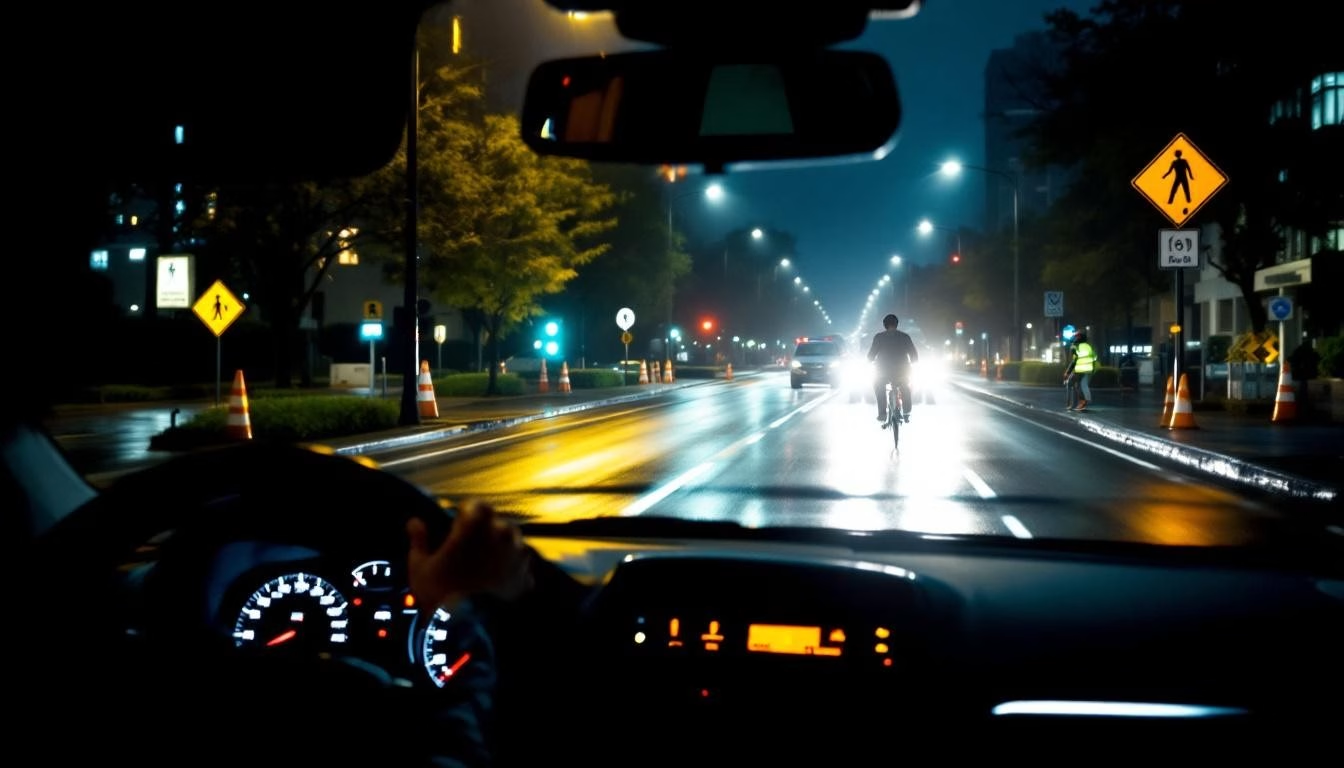
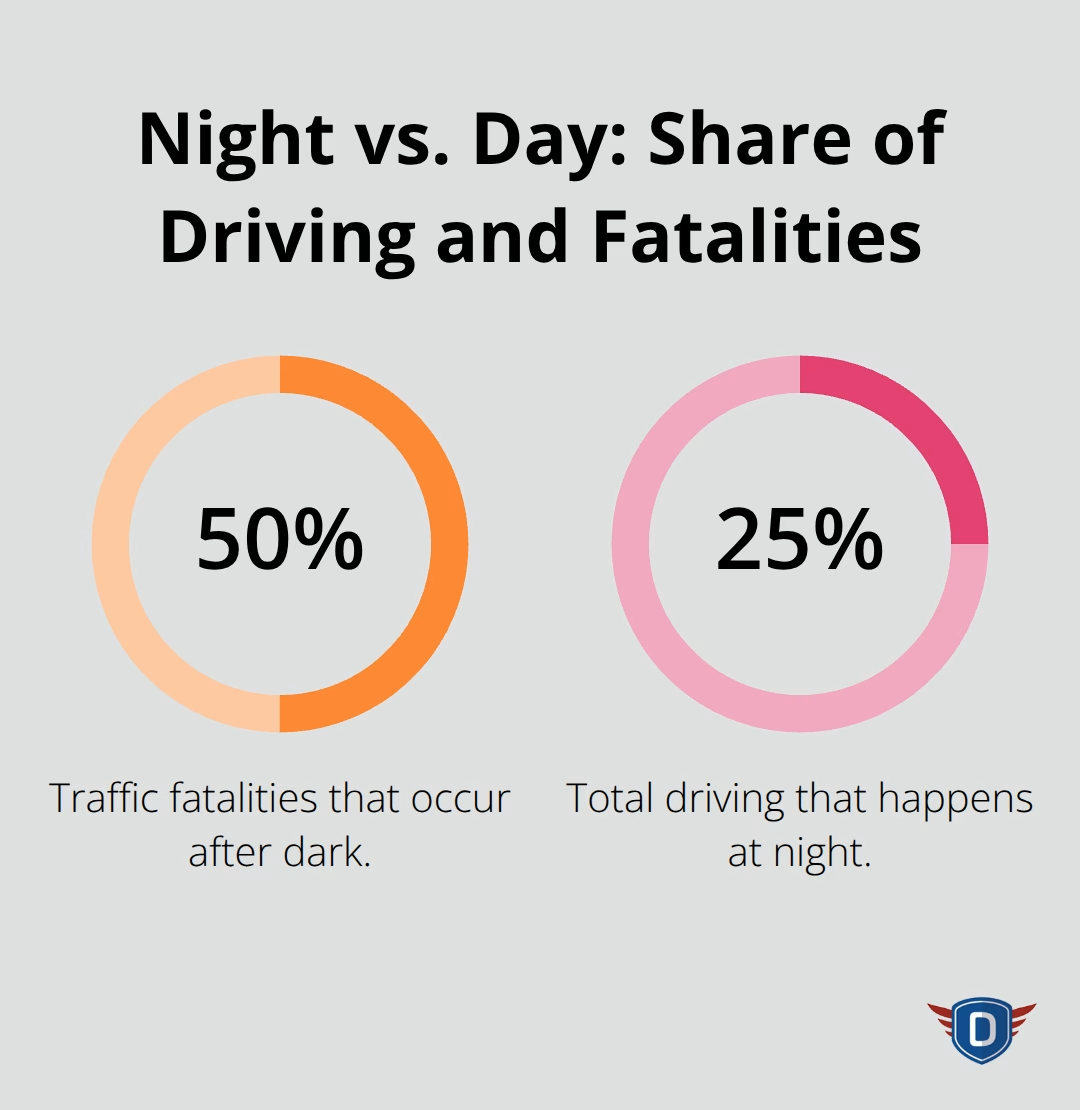
Nighttime driving hazards are responsible for a disproportionate share of traffic fatalities. The National Highway Traffic Safety Administration reports that nearly 50% of traffic deaths occur after dark, despite only 25% of driving happening at night.
At floridanewdriver.com, we know that most drivers haven’t learned the specific defensive techniques needed when visibility drops. This guide covers the vision challenges you’ll face and the practical strategies that actually work.
How Far Can You Actually See at Night
Standard Headlights Fall Short of Driver Expectations
Your headlights are not as powerful as you think. Standard headlights illuminate roughly 250 feet ahead, which translates to about 2.5 seconds of visibility at 65 mph. High beams extend that to approximately 500 feet, doubling your reaction window. Most drivers operate under the illusion that they can see well enough, when in reality they cannot stop in time if a hazard appears beyond their light range. This gap between perceived visibility and actual visibility is dangerous and demands that you adjust your speed accordingly.
Depth Perception Fails Without Light and Contrast
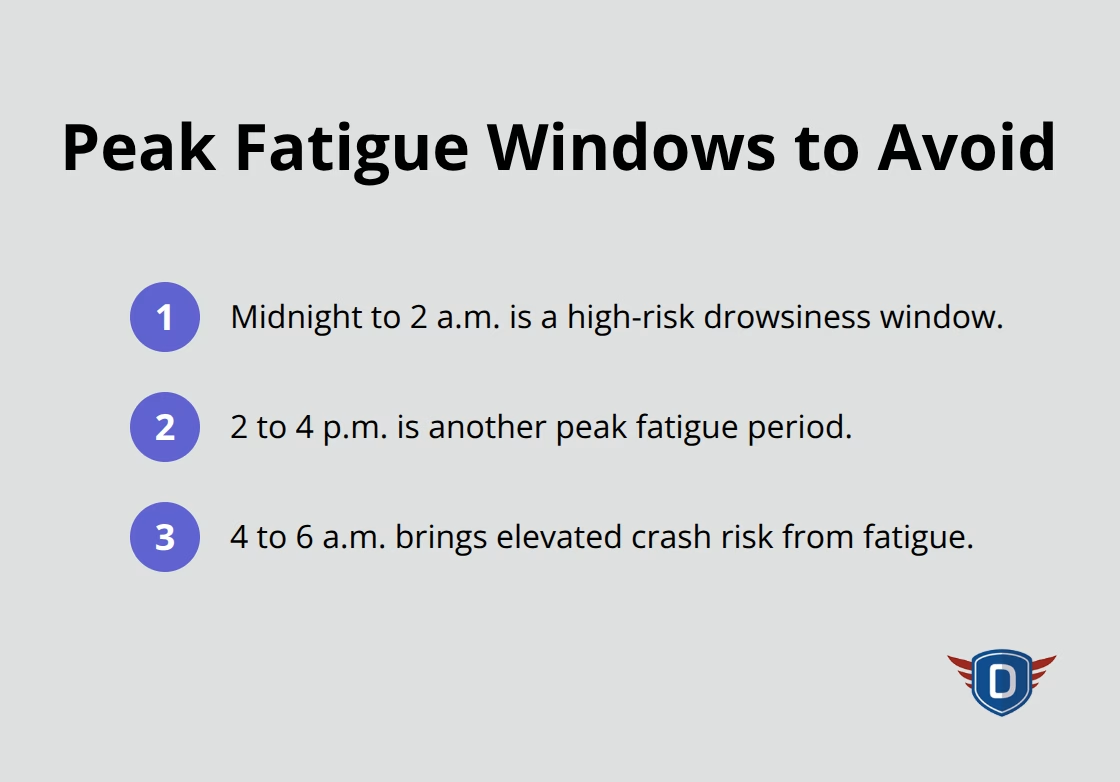
Your eyes struggle with depth perception at night because reduced light eliminates shadow and contrast cues your brain normally uses to judge distance. A vehicle ahead that appears far away might be closer than you think, and that matters enormously when you need to brake. Fatigue compounds this problem significantly. The National Sleep Foundation reports that roughly 100,000 police-reported crashes happen annually due to driver fatigue, with peak fatigue times occurring between midnight and 2 a.m., 2 to 4 p.m., and 4 to 6 a.m. Tired drivers scan less effectively and miss hazards in their reduced field of view.
Glare and Peripheral Vision Narrowing Create Additional Hazards
Glare from oncoming headlights creates temporary blindness that can last several seconds after a vehicle passes. The National Safety Council recommends scanning toward the right edge line of the road and avoiding direct eye contact with oncoming lights to mitigate this effect. Your peripheral vision also narrows significantly at night, meaning you catch fewer details about road edges, lane markings, and potential obstacles. A 50-year-old driver requires roughly twice as much light as a 30-year-old to see the same detail, according to the American Optometric Association, and vision challenges intensify after age 60 due to cataracts and other age-related changes.
Equipment Maintenance Directly Impacts Your Visibility
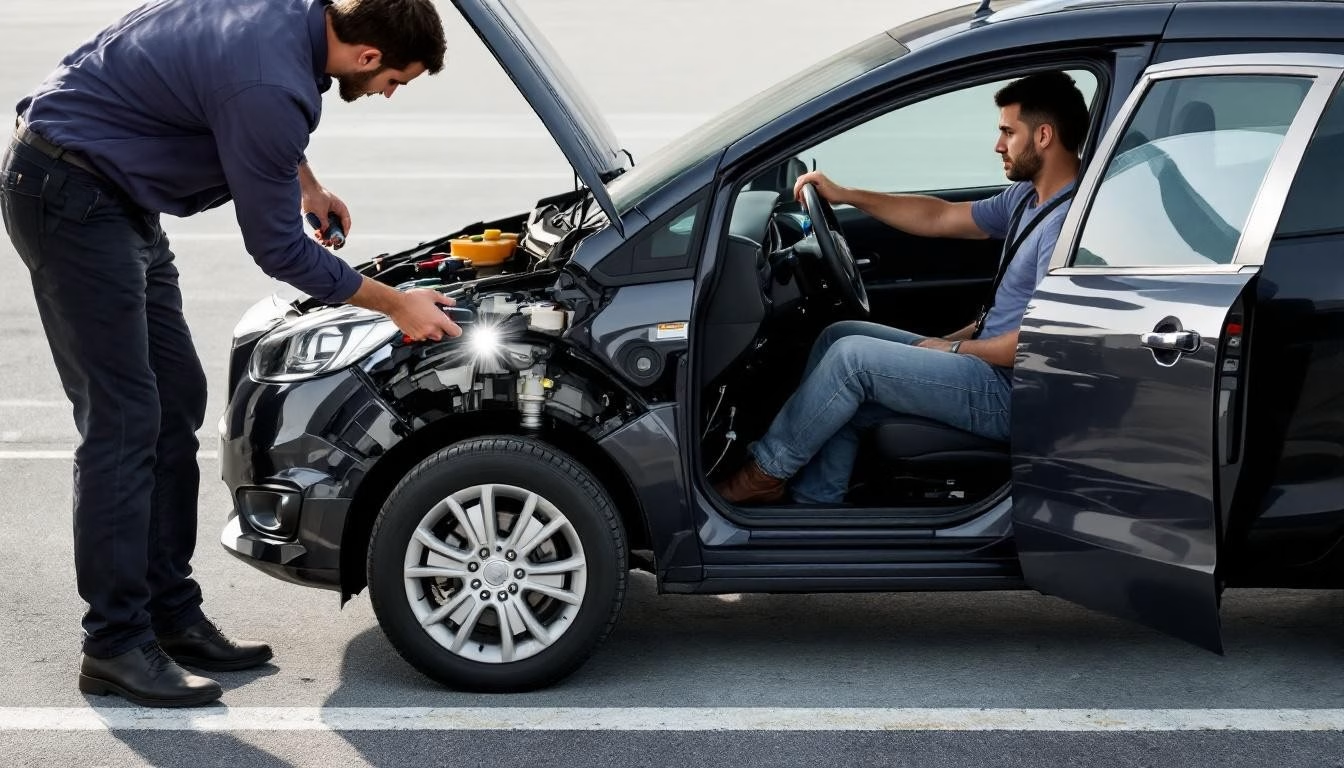
Clean headlights and windshields are not optional extras-dirty lenses reduce light output by up to 50 percent, effectively cutting your already limited visibility in half. Anti-reflective coatings on eyeglasses reduce glare and improve contrast, making them worth considering if you drive frequently after dark. These practical steps cost little but yield significant safety gains.
Nighttime driving demands that you operate with significantly less information than daytime driving provides. The defensive techniques that work in daylight fail at night unless you adapt them to match your actual visibility and perception limits. Understanding these vision challenges sets the stage for the specific defensive strategies that actually compensate for darkness.
Defensive Driving Techniques for Night Conditions
Speed Reduction Matches Your Actual Visibility
Reducing speed at night is not optional-it’s a mathematical requirement. Standard headlights illuminate roughly 250 feet ahead, which equals about 2.5 seconds before you reach an obstacle at 65 mph. High beams extend that to 500 feet, or approximately 5 seconds. If a hazard appears beyond your light range, you cannot stop in time, regardless of skill level. The National Safety Council recommends slowing to a speed where you can stop within the distance your headlights illuminate. This means 45 mph on roads with standard lighting and potentially 35 mph or lower on rural unlit roads. Drivers over 50 need roughly twice as much light as younger drivers to perceive the same details, making this adjustment even more critical for that age group.
Following Distance Becomes Your Safety Buffer
Increase your following distance to at least three seconds between your vehicle and the car ahead instead of the standard two-second rule used in daylight. On wet roads or in fog, extend that to four or five seconds. This extra space gives you time to react when visibility fails and depth perception becomes unreliable. The longer following distance compensates for the reduced light and contrast cues your eyes depend on to judge distance accurately.
Headlight Strategy Prevents Crashes and Blindness
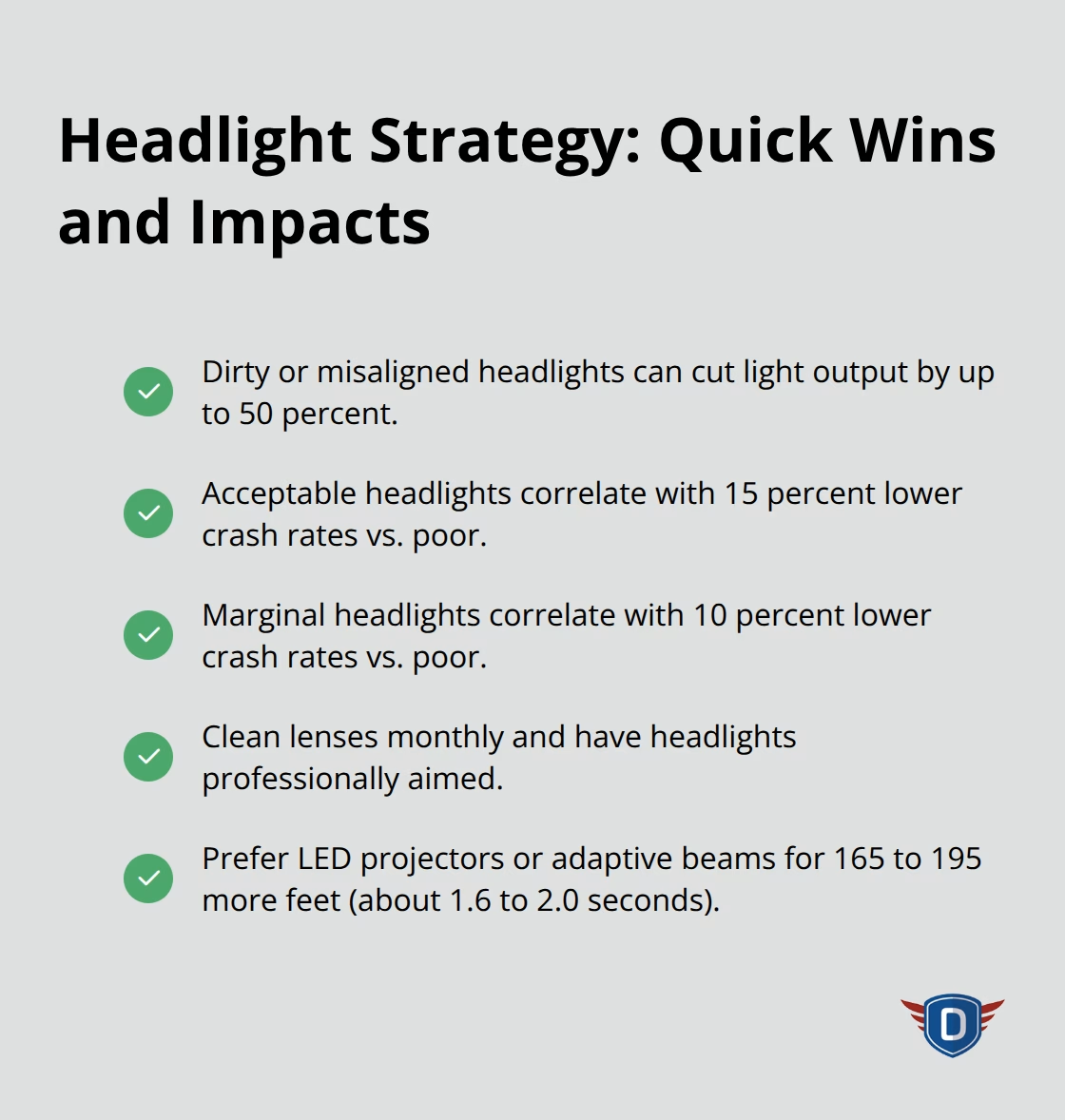
High beams illuminate twice the distance of standard beams, but most drivers misuse them. Use high beams on unlit rural roads when no oncoming traffic appears, then switch to low beams immediately when you see headlights in the distance-do not wait until the other vehicle is close. In urban areas with street lighting, low beams are usually sufficient and prevent blinding oncoming drivers. Headlight maintenance directly impacts safety: dirty or misaligned headlights reduce light output by up to 50 percent, cutting your already limited visibility in half. Clean your headlight lenses monthly and have them professionally aimed during routine maintenance. Vehicles with acceptable or marginal headlights experience 15 percent and 10 percent lower crash rates than those with poor ratings. When shopping for a vehicle or considering upgrades, prioritize LED headlights with projector lenses or adaptive driving beams, which add 165 to 195 feet of forward visibility-translating to roughly 1.6 to 2.0 seconds of extra reaction time at highway speeds.
Fatigue Prevention Stops Crashes Before They Happen
Roughly 37 percent of adults have fallen asleep at the wheel according to the National Sleep Foundation, and 100,000 police-reported crashes annually result from driver fatigue. Peak fatigue danger occurs between midnight and 2 a.m., 2 to 4 p.m., and 4 to 6 a.m. Losing just two hours of sleep impairs driving as much as consuming three beers. If you feel drowsy, pull over immediately at a safe location and rest rather than continuing-fatigue impairs judgment faster at night than any other factor. Plan night trips to avoid these high-risk windows when possible, and never rely on coffee or energy drinks to mask genuine tiredness.
Impairment and Medication Require Honest Assessment
Approximately one-third of nighttime fatalities involve alcohol, and many drivers underestimate how prescription medications affect night driving ability. Discuss any new medications with your doctor before driving at night, particularly sedatives or pain relievers. Stay alert to other impaired drivers by maintaining extra distance, scanning for erratic lane changes, and avoiding confrontation if you spot dangerous behavior-report it to law enforcement instead. These defensive moves protect you from drivers whose judgment is compromised by substances or fatigue, which become far more dangerous when visibility already limits your reaction time.
Why Nighttime Crashes Kill More Drivers
The Deadly Statistics Behind Darkness
Nighttime driving accounts for roughly 50 percent of all traffic fatalities, according to the National Safety Council, despite representing only 25 percent of total driving. This disparity exposes a hard truth: darkness doesn’t just reduce visibility-it compounds every other risk factor simultaneously.
Fatigue peaks during the hours between midnight and 2 a.m., 2 to 4 p.m., and 4 to 6 a.m., according to the National Sleep Foundation. Alcohol involvement increases dramatically after sunset, with approximately one-third of nighttime fatalities involving impaired drivers, per the National Highway Traffic Safety Administration.
Weekend Nights Present the Highest Risk
Saturday nights present the deadliest conditions, combining weekend traffic volume with higher rates of impairment and fatigue. These aren’t random coincidences; they’re predictable patterns that demand specific defensive responses. The combination of reduced visibility, impaired judgment from substances or tiredness, and drivers operating at the edge of their perception creates a perfect environment for serious crashes.
Why Nighttime Collisions Cause More Damage
Accidents that occur after dark tend to be more severe because drivers traveling at night often maintain higher speeds while seeing less. A collision at 50 mph in darkness causes more damage than the same speed collision in daylight because nighttime drivers have less time to brake or swerve. Pedestrians and cyclists become nearly invisible on unlit roads, and animals crossing highways are harder to spot until you’re dangerously close.
Age and Fatigue Multiply Crash Severity
Drivers over 50 require approximately twice as much light as younger drivers to perceive hazards, making age a critical factor in nighttime crash severity. The National Sleep Foundation reports that losing just two hours of sleep impairs driving ability as much as consuming three beers, and 37 percent of adults have fallen asleep at the wheel at some point. Roughly 100,000 police-reported crashes annually result from driver fatigue alone.
Defensive Strategy Must Address Multiple Factors
Your defensive approach must account for all these factors simultaneously-speed reduction, headlight management, fatigue monitoring, and heightened awareness of impaired drivers sharing the road with you. These conditions explain why nighttime driving demands more than standard daytime techniques.
Final Thoughts
Nighttime driving hazards demand a fundamentally different approach than daytime driving. The statistics are unambiguous: nearly 50 percent of traffic fatalities occur after dark, despite only 25 percent of driving happening at night. This gap exists because darkness amplifies every risk simultaneously-reduced visibility, impaired depth perception, fatigue, and higher rates of impairment all converge when the sun sets.
The defensive techniques covered in this guide address these compounded risks directly. Reduce your speed to match your actual visibility, increase your following distance, manage your headlights strategically, and stay alert to fatigue-these actions are not suggestions but requirements for safe nighttime driving. A 50-year-old driver needs roughly twice as much light as a 30-year-old to perceive the same hazards, and losing just two hours of sleep impairs your driving as much as consuming three beers, yet roughly 37 percent of adults have fallen asleep at the wheel at some point.
Preparation separates safe nighttime drivers from those who rely on luck. Before any night trip, verify that your headlights are clean and properly aimed, your windshield is clear, and your vehicle’s lighting systems function correctly (particularly on rural roads where darkness is most complete). Plan routes that avoid peak fatigue windows between midnight and 2 a.m., 2 to 4 p.m., and 4 to 6 a.m. when possible, and discuss any new medications with your doctor before driving after dark. Our driver education programs provide the knowledge and confidence to handle nighttime driving safely through real-world scenarios and proven defensive strategies.