Supervising a teen driver doesn’t mean controlling every move. The real challenge is finding the balance between keeping them safe and letting them grow as drivers.
At floridanewdriver.com, we know that parent-teen communication is where this balance starts. When you talk openly with your teen about driving risks and expectations, they’re more likely to make smart choices behind the wheel.
Why Teens Take Driving Risks
The Neuroscience Behind Risky Behavior
Teens push boundaries behind the wheel because their brains are still developing judgment skills that won’t fully mature until their mid-20s. The prefrontal cortex development in teens is one of the last regions of the brain to reach maturation, which explains why some adolescents exhibit behavioral immaturity. This overconfidence peaks between ages 16 and 19.
How Peer Pressure Amplifies Risk
Peer pressure amplifies this problem significantly. Research shows that presence of teenage passengers increases crash risk for teen drivers compared to driving alone. When friends sit in the car, teens speed more, brake harder, and take corners faster-behaviors they’d likely avoid if driving solo. They’re not acting reckless to upset you; they’re responding to social pressure and their own neurological development stage.
The Connection Between Trust and Safer Choices
Trust directly shapes how your teen responds to risk. Teens whose parents establish open dialogue about driving-not lectures, but actual conversations-make measurably safer choices. When you trust your teen with graduated freedom and acknowledge their growing capability, they feel motivated to prove you right rather than sneak around to prove you wrong.
Excessive control produces the opposite effect: it breeds secrecy. A teen who feels monitored without explanation will find ways to hide their behavior rather than internalize safety values. Your job isn’t to eliminate risk entirely (which is impossible), but to help your teen develop the judgment to manage risk themselves.
Building Internal Motivation Through Communication
This happens through consistent communication where you explain the why behind rules, acknowledge their perspective, and let them see that you respect their growing independence while maintaining clear boundaries about safety. This approach builds the internal motivation that actually prevents crashes, not just the external compliance that creates resentment. Your teen’s ability to make smart decisions on their own depends far more on understanding your reasoning than on fearing your consequences. The strategies you implement next will show you exactly how to turn this understanding into action.
How to Set Boundaries That Actually Work
Establish Specific Rules Tied to Skill Level
Effective supervision starts with rules your teen understands and can actually follow. Vague expectations like “drive safely” fail because they mean nothing to a 16-year-old. Instead, establish specific restrictions tied to their current skill level. If your teen just got their permit, restrict night driving to before 9 PM, limit passengers to family members only, and require hands-free phone use. These aren’t arbitrary-they target the exact conditions where teen crash risk spikes.
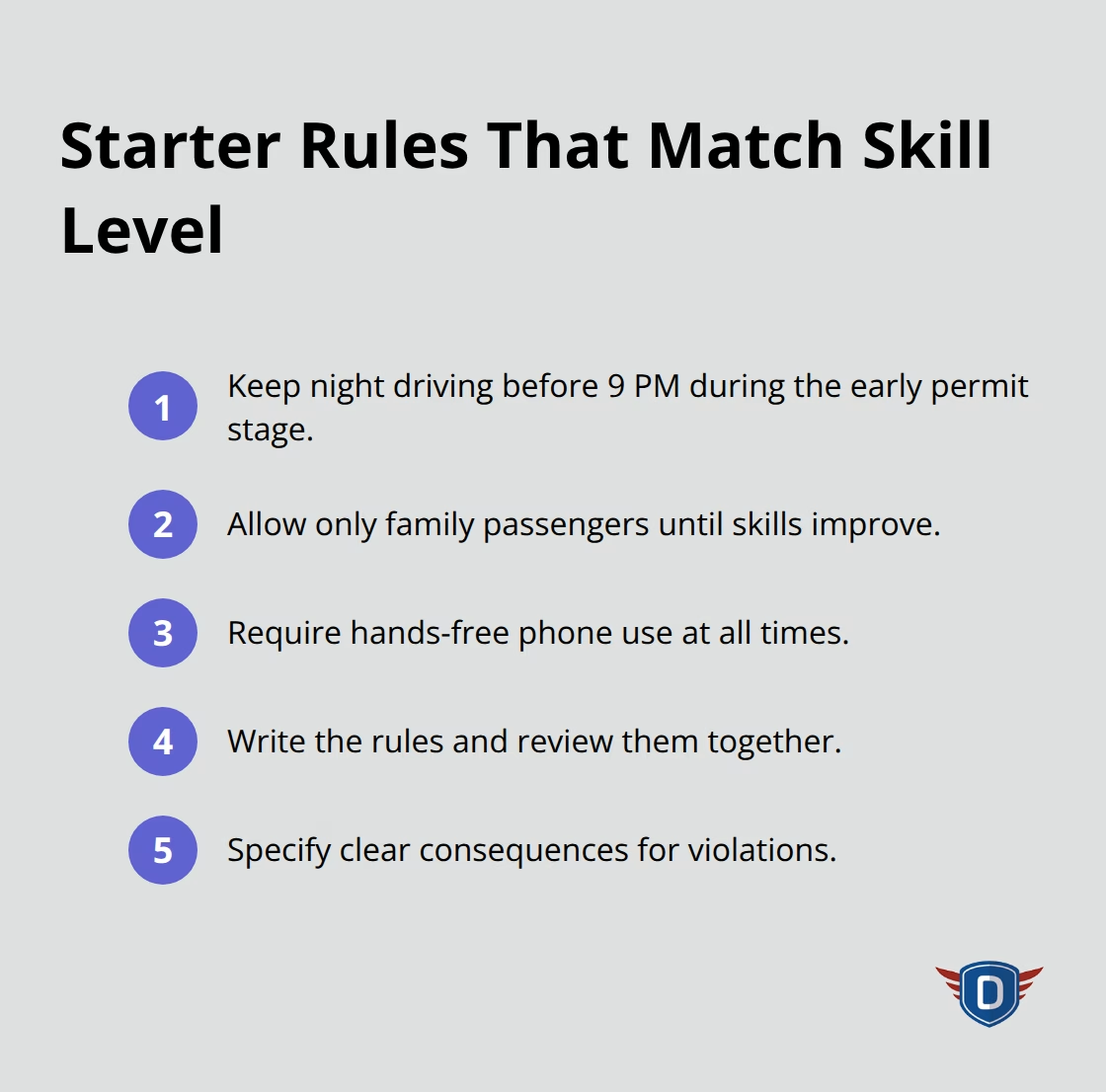
Teen drivers aged 16�17 have the highest crash rates between 9 PM and midnight, and passenger presence significantly increases crash likelihood. Write these rules down and review them together before the first solo drive. Your teen needs to know exactly what happens if they break a rule.
Match Consequences to the Violation
Consequences should match the violation, not exceed it. Breaking curfew by 30 minutes means losing driving privileges for a week, not a month. Harsh, disproportionate consequences breed resentment and secrecy; they don’t build safer drivers. The goal is accountability, not punishment. Your teen will respect boundaries that feel fair far more than rules enforced through fear.
Progress Through Real-World Driving Scenarios
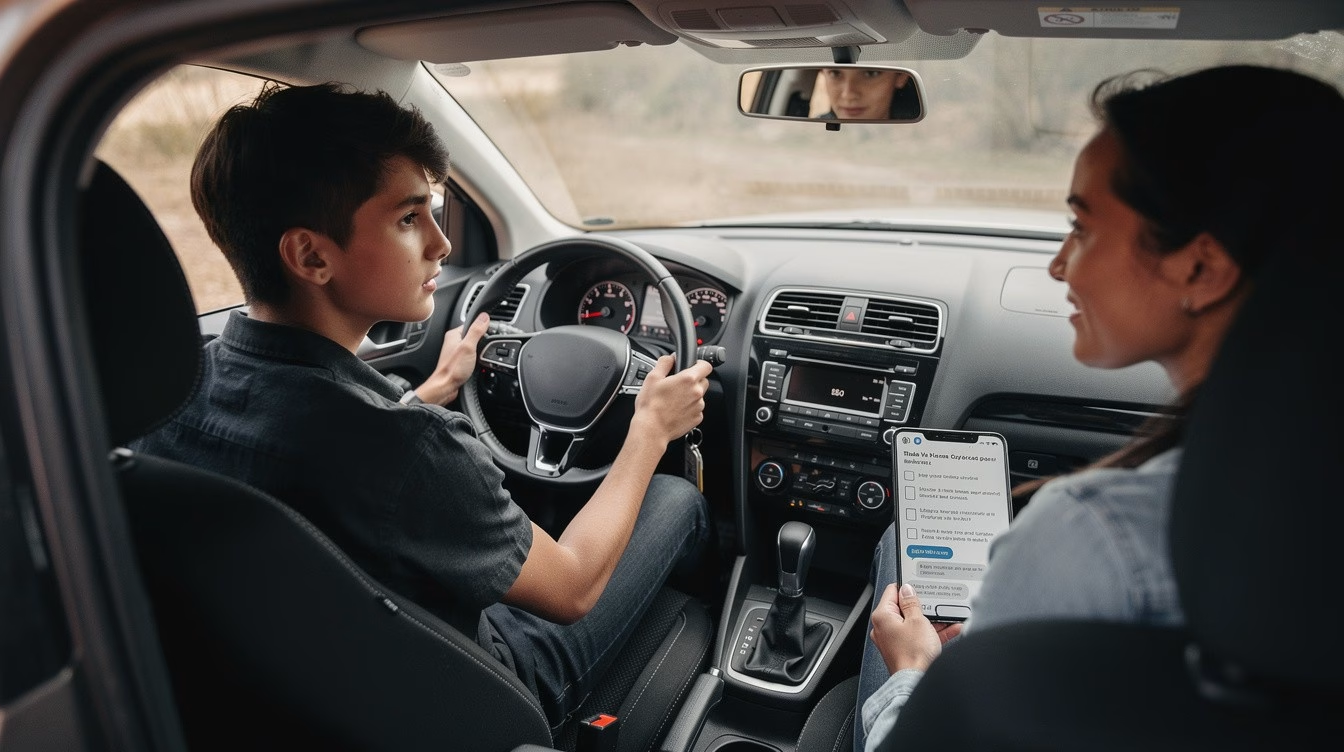
Gradual exposure to more complex driving scenarios is non-negotiable if you want your teen to develop real judgment. Start with daytime driving on familiar roads with light traffic, then progress to busier streets, highway merges, and finally night driving. Each step should take weeks, not days. Use real-world scenarios during supervised drives to teach defensive driving. Point out the tailgater two cars ahead, the pedestrian stepping off the curb, the wet road conditions after rain. Ask your teen what they see and what they’d do differently. This active observation teaches pattern recognition far better than lectures.
Turn Mistakes Into Teaching Moments
Monitor progress through honest conversations about specific driving moments, not through surveillance apps that create the illusion of oversight without building trust. Ask what made them nervous, what went well, and where they felt unsure. Listen more than you talk. When you hear about a close call, resist the urge to panic or overreact. Instead, ask what they learned and how they’d handle it differently next time. This approach transforms mistakes into teaching moments rather than reasons to restrict freedom further. Your teen’s willingness to share these moments with you depends entirely on whether they trust you to respond with curiosity instead of anger.
As your teen gains confidence and demonstrates consistent judgment, you’ll recognize which restrictions can loosen and which must stay firm. The next chapter shows you exactly how to recognize and reinforce the good decisions that prove your teen is ready for more independence.
How to Spot and Reward Safe Driving
Name Specific Behaviors Your Teen Executes Well
Your teen needs immediate, specific feedback when they make good decisions behind the wheel. Generic praise like “great driving” teaches nothing. Instead, name the exact behavior you noticed: “You checked your mirrors three times before changing lanes on the highway, and you waited for a safe gap instead of forcing it. That’s exactly the judgment I want to see.” This specificity matters because your teen learns precisely which actions you value, and they’ll repeat them. Positive reinforcement tied to specific behaviors increases their frequency far more than general encouragement. When your teen merges smoothly, accelerates gradually, or maintains proper following distance, point it out in the moment or immediately after the drive. The closer the feedback to the action, the stronger the learning connection.
Turn Mistakes Into Problem-Solving Conversations
Mistakes demand a different approach than many parents use. When your teen runs a stop sign or brakes hard unexpectedly, your first instinct might be panic or anger. Resist it. Instead, ask what happened: Did they not see the sign? Were they distracted? Did they misjudge the stopping distance? Their answer tells you whether they need more practice in similar conditions, a conversation about distraction, or specific instruction on braking technique. A teen who admits they were looking at their phone has just given you the information you need to address the real problem. If you respond with anger, they’ll hide the next mistake instead of reporting it. If you respond with curiosity and problem-solving, they’ll keep talking to you.
Build Pattern Recognition Through Real-World Observation
Point out the delivery truck that might stop suddenly, the pedestrian who glanced at their phone while crossing, the wet pavement after rain that reduces traction. Ask your teen what they see and what they’d do differently. This active observation teaches defensive driving far better than lectures because your teen thinks through decisions in real time, not passively listening to warnings they’ve heard a hundred times. During every supervised drive, create these teaching moments by directing their attention to hazards before they become emergencies. Your teen develops the judgment to manage risk themselves when they practice identifying and responding to threats while you sit beside them.
Final Thoughts
Supervision and trust work together to build safer drivers, not against each other. When you combine clear boundaries with open parent-teen communication, your teen feels safe admitting mistakes and asking questions instead of hiding risky behavior. This balance prevents crashes far more effectively than surveillance apps or excessive control ever could.
Your role shifts as your teen gains experience and demonstrates sound judgment. The restrictions that made sense at 16 won’t apply at 18, and the supervised drives that built confidence eventually give way to independent driving. Structured skill-building through professional driver education complements your supervision at home and gives your teen the foundation to drive safely for life.
Teens who develop judgment through guided practice and honest conversations become adults who make sound decisions independently. They internalize safety values rather than simply obeying rules out of fear, which means they apply those principles in situations you never anticipated or supervised.