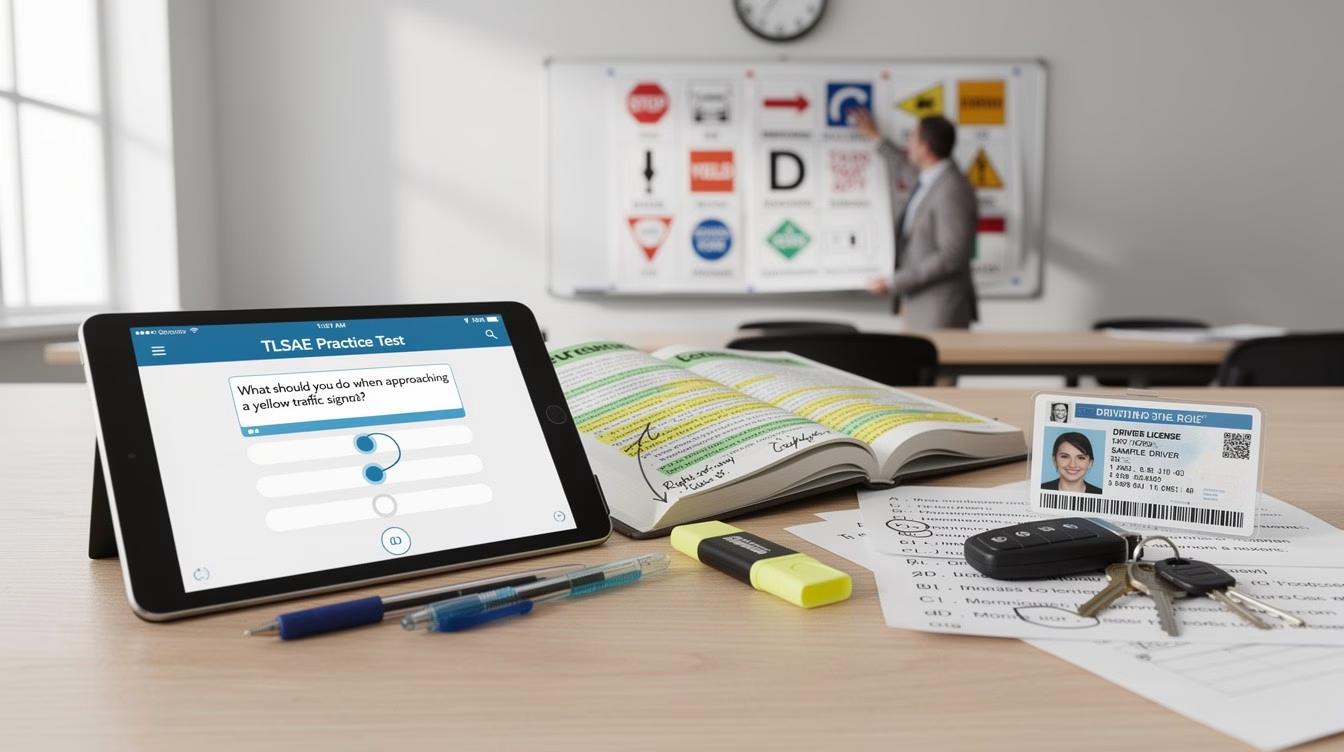

A court notice, DMV letter, insurance form, or license checklist may say you need to complete a driver course. The question is not simply whether you can take it online. It is: does online course meet requirements for the agency, court, insurer, or licensing step that applies to you?
Often, the answer is yes. Online driver education can satisfy many official requirements when the course is approved for your state and purpose. But approval is specific. A course accepted for an insurance discount may not meet a court order, and a first-time driver education course may not satisfy a traffic citation requirement.
The safest approach is to match the exact course to the exact reason you need it before enrolling.
Does an Online Course Meet Requirements? It Depends on Approval
An online course meets requirements when the organization that set the requirement accepts that course format and provider. That organization may be a state DMV, a local court, a licensing agency, an insurance company, or an employer.
�Online� is a delivery method, not an approval category. A self-paced course can be fully accepted if it is state-approved, court-approved, or insurer-approved for the purpose you need. At the same time, a well-designed course that lacks the required approval may not count at all.
Start with the language on your notice or application. Look for the required course name, number of hours, state, due date, and any provider restrictions. Terms such as BDI, TLSAE, driver education, defensive driving, mature driver, aggressive driver, or wireless communications device course identify different programs with different rules.
Match the Course to the Reason You Need It
The same driver may need different education at different points. A teen applying for a first license, an adult responding to a ticket, and a mature driver seeking an insurance discount should not assume they need the same online class.
Court or Traffic Ticket Requirements
If a judge, clerk, or citation instructs you to complete a traffic school or driver improvement course, verify the court�s approved course type. Some courts specify a course length, deadline, or completion reporting process. Others require you to obtain permission before taking a course, especially if you are seeking ticket dismissal or a reduced penalty.
Do not enroll based only on a course title that sounds similar. Confirm whether the court accepts an online option, whether the provider is approved in the relevant jurisdiction, and whether you must submit the certificate yourself.
DMV or License Requirements
DMV requirements commonly apply to first-time licensing, license reinstatement, points reduction, learner permits, or state-specific safety education. States can require a particular curriculum and a minimum number of instructional hours.
For example, Traffic Law and Substance Abuse Education is a specific Florida licensing requirement. It is not interchangeable with a general defensive driving course. Likewise, a driver education and traffic safety course may be required for a teen license path but may not fulfill a court-ordered improvement program.
Insurance Discount Requirements
Many insurers offer discounts for approved mature driver or defensive driving courses. The discount is determined by the insurance company and policy rules, not simply by course completion.
Before you enroll, ask your insurer whether it accepts the course, how long the discount lasts, and what certificate or documentation it needs. A qualifying course may help lower premiums, but the insurer decides the amount and eligibility.
What to Verify Before You Enroll
A few minutes of verification can prevent missed deadlines, duplicate coursework, or a certificate that is not accepted. Review these details before paying for any online driver course:
- Required course type: Use the exact course name listed by the court, DMV, insurer, or licensing authority.
- State and jurisdiction: Approval in one state does not automatically apply in another state or county.
- Provider approval: Confirm that the provider is approved for your specific course and purpose.
- Time requirement: Make sure the online program includes the required number of hours.
- Completion deadline: Check whether the course must be finished, reported, or submitted by a specific date.
- Certificate process: Find out whether completion is reported electronically or whether you must download, print, or deliver a certificate.
If your notice is unclear, contact the issuing agency before starting. Ask a direct question: �Will this online course satisfy my requirement?� Record the name of the person who confirms the answer and the date of the conversation.
Approval Is Not the Only Requirement
Even an approved course can fail to satisfy a requirement if you do not complete its administrative steps. Online courses may include identity verification, required quizzes, final exams, timed lessons, or a final certificate process. These are often part of the approval rules.
You may also need to use your legal name, correct driver license number, citation number, or case number during registration. A simple typo can delay reporting or make it harder for an agency to match your completion record.
Complete every module and keep a copy of your certificate. If the provider reports completion directly, save the confirmation anyway. Direct reporting is convenient, but you remain responsible for meeting your deadline unless the agency confirms that your requirement is closed.
When an Online Course May Not Be Accepted
Some requirements still call for in-person instruction, a live classroom, an approved testing location, or a course from a limited provider list. This is more likely when a court order specifically says �in person,� when a program requires hands-on training, or when an agency has restricted online eligibility.
Eligibility can also depend on your driving record. For instance, a court may allow a course for a first eligible citation but not for repeat violations or serious offenses. A course cannot replace requirements such as paying a fine, appearing in court, installing an ignition interlock device, or completing a separate evaluation.
That does not mean online education is less legitimate. It means the format must fit the rule. When the requirement allows an approved online program, self-paced access can make it easier to finish on time from a phone, tablet, or computer.
Choosing an Online Course With Confidence
Look for clear approval information, transparent pricing, mobile access, customer support, and a straightforward certificate process. A provider should explain what the course is designed to satisfy without making vague promises that every court, state, or insurer will accept it.
floridanewdriver.com offers online driver education and traffic safety courses designed for specific licensing, compliance, and driver improvement needs. As with any provider, select the course that matches your state and the purpose listed on your notice.
Avoid choosing solely by price or speed. The least expensive option is not a savings if you must retake another course later. The better choice is an approved course that fits your requirement, schedule, and reporting needs.
Frequently Asked Questions
Does an online driver course count the same as a classroom course?
It can. An online course counts when the court, DMV, licensing agency, or insurer accepts an approved online provider for your specific requirement.
How do I know if my online course is approved?
Check the provider�s approval details and compare them with your notice. Confirm the state, course type, and intended purpose before enrolling.
Can I take any defensive driving course for a ticket?
No. Ticket requirements vary by court and state. Your citation or court clerk can confirm the required course and whether online completion is accepted.
Will my certificate be sent automatically?
It depends on the course and agency. Some providers report completion electronically, while others issue a certificate that you must submit yourself.
What if I finish the wrong online course?
You may need to take the correct course to satisfy the requirement. Contact the court, DMV, insurer, or provider promptly to understand your options.
The right online course should remove stress, not create another compliance problem. Confirm the approval, complete every required step, and keep your completion record until the agency, court, or insurer confirms that your requirement has been met.