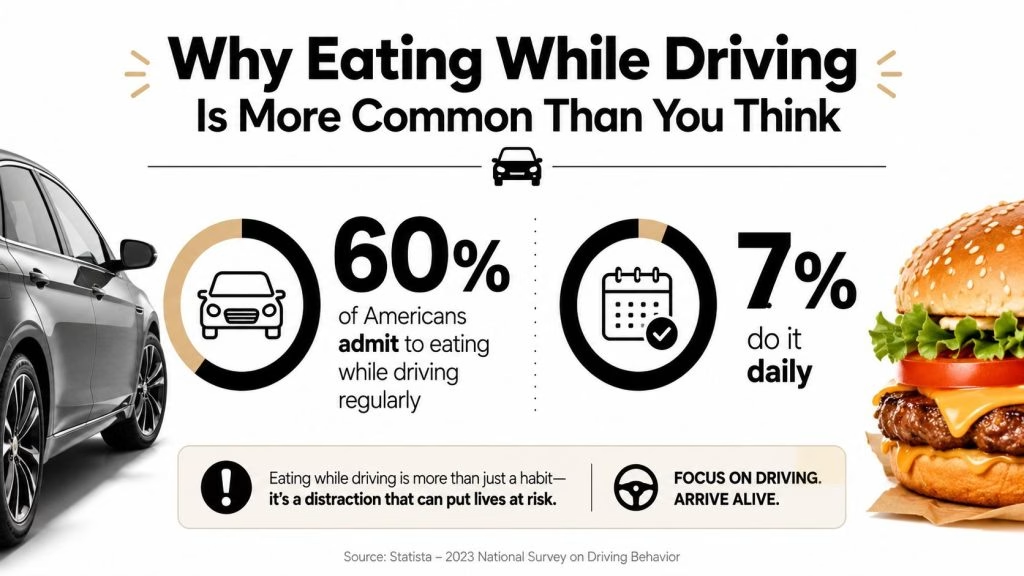
One survey found that 60% of Americans eat while driving on a semi-regular basis, while 7% do it every day (The Zebra’s driving-safety coverage). That makes eating behind the wheel more than an occasional mistake. It’s a routine distraction that many drivers treat as harmless because it feels ordinary.
A coffee during the morning commute, a sandwich between appointments, or fries grabbed on the way home can combine several distractions at once. Your hands may leave the wheel, your eyes may leave traffic, and your attention may shift toward the food. Florida doesn’t specifically ban eating while driving, but that doesn’t protect a driver from the consequences of impaired control.
Why Eating While Driving Is More Common Than You Think
Eating while driving has become part of many people’s daily routine. Drivers often start with a practical reason, such as a short lunch break, a long commute, or a child’s busy schedule. Because the vehicle keeps moving and the task feels familiar, the behavior can seem less serious than checking a phone.
The survey result is striking: 60% of Americans admit to eating while driving regularly, and 7% report doing it daily (The Zebra). Those figures describe a habit that’s widespread enough to feel socially acceptable. A driver who sees people eating in traffic may assume the behavior is inconvenient at most, rather than a meaningful threat to vehicle control.
Why familiar habits still create risk
Drivers usually compare eating with more visibly dangerous actions, especially texting or holding a phone. That comparison can make a quick snack seem acceptable. Historical research, however, has described eating and drinking as a common secondary task that drivers often perceive as less risky than mobile-phone use (PubMed research on eating and drinking while driving).
The problem isn’t whether a driver can take a bite without immediately losing control. The problem is what happens when the food requires another action:
- A coffee spills, so the driver looks down for a napkin.
- A wrapper sticks, so both hands work to open it.
- A fry falls, so the driver reaches toward the floor.
- A hot meal shifts, so the driver reacts suddenly.
Each event can interrupt steering, braking, scanning, or decision-making. A driver may complete the first bite safely but become distracted by the cleanup that follows.
Practical rule: If the food needs attention beyond simply holding it, it belongs at a stopped location, not in moving traffic.
Recognizing the habit isn’t about blaming drivers. Busy people often feel they’re saving time. A safer driving mindset, however, treats meals as activities that deserve a proper stopping place. The guidance on safe driving habits as a state of mind can help drivers replace automatic behavior with deliberate choices.
The Three Ways Eating Distracts You Behind the Wheel
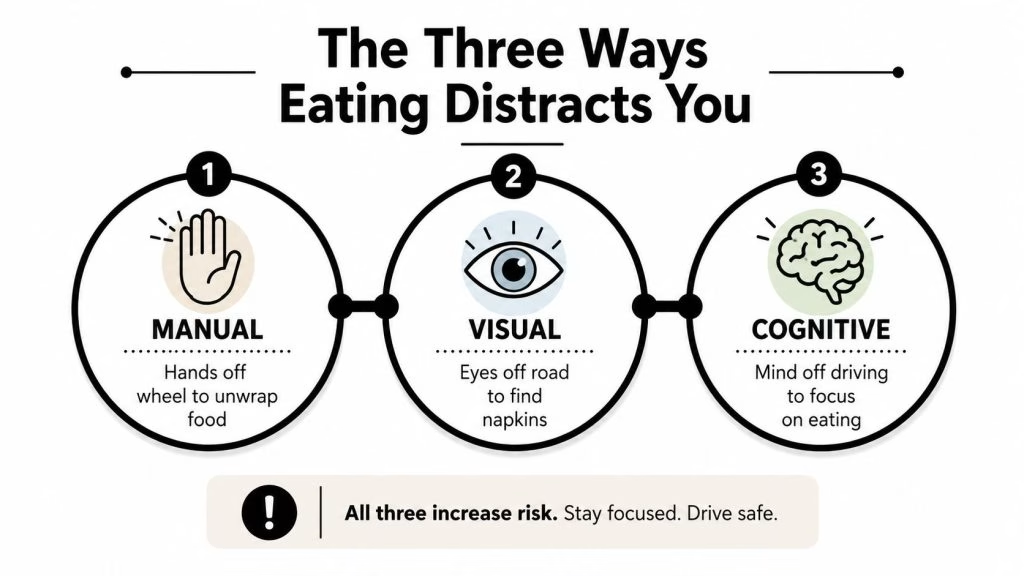
Eating creates manual, visual, and cognitive distraction at the same time. These categories overlap, which is why the task can become more demanding than it first appears.
Manual distraction
Manual distraction happens when your hands stop doing what driving requires. One hand may hold a sandwich, cup, or utensil while the other tries to steer. Unwrapping a burger, opening a sauce packet, or adjusting a drink lid can take both hands away from the wheel.
A dropped fry creates a different problem. Reaching toward the seat or floor changes your body position and removes your hand from a steering task exactly when traffic may change. Even a short reach can make it harder to correct the vehicle smoothly.
Visual distraction
Visual distraction occurs when your eyes leave the forward roadway. Eating often involves more than looking at the food. Drivers look for napkins, search for a straw, check a spill, or inspect the container before taking another bite.
Unwrapping food may require two to three seconds of visual attention, depending on the packaging and the driver’s actions. A driver who looks down during that interval may miss a slowing vehicle, a lane-position change, or a hazard entering the roadway.
Research summaries cited in driving-safety discussions identify glances away from the forward roadway lasting more than about two seconds as a serious threshold because crash or near-crash risk can at least double (Daily Driver Advocate). Eating can create several separate glances rather than one obvious, extended look.
Cognitive distraction
Cognitive distraction means your mind is partly occupied by something other than traffic. You may decide what to eat next, judge whether a drink is about to spill, or plan how to handle a messy wrapper. Your eyes might face forward, but your attention isn’t fully available for driving.
A useful comparison is the five seconds of distraction football field, which illustrates how much roadway can pass while a driver’s attention is diverted. Eating doesn’t always produce one continuous distraction, but repeated small decisions can still divide focus.
The safest response is simple: finish the meal before leaving, or stop somewhere suitable before eating. Keeping food within reach doesn’t make the driving task safer if the food keeps competing for your hands, eyes, and attention.
What the Research Shows About Crash Risk and Vehicle Control
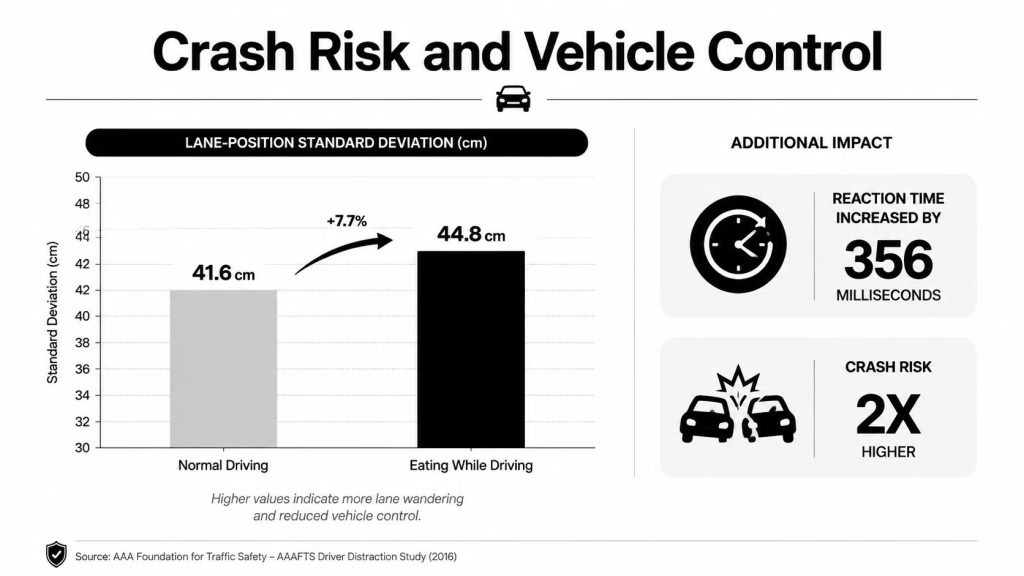
A 2014 simulator study found measurable changes in vehicle control when drivers ate. Their standard deviation of lateral position increased from 41.6 centimeters during baseline driving to 44.8 centimeters while eating. The result indicates less consistent lane positioning during the eating task, as reported in research on dangerous meals while driving.
The difference may appear small, yet lane control is continuous. A vehicle that drifts slightly more often has less room to handle a curve, a narrow lane, nearby traffic, or an unexpected movement. Eating also adds several demands at once, including holding food, watching for spills, and deciding what to do with wrappers.
How the risk estimates compare
Safety analyses describe a substantial increase in crash risk. One estimate places the increase from eating and drinking while driving at about 80%, while a naturalistic-driving summary reports a rise of about 1.8 times for drivers who eat (Winters & Yonker).
Another summary of Insurance Institute for Highway Safety research reports that eating or drinking while driving raises crash risk by about 70% compared with undistracted driving (Automotive Fleet). These estimates come from different methods, so they should not be treated as identical measurements. They do point toward the same practical conclusion: food creates a real control problem behind the wheel.
For broader context, NHTSA-referenced figures for 2018 reported that distraction affected 8% of fatal crashes and 15% of injury crashes, involving 2,841 deaths and about 400,000 injuries in the United States. Eating is one part of that wider distracted-driving problem.
Eating versus texting
Drivers often ask whether a quick snack carries the same danger as texting. The evidence does not support treating the two activities as equivalent in danger. One simulated-driving study found that both eating and texting worsened lane control and reaction time compared with baseline. Another comparison found that eating and drinking created a lower workload than phone use, while still performing significantly worse than driving without distraction (PubMed).
The useful lesson is practical. A driver does not need to prove that eating matches texting before removing the distraction. Both tasks can interfere with keeping the vehicle in its lane and responding to hazards.
Repeated short interruptions can be especially risky because each one removes another moment of attention from traffic. Watch the embedded video for another explanation of distracted-driving risk:
For broader context, review research on what causes most car accidents. The safest choice is to finish eating before driving or stop in a suitable place first.
Florida Laws and Legal Consequences You Need to Know
Florida doesn’t have an explicit law that bans eating while driving. That doesn’t mean a driver can eat without legal exposure. If eating interferes with vehicle control, an officer may evaluate the conduct under broader careless-driving or reckless-driving standards.
Florida news coverage reports that a careless-driving citation can carry a fine of up to $500, and a crash connected to the behavior can lead to reckless-driving charges (Miami Herald). The legal question isn’t whether food was present in the vehicle. It’s whether the driver’s actions showed insufficient care or created a dangerous situation.
�Not illegal� doesn’t mean consequence-free
Law enforcement may look at the complete circumstances. An officer could consider lane movement, delayed braking, failure to respond to traffic, a collision, or other signs that the driver’s attention was compromised.
That distinction matters because drivers sometimes use the absence of a specific food-related prohibition as permission to continue. Florida law can still address unsafe driving behavior when the food becomes part of the reason the driver loses control.
The potential consequences can extend beyond a roadside citation. A moving violation or crash may affect a driver’s record, court obligations, insurance decisions, and future premiums. The exact result depends on the facts, the citation, the insurer, and the applicable legal process.
Education helps prevent the preventable
Defensive driving education gives drivers a framework for identifying distractions before they become emergencies. It also reinforces the idea that safe driving depends on preparation, attention management, and responsible decisions, not merely on avoiding behaviors that have a specific name in a statute.
Florida drivers can review the relevant rules through this guide to Florida state driving laws. If you’ve received a citation, check the official requirements that apply to your situation before choosing a course or court option.
Practical Strategies to Break the Eating and Driving Habit
The safest eating decision happens before the engine starts. Treat food like refueling or caring for a child: plan a proper stop before driving, rather than trying to manage both tasks at once. Eating combines hand movement, visual attention, and mental focus, so a small snack can create several distractions at the same time.
Build a routine that removes the temptation
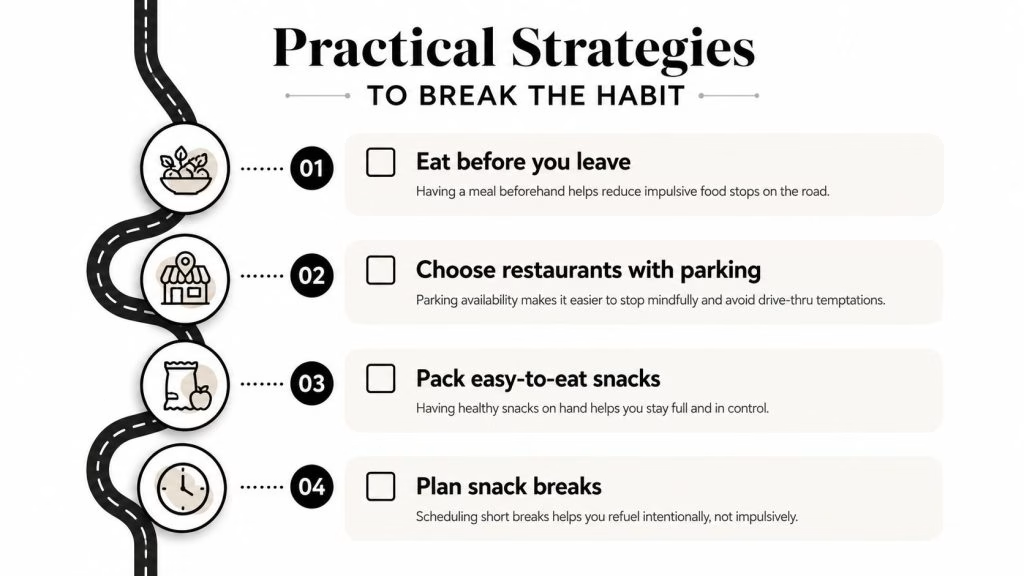
- Eat before you leave: Finish breakfast or lunch while parked at home, work, or a restaurant. Give yourself enough time so leaving does not create pressure to eat on the road.
- Choose restaurants with parking: Pick a location where you can eat inside or remain parked. Taking the meal into moving traffic turns a simple food choice into a control problem.
- Pack easy-to-eat snacks: For longer trips, bring food for a designated stop. A secure travel mug may reduce spills, but it should not encourage eating or drinking while the vehicle is moving.
- Plan snack breaks: Add a stopping point to the route before hunger becomes urgent. A planned pause works like a scheduled maintenance stop, creating space to handle food without competing with traffic.
Messy, hot, or wrapped foods require extra caution because they can demand more hand movement and visual attention. Road-safety guidance identifies these features as distractions, while research has associated eating and drinking with slower reactions and more lane-control errors (The General).
Answering the time objection
�I don’t have time� often means no stopping place has been assigned. Choose a restaurant with convenient parking, leave earlier when possible, or save a suitable snack for a planned break. The goal is simple: keep food from competing with driving while the vehicle is moving.
Parents also teach through example. Teenagers who see adults unwrap meals, reach for dropped food, or clean spills behind the wheel may treat those actions as ordinary. Adults can model the safer rule by stopping first and explaining that the pause protects everyone in the vehicle.
A spill requires the same response as any other sudden distraction. Do not clean it while moving. Slow down safely, pull over where permitted, and handle the mess only after the vehicle is stationary.
How Driver Education Courses Build Safer Habits
Driver education courses turn safety advice into repeatable decision-making. Lessons on distracted driving help students recognize that eating isn’t one simple action. It can involve hands, eyes, and mental attention, all of which driving needs at the same time.
Florida-approved programs include the Basic Driver Improvement course, a 4-hour option for drivers with a moving violation, and the Intermediate Driver Improvement course, an 8-hour program for court-ordered drivers or those seeking deeper instruction. Other offerings include an 8-hour Aggressive Driver Course and a 6-hour Mature Driver Course.
Course benefits may include point reduction, court requirement fulfillment, and eligibility for insurance discounts, depending on the driver’s circumstances and insurer. The programs are online, self-paced, FLHSMV-approved, and available in English, Spanish, and Portuguese, making it easier for busy professionals, returning drivers, and first-time learners to study in a suitable format.
Learn more about driver education in Florida and choose the course that matches your requirement. Safer habits begin with understanding how ordinary choices affect vehicle control.
BDISchool offers Florida-approved online driver improvement and defensive driving courses that cover distracted driving, traffic laws, and safer decision-making. Visit BDISchool to review the available courses, select the right program, and start building safer driving habits today.