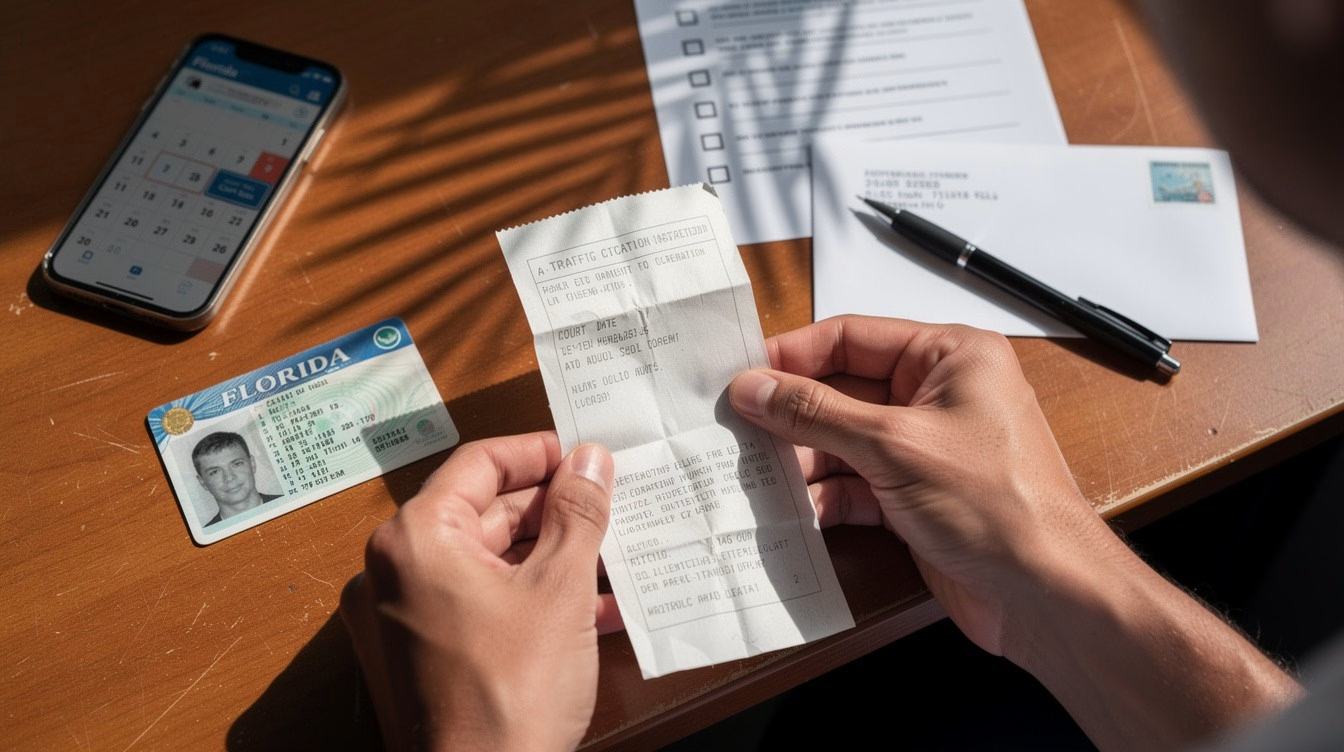
A traffic citation can feel like a small piece of paper with a large set of consequences. The essential traffic citation steps are usually time-sensitive, and the right response depends on the violation, your driving history, and the rules in the state or court named on the ticket. Acting promptly gives you more choices and helps prevent extra fees, license issues, or a missed court requirement.
Start With the Citation Itself
Read every section of the citation before you pay, call the court, or enroll in a course. Confirm the alleged violation, citation number, county or municipality, court name, response deadline, fine amount, and any court date. These details determine which agency controls your case and what options may be available.
Do not assume that paying the fine is always the simplest resolution. In many jurisdictions, payment may be treated as an admission of responsibility or a guilty plea. That can lead to points, a conviction on your driving record, higher insurance costs, or the loss of an option such as traffic school or a diversion program.
If the citation is difficult to read or you believe information is incorrect, contact the court clerk or agency listed on the ticket. Ask procedural questions, such as the deadline and available response methods. Court staff cannot provide legal advice, but they can explain filing and payment processes.
Essential Traffic Citation Steps Before the Deadline
The deadline is not a suggestion. Missing it can result in added penalties, a license suspension, a failure-to-appear action, or a warrant in more serious cases. Put the date in your calendar immediately and allow time for processing if you are mailing paperwork or completing an online course.
Your next action typically falls into one of three paths: pay or resolve the citation, contest it, or ask whether you qualify for a course-based option. The best path depends on the facts of your case and local rules.
Check Your Court and DMV Requirements
Look up your case through the court or agency identified on the citation when online access is available. Verify that the citation has been entered into the system, especially if it was issued recently. Save screenshots, confirmation numbers, receipts, and copies of every form you submit.
Also determine whether the state DMV has a separate requirement. Some citations involve only a court fine, while others affect license status, points, insurance, or driving privileges. Commercial drivers, drivers with out-of-state licenses, and drivers cited in a different state may have additional compliance concerns.
Decide Whether to Pay, Contest, or Request an Option
Paying can be appropriate when you understand the consequences and want to resolve a minor matter quickly. But first confirm whether payment will add points or create a conviction. If a court-approved driver improvement course could reduce or avoid those consequences, ask about eligibility before making a payment.
Contesting a citation may make sense if you believe the charge is inaccurate, you have evidence, or the citation creates serious consequences for your license or employment. Follow the court’s instructions for requesting a hearing. For criminal traffic charges, crashes involving injuries, DUI-related allegations, or cases that could affect a professional license, consider speaking with a qualified traffic attorney.
A course option can be useful when it is authorized by the court, DMV, or state program. It is not automatic, and eligibility rules vary. Some programs exclude drivers with recent course completions, serious violations, commercial licenses, or a prior record within a specified period.
If You Are Eligible for Traffic School or Driver Improvement
Get approval or clear instructions before enrolling. Some courts require you to elect the option through their portal, submit an affidavit, pay an administrative fee, or receive a court order first. Completing a course without confirming the requirement can leave you with a certificate that does not apply to your case.
Choose a course that is approved for the exact purpose you need. A basic driver improvement course, aggressive driver program, wireless communications device course, or other specialized program may have different approval standards. The court or state agency should identify the required course type, length, completion deadline, and submission method.
Online education can make compliance easier for busy drivers because coursework can often be completed on a phone, tablet, or computer at times that fit your schedule. A provider such as floridanewdriver.com offers online driver education and traffic safety courses designed for approved requirements, but you should still verify that the specific course is accepted by your court or state.
Before you enroll, confirm these practical details:
- The course is approved for your state, court, or cited requirement.
- The course completion deadline leaves enough time for processing.
- You understand the full price and whether court fees are separate.
- You know whether the provider, you, or both must send the completion certificate.
- You can access your course on the device you plan to use.
Complete the Requirement Carefully
Do not wait until the final day to begin a required course. Technical issues, identity verification steps, quiz requirements, or certificate processing can take time. Start early enough to complete the program at a reasonable pace and correct any account or reporting issue before your deadline.
Use your legal name and citation information exactly as requested. A missing middle initial may not always matter, but an incorrect driver license number, county, or case number can delay matching your completion to the correct record. Keep your enrollment confirmation and final certificate even when the provider reports completion directly.
After completing the course, verify that the court or DMV received it. Reporting timelines differ by state and provider. Your responsibility is not finished until the required agency records the completion and your case status reflects the resolution.
Protect Your Record After the Case Closes
Check your driving record after enough time has passed for the case to update. Depending on the state, you may be able to request a copy through the DMV or review your status online. Confirm that a suspension, point assessment, or unresolved case has not appeared unexpectedly.
It is also wise to watch for notices from your insurer at renewal. A completed course or dismissed citation may help in some situations, but insurance companies use their own underwriting rules. Do not assume a course guarantees that a premium will stay the same.
Use the experience as a practical reset behind the wheel. Slow down near changing speed limits, reduce distractions before the vehicle moves, leave extra following distance, and plan for delays instead of trying to make up time in traffic. Safer habits protect more than your record.
Common Mistakes That Create Bigger Problems
The most common mistake is ignoring a ticket because it seems minor. A relatively small fine can become far more expensive when late fees, reinstatement costs, or a suspended license are involved.
Another mistake is enrolling in the wrong course. State-approved does not always mean court-approved for your specific case. Confirm the requirement first, then keep written proof of the approval instructions.
Finally, avoid relying on verbal assumptions. If a court clerk, agency, or course provider gives you a key instruction, write down the date, name, and details. Clear records are helpful if a completion or payment needs to be traced later.
Frequently Asked Questions
Do I have to go to court for a traffic citation?
Not always. Many minor citations can be paid, contested, or resolved through an eligible course option, but your ticket or court notice will state whether an appearance is required.
Can traffic school remove a ticket from my record?
Sometimes. A course may prevent points, support dismissal, or satisfy a court requirement, but the outcome depends on state law, court policy, and eligibility.
Should I pay my ticket before taking a driver improvement course?
Only if the court instructions say to do so. In some locations, paying first can end your eligibility for a course-based resolution.
What happens if I miss the citation deadline?
You may face late fees, a failure-to-appear action, or license consequences. Contact the listed court or agency as soon as possible to ask how to resolve the missed deadline.
How do I know if an online course is accepted?
Ask the court, DMV, or program administrator for the required course type and approved provider criteria. Acceptance must match your specific state and case requirement.
A citation is easier to manage when you treat it as a deadline-driven compliance task, not a problem to postpone. Save your records, verify every requirement, and give yourself enough time to complete the correct next step with confidence.