
A final exam is often the last step between completing your online driver education course and receiving the credit you need for licensing, court compliance, or an insurance-related requirement. Final exam requirements can feel stressful when a deadline is involved, but they are usually straightforward: complete the assigned lessons, meet any required study time, pass the exam, and follow the state or provider process for reporting completion.
The details matter because driver education rules are set by the state, court, DMV, insurance company, or program administrator. A course that is approved for one purpose may have different completion rules than a course required for another. Before you enroll or begin the final exam, confirm that the course is approved for your specific reason for taking it.
What final exam requirements usually include
Most online driver education programs require students to finish all required units before the final exam becomes available. This may include reading or video lessons, knowledge checks, end-of-unit quizzes, required seat time, and any state-specific identity verification steps.
The final exam typically measures the traffic laws, safe-driving practices, hazard awareness, impairment risks, and defensive-driving skills covered in the course. It is not intended to be a surprise. Students who complete the coursework carefully and review missed quiz questions are generally well prepared.
A typical course completion process includes four parts:
- Completing every required lesson and activity
- Meeting the minimum course time, when state rules require it
- Passing the final examination at the required score
- Completing identity verification or submitting required information
Some programs may also require a parent, guardian, instructor, or student acknowledgment. This is more common in teen driver education courses, where state licensing rules may require records beyond the online course itself.
Passing scores and retake rules
The passing score for a driver education final exam depends on the approving authority and course type. Many programs use a score of 80% or higher, but you should not assume that number applies to every course. Your course instructions should clearly state the required score before you begin.
If you do not pass on the first attempt, a retake may be available. Some approved courses allow multiple exam attempts, while others limit attempts or require you to review material before taking the test again. A retake policy is not a minor detail, especially if you are trying to meet a court date, DMV deadline, or insurance deadline.
Do not rush through an exam simply because it can be retaken. Review the questions you miss and return to the relevant course section. The goal is to understand the rule or safety principle, not only to earn a passing score.
What happens if you fail the final exam?
Failing one attempt does not always mean you fail the course. It usually means you need to review the material and take another attempt under the course’s stated policy.
If a program has an attempt limit, contact customer support before your deadline passes. They can explain the available next steps based on the approved course rules.
Identity checks and exam integrity
Many state-approved online courses use identity verification to confirm that the enrolled student is the person completing the work. This requirement supports the validity of the completion certificate and helps the course provider meet regulatory standards.
Identity checks can take several forms. You may be asked to answer personal verification questions, submit a photo of an identification document, use a webcam, confirm your identity at random points, or complete a brief knowledge validation. The exact method depends on the state and course approval requirements.
Use your legal name and accurate enrollment information from the start. A mismatch between your course profile, driver license, citation, court record, or permit application can delay reporting or certificate processing.
You should also complete the final exam yourself. Having another person take the course or exam for you can invalidate your completion and may create larger problems with the court, DMV, insurer, or licensing process.
Prepare before you start the final exam
A little preparation makes the final step much easier. First, make sure your device has a stable internet connection and enough battery power. A computer may be more convenient for a longer exam, but many online courses are designed to work on mobile devices as well.
Next, choose a quiet place where you can focus. Read each question completely before selecting an answer. Traffic safety questions may include details about speed, right-of-way, following distance, distracted driving, alcohol or drug impairment, and state-specific laws. One word can change the meaning of the question.
Have any permitted materials ready, but do not assume every course is open-book. Follow the exam instructions shown in your account. If the course includes a timer, begin only when you have enough uninterrupted time to finish.
It also helps to check your deadline before you begin. Courts and DMVs may require the course to be completed by a specific date, not merely started by that date. Leave time for identity verification, certificate delivery, and reporting if those steps are required.
After you pass: certificates and reporting
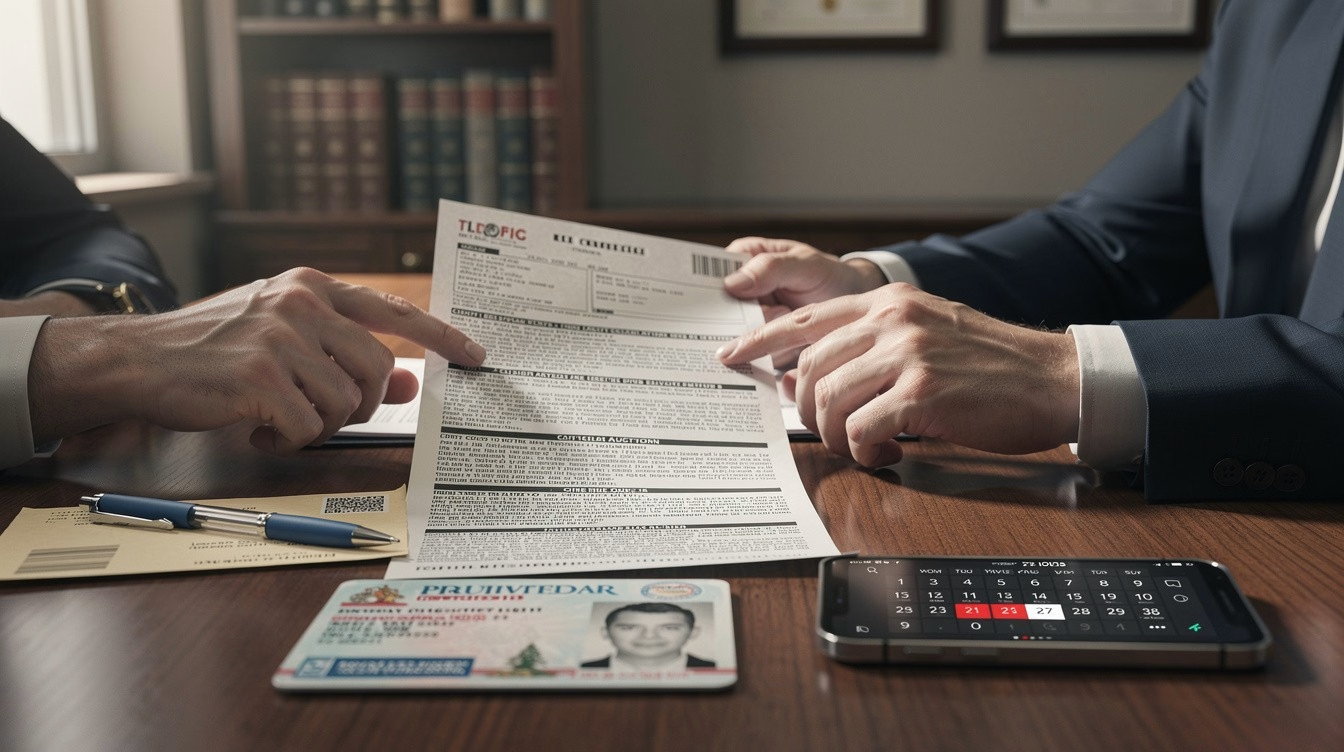
Passing the final exam is not always the last administrative step. Depending on the course, you may receive a downloadable certificate, have your completion reported electronically, or need to submit proof directly to a court, employer, insurer, or government agency.
Read the completion instructions carefully. If a court ordered the course, confirm whether the provider reports completion or whether you must file the certificate yourself. Keep a copy of your certificate and confirmation details until your case, licensing step, or insurance request is fully resolved.
Electronic reporting can be convenient, but it may not appear instantly in every system. Processing times vary by state and agency. If you are close to a deadline, complete the course early enough to account for normal processing time.
For first-time drivers, completing the course may be only one part of becoming eligible for a permit or license. You may still need to complete supervised driving hours, a vision test, a written knowledge test, a road test, or other state-required steps.
Requirements differ by course purpose
The phrase �driver education� covers several different types of programs. A teen pre-licensing course, a traffic school course for a citation, a basic driver improvement course, and a mature driver insurance discount course can all have different final exam requirements.
For example, a court-approved traffic course may focus on completing the course by a court deadline and ensuring the court receives proof of completion. A licensing course may require a state-mandated number of instructional hours and a specific final test score. An insurance discount course may require the student to provide a certificate to the insurance company and confirm whether the insurer accepts that course for a discount.
This is why approval matters more than convenience alone. Select a course that matches your state and your specific requirement. floridanewdriver.com offers online driver education and improvement courses designed around approved program requirements, with clear course instructions and flexible access for busy students.
FAQ: Final Exam Requirements
Do I need to complete every lesson before the final exam?
Usually, yes. Most approved online courses require completion of all required lessons, quizzes, and minimum time before the final exam opens.
What score do I need to pass a driver education final exam?
The required score varies by course and state. Many courses require 80%, but your course instructions provide the score that applies to you.
Can I retake the final exam?
Often, yes. Retake availability and attempt limits depend on the course approval rules, so check the policy before testing.
Is the final exam timed?
It depends on the course. If an exam has a time limit, it should be displayed before or when you begin the test.
Will my completion be sent to the DMV or court automatically?
Sometimes. Check your completion instructions because reporting methods differ by state, course type, and agency.
Can someone else take the exam for me?
No. You must complete your own course and exam. Identity verification may be used to protect the validity of your completion record.
Your final exam should be the point where you demonstrate what you learned, not a last-minute obstacle. Complete the course carefully, verify the rules that apply to your situation, and give yourself enough time to finish and submit any required proof with confidence.