Driver accidents cost U.S. companies over $60 billion annually in medical expenses, lost productivity, and vehicle damage. A well-designed driver safety program cuts these costs dramatically while protecting your team.
We at floridanewdriver.com know that building an effective program requires the right mix of policies, technology, and continuous monitoring. This guide walks you through the essential components that actually work.
The Foundation Your Program Must Have
A written safety policy signed by top leadership and distributed to every driver is non-negotiable. This document spells out what safe driving looks like at your company, consequences for violations, and expectations around vehicle inspections and incident reporting. Without this foundation, you have no standard to enforce and no clear message to your team. Companies that implement formal written policies see measurable improvements in compliance and safety culture. Your policy needs teeth, though, which means consistent enforcement. If you let speeding slide for one driver but discipline another, your program loses credibility instantly. Assign one person to oversee driver safety and hold them accountable for monitoring compliance. This dedicated role prevents safety from becoming everyone’s responsibility, which means it becomes no one’s responsibility.
Training That Actually Changes Behavior
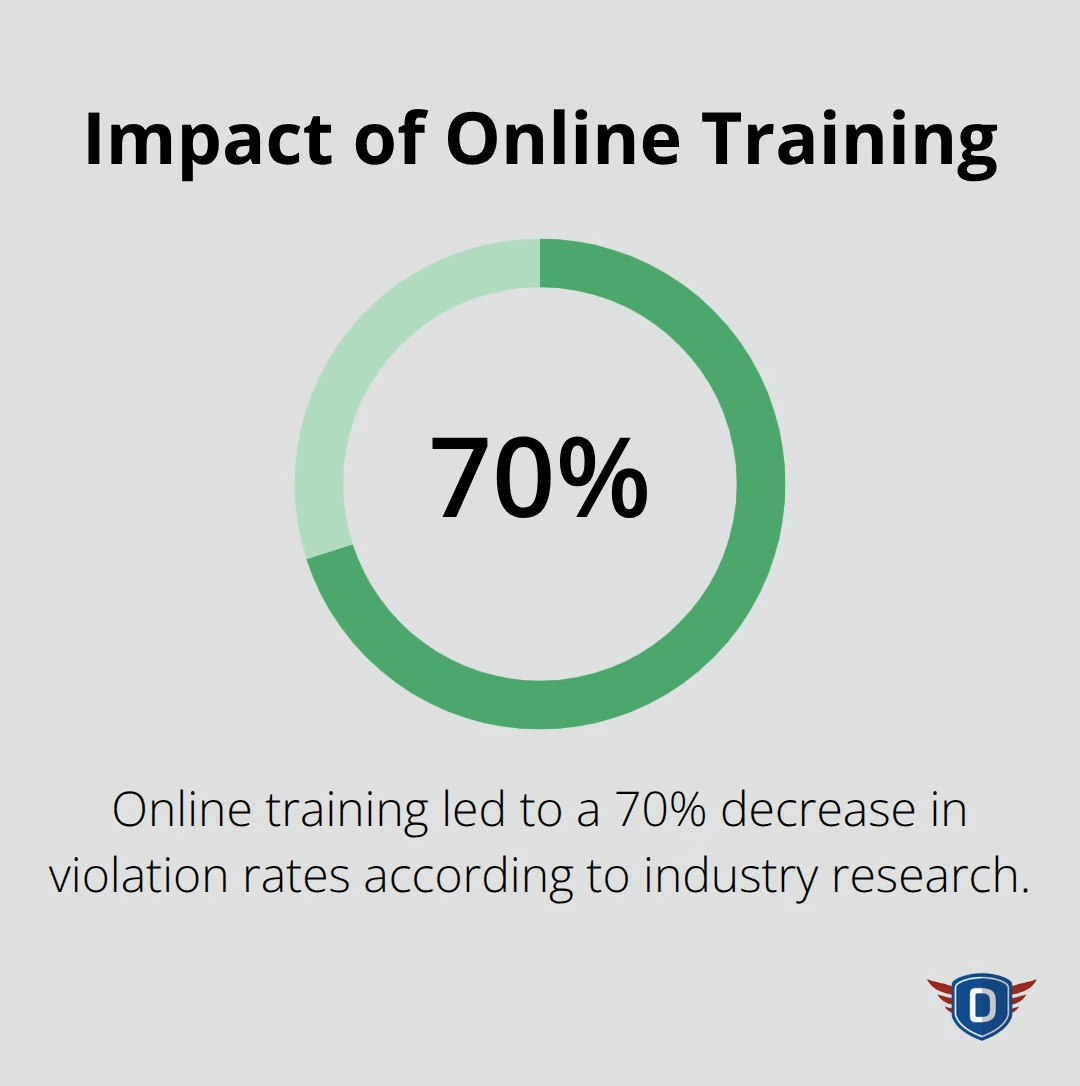
Regular training programs significantly reduce violations, with online training leading to a 70% decrease in violation rates according to industry research. This gap exists because of the Forgetting Curve, a real phenomenon showing how quickly knowledge fades without reinforcement. You cannot train drivers once and expect lasting results.
Start with onboarding that covers defensive driving fundamentals like speed management, evaluating space, and managing fatigue, then build a monthly cycle of refresher sessions tied to your company’s specific crash patterns. If your drivers struggle with hard braking incidents, focus that month’s training on following distances and hazard anticipation. If distracted driving shows up in your incident data, address it directly. Use real examples from your fleet, not generic scenarios, so drivers see the relevance. Track completion rates and quiz scores in each driver’s file to prove you ran the program and identify who needs extra coaching.
Visibility Into What’s Actually Happening
Self-reported safety and annual Motor Vehicle Record checks leave massive gaps in your visibility. Continuous MVR monitoring combined with telematics data reveals violations, license suspensions, and risky driving patterns as they happen, not months later. Analysis of road-facing video data shows that commercial drivers operate without seat belts in one out of every ten instances, revealing how common preventable violations are. Real-time alerts let you intervene with coaching or retraining before a violation becomes a crash. Track hard braking, rapid acceleration, speeding, and seatbelt use through your fleet management system. These metrics identify high-risk drivers for targeted interventions and show which drivers are improving. Document everything in each driver’s file, including training completion, MVR reviews, and any corrective actions taken. This record protects your company during audits and demonstrates due diligence if an incident occurs.
Moving From Policy to Action
The gap between a written policy and actual safety improvement comes down to accountability. Your dedicated safety overseer must review MVR data monthly, flag violations immediately, and assign corrective training or discipline based on severity. Drivers with disqualifying violations (DUI, hit-and-run, or three moving violations in three years) should face termination. Others warrant targeted retraining tied to their specific violations. Recognize and reward safe driving through incentive programs-monthly safety awards, gift cards, or extra time off strengthen your safety culture and improve driver retention. When drivers see that safety matters to leadership and that safe behavior gets noticed, they change their habits. This shift from compliance-only thinking to a genuine safety culture is what separates programs that work from those that sit on a shelf.
Real Tools That Close the Visibility Gap
Telematics Reveals What You Cannot See
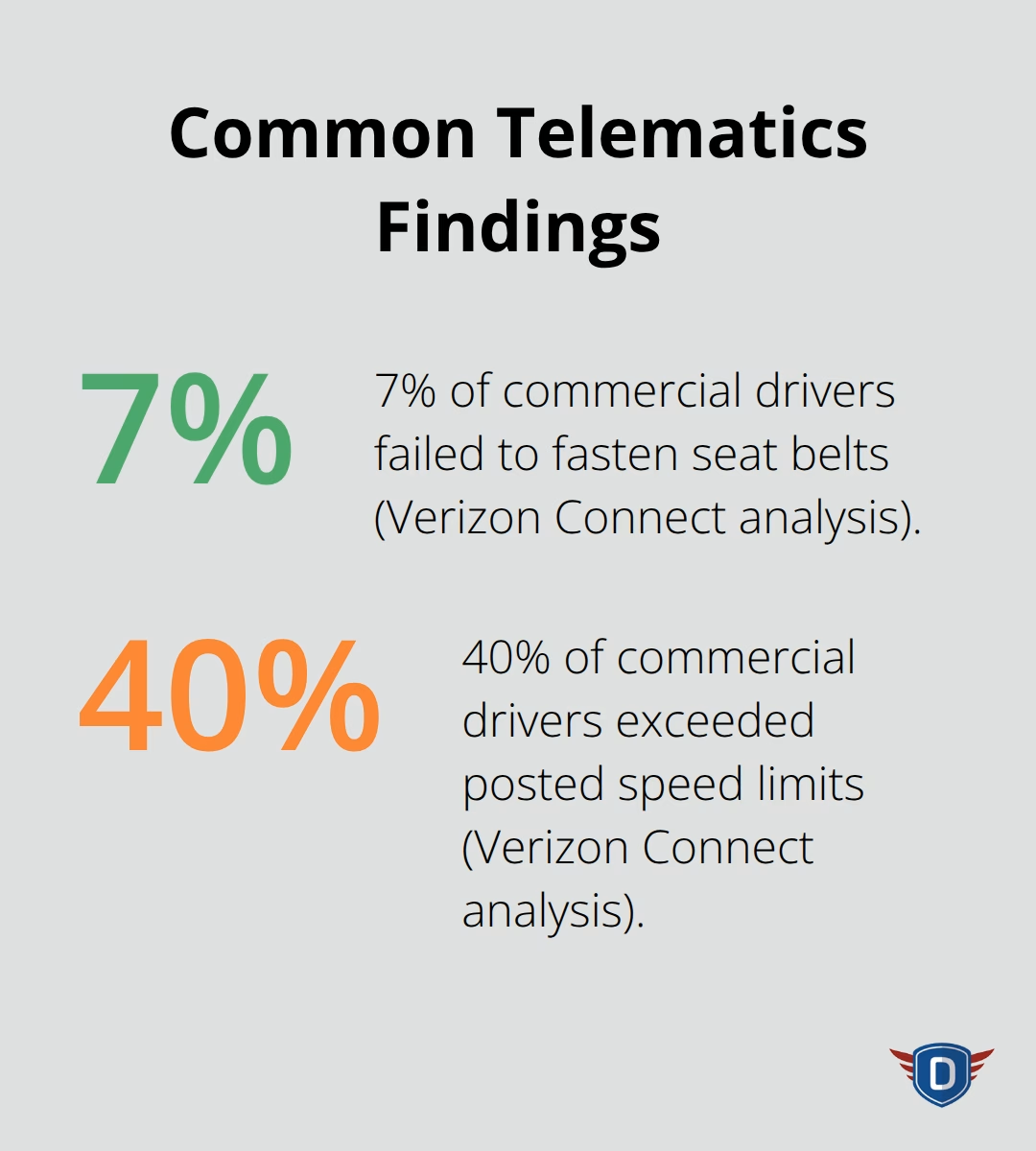
Technology separates safety programs that actually work from those that fail silently. Telematics systems capture continuous data on speed, hard braking, rapid acceleration, and seatbelt use, revealing patterns that monthly MVR checks miss entirely. Verizon Connect’s analysis of 70 million driver-facing videos found that 7% of commercial drivers failed to fasten seat belts and 40% exceeded posted speed limits, showing how pervasive preventable violations are across fleets.
These systems feed real-time alerts to your safety overseer, enabling immediate coaching before violations escalate into crashes. Without telematics, you operate blind between quarterly reviews, losing months of intervention opportunities.
In-Vehicle Safety Features Require Driver Knowledge
In-vehicle safety features like automatic emergency braking and lane departure warnings reduce crash risk, but they only work if drivers know they exist and understand how to use them. Your onboarding must cover these features specifically, not as general technology overview but as practical tools that protect drivers and the company. Drivers who understand how their vehicle responds in emergency situations gain confidence and make better decisions on the road.
Data Analytics Transforms Information Into Action
Data analytics transforms raw telematics and MVR information into actionable intelligence by identifying which drivers pose the highest risk, which routes generate the most violations, and which behaviors correlate with future incidents. A centralized platform that unifies MVR monitoring, telematics data, training records, and compliance documentation eliminates the fragmented spreadsheets and disconnected systems that plague most programs. This single source of truth enables your safety overseer to spot trends instantly, such as a sudden spike in speeding violations on a specific route or a driver whose behavior deteriorated after a near-miss.
The Financial Impact Justifies the Investment
The financial case is strong: 25% of fleet operators have reported reduced premiums thanks to fewer violations and crashes, underscoring the financial incentives of a robust safety program. This translates directly to lower insurance premiums, fewer claims, reduced vehicle downtime, and fewer lost-time injuries. Companies that implement these systems see ROI within months through accident prevention alone, not counting the indirect benefits of improved driver retention and enhanced reputation.
Accountability and Recognition Drive Real Change
The technology itself means nothing without disciplined action. Your safety overseer must review alerts daily, assign training within 48 hours of a violation, and document everything in driver files. Gamification through driver scorecards motivates behavior change by making performance visible and measurable, allowing you to recognize top performers publicly and target struggling drivers with specific coaching. This combination of visibility, accountability, and recognition transforms telematics from a surveillance tool into a genuine safety partner. With these systems in place, you now have the foundation to measure whether your program actually works-which brings us to the metrics that matter most.
How to Know Your Program Actually Works
A driver safety program without metrics is just expensive compliance theater. You need specific numbers that prove your investment reduces crashes, violations, and costs. The metrics that matter most connect directly to preventing incidents, not vanity metrics that look good in reports but fail to predict safety outcomes.
Track the Behavioral Indicators That Predict Crashes
Start tracking Motor Vehicle Record violations by type and frequency, hard braking events, rapid acceleration incidents, speeding violations, and seatbelt non-compliance. These behavioral indicators reveal which drivers pose genuine risk before they cause crashes. Document everything in a centralized system so your safety overseer pulls reports instantly and spots trends across the fleet. If speeding violations spike on Tuesday mornings on a specific route, that’s actionable intelligence. If one driver’s hard braking incidents jumped from two per week to eight, that driver needs immediate intervention. The National Highway Traffic Safety Administration reports that approximately 94% of all crashes are attributed to human error, which means your data reveals preventable crashes waiting to happen.
Review Data Weekly, Not Monthly
Assign your safety overseer the responsibility of reviewing this data weekly, not monthly. Monthly reviews miss intervention windows and allow patterns to harden into habits. When you spot a driver with deteriorating metrics, assign targeted retraining within 48 hours and schedule a follow-up check two weeks later to confirm improvement. Measure training effectiveness by comparing driver behavior before and after each course. If a driver completes distracted driving training but their phone-use violations remain unchanged, that training failed and needs replacement.
Connect Continuous Monitoring to Measurable Results
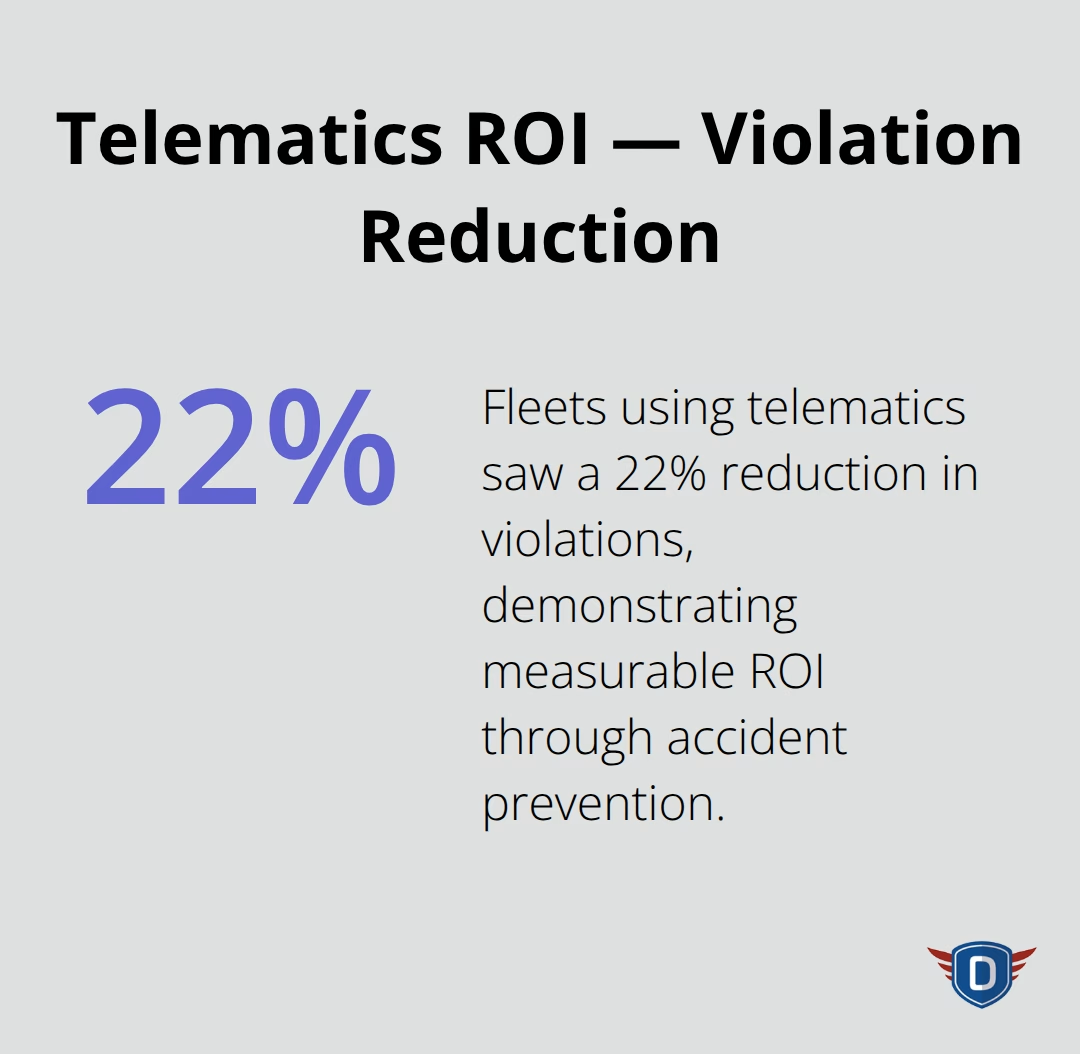
Fleets using telematics to monitor driver behavior saw a 22% reduction in violations, which means the technology pays for itself through accident prevention alone. Track your fleet’s accident frequency and severity month over month, and tie this directly to your program investments.
When accidents decline, share those wins with your team and connect them explicitly to the safety initiatives you implemented. This builds credibility and keeps drivers engaged in the process.
Prove Impact Through Driver-Specific Outcomes
Your program succeeds or fails based on whether your specific drivers change their specific behaviors on your specific routes, not on whether you checked compliance boxes. A driver who reduced hard braking incidents from eight per week to three per week represents real progress and genuine risk reduction. Another driver who maintained perfect seatbelt compliance for three consecutive months earned recognition and demonstrated that your accountability system works. These individual transformations, multiplied across your fleet, create the safety culture that prevents crashes and protects your team.
Final Thoughts
An effective driver safety program rests on three pillars: clear policies enforced consistently, continuous monitoring of driver behavior, and measurable outcomes that prove your investment works. Vehicle incidents cost companies an average of $70,000 per incident, and crashes remain the leading cause of work-related deaths-making this investment non-negotiable. Without all three pillars, you have compliance theater instead of genuine risk reduction.
Starting your program requires three immediate steps: write a formal safety policy signed by top leadership and distribute it to every driver with documented acknowledgment, assign one person full responsibility for overseeing the program and holding drivers accountable, and implement continuous MVR monitoring and telematics to close visibility gaps between annual reviews. These foundational steps cost far less than a single serious accident and position your fleet for measurable improvement within months. Your drivers need ongoing training that reinforces safe habits, not one-time onboarding that fades quickly-and at floridanewdriver.com, we understand that effective driver education combines clear instruction with real-world scenarios that drivers actually encounter through our comprehensive driver improvement courses.
The path forward is clear: build your driver safety program on data, enforce it consistently, and measure what matters. Your team’s safety and your company’s financial health depend on it.