One bad decision behind the wheel can derail your entire life. A single instance of impaired driving in Florida leads to thousands in fines, license suspension, and skyrocketing insurance costs that follow you for years.
We at floridanewdriver.com know that impaired driving education in Florida isn’t just about following the law-it’s about understanding the real consequences before you get behind the wheel. This blog post breaks down exactly what’s at stake and how education changes behavior on Florida roads.
What Impaired Driving Costs You in Florida
A first-time DUI in Florida triggers a minimum six-month license suspension, fines starting at $500 for a BAC between 0.08 and 0.15, and mandatory substance abuse education that costs hundreds more. If your BAC exceeds 0.15 or you refused a breath test, fines jump to $1,000 minimum. Court costs, attorney fees, and administrative processing add another $1,500 to $3,000 to your bill. The financial hit doesn’t stop there. Florida law requires an ignition interlock device on your vehicle for at least six months, costing $60 to $100 monthly for installation and monitoring.
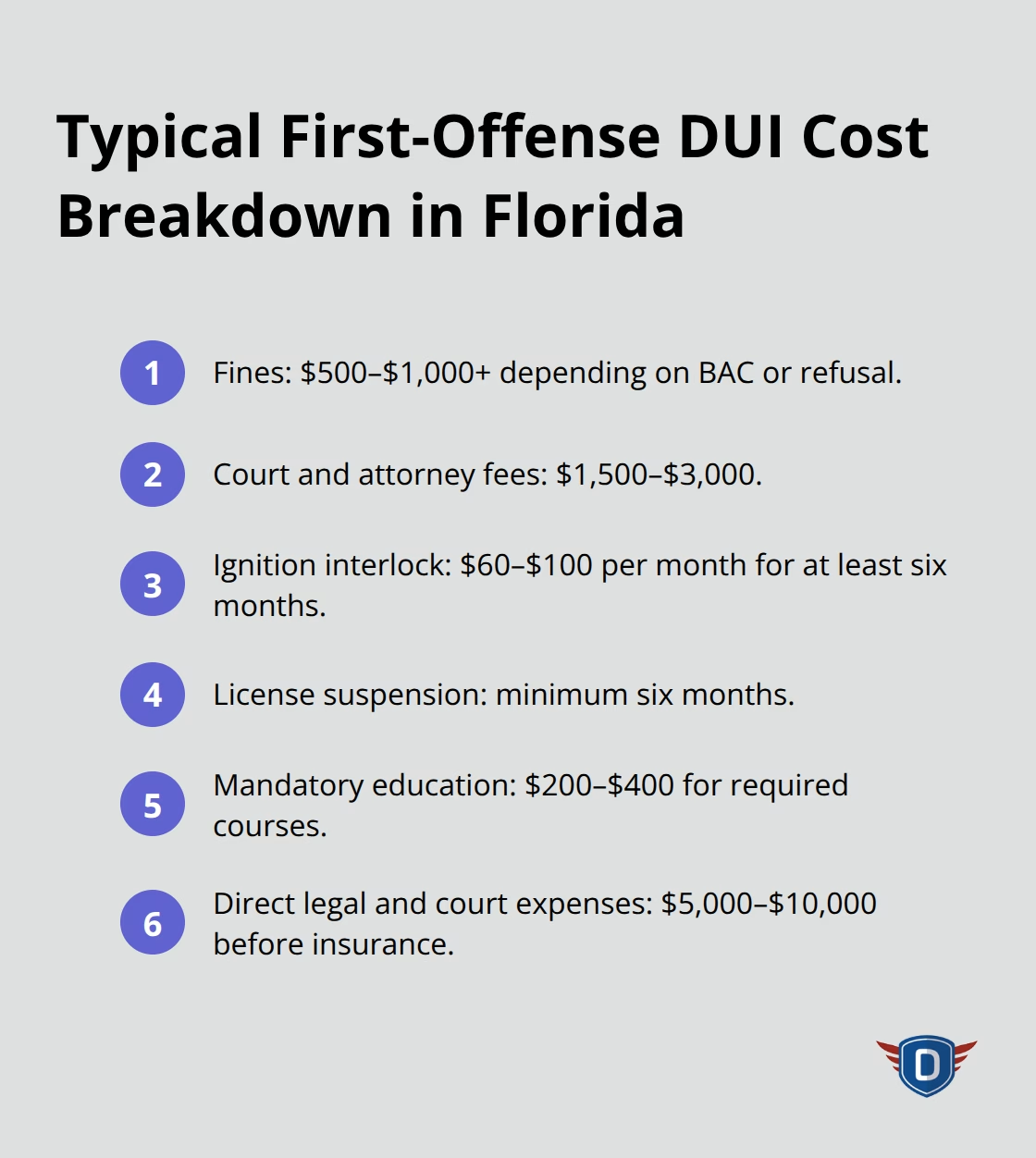
A single impaired driving incident easily totals $5,000 to $10,000 in direct legal and court expenses before insurance even enters the picture.
Insurance becomes your biggest long-term expense
Your auto insurance rates spike immediately after a DUI conviction. Most insurers classify you as high-risk, raising your premiums significantly for three to five years. If you were paying $1,200 annually before the conviction, expect substantially higher costs yearly. Some insurers drop you entirely, forcing you to find SR-22 high-risk coverage at even steeper rates.
Employment and housing suffer after conviction
A suspended license makes your job harder to keep, especially if your work requires driving. Even jobs that don’t involve operating a vehicle often require a clean driving record for background checks. A DUI conviction appears on your criminal record permanently in Florida, affecting job applications for positions in healthcare, education, transportation, and government. Landlords screen for criminal history too, limiting your housing options and sometimes requiring higher deposits.
Your independence and relationships take a hit
A suspended license means you depend on others for rides to work, medical appointments, and daily errands-a reality that strains relationships and independence. If you live outside a major city where public transit is limited, losing driving privileges becomes genuinely crippling. Professional licenses in fields like nursing, real estate, and teaching face suspension or revocation after a DUI conviction. Your family’s stability suffers when breadwinner income drops due to job loss or reduced hours. Relationships deteriorate under the stress of legal battles, financial strain, and the shame that follows. The emotional toll of a DUI conviction often exceeds the financial cost.
How impaired driving education changes what happens next
Florida’s impaired driving education requirement exists because one decision behind the wheel reshapes your entire trajectory. These courses teach you to recognize the decision points before impairment clouds your judgment, giving you the knowledge to make choices that protect your freedom, your finances, and your future. Understanding what impairment actually does to your brain and body-how it slows your reaction time and distorts your judgment-is the first step toward making better decisions. The next section explains exactly how impaired driving affects your decision-making behind the wheel and why education interrupts that dangerous chain of events.
How Impaired Driving Damages Your Brain’s Safety System
Alcohol and Drugs Slow Your Reaction Time
Impairment doesn’t just make you feel different-it systematically dismantles the mental processes that keep you alive on the road. The National Institute on Alcohol Abuse and Alcoholism confirms that alcohol slows reaction time, impairs judgment, and degrades motor control. At a blood alcohol content of 0.05, your reaction time slows roughly 20 percent, meaning you need an extra car length or two to stop when danger appears. At 0.08, the legal limit in Florida, your ability to track moving objects deteriorates, your peripheral vision narrows, and your concentration fractures. You miss the brake lights ahead because your brain cannot process information fast enough. You misjudge the speed of oncoming traffic at intersections because impairment distorts your perception of distance and motion.
How Impairment Destroys Your Decision-Making
The CDC reports that 29 percent of drivers aged 15 to 20 killed in crashes had been drinking, and these deaths were not accidents-they were failures of impaired decision-making stacked on top of each other. Your brain under impairment does not just process information slower; it makes worse choices with that slower information. You accelerate when you should brake. You merge without checking your blind spot.
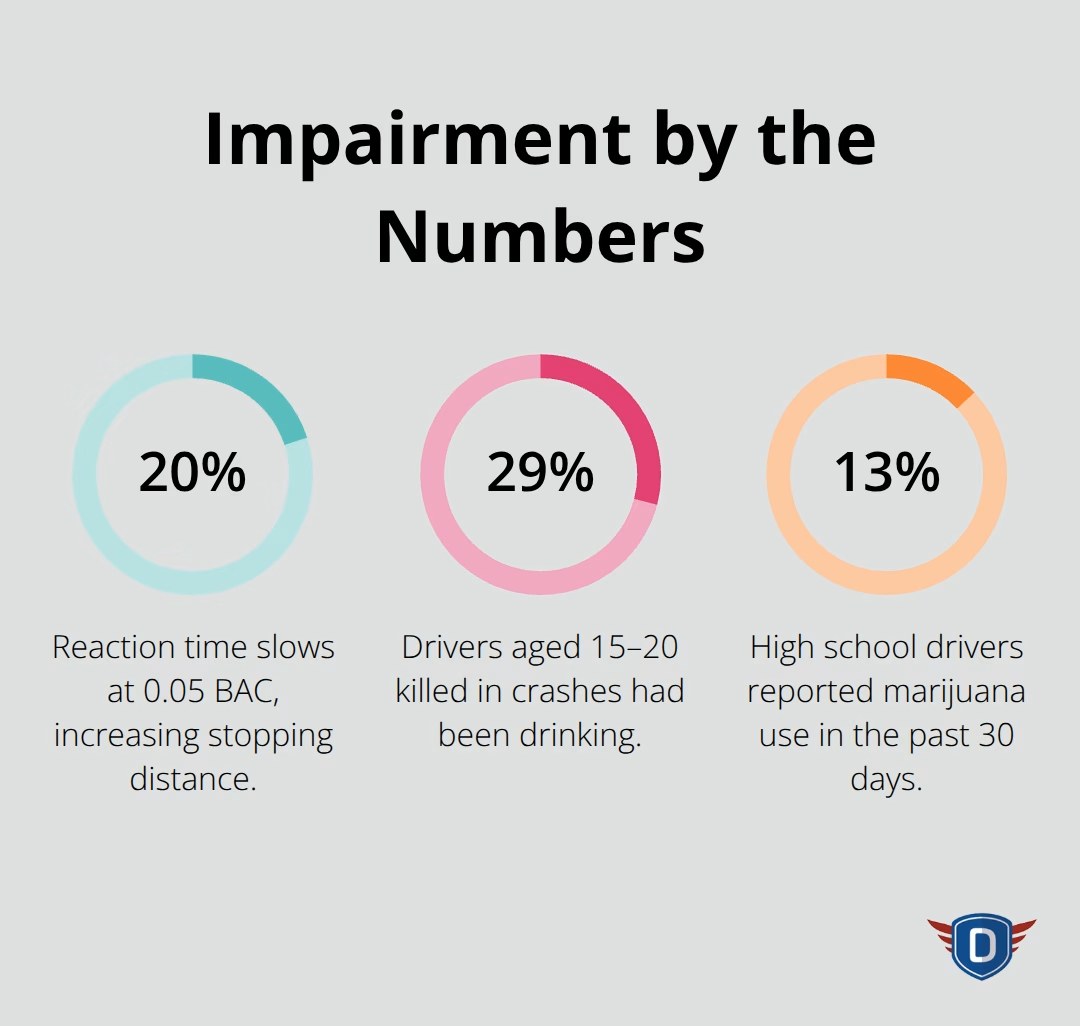
You take a turn too fast because your judgment of road conditions has evaporated. Marijuana compounds this problem further. About 13 percent of high school students who drove reported marijuana use in the past 30 days, and combining marijuana with alcohol multiplies impairment effects beyond simple addition.
The Decision Chain Begins Before You Start the Engine
The real danger emerges in how impairment hijacks your decision chain before you even start the car. Adolescents who binge drink in the past 30 days are 3.17 times more likely to drive impaired and 6.12 times more likely to ride with an impaired driver-meaning impairment affects judgment about whether to drive, not just how you drive once behind the wheel. You convince yourself you are fine to drive when you are not. You ignore the voice suggesting you call a rideshare. You rationalize that the distance is short or the roads are empty.
Education Interrupts the Dangerous Pattern
Impaired driving education interrupts this chain at critical moments. The courses teach you to recognize decision points before impairment clouds your judgment. Understanding exactly how alcohol and drugs degrade reaction time, peripheral vision, and judgment gives you concrete reasons to make different choices. You avoid driving impaired because you understand the mechanics of why it kills people, not because you fear punishment. This shift in perspective-from external consequence to internal understanding-is what transforms behavior on Florida roads.
The next section examines Florida’s legal framework and how education requirements work to reinforce these safer decisions before they become habits.
Florida’s DUI Laws and What Education Actually Changes
License Suspension Strips Your Freedom Immediately
Florida’s first DUI conviction demands more than paying fines and sitting through traffic school. The state imposes a mandatory license suspension, meaning you cannot legally drive regardless of circumstances. If your BAC exceeded 0.15 or you refused the breath test, that suspension extends longer. The Florida Department of Highway Safety and Motor Vehicles enforces these suspensions strictly, and driving with a suspended license carries separate criminal charges that compound your legal problems. Beyond suspension, Florida requires completion of a substance abuse education course before you regain driving privileges. This is not optional. Courts will not reinstate your license without proof of completion, making education the mandatory bridge between your conviction and your freedom to drive again.
Court-Ordered Education Costs Add Up Fast
The substance abuse course typically costs $200 to $400, adding to the financial burden you already carry from fines and legal fees. Court-ordered traffic school in Florida comes in different forms depending on your violation severity. For first-time DUI offenders, the 4-hour Traffic Law and Substance Abuse Education course satisfies the state requirement, though courts sometimes mandate the 8-hour Intermediate Driver Improvement course for more serious cases or repeat offenders. The 12-hour Advanced Driver Improvement course applies to drivers facing license suspension or revocation due to accumulated points.
How Education Interrupts Impaired Driving Decisions
Florida-approved programs meet these specific legal requirements with certificates reported directly to the FLHSMV so you stay compliant without extra paperwork. The curriculum blends clear explanations of how impairment destroys decision-making with Florida traffic laws and defensive driving techniques that actually change behavior. Courses cover how alcohol and drugs affect reaction time and judgment, strategies for avoiding impaired driving situations, and understanding the mechanics of why these decisions matter. Completing your court-ordered education through an approved provider removes the guesswork about whether you meet legal requirements correctly.
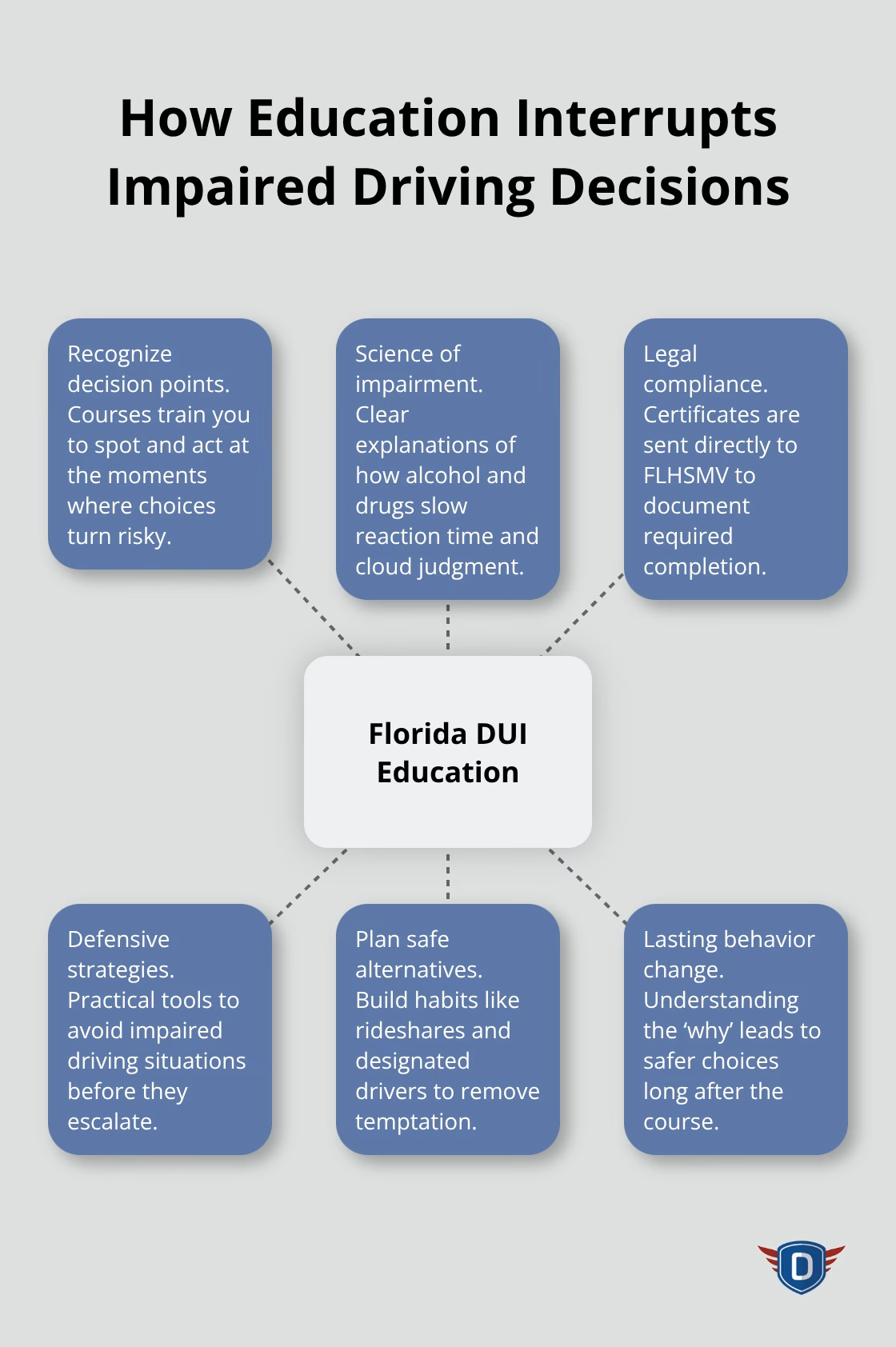
Education works because it transforms your understanding of impairment from abstract fear into concrete knowledge about what happens to your brain and body behind the wheel.
Final Thoughts
Education transforms impaired driving from a distant consequence into concrete knowledge about what happens inside your body and brain. When you understand that alcohol at 0.05 BAC slows your reaction time by 20 percent, you stop rationalizing that one drink is harmless. When you recognize that impairment hijacks your decision-making before you even turn the key, you see the real danger point arrives earlier than you thought.
Impaired driving education Florida programs work because they interrupt the chain of bad decisions at the moment it matters most. Our Florida-approved courses at floridanewdriver.com report certificates directly to the FLHSMV, removing the guesswork about compliance while delivering knowledge that sticks with you long after completion. Whether you need a 4-hour Basic Driver Improvement course or a deeper 8-hour program, our self-paced online format fits your schedule and actually changes how you think about driving.
One decision behind the wheel reshapes your entire life, and the financial penalties, license suspension, employment consequences, and relationship strain that follow impaired driving are not abstract possibilities. Education gives you the concrete understanding to make different choices, not because you fear punishment, but because you understand exactly why those choices matter. Your next decision about whether to drive impaired determines whether you keep your independence, your job, and your future intact.