Getting your driver’s license opens doors, but it also comes with legal obligations you need to understand from day one. Florida has specific requirements for new drivers, and skipping the details could cost you money or worse.
We at floridanewdriver.com have created this roadmap to walk you through every new driver legal requirement you’ll face. From licensing to insurance to traffic laws, we’ll break down what matters most.
Getting Your Florida License as a New Driver
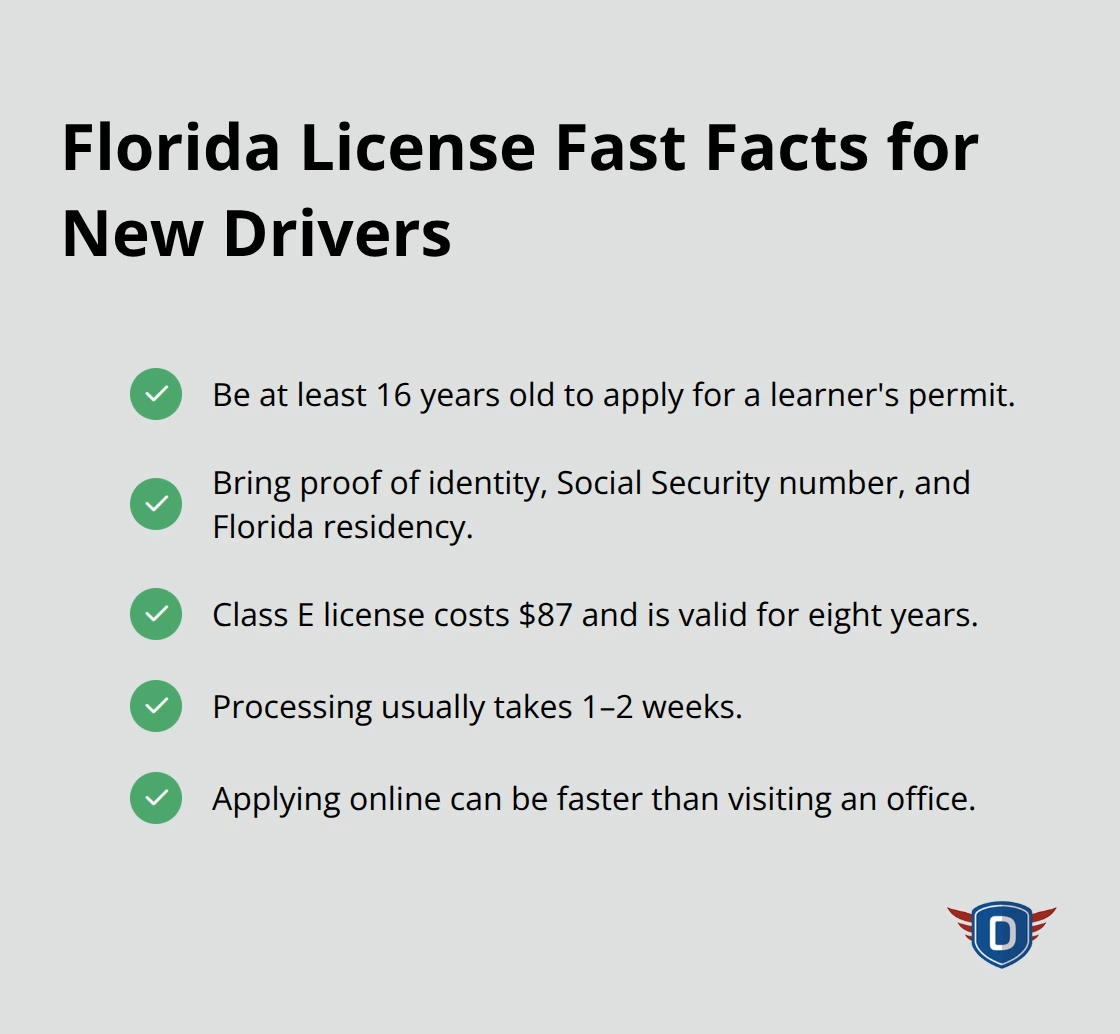
Florida requires you to be at least 16 years old to apply for a learner’s permit. The Florida Department of Highway Safety and Motor Vehicles (FLHSMV) sets these age thresholds to give new drivers adequate time behind the wheel with supervision before operating independently. You’ll need to provide proof of identity, Social Security number, and Florida residency when you apply-bring your birth certificate, passport, or state ID along with two documents showing your current address like a utility bill or lease agreement. The FLHSMV charges $87 for a Class E license valid for eight years, though prices vary slightly depending on your age and license type. Processing typically takes 1 to 2 weeks, but applying online through the FLHSMV website speeds things up considerably compared to visiting a license office in person.
Written Exam Requirements
The written knowledge test consists of 50 multiple-choice questions about Florida traffic laws, safe driving practices and identifying traffic controls, and you must answer at least 40 correctly to pass. The test focuses on road signs, traffic laws, safe driving practices, and right-of-way rules specific to Florida conditions. You get only one attempt per visit to the FLHSMV office, so studying the official handbook thoroughly before your appointment matters far more than cramming. Many new drivers use practice tests available through the FLHSMV website or third-party resources to identify weak areas and build confidence. Test centers administer the exam in English, Spanish, Creole, and other languages, so language barriers won’t prevent you from obtaining your license.
Behind-the-Wheel Test and Driving Skills
Florida’s driving test evaluates your ability to handle basic vehicle control, follow traffic laws, and respond appropriately to road conditions with an FLHSMV examiner. The test includes tasks like parallel parking, lane changes, turns, and stops at traffic signals-all performed in actual traffic rather than a closed course. You must bring a vehicle that’s registered, insured, and in safe working condition, as examiners will not test you in an unsafe car. Common reasons for failing include improper mirror checks, failure to signal turns, speeding, or unsafe parking techniques. Most new drivers pass on their second or third attempt, so a failed test simply means you need more practice before rescheduling.
What Happens After You Pass
Once you pass both the written and driving tests, the FLHSMV issues your Class E license, which permits you to operate a vehicle independently throughout Florida. Your new license arrives by mail within 1 to 2 weeks and remains valid for eight years. However, passing your driving test marks the beginning of your legal responsibilities on the road, not the end of your learning journey. Insurance requirements, traffic laws, and safe driving practices all take effect immediately once you hold that license.
Insurance and Registration Obligations for New Drivers
Florida law requires you to carry liability insurance before operating any vehicle on public roads, and this requirement takes effect the moment you pass your driving test. Most states, including Florida, mandate a minimum of 10/20/40 coverage, meaning $10,000 in bodily injury per person, $20,000 total per accident, and $40,000 in property damage.
What New Drivers Pay for Insurance
New drivers aged 16 to 19 pay roughly double or triple what a 30-year-old driver pays for the same coverage. Your premium depends on multiple factors beyond age: the vehicle’s make, model, year, mileage, your location within Florida, and your driving history all influence what you’ll pay.
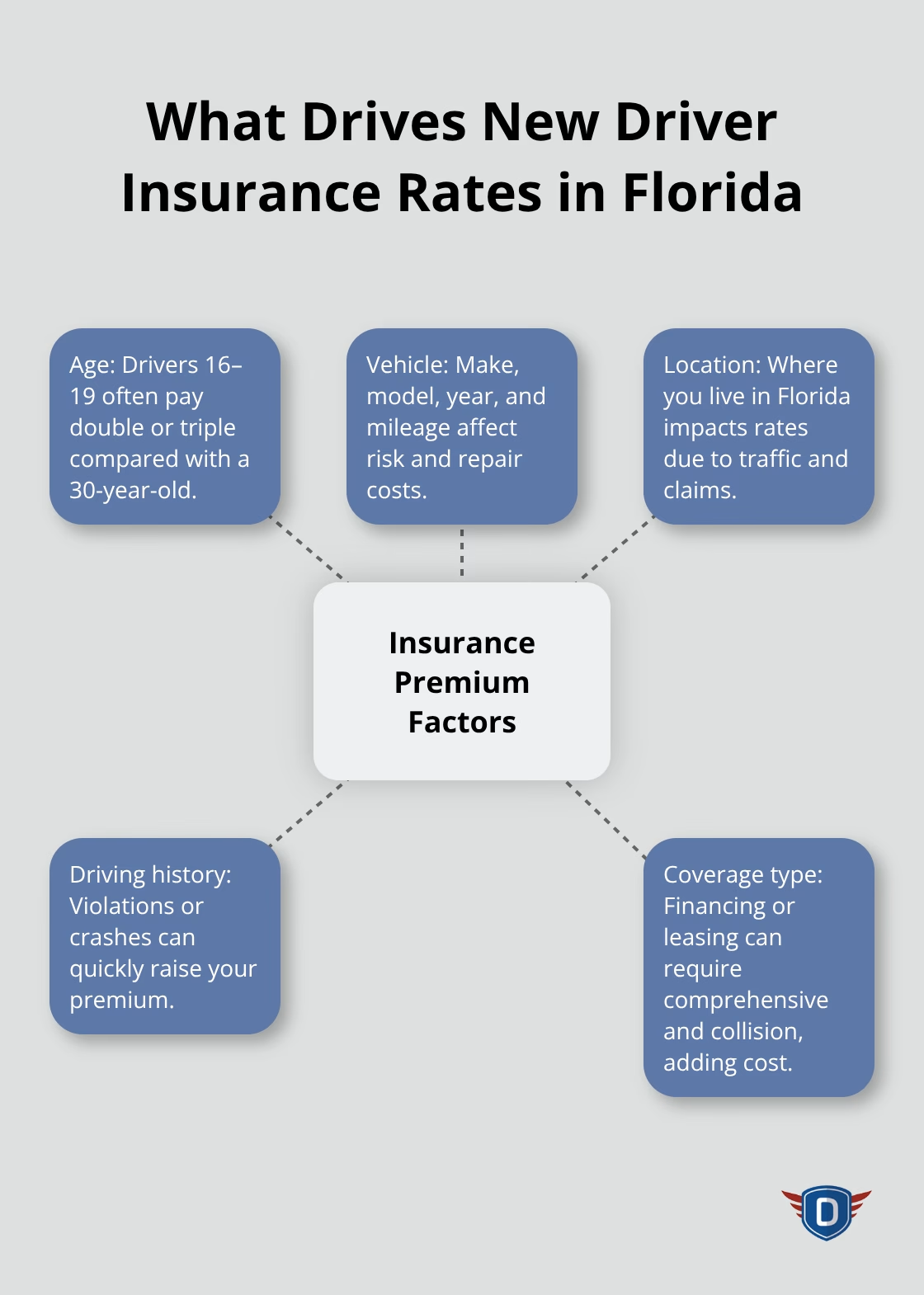
If you finance or lease your vehicle, your lender will require comprehensive and collision coverage in addition to liability, which increases your total cost but protects both you and the lender if your car is damaged or stolen.
Strategies to Lower Your Premium
You can reduce your premium by increasing your deductible from $500 to $1,000, though this means paying more out of pocket if you file a claim. Completing an approved defensive driving course qualifies you for insurance discounts in most cases, potentially saving up to 10% on applicable coverages.
Usage-based insurance programs that monitor your actual driving behavior reward safe habits with rate reductions, making them worthwhile if you drive cautiously. These programs track your acceleration, braking, and speed patterns to determine your discount eligibility.
Vehicle Registration Requirements
Vehicle registration in Florida happens through the Department of Motor Vehicles, and you cannot legally drive without it. The registration fee for a standard passenger vehicle runs approximately $226 for the first year and $176 for renewals, though this varies based on your vehicle’s age and type.
When registering, bring proof of ownership like the title or bill of sale, proof of Florida residency, proof of insurance, and your driver’s license. The FLHSMV processes registration applications online, by mail, or in person at any license office, with online applications typically completing within 1 to 2 weeks.
Penalties for Missing Registration or Insurance
Your registration tags arrive by mail and must display on your rear license plate. Failure to register your vehicle or displaying expired tags results in fines starting at $83 and can escalate if you ignore the citation.
You cannot register a vehicle without proof of insurance, and you cannot legally drive without both active registration and valid insurance. This creates a straightforward sequence for new licensees: purchase insurance first, then register your vehicle, then drive legally. Skipping either step exposes you to penalties ranging from fines to vehicle impoundment.
Now that you understand the financial and legal obligations tied to vehicle ownership, the next critical area involves how you actually operate that vehicle on Florida roads-and the traffic laws that govern every decision you make behind the wheel.
How Traffic Laws and Penalties Protect Florida Roads
Florida’s traffic laws exist for one reason: to prevent crashes and deaths. New drivers often underestimate how quickly a single violation escalates into serious consequences, both legally and financially. Speed limits in residential areas sit at 25 mph for a specific reason-the National Highway Traffic Safety Administration found that pedestrians have a 90 percent chance of surviving a crash involving a vehicle traveling 20 mph or below, they have less than a 50 percent chance of surviving crashes at higher speeds.
Speed Violations and Their Costs
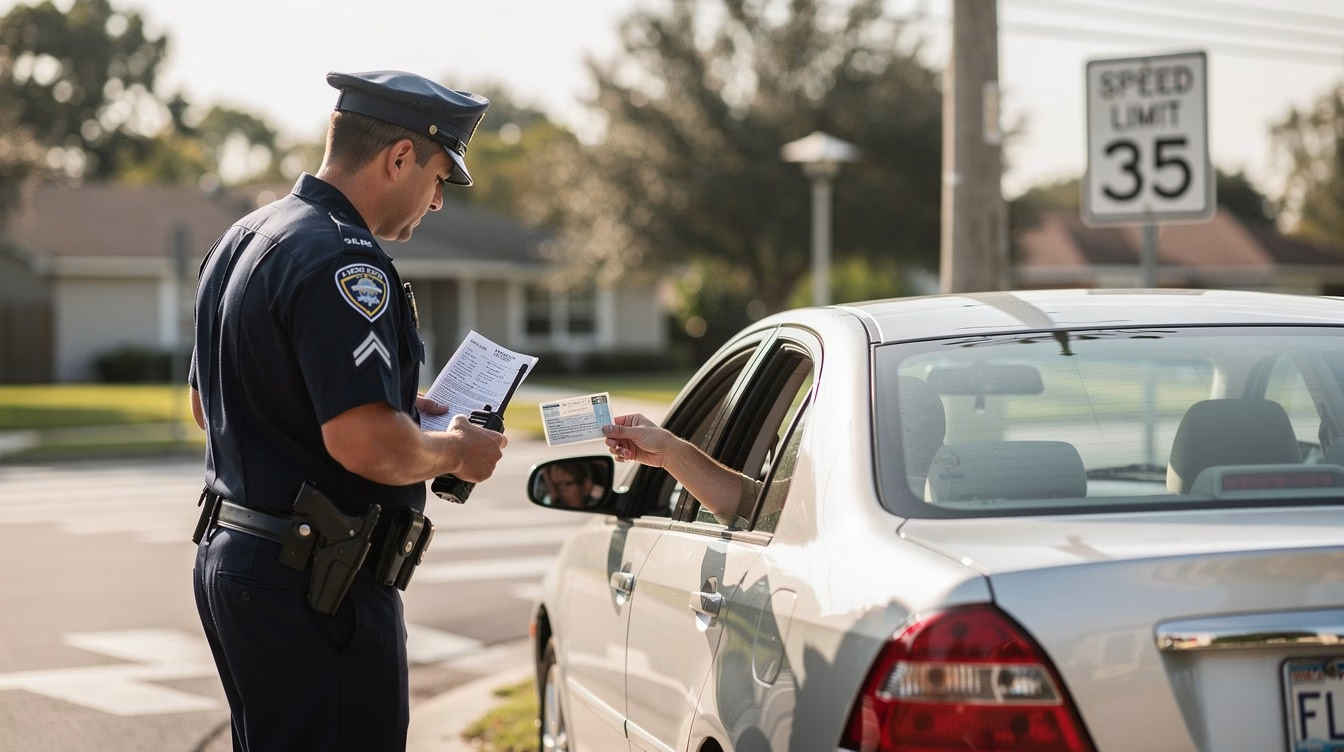
Exceeding the posted limit by just 10 mph in a school zone or residential area transforms a minor infraction into a criminal offense in Florida. You cannot treat speed limits as suggestions; they’re enforced through cameras, patrol cars, and citations that start at $130 for exceeding limits by 1�5 mph and jump to $400+ for speeds 26 mph or higher over the limit. School zones carry double fines, and construction zones impose triple penalties, meaning a 35 mph zone violation in a school zone costs far more than the base fine.
Traffic Signals and Stop Signs
Traffic signals and stop signs function identically to speed limits-they’re absolute requirements, not guidelines. Running a red light or stop sign costs $165 minimum and adds points to your license that directly increase your insurance premiums. Most insurance companies raise rates by 10�25% after a single moving violation, and that increase persists for three to five years regardless of your subsequent driving behavior.
Distracted Driving: The Most Dangerous Choice
Distracted driving represents the single most dangerous choice you can make behind the wheel, and Florida law treats it seriously. Drivers under 18 cannot use a cell phone while driving under any circumstances, whether handheld or hands-free, except to call 911 in an emergency-violation brings a $30 fine and points on your license. Drivers 18 and older face $165 fines for texting, reading, or accessing the internet while driving, plus points that trigger insurance increases.
The data is stark: according to the Centers for Disease Control and Prevention, about 3,000 people die in crashes involving a distracted driver. One text message read or sent takes your attention from the road for an average of 4.6 seconds-at 55 mph, that’s equivalent to driving the length of a football field with your eyes closed.
Other Moving Violations and Point Accumulation
Moving violations beyond speeding and distracted driving include improper lane changes ($165), failure to signal ($130), and unsafe passing ($165). Each violation adds points to your driving record, and accumulating 12 points within 12 months triggers a license suspension. Accumulating 18 points within 18 months results in a 10-day suspension, 24 points within 36 months brings a 30-day suspension, and 36 points within 36 months leads to a one-year suspension.
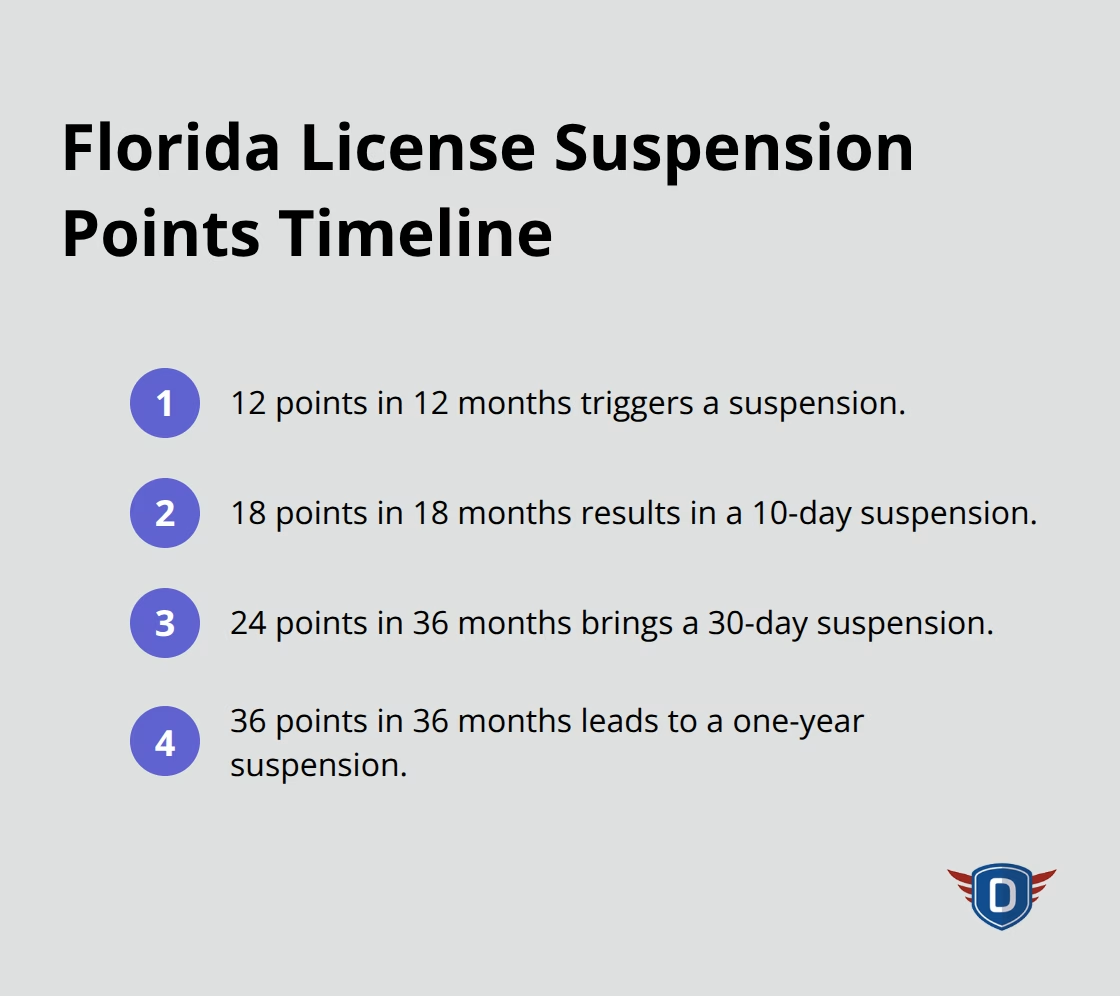
A suspended license means you cannot legally drive anywhere, and driving with a suspended license is itself a criminal offense carrying jail time, fines up to $1,000, and vehicle impoundment. Understanding the point system helps you recognize how quickly violations compound and why every decision behind the wheel matters for your driving record and safety.
Final Thoughts
Your Florida driver’s license represents a major milestone, but the real responsibility begins the moment you pass that driving test. New driver legal requirements span licensing, insurance, registration, and traffic law compliance-each one carries real consequences if you ignore it. The roadmap we’ve outlined walks you through every obligation you’ll face, from the $87 license fee to the $226 registration cost to the insurance premiums that protect you financially on the road.
Your success as a new driver depends on understanding that traffic laws exist to save lives, not to inconvenience you. Speed limits, traffic signals, and distracted driving restrictions aren’t arbitrary rules-they’re based on crash data and fatality statistics that show exactly how decisions behind the wheel affect survival rates. A single moving violation costs $130 to $400 in fines, raises your insurance by 10�25% for three to five years, and adds points that compound toward license suspension.
We at floridanewdriver.com offer Florida-approved traffic school programs designed to help you understand safe driving practices and current traffic laws, whether you’re working to reduce points or simply want to become a more confident driver. Your driving record follows you for years, affecting insurance rates, employment opportunities, and your ability to maintain a valid license. Start strong by respecting the rules, staying focused behind the wheel, and recognizing that safe driving protects not just you but everyone sharing Florida’s roads.