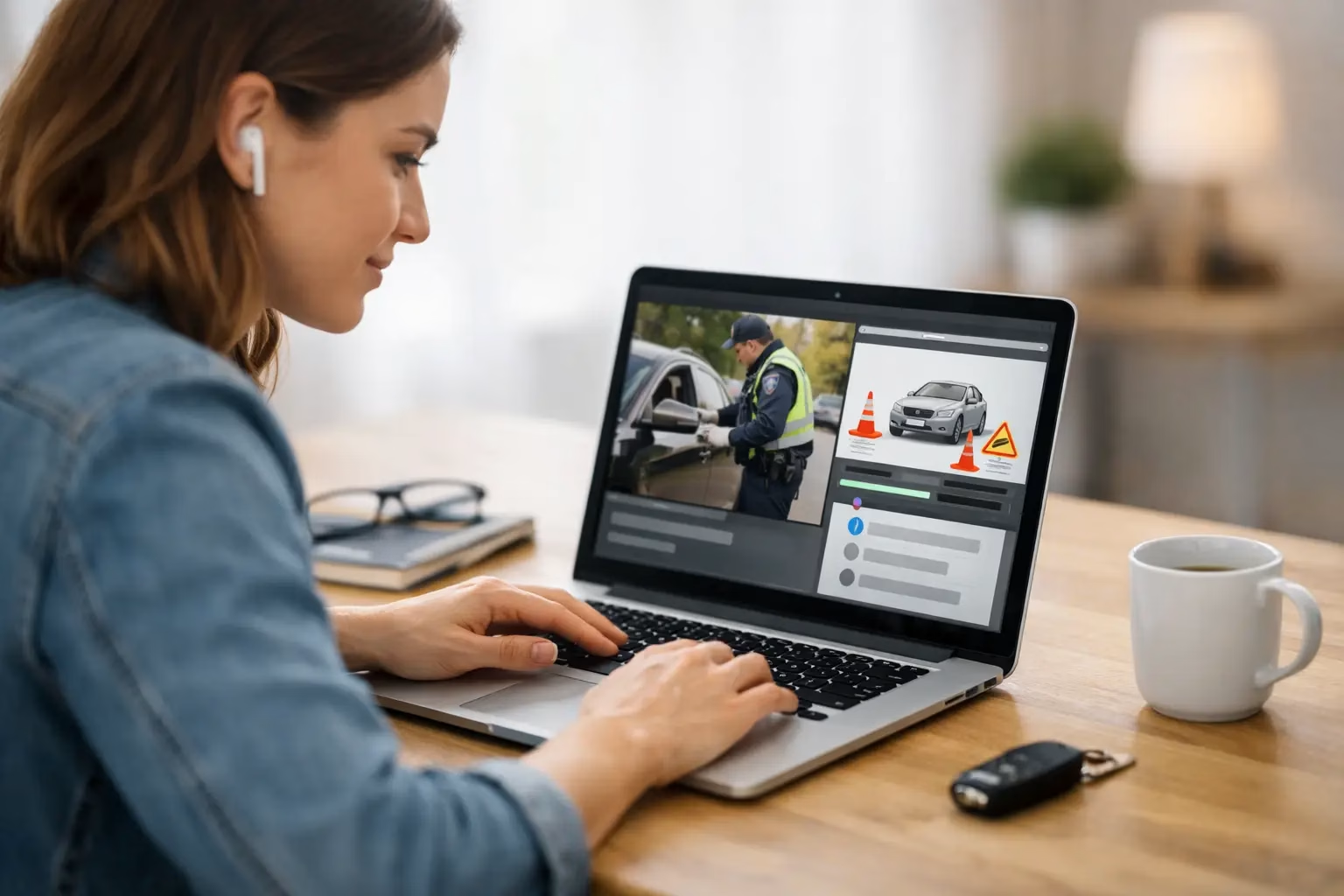
A traffic ticket rarely shows up at a convenient time. You are busy, the deadline is real, and the last thing you want is to sign up for a course that does not meet court or DMV requirements. That is why choosing the right online course for traffic ticket issues matters. The right course can help you meet a legal requirement, stay on schedule, and avoid extra stress.
For many drivers, the first question is simple: can a ticket really be handled with an online class? Sometimes yes, but it depends on the state, the court, the violation, and your driving record. Online traffic school is common across the US, but approval rules are never one-size-fits-all.
When an online course for traffic ticket is the right option
An online course may be allowed when a court orders traffic school, when a state permits a driver improvement course to satisfy a citation-related requirement, or when a driver wants to address points or eligibility issues tied to a minor violation. In some cases, the course is voluntary. In others, it is mandatory.
The details matter. A speeding ticket may qualify in one state but not another. A first offense may be eligible, while repeat violations may not. Some courts accept online completion automatically. Others require you to choose from a list of approved providers.
This is why approval status should come first. Convenience matters, but not more than compliance. If the course is not accepted by the court, DMV, or supervising agency, finishing it does not solve the problem.
What to verify before you enroll
Before you pay for any course, confirm exactly what your citation requires. Start with the notice you received. Look for the court name, case instructions, due date, and any language about traffic school, driver improvement, or defensive driving.
Next, verify who must accept the course. Sometimes it is the court. Sometimes it is the state DMV. Sometimes it is an insurance-related or licensing requirement connected to the violation. The approval authority determines what course you actually need.
You should also check the course type. Not every traffic-related class serves the same purpose. A basic driver improvement course, a defensive driving course, and a specialized safety class may all sound similar, but they can satisfy different requirements. Choosing the wrong format can create delays you do not need.
Timing is another practical issue. Self-paced online learning is helpful, but a deadline is still a deadline. If the court requires completion by a certain date, give yourself enough time to register, study, pass any required assessments, and make sure the completion is reported correctly.
What a good online traffic ticket course should include
A reliable course should be approved where required, easy to access, and clear about what it does and does not cover. That sounds basic, but it is where many drivers run into trouble. If a provider is vague about approval, reporting, fees, or completion steps, that is a warning sign.
The strongest option is a course built for compliance first and convenience second. That means transparent pricing, no hidden charges at the end, clear instructions, mobile-friendly access, and a support team that can answer practical questions. You should know how long the course takes, whether there are quizzes, how completion works, and what proof you will receive.
Flexibility also matters. Most people taking a ticket-related course are fitting it around work, family, or school. A 24/7 self-paced format is valuable because it lets you make progress without rearranging your entire week. You can complete a lesson in the evening, during a break, or from a phone or laptop when time opens up.
That said, convenience should not be confused with speed promises that sound too good to be true. A legitimate course still has required content and completion standards. If a provider suggests you can skip sections or rush through a state-regulated class unrealistically fast, be cautious.
How the process usually works
In most cases, the process is straightforward once you know your requirement. You select the approved course, register with your personal and citation details, complete the material at your own pace, and finish any final quiz or exam if required. After that, the provider issues proof of completion or reports it to the proper authority, depending on the state and program rules.
Where drivers get tripped up is the paperwork. Your name should match your official record. Citation information should be entered correctly. If the course asks for a case number, driver license number, or county, accuracy matters. Small errors can slow down reporting.
It is also smart to keep your own records. Save confirmation emails, payment receipts, and completion documents. Even when providers report directly, having your own proof gives you a backup if a court clerk or agency needs verification.
The trade-offs drivers should understand
Online courses are convenient, but they are not identical to every in-person option. For many drivers, that is a benefit. You can work on the course when it fits your day, avoid travel, and complete the requirement from home. For people with tight schedules, that is often the deciding factor.
Still, some people prefer live classroom instruction because it gives them a set timeline and direct interaction. If you tend to procrastinate, a self-paced course may feel easier to postpone than it should. The best format depends partly on your learning style and partly on the rules tied to your citation.
There is also a difference between satisfying a requirement and improving driving habits long term. A compliant course should do both, but some drivers focus only on getting past the deadline. That is understandable, but the practical safety value matters too. A well-designed course helps you avoid repeat violations, not just complete a task.
Why approval and reporting are more important than price alone
Price matters, especially when a ticket has already created an unexpected expense. But the cheapest course is not always the lowest-cost choice in practice. If a class is not accepted, if fees appear late in the process, or if completion reporting is confusing, the real cost goes up fast.
A better standard is value. Look for straightforward pricing, clear state or court acceptance information, device compatibility, and refund protection where offered. Those details reduce risk. They also make the process more manageable when you are already dealing with a citation.
Providers such as floridanewdriver.com build their course options around those real-world concerns: approval, flexibility, transparent fees, and accessible support. For drivers who need to meet a requirement efficiently, those basics are not extras. They are the service.
FAQ
Can I take an online course for a traffic ticket in any state?
No. State rules vary, and some courts have their own approval standards.
Always check the citation instructions and confirm whether your court or DMV accepts online completion.
Is an online traffic course the same as defensive driving?
Not always. Defensive driving is one type of course, but ticket-related requirements may call for a different approved program.
The course name matters less than whether it satisfies your specific requirement.
Will taking a course dismiss my ticket?
Sometimes, but not automatically. Ticket dismissal depends on your court, state law, eligibility, and the type of violation.
A course can be part of the process without guaranteeing the same result in every case.
How long does an online traffic ticket course take?
It depends on the state and course type. Some courses have a fixed minimum time by law.
Check the listed hours before enrolling so you can plan around your deadline.
Do I need to finish the course all at once?
Usually no. Most online courses are self-paced and let you log in and out as needed.
That flexibility is useful, but you still need to finish before the required date.
How do I know if a provider is approved?
Look for course approval details tied to your state, court, or program requirement. If the provider does not clearly explain acceptance, ask before enrolling.
Approval should be easy to verify, not hidden in vague language.
What happens after I complete the course?
You usually receive a certificate, the provider reports completion, or both. The exact process depends on the program rules.
Keep your records even if reporting is handled for you.
Can I use my phone to take the course?
In many cases, yes. Many modern courses are built for mobile access as well as desktop use.
Still, confirm device compatibility before you start, especially if you plan to complete the whole course on a phone.
A traffic ticket can feel urgent, but the decision itself does not have to be rushed. If you verify the requirement first and choose an approved online course that is built for compliance, the process becomes much simpler and a lot more manageable.