Your insurance renewal just arrived, and the premium is higher than expected. You’ve heard that an online driving course to lower insurance might help, but Florida has several different course pathways, and choosing the wrong one can leave you with a certificate your insurer won’t use.
The practical answer is simple. First identify why you’re taking the course, then confirm your insurer’s rules before enrolling. Florida drivers generally fall into one of three groups: drivers handling a moving violation, drivers voluntarily seeking a defensive-driving discount, and drivers 55 or older pursuing the mature-driver discount.
Why Florida Drivers Choose an Online Driving Course to Lower Insurance
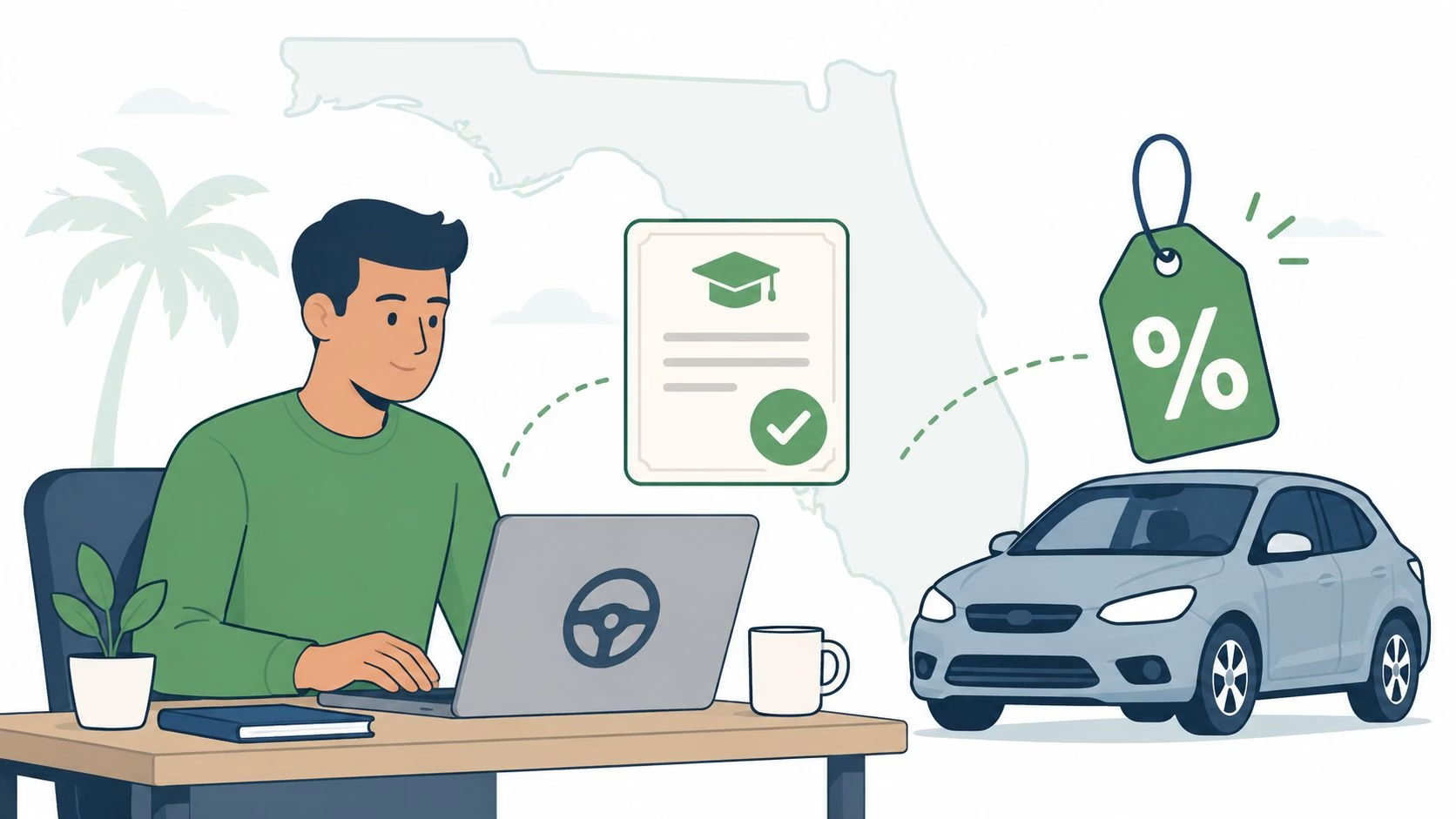
Your renewal notice shows a higher premium, and you are considering an online course. The right choice depends on why you are enrolling. Florida drivers usually follow one of three paths: a Basic Driver Improvement course after an eligible moving violation, a voluntary defensive-driving course for a possible discount, or a mature-driver course for drivers 55 or older.
An online course can support a lower premium only when the course, driver, policy, and documentation meet the insurer’s requirements. Completing the lessons and receiving a certificate does not guarantee savings. Confirm acceptance with your insurer before you pay, and submit the certificate through the method the carrier specifies.
Florida’s driver improvement premium statute permits a premium reduction of up to 10% for qualifying liability, personal injury protection, and collision coverage, subject to the statute’s conditions. The mature-driver route follows separate rules. Florida Highway Safety and Motor Vehicles guidance explains that qualifying older drivers who complete an approved mature driver course must receive an appropriate reduction, while the insurer determines the amount.
Match the course to your situation
- Eligible moving violation: Begin with the four-hour Basic Driver Improvement course. Taken under the correct conditions, it may address points and support an insurance reduction.
- Voluntary discount request: Ask whether your insurer accepts a defensive-driving or driver-improvement course for a clean-record discount. A ticket-related course may not satisfy this separate purpose.
- Age-based discount: If you’re 55 or older, ask for the six-hour Mature Driver Course and confirm its eligibility rules before enrolling.
For practical ways to reduce your premium, use this guide to lowering car insurance rates. Then call your insurer, explain your exact enrollment reason, and confirm the approved course and required proof.
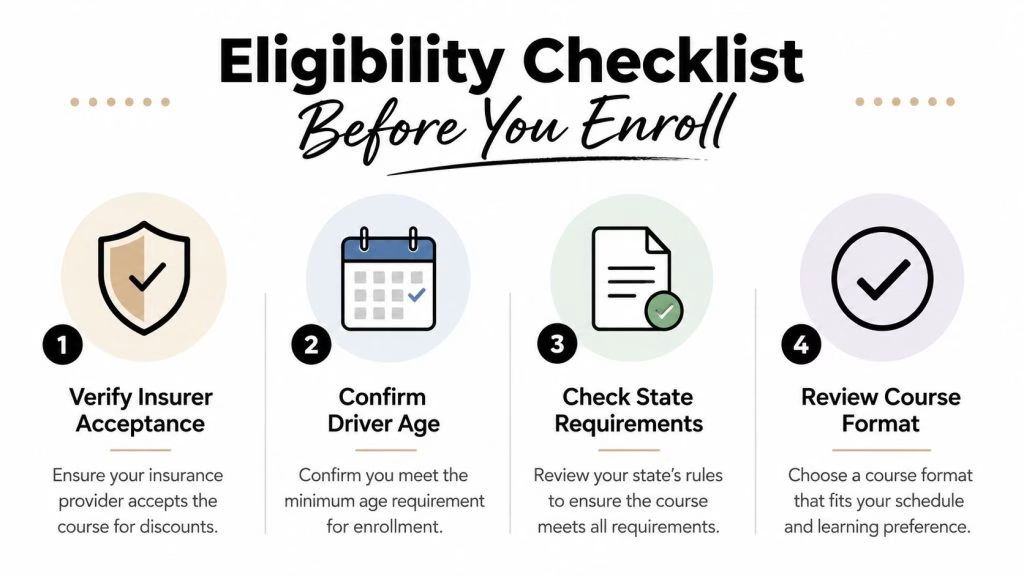
Eligibility Checklist Before You Enroll
A course advertisement cannot confirm your discount. Your insurer can. Before you register, get a clear answer that the carrier accepts an online course from an approved provider and that the discount applies to your policy, driver, and enrollment purpose.
Use this checklist:
- Verify insurer acceptance. Ask, �Will you apply an insurance discount after I complete this specific Florida-approved online course?� Confirm whether you need advance approval, a particular course type, or a certificate sent through a specific channel.
- Choose the correct pathway. If you’re 55 or older, ask whether the six-hour Mature Driver Course is required and whether you meet the insurer’s continuing eligibility rules. The mature-driver route has its own requirements, as noted earlier.
- Check state approval. Confirm that both the provider and course appear in the applicable Florida approval system. A program may satisfy a court or school requirement without qualifying for a voluntary insurance discount.
- Review your license and record. A suspended license, an ineligible citation, or a recent violation can change your course requirement. Explain why you are enrolling instead of requesting a generic �traffic school discount.� The three Florida paths are different: BDI after an eligible ticket, voluntary defensive driving for an insurer-approved discount, and the 55+ mature driver course.
- Confirm certificate delivery. Get the carrier’s email address, portal instructions, or fax details before starting. Record the representative’s name and the call date.
Practical rule: Do not enroll based on the course title alone. Have the insurer confirm the course purpose, approval status, and certificate procedure first.
Stop and verify your options if the carrier does not offer the discount, your license is ineligible, the course lacks approval for your purpose, or the insurer requires another program. You may still need traffic school, but that enrollment may not lower your premium.
Choosing the Right Florida-Approved Course
Florida drivers commonly encounter four different course options. They aren’t interchangeable, and the right choice depends on the event that brought you to traffic school.
| Course | Length | Best Fit | Insurance Discount Trigger |
|---|---|---|---|
| Basic Driver Improvement, BDI | 4 hours | An eligible moving violation, or voluntary driver improvement when the insurer permits it | A qualifying completion may support a reduction, but the insurer sets the amount and requirements |
| Intermediate Driver Improvement, IDI | 8 hours | A court-ordered requirement or a driver who needs more extensive improvement instruction | Only when the insurer specifically accepts it for the applicable discount |
| Aggressive Driver Course | 8 hours | A court or state requirement involving habitual aggressive driving or road-rage behavior | Don’t assume it triggers a voluntary insurance discount. Confirm with the carrier first |
| Mature Driver Course | 6 hours | Drivers 55 and older pursuing the age-based mature-driver pathway | Florida law requires an appropriate reduction for qualifying drivers, with the insurer setting the amount |
The BDI course is the focused option for eligible moving violations. Florida-related course materials identify it as a four-hour program used for certain violations and, in some cases, a possible insurance discount when taken voluntarily, as described by the Florida Safety Council’s Basic Driver Improvement course information.
The IDI and Aggressive Driver Course serve more specialized situations. If a court order names one of them, take the named course. Completing BDI instead may fail the court requirement and won’t automatically create an insurance discount.
For drivers 55 or older, the Mature Driver Course is the clear first choice when the goal is the age-based discount. Review the Florida-approved online traffic school options and match the course to the insurer’s written or recorded instructions before registering.
Registering and Completing the Course Online
Once your insurer confirms the correct pathway, registration should be straightforward. Start with the provider’s course catalog and select the exact program your insurer or court identified. BDISchool offers Florida-approved online options, including BDI, IDI, Aggressive Driver, and Mature Driver courses.
Create your student account with accurate identifying information. Use the same name and details associated with your driver record and insurance policy, because inconsistencies can create unnecessary certificate or reporting problems.
What the online experience looks like
The coursework is self-paced and accessible from a device with an internet connection. That format suits professionals, parents, and shift workers who can’t attend a class at a fixed time.
BDISchool’s available course materials support English, Spanish, and Portuguese, giving non-native English speakers a practical way to study the material carefully rather than rush through unfamiliar terminology. Work through each module, complete the knowledge checks, and follow the provider’s completion requirements.
Expect practical subjects, not a hollow formality. The curriculum addresses defensive driving techniques, right-of-way, safe following distance, impaired driving, distracted driving, crash avoidance, and the effect of driver attitude on decisions. Those topics matter because an insurance discount pathway should also improve the habits that help protect your record.
Set aside uninterrupted time when you can, even though the online format gives you flexibility. Keep your account credentials available, save confirmation emails, and don’t wait until the final moment before a court deadline or policy renewal.
Completion is the point at which the administrative work begins. After you finish the required modules and assessments, obtain the electronic certificate and follow the insurer’s submission instructions immediately.
Getting Your Certificate and Submitting It to Your Insurer
Finishing the course doesn’t automatically change your policy bill. The certificate must reach the insurer, and the carrier must process it under the rules for your discount pathway.
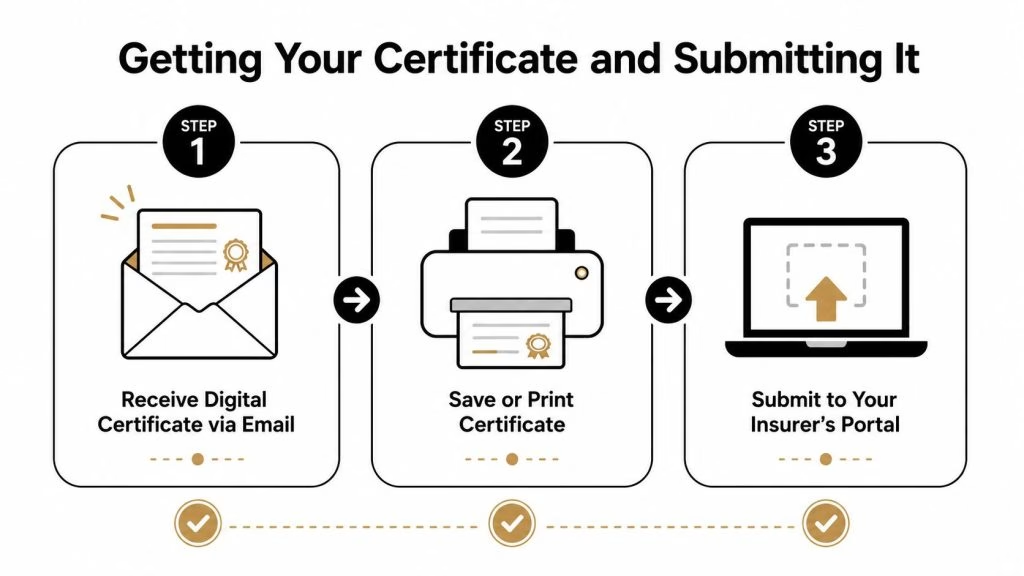
BDISchool issues completion certificates electronically. For qualifying BDI completions, course results can also be reported electronically to FLHSMV, while the certificate may still need to be presented to the court or insurer for the specific purpose involved. Florida’s official course guidance confirms that drivers can provide a successful completion certificate to an insurance company for a possible discount, with the amount determined by the insurer, as explained by FLHSMV’s driver improvement school information.
Use the insurer’s preferred channel
Send the certificate exactly as requested. The carrier may accept an email attachment, fax, or upload through its customer portal. Don’t send it to a general address if the representative gave you a specialized department or upload link.
Use direct wording:
�I completed the Florida-approved [course name] for an insurance discount. Please add the certificate to my policy and confirm whether the discount will apply at the next eligible billing or renewal cycle.�
Save the certificate, transmission receipt, portal confirmation, and call notes. The BDISchool online driving certificate information can help you understand the documentation step, but your insurer controls the final processing requirements.
Ask when the discount should appear and whether the carrier will issue a revised bill or show a policy endorsement. If the discount doesn’t appear when promised, you’ll have a clear record for escalation.
How Much You Save and How Long the Discount Lasts
The discount amount depends on the insurer, course purpose, driver profile, and policy rules. Industry guidance places defensive-driving discounts commonly between 5% and 20%, depending on the state and carrier, as outlined by Insurance.com’s defensive-driving discount guide.
Florida’s mature-driver path is different. Independent Florida insurance summaries describe typical mature-driver savings in the 3% to 10% range, while emphasizing that the carrier sets the exact amount, as discussed in this Florida mature-driver insurance discount guide. Treat those figures as planning ranges, not promises.
A useful market benchmark comes from New York’s official point and insurance reduction program, which specifies a 10% premium reduction for three years. Florida doesn’t use that benchmark to set every insurer’s discount, but it shows why a three-year validity period is a sensible planning assumption, as summarized by Progressive’s defensive-driving discount guidance.
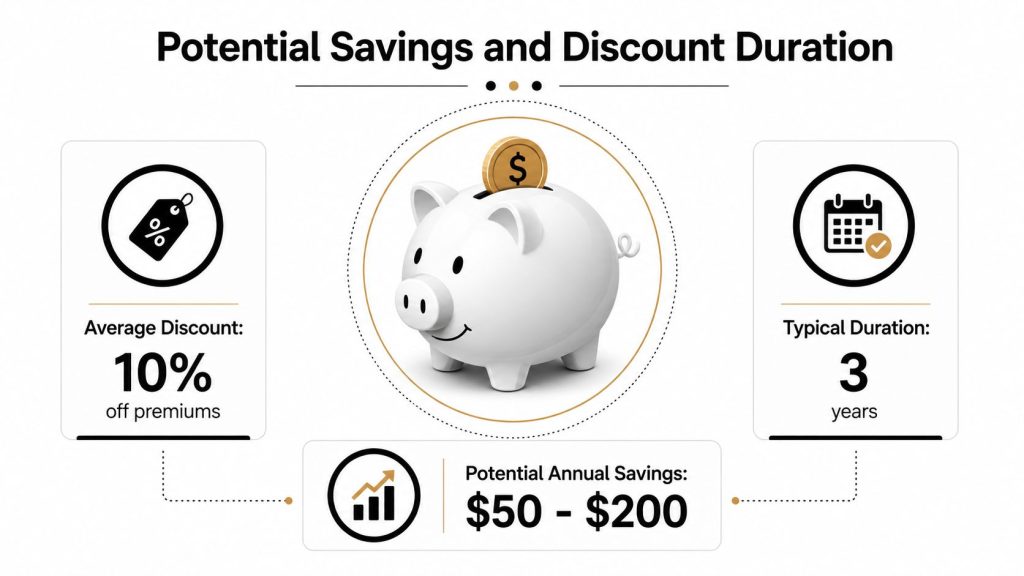
Most drivers should finish before the next policy renewal if they want the discount considered promptly. Some insurers use a validity period of two to five years, and many use about three years, so ask the carrier when the course must be renewed rather than assuming the certificate lasts indefinitely.
For broader premium-management ideas, review these Forever Florida Insurance tips alongside the course discount. The course is one lever, not a replacement for comparing coverage, reviewing deductibles, or checking other carrier-specific discounts.
Use this Florida defensive-driving insurance discount resource to keep the certificate and renewal timing on your radar.
Troubleshooting When the Discount Does Not Show Up
A completed course and a lower premium aren’t the same event. Most problems come from a mismatch between the course, the driver’s eligibility, and the insurer’s processing requirements.
You took the wrong course
The first failure is selecting a course because its title sounds relevant. BDI may fit an eligible moving violation, while the Mature Driver Course fits the age-based route for drivers 55 or older. IDI and the Aggressive Driver Course may satisfy a court or specialized requirement without triggering a voluntary insurance discount.
Call the insurer and ask what the completed course qualifies for. If the carrier says the course doesn’t meet its discount rule, ask whether another approved course is available at the next renewal cycle. Don’t assume a second certificate will fix the issue immediately, because the insurer may restrict when a course can be repeated.
The certificate never reached the carrier
Check your sent email, fax confirmation, or portal receipt. If you have no proof of delivery, submit the certificate again through the carrier’s preferred channel and request written confirmation.
Ask the insurer to confirm three separate items: that the certificate is attached to the policy, that the driver is eligible, and that the discount has been scheduled. A representative who says �we received it� hasn’t necessarily confirmed that underwriting applied the discount.
The insurer rejected the certificate
Ask for the rejection reason in writing. The problem may be an incomplete document, a mismatch in the driver’s name, an unapproved provider, an expired eligibility period, or a course that doesn’t match the stated purpose.
Request a supervisor review if the first representative can’t explain the decision. Provide the certificate, course name, completion date, and the notes from your pre-enrollment call. If the carrier still refuses the discount, ask which course and documentation would qualify in the future.
Your discount disappeared after a record change
Florida’s driver-improvement discount conditions can require the driver to avoid an at-fault crash and moving violations during the applicable period. The state’s mature-driver guidance also describes continuing eligibility requirements. A new at-fault crash or moving violation can therefore affect the discount after the course has already been completed.
Ask the insurer whether the discount was removed, suspended, or omitted from the latest bill. Request the effective date and the policy provision used. The answer determines whether you need to correct a processing error or accept that the discount condition was no longer met.
You missed the renewal cycle
Discounts aren’t always automatic, and certificates can expire for insurance purposes. Industry guidance commonly places validity between two and five years, with many carriers using about three years, so check the policy’s renewal records and the insurer’s course schedule.
If the discount expired, ask whether the carrier permits a renewal course before the next billing cycle. Drivers who have reached age 55 should also ask whether they now qualify for the Mature Driver Course, rather than repeating a general program that may not activate the age-based pathway.
Frequently asked questions
Does an online driving course really lower insurance in Florida?
Yes, it can, but only when the course matches the Florida pathway and the insurer’s rules. Florida law creates discount routes for qualifying driver-improvement and mature-driver coursework, while the insurer determines the applicable amount and processing requirements.
How long does the discount last?
A three-year period is common, although some carriers use a different renewal period within the broader industry range of two to five years. Confirm the expiration date directly with your insurer.
Is the discount automatic after course completion?
No. You generally need to obtain the completion certificate, submit it in the insurer’s required format, and confirm that the discount appears on the policy.
What should I do if my insurer rejects the certificate?
Ask for the reason in writing, verify that the course matches your discount pathway, and resubmit through the carrier’s required channel. Escalate to a supervisor if the rejection doesn’t identify a clear eligibility or documentation issue.
Should I take BDI or the Mature Driver Course?
Take BDI when an eligible moving violation or insurer-approved driver-improvement pathway calls for it. Choose the Mature Driver Course when you’re 55 or older and your insurer directs you to the age-based discount route.
BDISchool offers Florida-approved online BDI, IDI, Aggressive Driver, and Mature Driver courses with self-paced access and electronic completion certificates. Visit BDISchool today, choose the course that matches your insurer’s instructions, and start the process of putting your certificate to work.