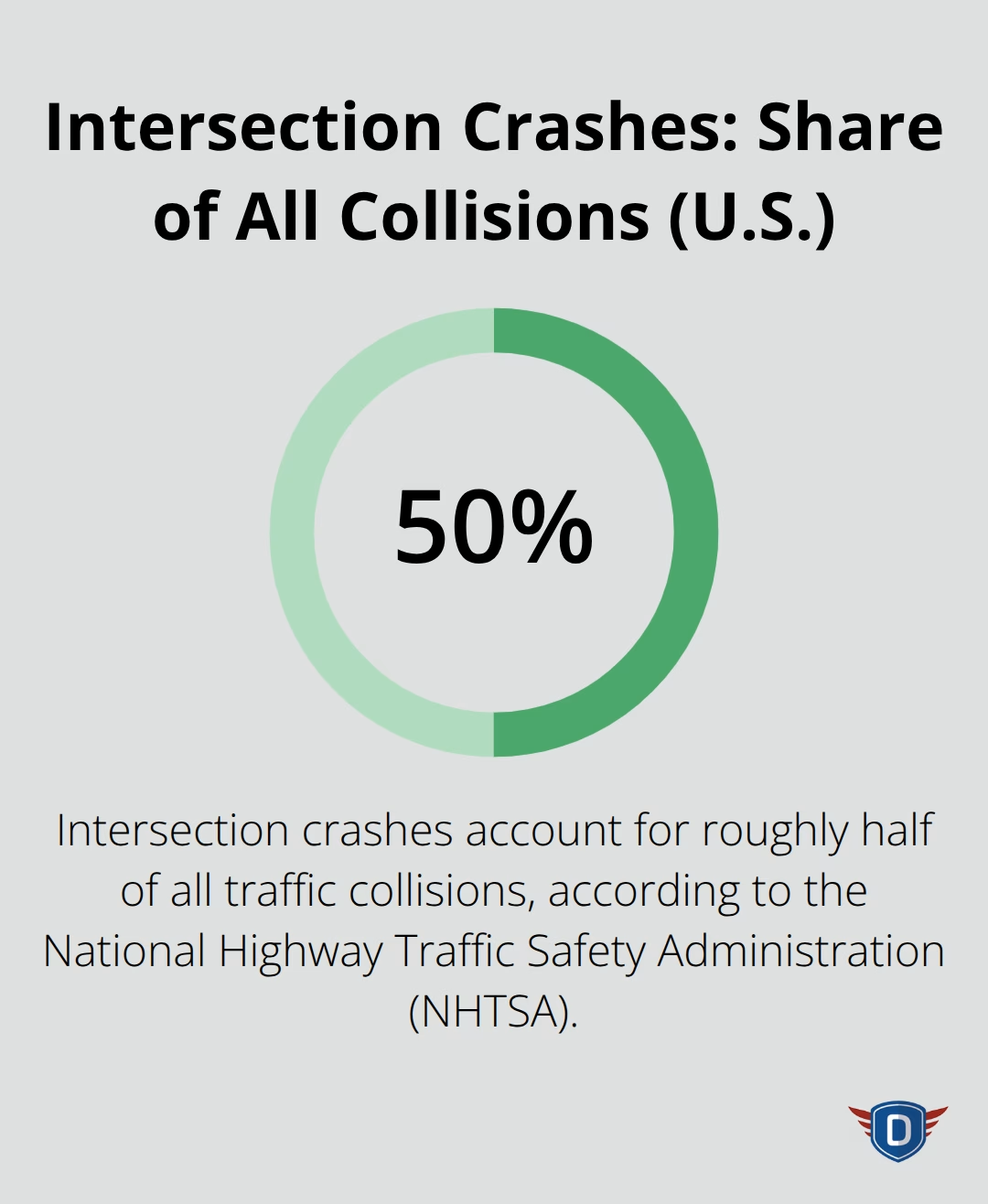
Intersections are where most accidents happen. According to the National Highway Traffic Safety Administration, intersection crashes account for roughly 50% of all traffic collisions, and many of these are preventable with proper knowledge of right of way rules.
At floridanewdriver.com, we’ve seen firsthand how confusion about who has priority at intersections leads to dangerous situations. This guide breaks down the rules you need to know to navigate intersections safely.
Understanding Priority at Intersections
The first vehicle to arrive at an intersection has the right of way, according to the California Department of Motor Vehicles. This rule applies at uncontrolled intersections where no signals or signs exist. However, determining who actually arrived first becomes difficult when multiple vehicles converge simultaneously. If two or more vehicles reach an intersection at the same time with no signs or signals, you must yield to the vehicle on your right. This right-of-way rule applies consistently across most states, including Florida, and forms the foundation of intersection safety.
T-Intersections and Priority Rules
At T-intersections, the through road always has priority over traffic on the terminating road, regardless of arrival order. If you travel on the terminating road, you must yield to all traffic on the through road. Many drivers incorrectly assume standard right-of-way rules apply at T-intersections when they actually don’t. This distinction prevents collisions because drivers on the through road expect unobstructed passage.
Traffic Signals and What They Actually Mean
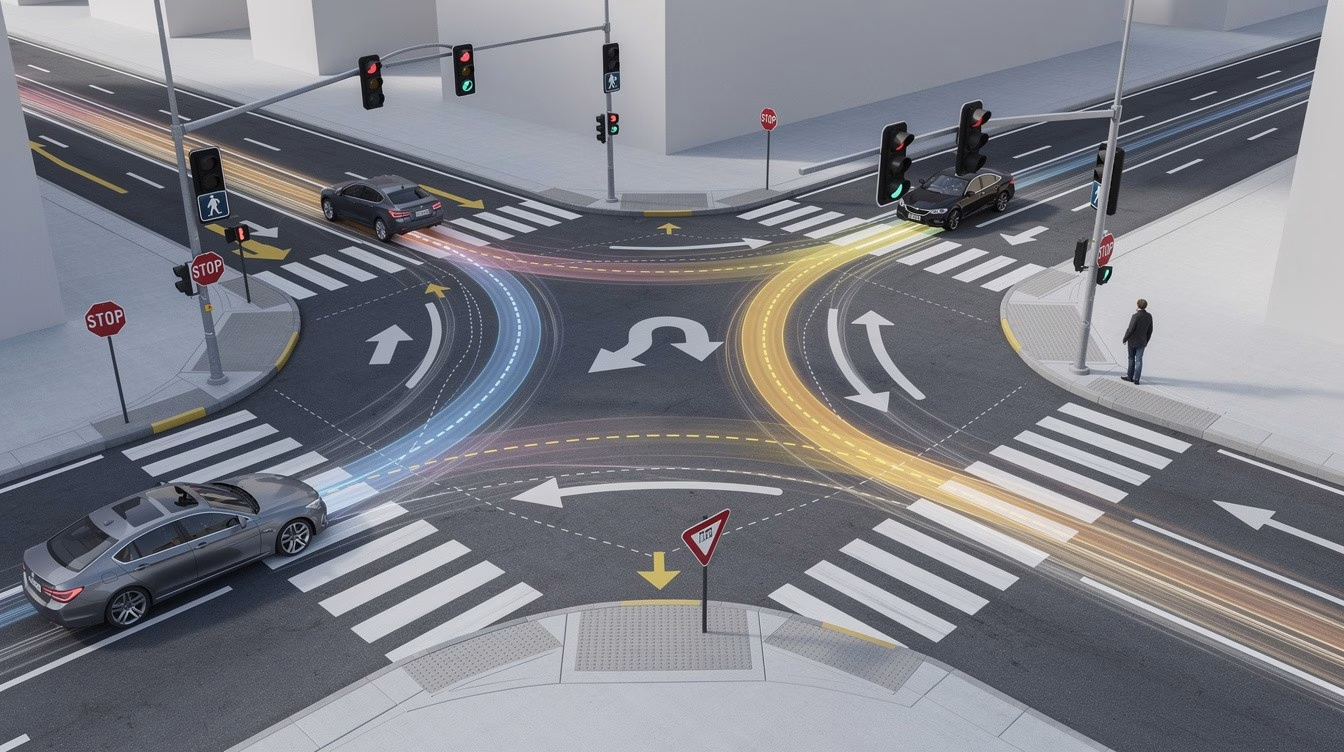
Traffic signals provide clear instructions, yet many drivers misinterpret them. A green light means go, but according to the California DMV, you must still yield to any vehicle, bicyclist, or pedestrian already in the intersection. A yellow signal means caution; you should stop if you can do so safely, but if stopping would create a collision risk, proceed through cautiously. A red light means stop, and you may turn right on red only if no NO TURN ON RED sign is posted. A red arrow specifically prohibits turning in that direction until a green light or green arrow appears.
Flashing signals require different responses. Flashing yellow means proceed with caution without stopping, while flashing red requires a complete stop before proceeding. Flashing yellow arrows indicate you may turn left, but the turn remains unprotected from oncoming traffic, so yield before proceeding. Never assume a green light gives you absolute right of way. Always verify the intersection is clear before entering. In Florida, these signal rules align with state law, though local variations in signal timing and placement require constant attention.
Left Turns and Oncoming Traffic
When turning left, you must yield to oncoming traffic even if you arrived at the intersection first. The California DMV emphasizes this rule because left-turning vehicles cause a significant portion of intersection collisions. Never start a left turn assuming space will be available. Check all lanes you must cross and confirm cross-traffic is completely stopped before committing to the maneuver.
Right Turns and Pedestrian Safety
When turning right, always check for pedestrians crossing in front of you and watch for motorcycles or bicycles riding beside you. The difference between left and right turns matters legally: a vehicle turning right has the right of way over a vehicle turning left when both are head-to-head. This rule prevents many collisions but remains widely misunderstood. In Florida, these turning rules are enforced strictly, and traffic citations for improper left turns are common.
The rules you’ve learned here form the foundation for safe intersection navigation, but real-world intersections present additional challenges. Pedestrians, cyclists, and aggressive drivers all complicate the picture, requiring you to adapt your approach based on what you observe around you.
Handling Four-Way Stops and Left Turns in Real Traffic
Four-Way Stop Priority and Decision-Making
Four-way stops demand split-second decisions, and most drivers execute them incorrectly. The first vehicle to arrive has priority, but when multiple cars converge simultaneously, you must yield to the vehicle on your right. If three vehicles arrive at once, the car furthest left yields until the two rightmost cars pass. Aggressive or distracted drivers frequently ignore these rules, so treat every four-way stop as a potential collision zone.
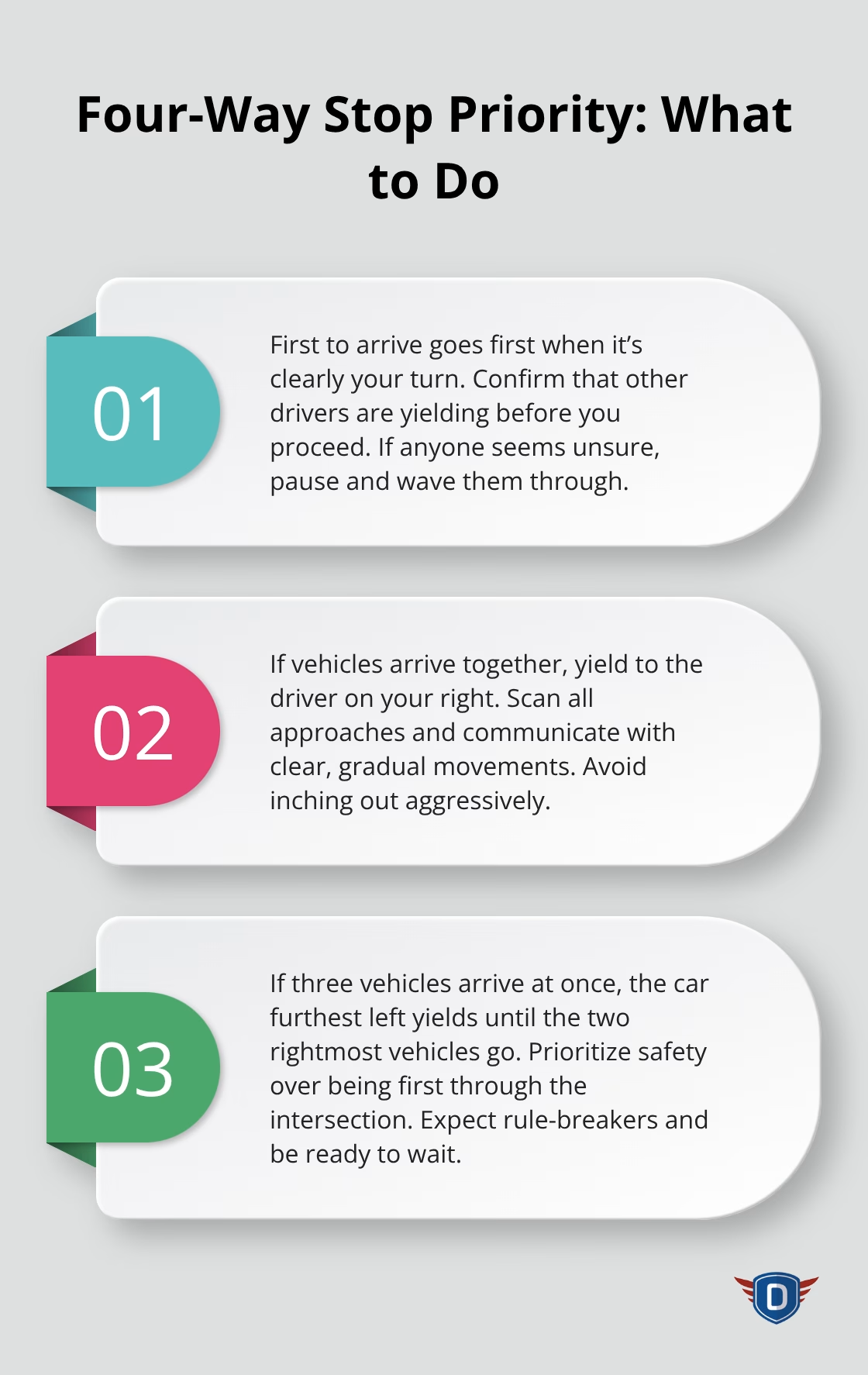
Before you enter, slow to a crawl and scan all directions. Make eye contact with other drivers when possible to confirm they see you. If another driver seems uncertain or fails to yield, hold your position and let them move first rather than gambling on their compliance.
Bicyclists and Four-Way Stop Rules
At four-way stops in Florida, bicyclists are treated as vehicles and must follow the same rules as cars, including coming to a complete stop and yielding appropriately. This distinction matters because many drivers fail to recognize bicyclists as traffic participants with equal legal standing. Treat bicyclists with the same caution you would extend to any other vehicle at the intersection.
Two-Way Stops and Road Hierarchy
Two-way stops present different dynamics than four-way intersections. You’re either on the terminating road or the through road, and this distinction determines everything. If you’re on the terminating road, you must yield to all traffic on the through road regardless of arrival order. Drivers on the through road expect unobstructed passage, making your failure to yield particularly dangerous. Approach slowly and verify the through road is clear before you commit to crossing.
Left Turns and Gap Timing
Left turns at intersections create more collisions than any other single maneuver. You must yield to oncoming traffic even if you arrived first, and this rule applies whether the intersection has signals or not. Never assume space will be available. Check every lane you must cross and confirm cross-traffic is completely stopped before you turn. Allow a gap of about eight seconds between you and any vehicle approaching from the left before you turn.
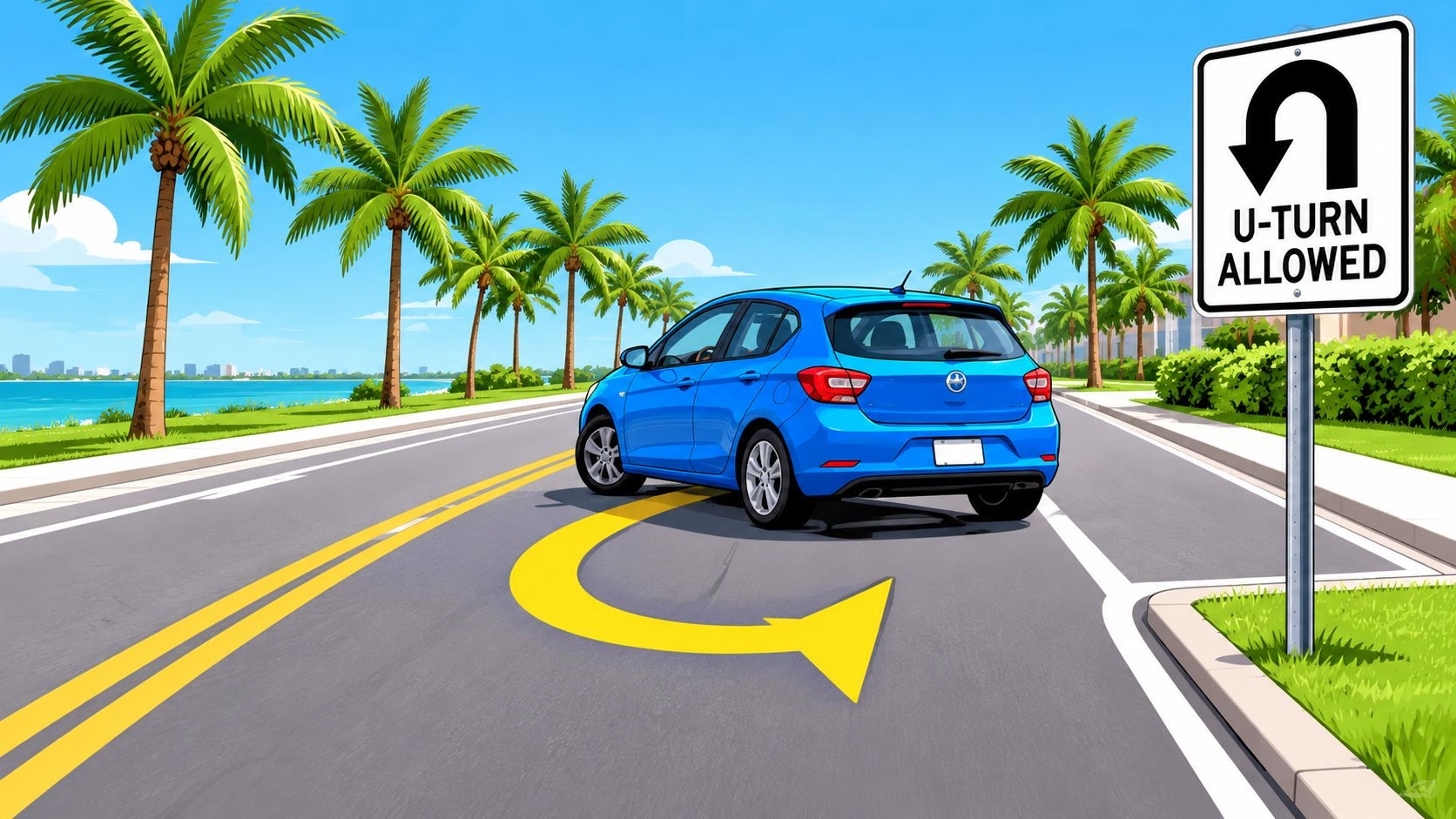
When an oncoming vehicle is also turning left, you can turn without yielding by passing in front of each other only if both of you turn left in the same direction. If the other vehicle turns right while you turn left, that driver has priority and you must wait. Pedestrians crossing in the intersection always have the right of way over turning vehicles, so scan crosswalks carefully before you commit to any turn.
Consequences and Real-World Enforcement
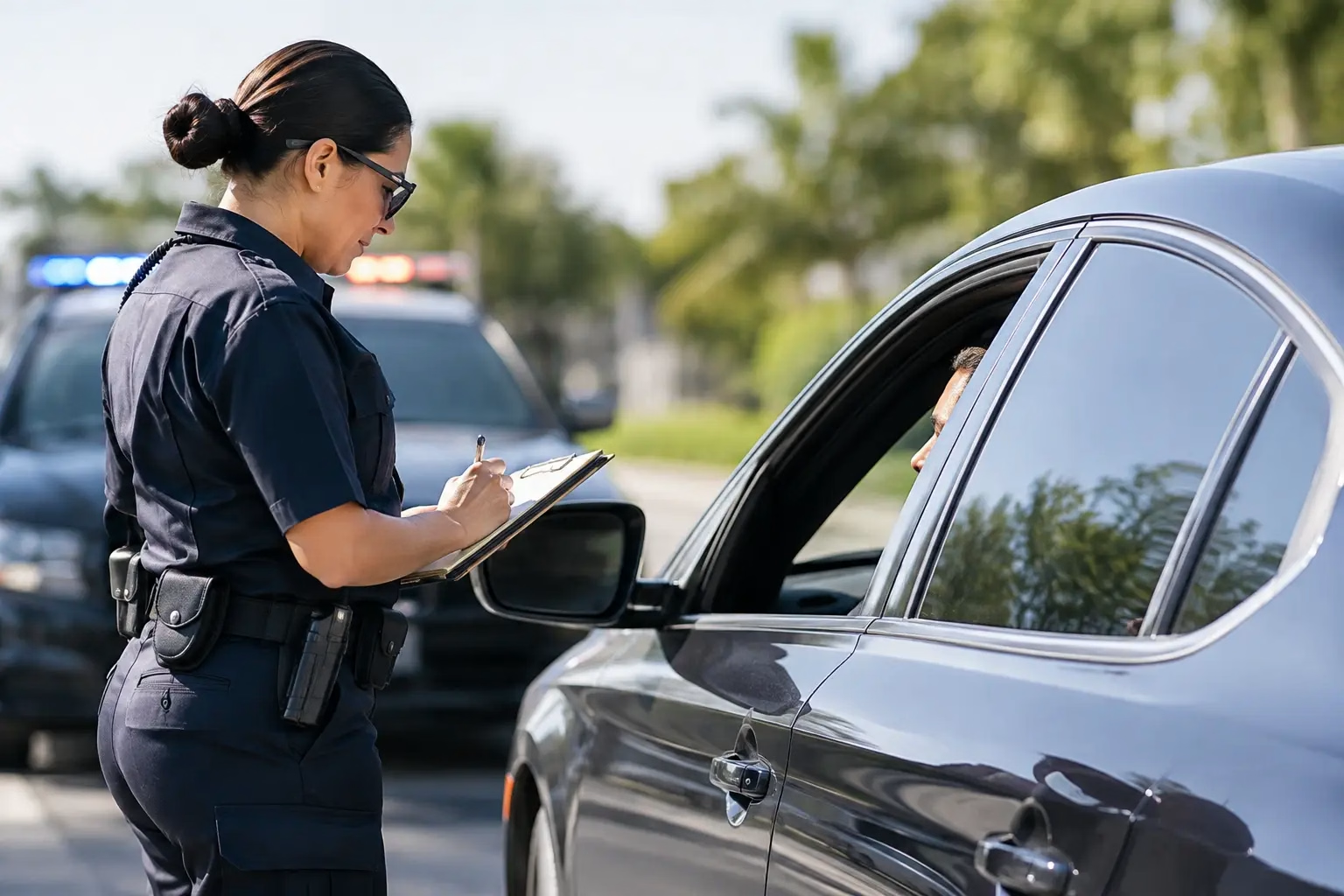
In Florida, failing to yield for a left turn generates substantial traffic citations and insurance increases, making caution the only reasonable strategy. These violations carry real financial consequences that extend far beyond the initial fine. The defensive approach to intersection safety-treating every intersection as hostile territory-protects both your safety record and your wallet. As you encounter more complex intersection scenarios involving pedestrians, cyclists, and aggressive drivers, your ability to recognize hazards before they develop becomes the difference between safe passage and collision.
How to Spot and Avoid Dangerous Intersection Situations
Scanning Ahead to Identify Hazards
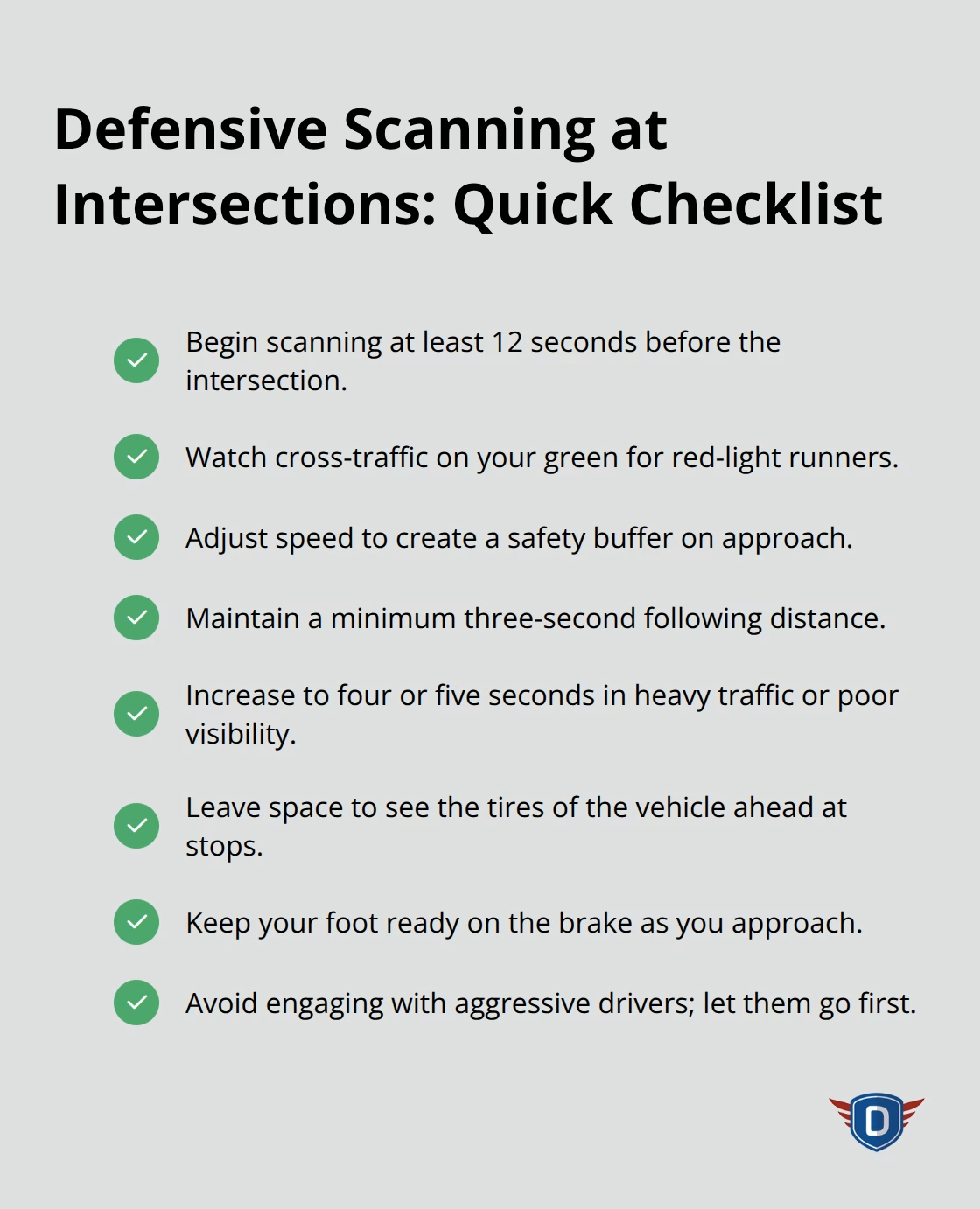
Your ability to recognize hazards before they develop separates safe drivers from those involved in collisions. Most intersection accidents occur because drivers fail to scan adequately or misread what they observe around them. Start scanning at least 12 seconds before you reach an intersection, which gives you roughly a quarter-mile of advance warning at 45 mph. Look for pedestrians stepping off curbs, cyclists approaching from side streets, and vehicles accelerating through yellow lights. Check your mirrors continuously as you approach because aggressive drivers often tailgate through intersections, and you need to know what’s happening behind you.
Many drivers focus only on what’s directly ahead, missing threats from adjacent lanes where motorcycles or bicycles operate in blind spots. When you’re within 100 feet of an intersection, your scanning should intensify. Identify which lanes are clear, which contain stopped vehicles, and where pedestrians are positioned. Note if any vehicle shows signs of hesitation, sudden acceleration, or failure to signal. These behaviors indicate distracted or aggressive driving, and defensive driving techniques help you recognize and respond to them effectively.
Responding to Traffic Signals and Red Light Runners
At traffic lights, never assume drivers will stop at red. Watch the cross-traffic as you approach your green light because red light runners cause hundreds of deaths and tens of thousands of injuries each year. Adjust your speed to create a buffer between yourself and the intersection. If you’re traveling at 35 mph and suddenly need to stop, you require roughly 65 feet to come to a complete halt.
Reduce speed as you approach intersections, especially in urban areas where pedestrian activity is high. Maintain at least a three-second following distance behind the vehicle ahead, which increases to four or five seconds in heavy traffic or poor visibility. This distance gives you reaction time if the vehicle ahead stops abruptly or if a pedestrian enters the intersection unexpectedly. Many drivers maintain inadequate following distances and find themselves unable to stop safely when hazards appear.
Managing Aggressive Drivers at Intersections
Aggressive drivers create unpredictable situations at intersections because they ignore standard rules and prioritize speed over safety. These drivers cut across multiple lanes and fail to signal, and accelerate through yellow lights that are clearly about to turn red. Your job is not to match their aggression or compete for space. If a driver behind you is tailgating, gradually reduce speed to increase the gap ahead, which forces the aggressive driver to pass or back off.
Never make eye contact with aggressive drivers or respond to their gestures because escalation leads to dangerous outcomes. If someone honks at you for following right-of-way rules, accept that they’re wrong and continue your safe approach. At four-way stops, aggressive drivers often accelerate first regardless of arrival order. Let them go rather than contest the intersection. Your safety matters far more than teaching someone else the rules. In Florida, aggressive driving violations carry substantial penalties including license suspension, but your focus should remain on personal safety rather than enforcement.
Positioning Your Vehicle Defensively
Position your vehicle defensively by staying centered in your lane and avoiding blind spots of large trucks and buses. When stopped at a traffic light, leave enough space between your vehicle and the one ahead so you can see their back wheels on the pavement. This positioning allows you to maneuver away if a rear-end collision appears imminent. Keep your foot ready on the brake rather than coasting into intersections. These small adjustments create cumulative safety advantages throughout your driving.
Final Thoughts
Intersection safety depends on understanding right of way rules and applying them consistently in real traffic. The knowledge you’ve gained throughout this guide covers the foundational principles that prevent collisions, from recognizing priority at four-way stops to yielding for pedestrians and cyclists. Knowledge alone doesn’t protect you-defensive scanning, appropriate speed adjustment, and the willingness to yield even when technically correct separate safe drivers from those involved in preventable accidents.
At floridanewdriver.com, we teach right of way rules within the broader context of defensive driving because rules without situational awareness create false confidence. Our Florida-approved traffic school programs combine clear explanations of state traffic laws with real-life scenarios that prepare you for actual intersection conditions. Whether you’re taking our Basic Driver Improvement course to address a moving violation or our Intermediate Driver Improvement program for deeper understanding, the curriculum emphasizes how attitude and behavior affect decision-making behind the wheel.
The statistics are sobering: intersection crashes account for roughly half of all traffic collisions, yet most are preventable. Your commitment to mastering right of way rules and practicing defensive techniques directly reduces your collision risk and protects everyone sharing the road. Visit floridanewdriver.com to explore our courses and take the next step toward becoming a safer, more confident driver on Florida’s roads.