
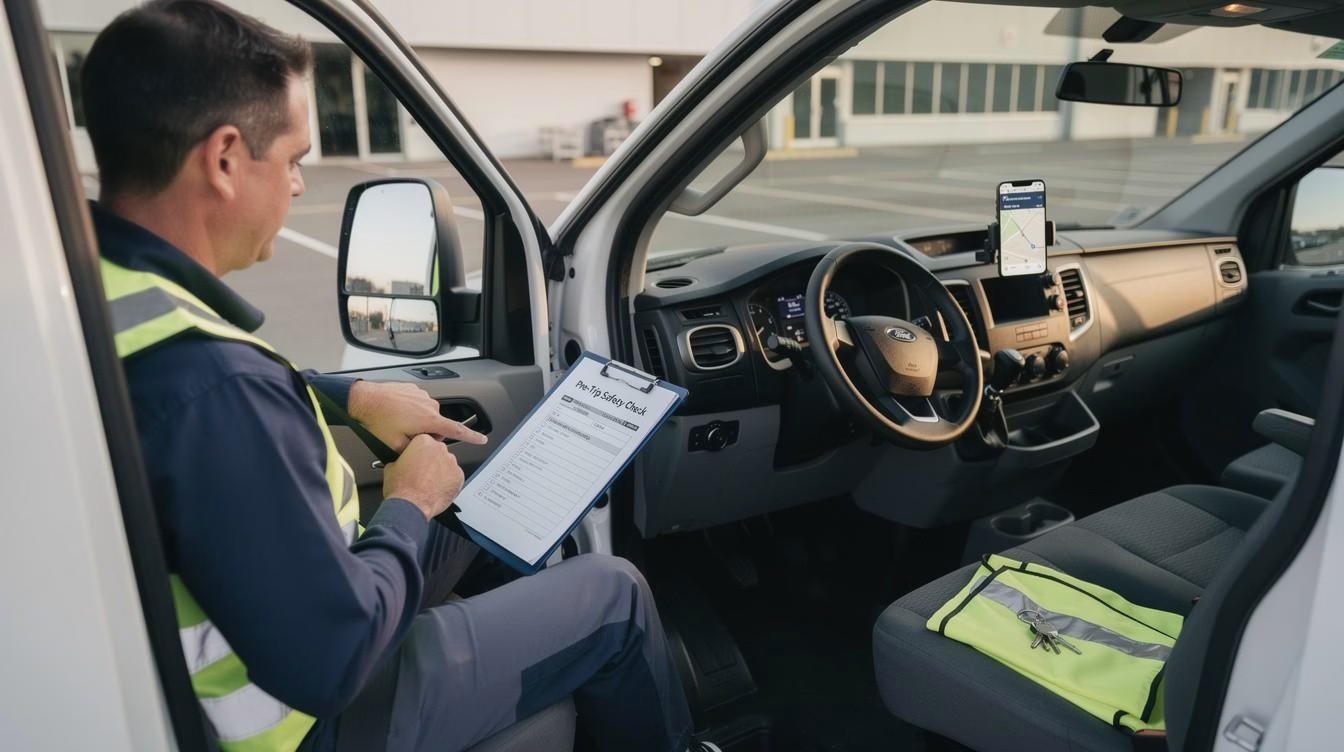
Employee vehicle accidents cost U.S. companies over $60 billion annually in direct and indirect expenses. Safe driving tips for employees aren’t optional-they’re a business necessity that protects your workforce and bottom line.
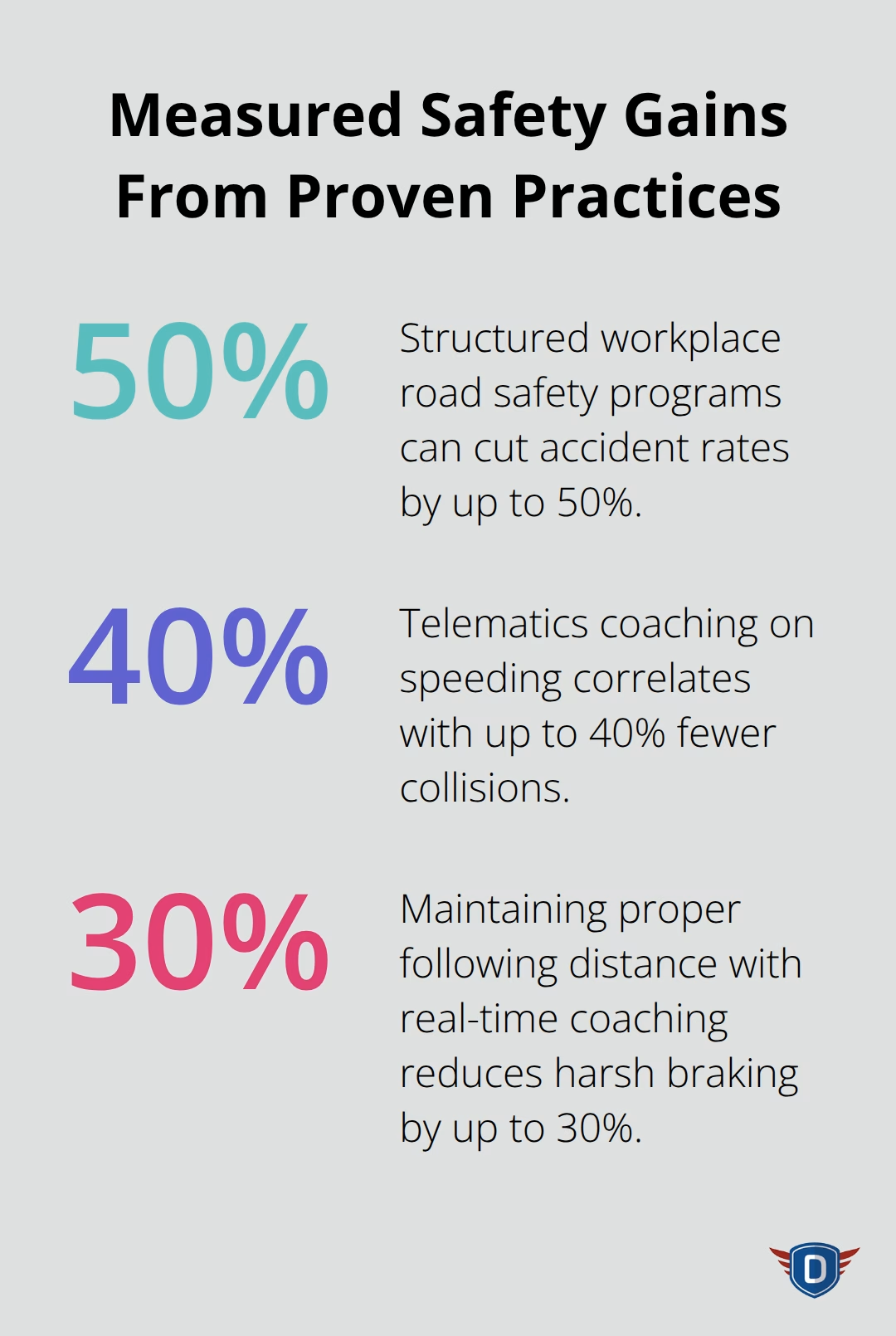
At floridanewdriver.com, we’ve seen firsthand how structured workplace road safety programs reduce accident rates by up to 50%. This guide covers the strategies that actually work, from speed management to fleet policies that stick.
Speed and Distractions: The Twin Threats to Employee Safety
Why Speed Kills on the Job
Speeding remains the leading cause of workplace-related traffic deaths, with 1,369 U.S. workers dying in work-related motor vehicle crashes off public roads (25% of all work-related deaths). When employees exceed speed limits, their stopping distance increases dramatically-at 35 mph, a vehicle needs 40% more distance to stop than at 25 mph. This gap widens further in rain or snow, yet many employees maintain highway speeds on slick roads anyway.
Speed management isn’t about crawling along; it’s about matching your speed to actual road and weather conditions. Employees who adjust speed based on visibility, road surface, and traffic density reduce collision risk substantially. Fleets using telematics to monitor and coach on speeding incidents report up to 40% fewer collisions, according to safety data across commercial operations.
The practical step is straightforward: set company speed policies that reflect real-world conditions, not just legal limits, and use real-time feedback to reinforce compliance.
Mobile Phones Create a Crash Risk
Mobile phone use while driving creates enormous potential for deaths and injuries on U.S. roads. A single text message diverts attention for an average of 4.6 seconds-enough time to travel 368 feet at highway speed without seeing the road.
Companies that restrict phone use through clear policy and technology solutions see measurable safety gains. The most effective approach combines a no-phone policy with hands-free systems and GPS navigation loaded before driving starts.
Hands-Free Setup Prevents Distraction Before It Starts
Employees should connect Bluetooth audio and set routes in advance using built-in navigation on their vehicle display or smartphone mount, eliminating the need to handle devices mid-drive. Those who establish this routine report fewer missed turns and reduced stress, while their employers avoid liability and insurance costs tied to distraction-related accidents.
This foundation of speed control and distraction prevention sets the stage for the defensive driving techniques that protect employees during unpredictable road situations.
Defensive Driving Techniques for Work Commutes
The Two-Second Rule Prevents Collisions
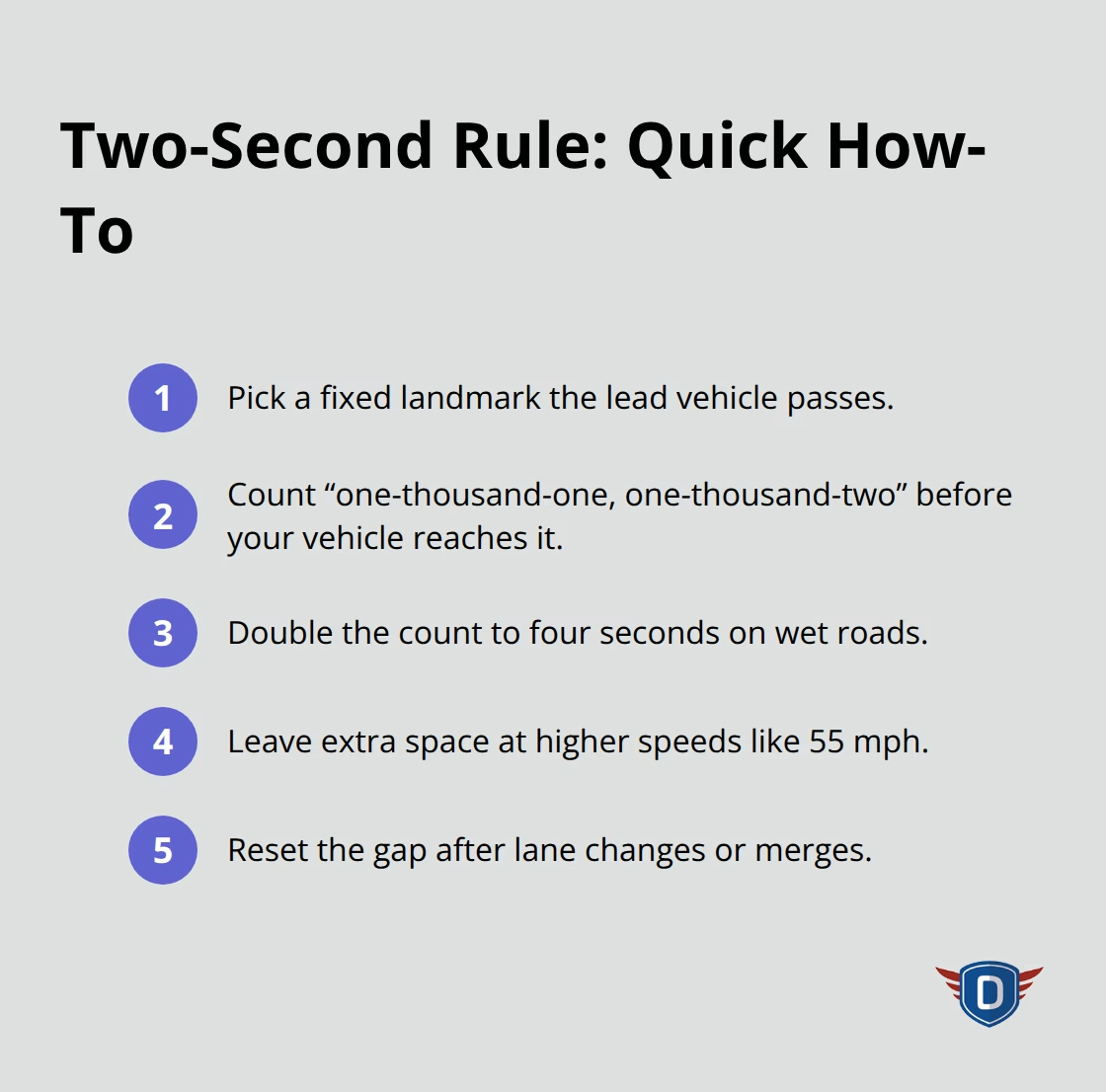
Defensive driving means reading traffic patterns and anticipating what other drivers will do before they act. Employees who practice this approach react faster to hazards and avoid crashes that less attentive drivers cannot prevent. The two-second rule forms the foundation: drivers maintain enough distance behind the vehicle ahead that they count two full seconds between when that vehicle passes a fixed landmark and when theirs does. In wet conditions, this distance increases to four seconds, since wet roads extend stopping distance significantly. At 55 mph, two seconds equals roughly 160 feet of space-a gap that feels generous until you need to brake suddenly.
Telematics data from commercial fleets shows that drivers who maintain proper following distance and respond to real-time coaching reduce harsh braking incidents by up to 30%, which directly correlates with fewer collisions and lower insurance claims. This metric matters because harsh braking signals reactive driving rather than proactive hazard management. Employees who establish the two-second habit early in their commute avoid the panic stops that damage vehicles and injure occupants.
Right-of-Way Violations Cause One-Third of Intersection Crashes
Right-of-way violations cause roughly one-third of all intersection crashes, according to traffic safety research. Employees must understand that a green light does not guarantee the intersection is clear-oncoming drivers may run red lights, pedestrians may step into crosswalks against signals, and cyclists may not be visible in blind spots. Defensive driving means checking mirrors and blind spots before every lane change, even when signals indicate the path is clear.
Employees should anticipate mistakes from other road users: a driver drifting toward your lane, a truck requiring extra space to turn, a cyclist weaving between parked cars. These scenarios demand that employees stay alert rather than assume other drivers will follow traffic laws. Companies that combine clear right-of-way training with regular safety refreshers see measurable improvements in employee compliance.
Hazard Anticipation Improves With Practice and Feedback
The most effective approach is short, frequent safety tips delivered during team meetings rather than annual training marathons-research shows bite-sized instruction reinforces habits better than one-time sessions. Hazard anticipation is a skill that improves with practice and feedback, and employees who develop this mindset become noticeably safer drivers within weeks of focused coaching. This foundation of defensive technique prepares employees to handle the policies and accountability systems that employers establish to sustain safe driving culture across the entire workforce.
How Employers Build Safety Systems That Actually Stick
Clear Policies Create Accountability
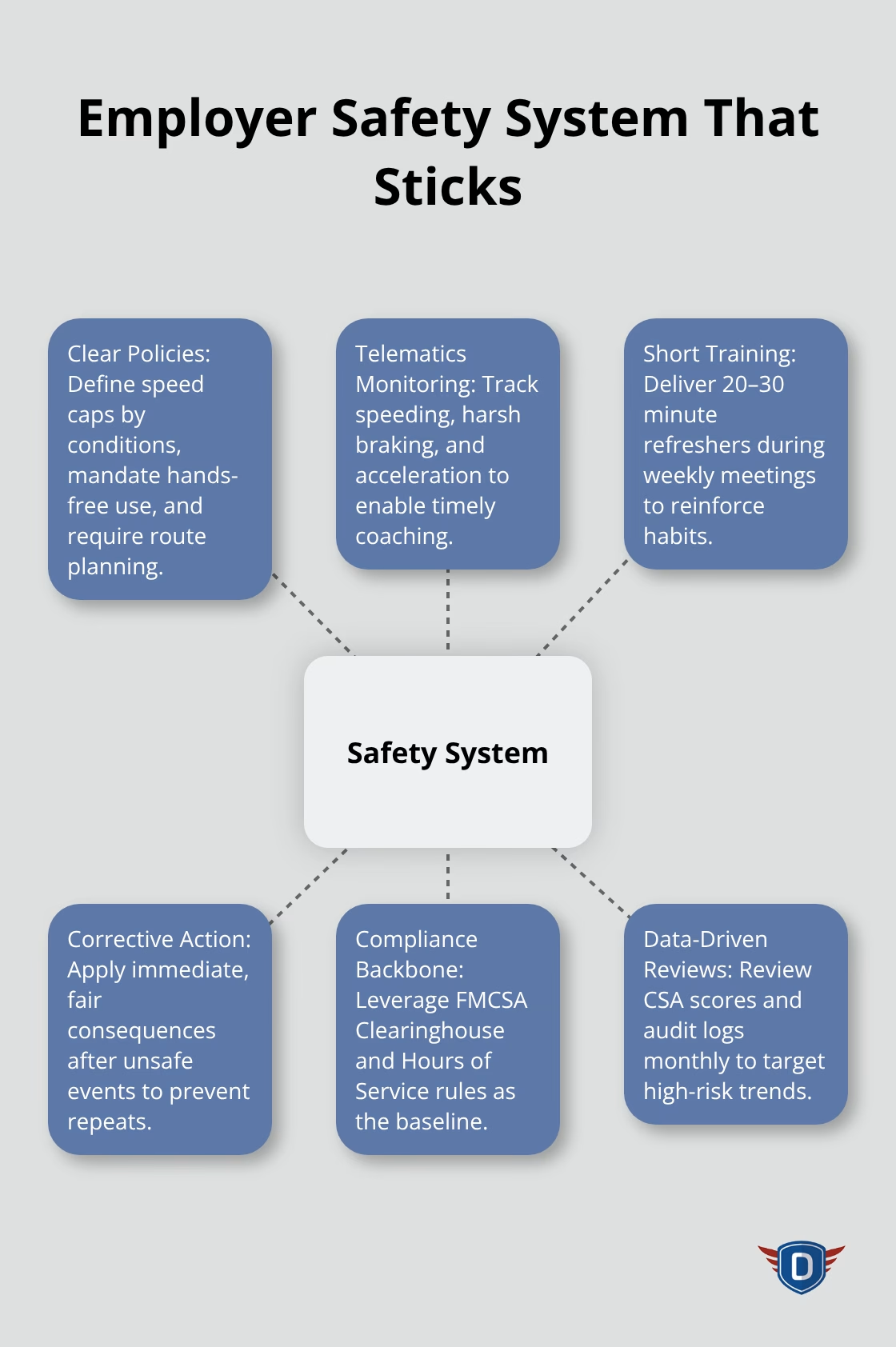
Defensive driving techniques only work when companies enforce them consistently through clear policies, regular training, and real accountability. Employers who establish specific speed limits for different road conditions, mandate hands-free phone use, and require documented route planning see measurable reductions in accident rates. The FMCSA Clearinghouse and Hours of Service rules provide a regulatory foundation, but companies that exceed minimum compliance thrive. Setting a 45 mph speed cap on wet roads or requiring drivers to report near-miss incidents creates a culture where safety is non-negotiable, not aspirational. Employees respond to clarity: they know exactly what’s expected, what happens when they comply, and what consequences follow violations.
Without this structure, even well-intentioned drivers revert to old habits during stress or fatigue.
Telematics Data Drives Real Coaching
Companies that pair written policies with telematics monitoring capture real driving data and use it to coach individuals, not punish them. The most effective employers treat safety as an operational metric, reviewed monthly alongside CSA scores and accident data, rather than an annual checkbox. Electronic Logging Devices and on-board safety monitoring flag speeding, harsh braking, and rapid acceleration in real time, enabling dispatch or safety teams to contact drivers before small mistakes become crashes. Companies that maintain current DQ files and Clearinghouse records and conduct monthly log audits catch compliance gaps early.
Short Training Sessions Reinforce Habits
Training that sticks happens in short bursts, not marathon sessions. One 30-minute safety discussion during a weekly team meeting outperforms a single annual training day because bite-sized instruction reinforces habits better than one-time sessions. Employees should discuss real-world scenarios: how they handled a close call, what they’d do differently, what weather or traffic patterns concern them most. This peer-to-peer exchange builds collective knowledge faster than lectures. Monthly CSA score reviews feed into targeted coaching for top violation drivers, ensuring resources go where they matter most.
Immediate Corrective Action Prevents Repeat Violations
Unsafe driving behavior must trigger a formal corrective action process immediately after the incident, not weeks later when employees forget the context. The employer’s role is to act as a safety partner for employees, removing obstacles to safe driving through clear communication channels between drivers, dispatch, and safety teams, so issues get resolved before violations occur.
Final Thoughts
Workplace road safety demands continuous commitment, not annual training marathons that employees forget within weeks. The safe driving tips for employees outlined in this guide target the behaviors that cause most work-related crashes: excessive speed, distraction, poor following distance, and failure to anticipate hazards. When companies implement these strategies systematically through clear policies, telematics monitoring, and immediate corrective action, accident rates drop by up to 50%, translating directly to fewer injuries, lower insurance premiums, and reduced vehicle maintenance costs.
Real progress happens when employers treat safety as an operational priority rather than a compliance checkbox. Monthly CSA score reviews, updated DQ files, and regular Clearinghouse verification keep your fleet audit-ready while protecting your operating authority, and telematics data reveals patterns in driver behavior that enable targeted coaching for individuals who need it most. Employees respond to clarity and consistency-they need to know what’s expected, see that policies apply equally to everyone, and understand that safety violations trigger swift, fair consequences.
Start this week by establishing clear speed policies tied to actual road conditions, requiring hands-free phone setup before driving, and scheduling your first team safety discussion. If your company lacks formal training infrastructure, floridanewdriver.com offers comprehensive driver improvement courses designed to reinforce safe habits and meet regulatory requirements.