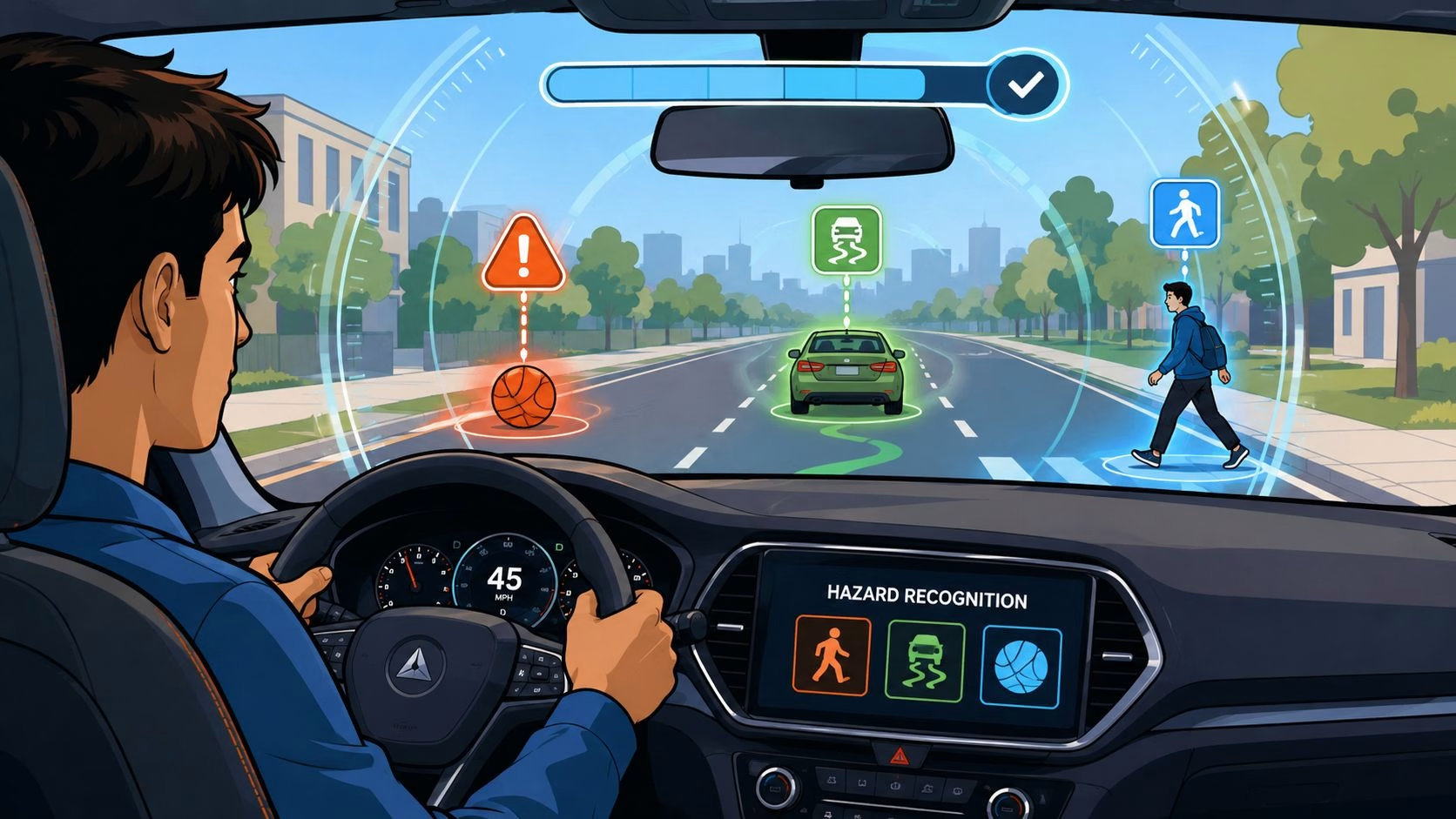
A teen�s first car isn�t just a purchase. It�s a safety decision with real stakes. Motor vehicle crashes are the leading cause of death for teenagers, and almost 30% of all teenage fatalities occur in mini or small cars, according to IIHS reporting summarized here. That single fact should change how most parents shop.
The good news is that you have more control than you think. The safest teenage used cars aren�t the flashiest, the cheapest, or the ones your teen thinks look coolest in the school parking lot. They�re the ones that give a young driver the most protection when judgment fails, weather turns ugly, or another driver makes a bad decision.
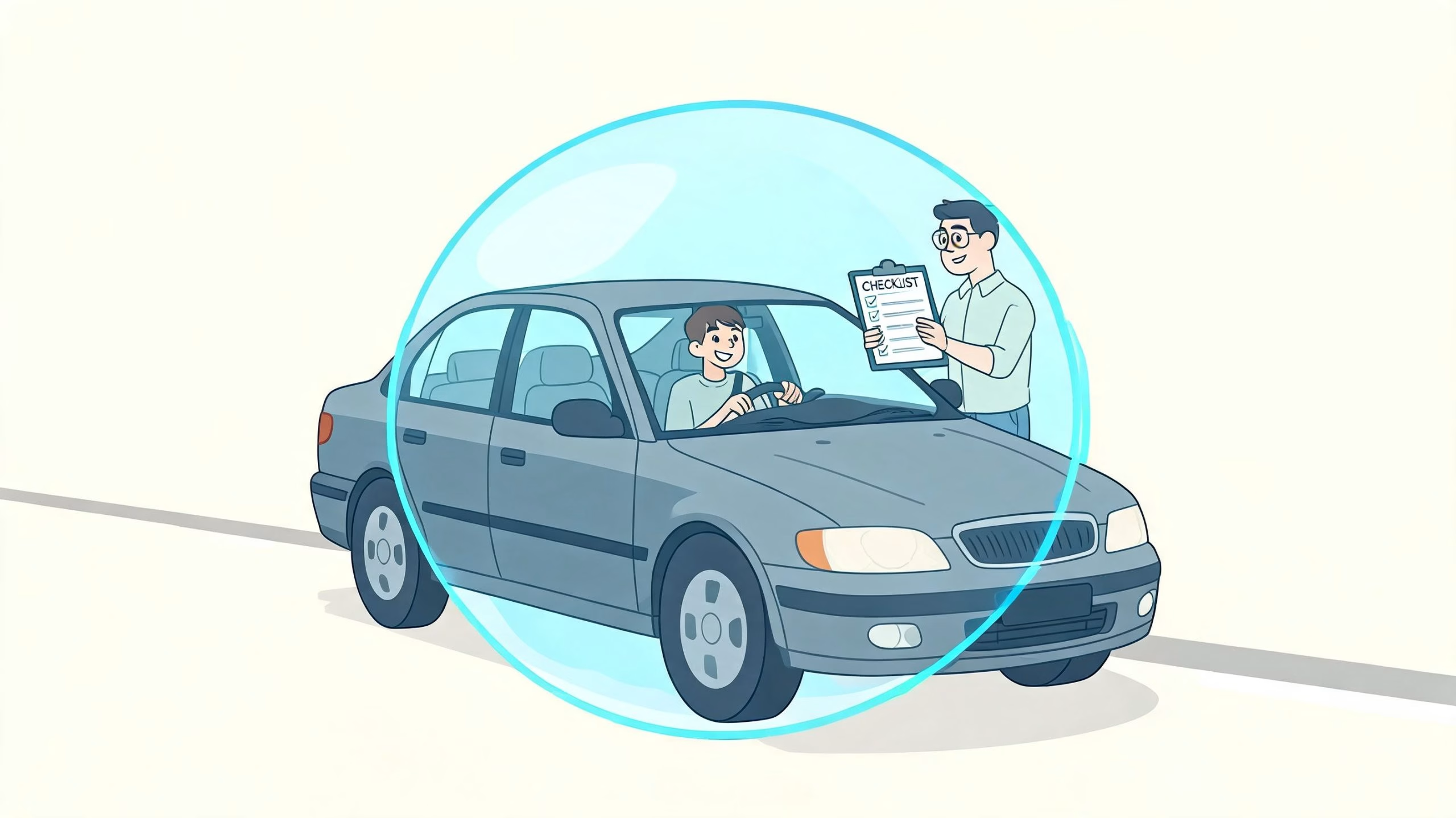
The smart approach is to build a safety ecosystem. One half is the vehicle: enough size, enough weight, and the right crash-avoidance tech. The other half is the driver: training, habits, and discipline. A safe car without a skilled teen behind the wheel leaves too much to chance. A careful teen in the wrong car still loses a physics fight they never should�ve been asked to take.
Your Teen’s First Car A Guide to Navigating the Risks
Getting that driver�s license feels like a milestone for your teen and a stress test for you. Both reactions are reasonable. Teen drivers are new, inconsistent, and easily overloaded. They need margin for error.
That margin starts with the car, but it doesn�t end there. The parents who make the best decisions here don�t treat this like a simple used-car search. They treat it like building a layered defense system.
Here�s the framework I recommend:
- Choose protection first: Start with vehicles known for strong crash performance and stability, not style or speed.
- Control exposure: Limit the temptation to buy something tiny, sporty, or overly powerful.
- Train the driver: Pair the vehicle with structured learning and defensive habits, including Florida�s graduated driver licensing rules.
- Verify the actual car: A good model can still be a bad buy if it was flooded, neglected, or poorly repaired.
Practical rule: Don�t ask, �What car will my teen like?� Ask, �What car gives my teen the best chance to walk away from someone else�s mistake?�
That shift matters. Parents often focus on affordability and reliability first, then tack on safety at the end. I think that�s backwards for a teenage driver. Reliability matters. Budget matters. But crash protection and crash avoidance belong at the top of the list.
The goal isn�t to eliminate every risk. You can�t. The goal is to stack the odds in your teen�s favor every time they back out of the driveway.
The Physics of Teenage Safety Why Size and Weight Matter Most
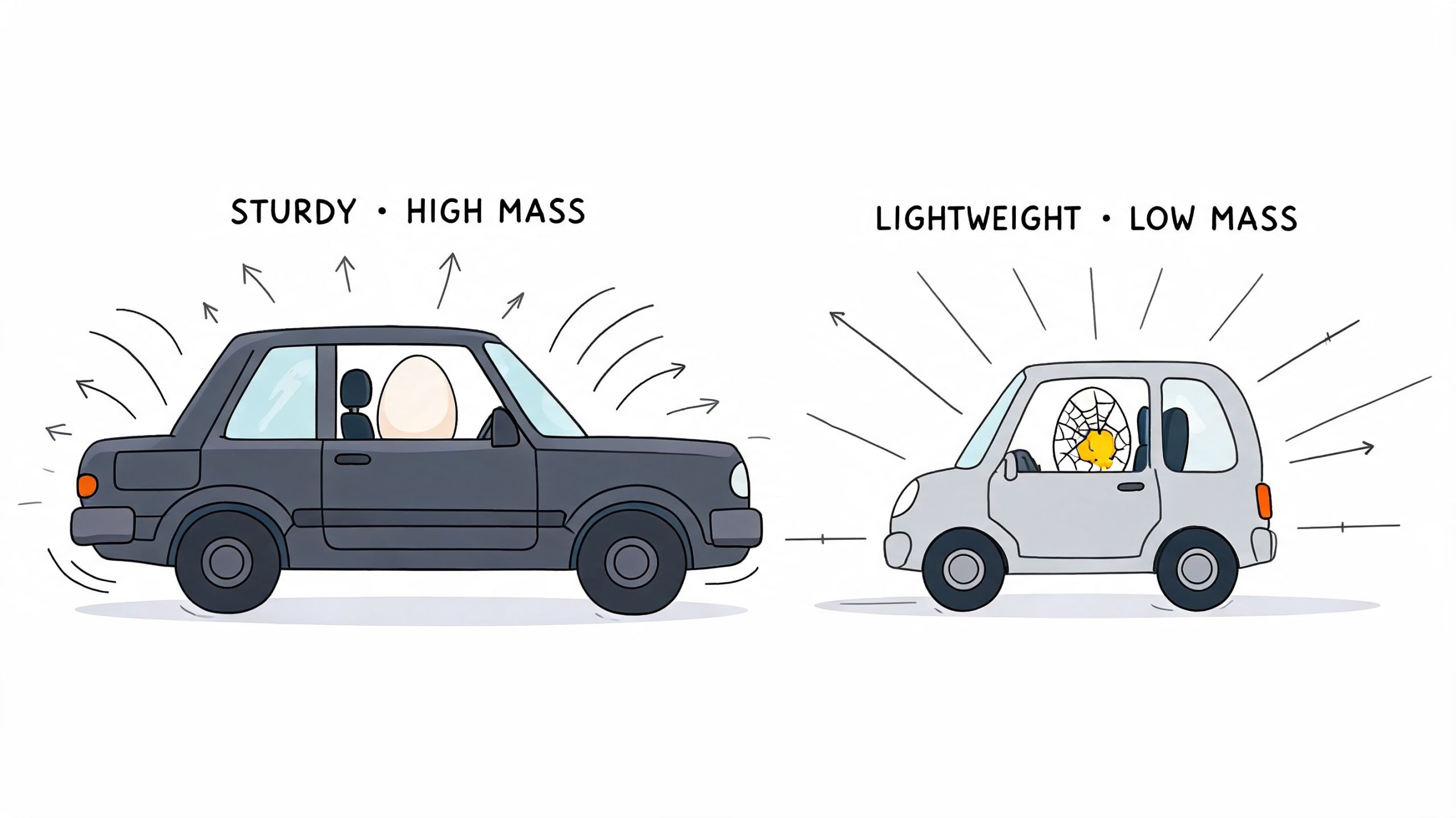
In a crash, physics decides faster than intentions do. The heavier, larger vehicle usually gives its occupants a better chance.
That matters more with teens because they make more mistakes, miss more hazards, and get overloaded faster than experienced drivers. A forgiving vehicle gives them more margin when judgment slips for a second.
Why bigger usually protects better
Larger vehicles usually give you two advantages. They put more structure between your teen and the point of impact, and they manage crash energy more effectively before that force reaches the cabin.
That does not mean every big vehicle is safe or every small vehicle is unsafe. Design, crash engineering, center of gravity, tires, and brakes still matter. But size and weight are not minor details. They are part of the foundation.
As noted earlier, IIHS excludes the smallest cars from its main teen recommendations for a reason. If your shortlist starts with mini cars because they are cheap, cute, or easy to park, start over.
Florida parents need to think about this even more carefully. Sudden downpours, slick pavement, high-speed arterials, and long highway runs change the risk picture. Your teen needs a vehicle that stays composed in heavy rain, tracks predictably at speed, and does not get pushed around easily by standing water or crosswinds.
The first rule for safest teenage used cars
Start with midsize sedans and well-rated small SUVs. That is the sweet spot for most families.
You want enough mass to help in a collision, but not so much size that the vehicle becomes awkward to place, hard to stop, or expensive to insure and maintain. Huge trucks are often a poor teaching tool for a new driver. Tiny economy cars are usually too little car for the job.
A smart teen vehicle usually has:
- Moderate power: Enough to merge and pass without drama, but not enough to tempt showing off.
- Useful weight and structure: Real crash protection, not the bare minimum.
- Predictable handling: Calm behavior in rain, on highways, and during sudden corrections.
- Good visibility: A teen should be able to judge corners, lanes, and surrounding traffic easily.
- Well-maintained brakes and tires: Safety disappears fast if basic hardware is neglected. That includes choosing vehicle-specific brake pads instead of generic assumptions when service is due.
A teen�s first car should be forgiving, stable, and boring in the best possible way.
What parents get wrong
Parents usually miss in one of three directions. They hand down the oldest car in the driveway. They buy the smallest car on the lot to save money. Or they give in to the sporty coupe because their teen insists they will �be careful.�
None of those choices respects how teens learn. New drivers need time to build hazard recognition, smooth braking, speed control, and weather judgment. The car should reduce consequences while those skills are still forming.
Bluntly, if your budget pushes you toward a very small car, keep shopping for an older but safer midsize sedan or a well-rated compact SUV. Then pair that car with real training. A safer vehicle helps, but the stronger safety gain comes from the combination of car choice, supervised practice, and disciplined habits. Tools like these safe driving apps for teen drivers can reinforce that training between lessons and family practice drives.
That is the safety ecosystem. Buy a car that gives your teen more protection on their worst day, then train them so that worst day is less likely to happen at all.
Decoding Safety Ratings and Essential Technology
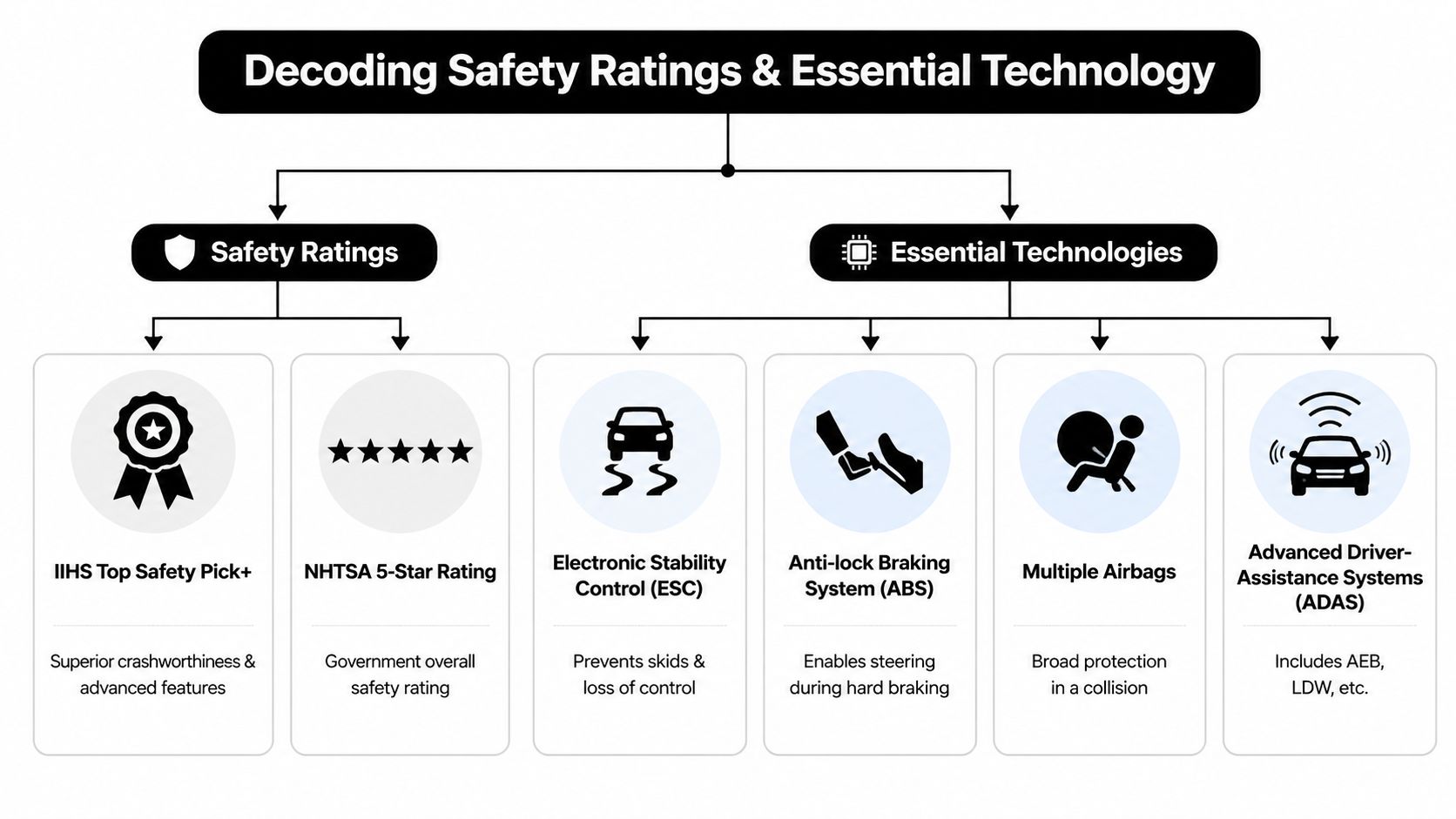
Once you�ve ruled out the too-small options, the next job is sorting through safety jargon without getting lost in acronyms. You don�t need to become a crash engineer. You do need to know what actually matters.
What ratings should tell you
A safety rating should answer two practical questions.
First, how well does the car protect the people inside when a crash happens? Second, what technology does it have to help avoid the crash in the first place?
That�s why I like using the Toyota Corolla as a concrete example. The IIHS teen vehicle list identifies the Toyota Corolla sedan (2017-2019 or 2023+) as a �Best Choice,� and notes that its good crash-test performance includes the driver-side small overlap front test. That test simulates a severe front-corner impact at 40 mph. IIHS also notes that Toyota Safety Sense can reduce rear-end crashes by 50% on equipped models.
Those aren�t abstract ratings. They describe how a car behaves when real mistakes happen.
The safety tech hierarchy
Not every feature carries equal value. Here�s how I rank them for teen drivers.
- Electronic Stability Control
It is imperative. IIHS and Consumer Reports prioritize vehicles with ESC, and it became standard in the U.S. starting in 2012 on new vehicles, which is why many stronger teen recommendations begin around those model years. ESC helps a driver keep control when the car starts to skid.
-
Automatic Emergency Braking
AEB matters because teens are still developing scanning habits and following-distance judgment. It won�t fix reckless driving, but it can help when attention slips.
-
Strong crash-test performance
Good restraint systems, strong roof strength, side-impact protection, and small-overlap performance all matter. A car can have fancy driver aids and still be a poor choice if the structure is weak.
-
Basic functional condition
Safety features only matter if the car is maintained properly. That includes tires, brakes, lights, and warning systems. If you�re comparing replacement parts during ownership, this guide to choosing vehicle-specific brake pads is useful because braking performance depends on using the correct components, not generic assumptions.
Buying advice: If a seller can�t clearly show which safety package the car has, assume it doesn�t have it until proven otherwise.
What to check on the actual vehicle
A listing that says �loaded� tells you almost nothing. Verify features on the specific car.
Use this quick screen:
- Look for ESC and AEB: Confirm through the VIN, window sticker history, or manufacturer equipment list.
- Test warning systems: Startup lights should illuminate briefly and then clear normally.
- Check camera and sensors: Backup camera, alerts, and visible sensor hardware should all function.
- Review owner habits: A well-equipped car with neglected maintenance is still a bad teen car.
- Teach the tech: Even good safety systems need a driver who understands what they do and what they don�t do. These safe driving apps and digital tools can help reinforce those habits.
Safety ratings are your filter. Safety technology is your backup. Neither replaces judgment, but both can buy your teen precious time and protection.
Recommended Safe Used Cars for Teens
Parents eventually want names, years, and prices. Fair enough. The broad shopping universe gets much easier once you focus on vehicles that fit the core safety criteria and stay under $20,000, which is how the IIHS and Consumer Reports teen recommendations are structured in the Kelley Blue Book summary of the joint list.
That same summary notes the joint IIHS/CR list includes 122 models. It highlights vehicles such as the Toyota Camry (2018+, from $13,100) and Chevrolet Equinox (2014+, from $5,300), with standard ESC and proven crash protection. Many newer versions also add AEB.
Top Recommended Used Cars for Teens
| Vehicle Type | Model (Recommended Years) | Average Price | Key Safety Note |
|---|---|---|---|
| Midsize Sedan | Toyota Camry (2018+) | $13,100 | Best Choice option with strong crash protection |
| Small SUV | Chevrolet Equinox (2014+) | $5,300 | Standard ESC, useful size and stability for teens |
| Small Sedan | Toyota Corolla sedan (2017-2019 or 2023+) | $9,500 | Best Choice with strong crash performance and Toyota Safety Sense |
| Small Sedan | Subaru Impreza sedan (2014+) | $5,800 | Affordable option with a strong safety reputation |
| Hatchback | Volkswagen Golf (2015-21) | $6,300 | Affordable used option cited among safer teen choices |
| Large SUV | Volvo XC90 (2013-17) | $6,000 | Large, protective vehicle with strong crashworthiness reputation |
| Midsize Sedan | Subaru Legacy (2020+) | $15,700 | Newer midsize option from the IIHS/CR recommendations |
| Hybrid | Kia Niro (2017-22) | $6,600 | Efficiency without giving up the safety-focused shortlist |
Best pick for most families
If you want the safest all-around answer for a lot of households, I�d start with the Toyota Camry.
It hits the sweet spot. It�s big enough to offer meaningful protection, common enough to find, and mainstream enough that maintenance and parts are usually straightforward. For parents who want a sedan instead of an SUV, this is one of the easiest recommendations to defend.
The Toyota Corolla sedan is also a strong answer if you want something smaller without dipping into the mini or small-car trap that IIHS warns about in its primary teen guidance. I prefer the Camry when the budget allows, but the Corolla remains a serious contender because of its strong safety credentials and widespread availability.
Best value under a tighter budget
If your budget is closer to the lower end, two vehicles stand out quickly.
The Chevrolet Equinox (2014+) is one of the strongest value plays on the board. Starting around $5,300 in the cited guidance, it gives many families a path into a vehicle with standard ESC and a more reassuring footprint than a tiny commuter car.
The Subaru Impreza sedan (2014+) at $5,800 also deserves attention, especially for families that want something affordable with practical road manners. In Florida, where rain can turn roads slick in minutes, that kind of predictable behavior matters.
Don�t confuse �cheap to buy� with �cheap to own.� A bargain car with old tires, neglected brakes, or crash damage gets expensive fast.
Best SUV choices for teen drivers
SUVs are popular with parents for good reason. The seating position can improve confidence and visibility, and the extra mass can be an asset. But not every SUV is a good teen SUV. You still want sane power, stable handling, and a proven safety record.
Strong options from the vetted lists include:
- Chevrolet Equinox (2014+) for value and everyday practicality
- Volvo XC90 (2013-17) for families who want a larger, highly protective vehicle
- Hyundai Tucson (2016-2021) as a modern compact SUV option from the recommendation pool
- Nissan Rogue (2014-2020) for parents who want another mainstream small SUV to compare
The Volvo XC90 is especially interesting if you want maximum size without blowing the budget. At $6,000 in the cited recommendations, it�s one of the more compelling �big protection for not-big money� choices.
Sedans still make excellent teen cars
A lot of buyers default to SUVs now, but I wouldn�t dismiss sedans. For many teens, a sedan is easier to place in traffic, easier to park, and less top-heavy in emergency maneuvers.
The standouts here are straightforward:
- Toyota Camry (2018+) for the best broad recommendation
- Toyota Corolla sedan (2017-2019 or 2023+) for a smaller but still safety-minded choice
- Subaru Legacy (2020+) for families wanting a newer midsize option
- Honda Civic sedan (2014-21) as another model identified in the broader recommendation set
If your teen will spend a lot of time on highways, I lean toward the midsize sedan category. The extra substance pays off.
What I�d buy depending on the situation
Every family has a different mix of budget, commute, and local road conditions. My opinionated shortlist looks like this:
- Best all-around sedan: Toyota Camry
- Best budget SUV: Chevrolet Equinox
- Best bigger-family option: Volvo XC90
- Best efficient safety-minded pick: Kia Niro
- Best lower-cost sedan: Subaru Impreza sedan
- Best compact mainstream choice: Toyota Corolla sedan
If you want a broader look at practical car solutions for students, that resource is worth scanning for another perspective on balancing price, practicality, and first-car usability.
The key is to stay disciplined. Don�t let a sunroof, upgraded stereo, or sporty trim distract you from the fundamentals. The safest teenage used cars are usually the boring ones. For a parent, boring is exactly what you want.
The Essential Pre-Purchase Inspection Checklist
A smart model choice doesn�t protect your teen if the specific vehicle in front of you is damaged, worn out, or poorly repaired. Many parents become careless at this stage. They research the right cars, then buy the wrong example.
In Florida, you need to be especially strict about water exposure. The Fred Beans guide on safe used cars for teens notes that in hurricane-prone Florida, parents should prioritize checking for flood damage. It also notes that AWD, found in vehicles like the Subaru Outback, can cut wet-road skids by 40% per NHTSA, and that Florida sees 20% more hydroplaning crashes than the national average.
Your walk-away checklist
Bring your teen with you. This is part of their education.
Use this checklist before you get emotionally attached to any car:
- Check for flood signs: Smell the interior. Look for musty odor, damp carpet, rust on seat mounts, silt in hard-to-reach places, or water lines in the trunk and spare-tire well.
- Look at panel fit and paint: Uneven gaps, overspray, and mismatched paint can point to crash repairs.
- Inspect the tires closely: Uneven wear can reveal alignment, suspension, or neglect issues.
- Test every safety feature: Backup camera, warning lights, door locks, seatbelts, headlights, and any driver-assistance alerts should all work.
- Scan the glass and lights: Different brand markings on one window or one headlamp can suggest prior damage.
- Watch the dashboard at startup: Warning lights should come on briefly, then turn off as expected.
- Check underneath: Look for fresh undercoating in suspicious patches, corrosion, or bent components.
- Review service records: Consistent maintenance beats a seller�s promises every time.
If the seller pressures you to skip an inspection, leave. A good used car can survive scrutiny.
The Florida-specific items parents miss
Florida buyers have a different risk profile than buyers in many other states. Storms, standing water, heavy rain, and high humidity make water damage and traction concerns more important.
That means I�d put these near the top of your list:
-
Flood history
Not just title branding. Look for physical evidence of water intrusion.
-
Tire condition
Worn tires turn a decent car into a poor wet-weather car fast.
-
Drainage and seals
Sunroof drains, door seals, trunk seals, and windshield seals matter more than many buyers realize.
-
AWD if your use case supports it
It isn�t mandatory for every Florida teen, but it deserves a harder look if your teen regularly drives in heavy rain or on poorly drained roads.
For broader maintenance habits that matter in Florida�s climate, these vehicle maintenance basics for Florida drivers are worth reviewing before you buy.
Don�t skip the professional inspection
Your own inspection screens out obvious bad bets. It does not replace a trusted mechanic.
Pay for a pre-purchase inspection. Have the mechanic evaluate brakes, tires, suspension, leaks, battery health, crash repairs, and the operation of safety systems. If you want an additional international comparison point, this roundup of the UK’s safest second-hand vehicles can be useful for seeing how safety-minded used-car criteria overlap across markets.
A used car for a teen should pass a higher bar, not a lower one. This isn�t the place for hope, guesswork, or seller charm.
Beyond the Car Reducing Risk and Insurance Costs
A safe vehicle gives your teen a better platform. It does not give them judgment, restraint, or hazard awareness. Those come from training and repetition.
That�s why parents need to think past the purchase. The complete safety plan includes how the teen drives, when they drive, who rides with them, and how seriously they treat distraction.
The car can�t save a reckless driver
Even excellent crash protection has limits. A teenager who speeds, follows too closely, drives tired, or touches the phone constantly can outrun the benefits of a good vehicle in a hurry.
What lowers risk in real life are habits such as:
- Scanning ahead: Looking well beyond the bumper instead of reacting late
- Managing space: Leaving enough following distance and escape room
- Reading conditions: Adjusting for rain, glare, traffic density, and poor visibility
- Controlling distraction: Keeping the phone out of reach and the cabin calm
- Understanding limits: Knowing when driver aids help and when they won�t
The safest car in the driveway becomes an average car the second a teen treats driving casually.
These habits also matter financially. Insurers look at risk. Parents usually focus on the premium after the fact, but behavior is part of the long game. Clean records, fewer violations, and safer routines can support lower costs over time. If you�re looking at practical ways to help on that front, this guide on how to lower car insurance rates gives parents a useful starting point.
Training multiplies the value of a safe car
I�ve seen many families overinvest in the vehicle and underinvest in the driver. That�s backwards.
A teen who learns defensive driving properly gets more out of every safety feature in the car. They brake earlier. They spot conflict sooner. They don�t rely on AEB to rescue a bad following habit. They understand that lane-keeping and alerts are backups, not permission slips.
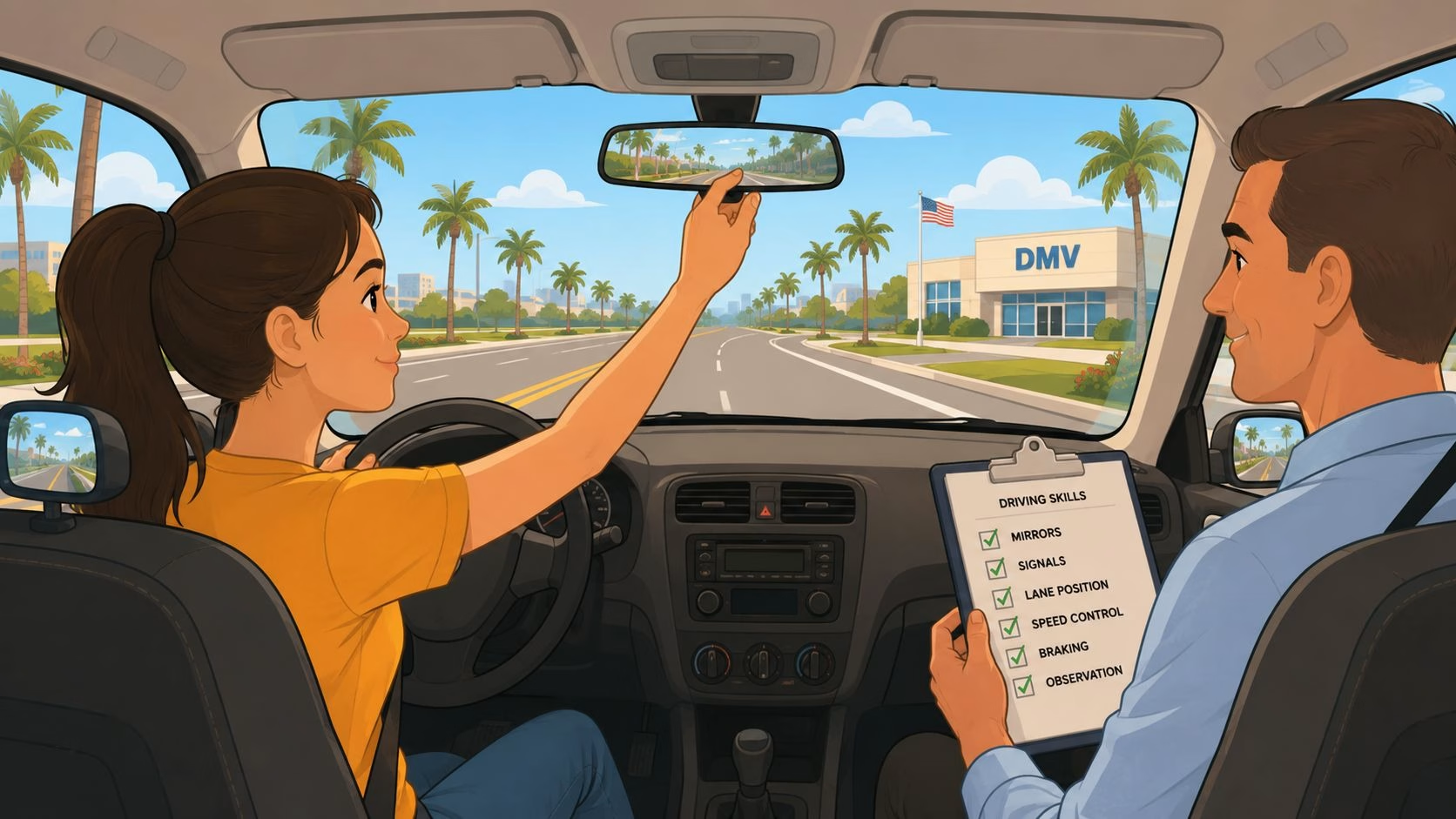
This is a good point to reinforce that learning visually too.
A well-trained teen in a well-chosen car creates a compounding effect. The car helps the driver. The driver uses the car better. That�s the combination parents should be chasing.
Set household rules that support the vehicle choice
The car is one part of your policy. Your family rules are the other.
I recommend clear, written expectations on:
- No phone use while driving
- No extra passengers early on
- No nighttime driving beyond family rules or state limits
- No rushing, no showing off, no aggressive lane changes
- Immediate reporting of warning lights, tire issues, or minor impacts
Those rules matter because teen crashes rarely come from one thing alone. It�s usually inexperience plus distraction, or speed plus weather, or fatigue plus passengers. A safe car helps. Consistent rules reduce the chances of piling risk on top of risk.
Building a Lifelong Foundation of Road Safety
Buying a first car for your teenager isn�t just about getting them from home to school and back. You�re setting a pattern. What you choose tells them what matters: appearance or protection, speed or stability, convenience or discipline.
If you want the clearest path, keep it simple. Favor size and weight over tiny packaging. Choose vehicles with proven safety credentials and the right technology. Inspect the actual used car like you expect to find problems, especially in Florida. Then put just as much effort into the driver as you put into the machine.
That�s the genuine answer to safest teenage used cars. Not a magic model. Not one badge. Not one feature. It�s the combination of a smart vehicle, a careful inspection, and a teen who�s taught to drive with patience and awareness.
Your teen�s first car should be forgiving. Your teen�s first driving habits should be deliberate.
Parents can�t control every road, every storm, or every other driver. But you can control the system you build around your child. Build a strong one, and you give them something much better than a set of keys. You give them a safer start that can protect them for years.
If you want help strengthening the driver side of that safety equation, BDISchool offers Florida-approved online courses that support safer habits, defensive driving knowledge, and insurance-focused education. A smart car choice matters. Pairing it with better training is how families create a safer long-term outcome.