
Your learner’s permit is just the beginning. To actually become a safe driver, you need proper training-and not all driver education courses are created equal.
State-approved driver education programs meet strict legal standards that protect you and set you up for success on the road. We at floridanewdriver.com believe this distinction matters more than most people realize, which is why we’re breaking down exactly what state approval means and why it should influence your choice.
What State Approval Actually Protects
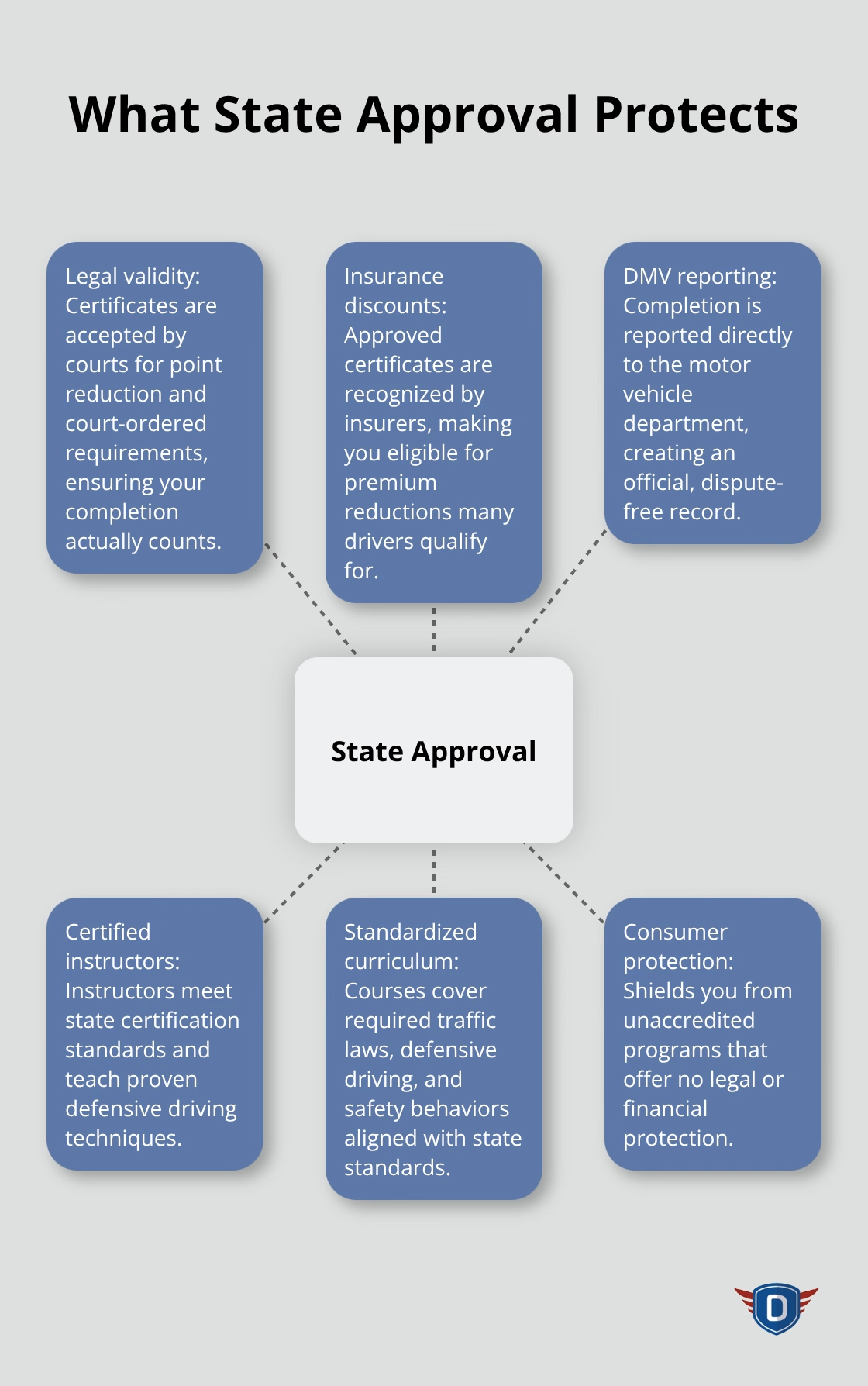
State-approved driver education isn’t just a label-it’s a legal requirement that separates legitimate programs from unaccredited alternatives. When a program receives state approval, the curriculum, instructors, and course materials pass review by your state’s Department of Motor Vehicles or equivalent agency. In Florida, the FLHSMV oversees all approved traffic school programs and verifies that courses meet strict standards before issuing certificates. This approval process isn’t optional; it’s what makes your certificate legally valid when you need to reduce points, satisfy court requirements, or claim insurance discounts. Without state approval, your completion certificate won’t be recognized by courts or insurance companies, leaving you without the legal protections and financial benefits you earned by taking the course.
Why Approved Programs Deliver Better Results
Approved programs must follow detailed curriculum standards that cover specific traffic laws, defensive driving techniques, and safety behaviors. The FLHSMV requires courses to address topics like impaired driving prevention, crash avoidance strategies, and how attitude affects decision-making on the road. This structured approach means you receive instruction aligned with what law enforcement and insurance companies expect, not random safety tips. A state-approved program significantly reduces the incidence of repeat violations, making it an effective strategy for safer driving. Instructors in approved programs must meet certification requirements, which means they’ve demonstrated competency in teaching defensive driving rather than simply reading scripts. Non-approved courses often lack this rigor, which is why courts won’t accept them and insurance companies won’t offer discounts for completion.
How Approval Protects Your Driving Record and Wallet
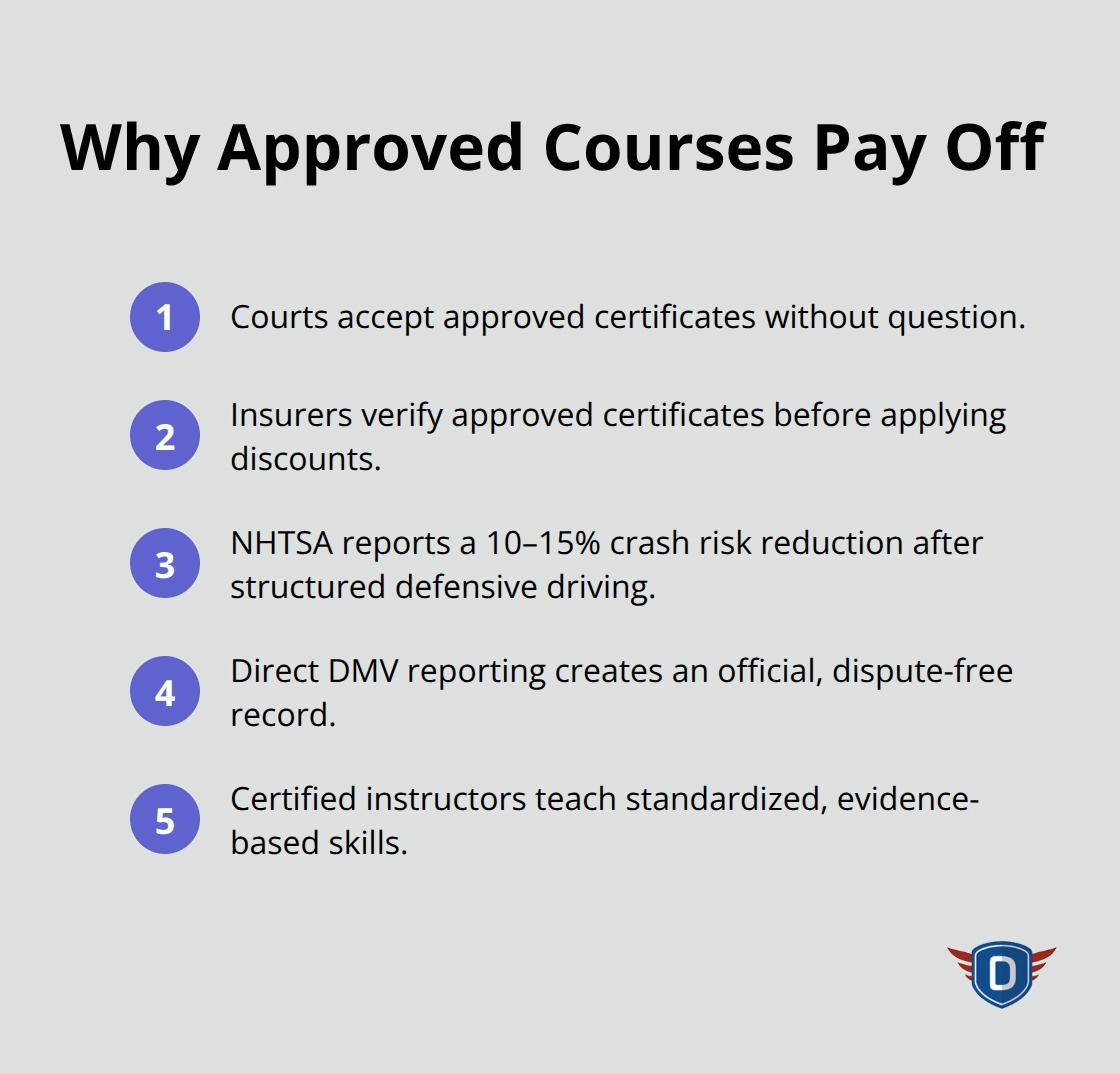
When you complete an approved course, the certificate is reported directly to your state’s motor vehicle department, creating an official record that courts and insurers can verify. This direct reporting prevents disputes about whether you completed the course. Insurance companies specifically check for FLHSMV-approved certificates before offering discounts many drivers qualify for after taking traffic school. If you take an unapproved course, you lose access to these discounts entirely, costing you hundreds of dollars over a three-year insurance period. Court orders also require approved certificates-a judge won’t accept completion proof from a non-approved program, which could result in license suspension or additional fines.
What Happens When You Choose an Unapproved Alternative
Unapproved courses might seem cheaper upfront, but they create serious problems down the road. Courts reject certificates from non-approved providers, meaning you won’t satisfy legal requirements even if you complete the entire program. Insurance companies won’t recognize your completion, so you miss out on discounts that approved courses provide. Your state’s motor vehicle department has no record of your completion, which leaves you vulnerable if questions arise about your driving history. The approval process exists because states recognize that standardized, verified instruction produces safer drivers and protects the public.
Moving Forward With the Right Choice
Understanding state approval helps you make an informed decision about your driver education. The next section explains exactly why choosing an approved program over non-approved alternatives makes financial and legal sense for your specific situation.
The Real Cost Difference Between Approved and Unapproved Courses
Insurance Discounts Add Up Fast
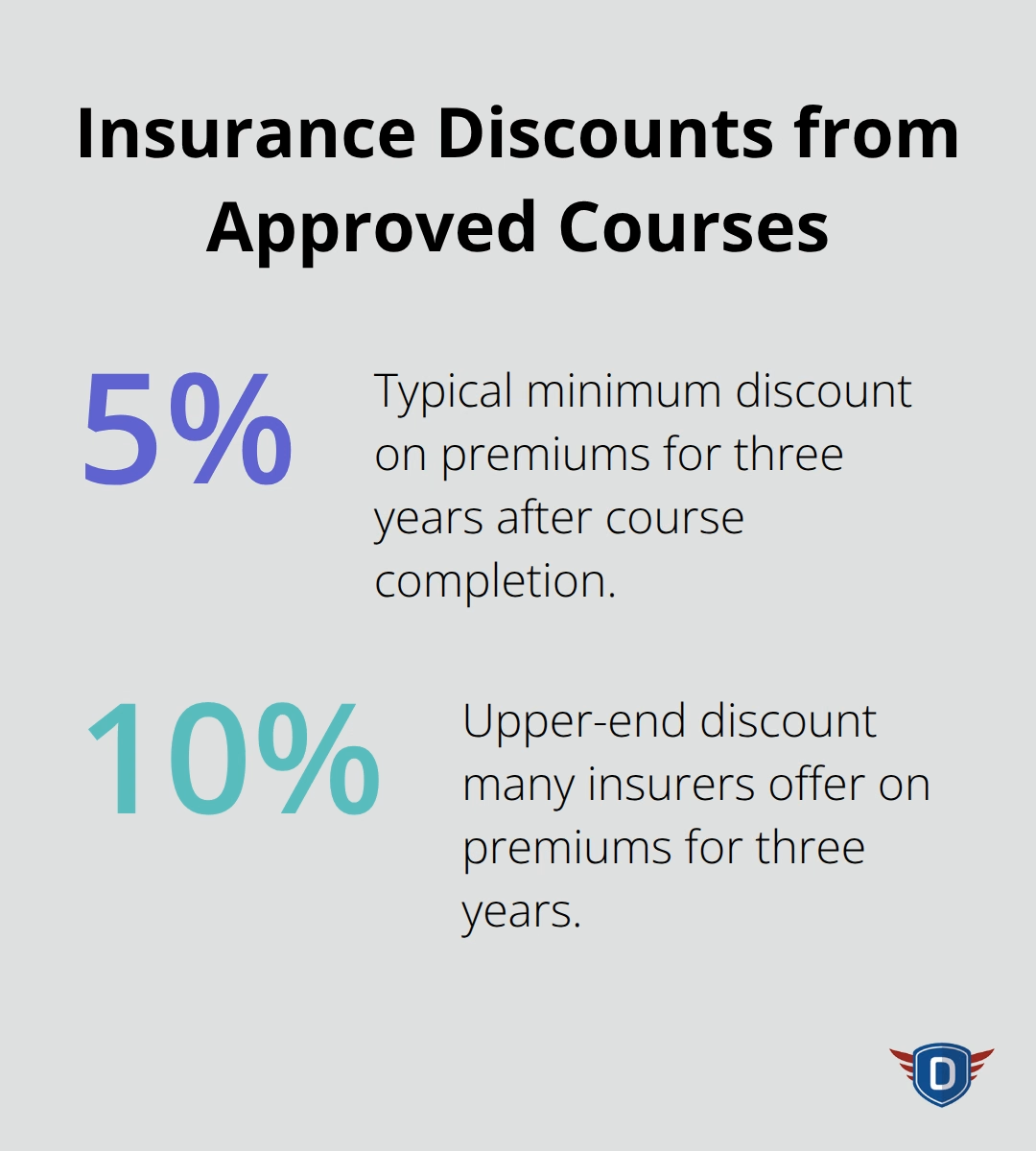
Insurance companies offer measurable discounts for completing state-approved defensive driving courses, typically ranging from 5% to 10% off your premium for three years. In Florida, the average car insurance premium runs around $2,100 annually according to recent market data, which means a 10% discount saves you $210 per year or $630 over three years. Most approved courses cost between $25 and $75, making the return on investment immediate and substantial. An unapproved course might cost $15 less upfront, but that savings vanishes entirely when insurance companies refuse to recognize your completion.
Court Penalties Hit Your Wallet Hard
Courts impose real financial consequences for failing to submit an approved certificate. Traffic violations in Florida carry fines ranging from $110 to $500 depending on the infraction, and choosing an unapproved program means you won’t satisfy court requirements, potentially triggering additional penalties, license suspension fees, or reinstatement costs that exceed $150. The approval process exists because approved programs produce measurable safety outcomes, while unapproved alternatives offer no verifiable protection for your wallet or your driving record.
Quality Differences Shape Your Actual Skills
State-approved curricula in Florida must cover specific competencies including hazard perception, speed management, and decision-making under pressure-topics that research shows reduce repeat violations significantly. Unapproved courses often skip these elements entirely, focusing instead on filler content that doesn’t translate to safer driving behavior. Instructors in approved programs must meet state certification standards, meaning they’ve demonstrated actual teaching competency rather than simply reading a script.
Official Records Protect You Later
When you complete an approved program, your certificate is reported directly to the FLHSMV, creating an official record that courts and insurers can verify instantly. This direct reporting prevents disputes and protects you if questions arise about your driving history. Courts won’t accept certificates from non-approved providers under any circumstances, which leaves you liable for the original violation even if you completed training elsewhere.
What Separates Legitimate Programs From the Rest
The distinction between approved and unapproved programs determines whether your effort actually counts. State approval means your completion satisfies legal requirements, qualifies you for insurance discounts, and creates a verifiable record with your state’s motor vehicle department. Non-approved alternatives leave you exposed to financial penalties and legal complications that far exceed any upfront savings.
How Approved Courses Build Better Drivers
Real Skills That Reduce Accidents
State-approved driver education teaches the specific skills that reduce accidents, not just the rules that satisfy legal requirements. The FLHSMV mandates that approved programs cover hazard perception, speed management, and decision-making under pressure because research shows these competencies directly lower repeat violation rates. When you take an approved course, you learn to identify dangerous situations before they develop-spotting the driver drifting between lanes three cars ahead, recognizing when wet roads require slower speeds, understanding how your own emotions affect your choices behind the wheel.
Instructors in approved programs teach defensive driving techniques grounded in real crash data, explaining why following distance matters at different speeds and how to recover from skids or sudden obstacles. Unlike unapproved alternatives that offer generic safety tips, approved curricula address the actual scenarios you’ll face: merging in heavy traffic, navigating intersections with poor visibility, reacting to aggressive drivers, and managing distractions.
The National Highway Traffic Safety Administration data shows that drivers completing structured defensive driving courses reduce their crash risk by approximately 10 to 15 percent, a measurable outcome that unapproved programs simply cannot deliver because they lack standardized, evidence-based content.
Attitude and Behavior Shape Actual Safety
Building genuine confidence on the road requires understanding both the mechanics of safe driving and your own behavioral patterns. Approved programs spend significant time on attitude and decision-making because safety experts recognize that knowing a rule and actually following it are different skills. You learn how fatigue affects reaction time, why aggressive responses to other drivers escalate situations, and how to manage the stress that leads to poor choices.
Florida-approved courses emphasize impaired driving prevention and crash avoidance strategies because these topics have the highest impact on survival rates. The structured environment of an approved program means you receive instruction from certified professionals who’ve demonstrated teaching competency, not from someone reading scripts.
Instruction That Produces Lasting Change
Effective instruction builds your ability to apply knowledge in real time, not just pass a test. Your state requires approval because approved programs produce measurable behavioral change-drivers who complete them actually drive differently months and years later, not just immediately after taking the course. Our DMV-approved courses follow strict FLHSMV guidelines and deliver instruction designed to create lasting safe driving habits. The curriculum blends clear explanations, engaging visuals, and real-life scenarios to make learning effective. Students explore traffic laws, defensive driving techniques, safe following distances, and the dangers of aggressive or distracted driving, with special focus on how attitude and behavior affect decision-making behind the wheel.
Final Thoughts
State-approved driver education delivers measurable benefits that extend far beyond passing a test or satisfying a court requirement. You gain access to insurance discounts worth hundreds of dollars over three years, legal protection that courts recognize instantly, and instruction grounded in real crash data rather than generic safety tips. NHTSA data shows that approved programs reduce accident risk by 10 to 15 percent, a result that unapproved alternatives cannot match.
Your choice between approved and unapproved courses determines whether your effort counts toward your driving record, your wallet, and your actual safety on the road. Approved programs create official records with your state’s motor vehicle department, satisfy court orders without question, and qualify you for insurance savings that unapproved alternatives cannot provide. The instructors you learn from have demonstrated teaching competency, the curriculum covers the specific skills that prevent accidents, and your certificate carries legal weight the moment you complete the course.
floridanewdriver.com offers Florida-approved courses including Basic Driver Improvement for moving violations, Intermediate Driver Improvement for court-ordered requirements, and specialized programs for aggressive drivers and mature drivers. Our courses follow strict FLHSMV guidelines, feature self-paced online learning available in multiple languages, and issue certificates reported directly to the state. Enrolling takes minutes, and your certificate arrives electronically upon completion, ready to satisfy your legal obligations and qualify you for insurance discounts immediately.