
A missed course requirement can delay a Florida license application, leave points on a driving record, or create problems with a court deadline. The choice between a substance course versus BDI is not about choosing the easier class. Each course serves a different purpose, and enrolling in the wrong one may not satisfy your requirement.
A substance course, commonly called Traffic Law and Substance Abuse Education or TLSAE, is generally for new Florida drivers before they apply for their first learner’s license. Basic Driver Improvement, or BDI, is generally for drivers responding to a traffic citation, point-related concern, court order, or driver improvement requirement.
Substance Course Versus BDI: The Key Difference
The most important difference is why you need the course. TLSAE helps first-time drivers meet an early licensing requirement. BDI helps licensed drivers address a traffic violation or complete an improvement program after a driving-related event.
Neither course automatically replaces the other. If you received a traffic ticket, a TLSAE substance course usually will not meet a BDI requirement. If you are applying for your first Florida learner’s license, BDI generally does not replace the required TLSAE course.
Both programs cover traffic safety, responsible decision-making, and the consequences of unsafe driving. Their audiences, approval purposes, and reporting requirements are different.
What Is a Substance Course?
A substance course is the common name for Florida’s Traffic Law and Substance Abuse Education course. You may also hear it called the Drug and Alcohol Course, the TLSAE course, or the first-time driver course.
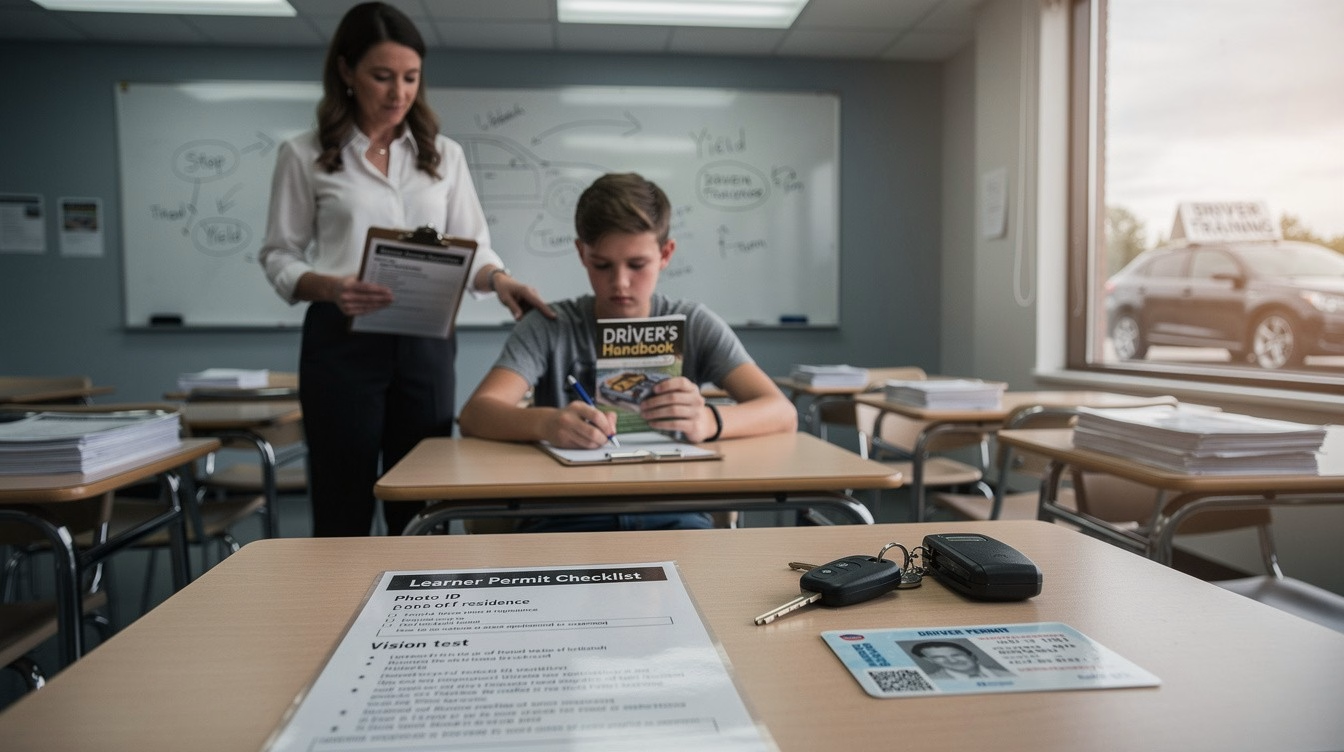
The course is designed for people seeking their first Florida learner’s license. It explains traffic laws, defensive driving principles, impaired driving risks, and how alcohol and drugs can affect judgment, vision, reaction time, and driving ability.
For many first-time applicants, completing this course is a required step before taking the permit knowledge exam. It is not a punishment course and does not mean the student has a substance-related violation. The name refers to the required curriculum, which includes education about alcohol, drugs, and driving.
Who typically needs TLSAE?
You may need TLSAE if you are a Florida resident applying for your first learner’s license and have never held a driver license in another state or country. Teen drivers commonly take it, but adults getting a first license may need it as well.
Your licensing situation matters. If you previously held a license elsewhere, have moved to Florida, or received instructions from the Florida Department of Highway Safety and Motor Vehicles, confirm your individual requirement before enrolling.
What does the course cover?
TLSAE typically includes Florida traffic laws, signs and signals, sharing the road, crash prevention, and the legal and personal consequences of impaired driving. It is intended to help new drivers build safer habits before they begin supervised driving.
Many approved online options are self-paced, so students can complete coursework around school, work, or family responsibilities. Before enrolling, confirm that the provider is approved for the specific Florida requirement you need.
What Is Basic Driver Improvement?
Basic Driver Improvement is a driver education program for people who already have a license or who are dealing with a traffic-related requirement. It is commonly called BDI, traffic school, or a four-hour driver improvement course.
BDI may be available after certain noncriminal traffic citations. Depending on the circumstances and eligibility rules, completing an approved BDI course can help a driver elect an option related to points on their driving record. Courts, employers, insurance companies, or the state may also require driver improvement training in certain situations.
BDI is not a single outcome with the same result for every driver. Your citation type, driving history, county, deadline, and prior course elections can all affect whether BDI is an option and what it accomplishes.
When might BDI be required or helpful?
A driver may take BDI after receiving an eligible moving violation, when directed by a court, or when instructed by a licensing authority. Some drivers choose an eligible course option to address points, while others complete BDI because it is specifically required.
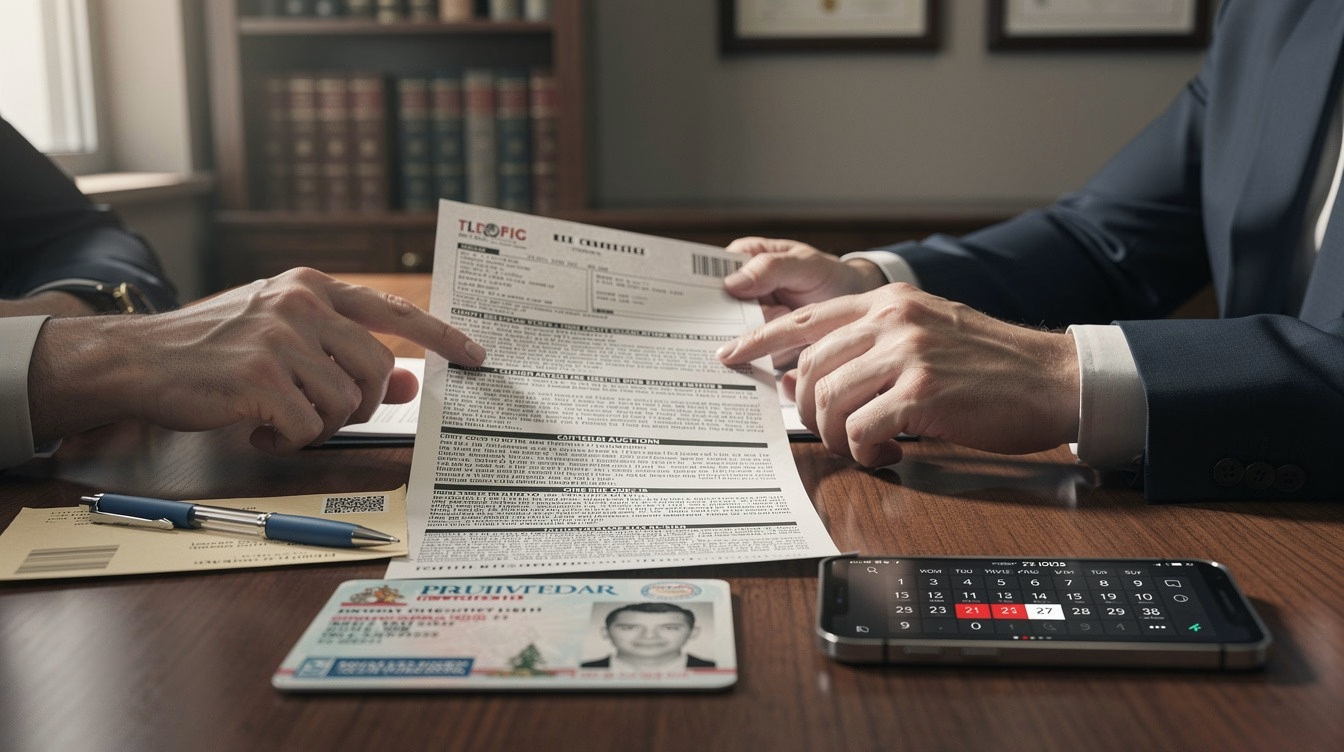
Read the citation and any court notice carefully. Those documents should identify the deadline, the required course type, and whether you must submit proof of completion yourself.
What does BDI teach?
BDI focuses on practical driving behavior after a violation or safety concern. Topics often include defensive driving, traffic laws, speed management, right-of-way decisions, distracted driving, following distance, crash avoidance, and the consequences of repeated unsafe choices.
The goal is not simply to check off a requirement. A well-designed BDI course connects the violation to safer habits drivers can use on their next trip.
How to Choose the Right Course
Start with the document or reason that brought you to the course. If you are applying for your first Florida learner’s license, TLSAE is likely the course you need. If you have a citation, court notice, or driver improvement instruction, review it for language such as Basic Driver Improvement, BDI, traffic school, or a required number of course hours.
Do not rely only on a course nickname. �Substance course� generally refers to TLSAE, while �traffic school� may refer to BDI, but local instructions can use different wording. The exact course name on your official notice should guide your choice.
If you are uncertain, contact the court, clerk, licensing agency, or organization that issued the requirement before you enroll. A support team can explain course features, but the agency that issued your citation or licensing instruction is the best source for confirming what will satisfy it.
Approval, Completion, and Deadlines Matter
An online course is convenient only if it meets the requirement attached to your situation. Look for a provider that clearly identifies the course type, explains its approval status, provides transparent pricing, and offers access on the devices you use.
For a licensing course, confirm how completion is reported and when you may take the next licensing step. For BDI, verify your due date before starting. Completing the course after a court or clerk deadline may not deliver the result you expected, even if the course itself is approved.
Keep your completion confirmation for your records. In some cases, a provider may report completion electronically. In others, you may need to present or submit your certificate. Follow the instructions on your notice rather than assuming every course is reported the same way.
Common Mistakes to Avoid
The most common mistake is enrolling in BDI because it sounds like a general driving course when the actual requirement is TLSAE for a first license. The reverse also happens when a driver takes a substance course after a traffic ticket even though the notice requires BDI.
Another mistake is waiting until the deadline. Self-paced learning gives you flexibility, but it does not change court dates, permit appointments, or administrative processing times. Start early enough to finish, receive confirmation, and complete any required next step.
Finally, do not assume a course removes every consequence of a citation. BDI eligibility and results vary. If a ticket involves a serious offense, a commercial license, a crash, a missed deadline, or a court order with special terms, ask the issuing authority what applies to your case.
Frequently Asked Questions
Is a substance course the same as BDI?
No. A substance course usually means Florida TLSAE for first-time licensing, while BDI is driver improvement training commonly associated with traffic citations or driver improvement requirements.
Do I need TLSAE if I got a speeding ticket?
Usually no. A speeding ticket may involve BDI if you are eligible or ordered to complete it, but the citation or court notice determines the required course.
Can BDI help me get my first learner’s license?
No. BDI generally does not replace the TLSAE requirement for first-time Florida learner’s license applicants.
How long are TLSAE and BDI courses?
Both are commonly offered as four-hour courses in Florida. Confirm the required course length on your official notice or licensing instructions before enrolling.
Can I take either course online?
Yes, approved providers may offer both courses online. Confirm that the course is approved for your purpose and understand how completion will be reported.
What if I choose the wrong course?
The course may not satisfy your requirement. Check with the court, clerk, or licensing agency promptly so you can enroll in the correct program without missing a deadline.
The right course should make the next step clearer, not more complicated. Confirm your requirement first, choose the approved course that matches it, and give yourself enough time to complete it with confidence.