
Florida traffic laws are strict, and violations can cost you thousands in fines, points, and insurance increases. A single ticket can derail your driving record for years.
Traffic laws education in Florida isn’t optional-it’s your best defense against costly mistakes. We at floridanewdriver.com help drivers understand the rules that matter most and the penalties that follow when you break them.
How Florida’s Point System Works and What Violations Cost
Understanding Point Values and Accumulation
Florida’s point system is straightforward but punishing. Every moving violation carries points, and too many points can suspend your license. Speeding 1�9 mph over costs 3 points, 10�29 mph costs 4, and 50+ mph costs 6. Failing to yield costs 3 points. Running a red light or rolling through a stop sign each carries 4 points.
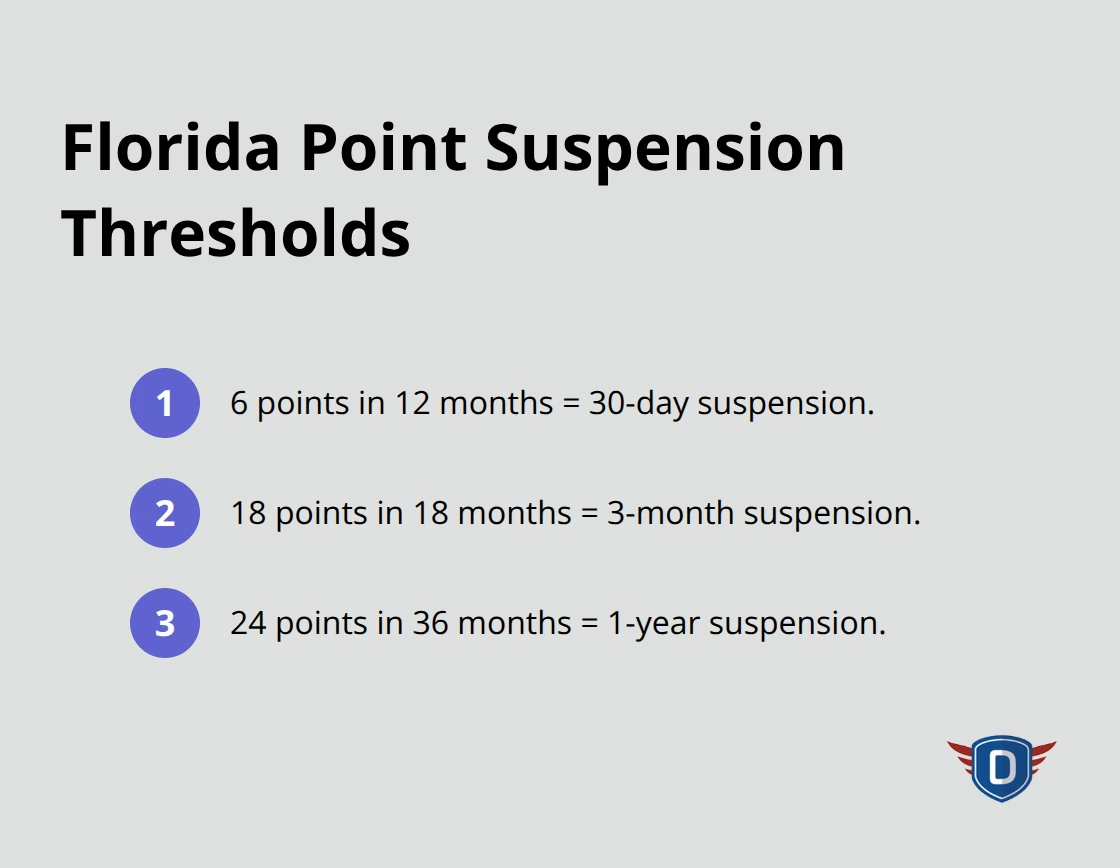
These aren’t theoretical numbers-they directly impact your ability to drive legally. Six points within 12 months triggers a 30-day suspension. Eighteen points within 18 months means a 3-month suspension. Twenty-four points within 36 months results in a full year without your license.
FLHSMV data from 2025 shows Florida issued nearly 1 million speeding tickets, up 29 percent from 2024, demonstrating how easy it is to accumulate violations. Points remain on your driving record for at least five years from the date of conviction, so a mistake today affects your driving standing for years.
How Points Translate to Insurance Increases
Insurance companies pull your driving record regularly, and points translate directly into higher premiums. A single 3-point violation can increase your annual insurance cost by 10 to 20 percent depending on your insurer. A 4-point violation often triggers a 25 to 40 percent increase.
Stacking multiple violations means your insurer may drop you entirely or charge rates you can’t afford. This is where taking action matters.
Taking Action Within 30 Days
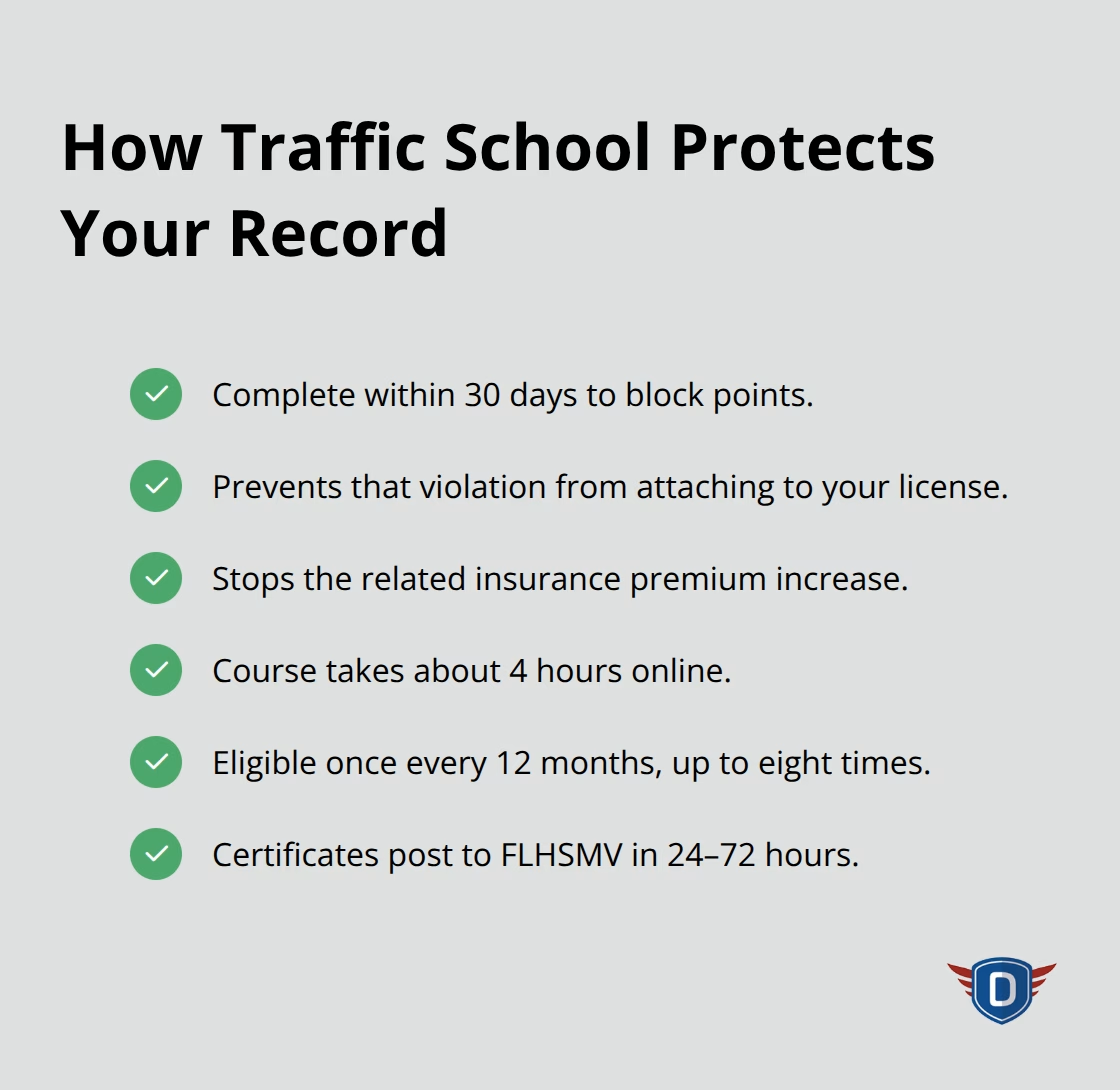
If you receive a citation for a non-criminal moving violation, you have 30 days to elect Basic Driver Improvement through an FLHSMV-approved provider. Completing a 4-hour BDI course prevents points from being added to your record entirely and stops the insurance increase for that specific violation.
You can take BDI once every 12 months and up to eight times in your lifetime. For more serious offenses (reckless driving, failing to stop for a school bus, racing on highways), you must complete BDI within 90 days or your license gets canceled.
Recent Law Changes That Affect You
Recent Florida law changes in 2026 expanded the Move Over Law to include any disabled vehicle with hazard lights on, not just emergency vehicles. Failing to move over or slow down now carries the same violation weight as before.
Since July 1, 2026, traffic camera citations require clear photo or video of the driver�s face, reducing weak tickets and strengthening court evidence. These changes mean enforcement is more targeted and harder to contest when violations are legitimate.
The Violations You’re Most Likely to Get and How to Stop Making Them
Speeding: Florida’s Most Common Violation
Speeding dominates Florida’s violation landscape, and the numbers prove it’s the easiest mistake to make. Most drivers don’t realize how aggressively enforcement has intensified in counties like Miami-Dade, where speeding enforcement in Florida counties includes traffic cameras that catch violations automatically.
The reality is simple: driving 5 mph over the limit in a 35 mph zone still gets you cited. At 1 to 9 mph over, you face 3 points and a fine. Reckless driving-which includes excessive speed, weaving through traffic, or aggressive acceleration-carries 4 points and often results in license suspension if combined with other violations.
Try setting your cruise control 3 to 5 mph below the posted limit, especially in school zones where the limit drops to 20 mph during active hours and cameras are frequent. This single habit eliminates most speeding violations.
Distracted Driving and Phone Use
Distracted driving enforcement has tightened significantly. Florida bans texting for all drivers and prohibits handheld device use entirely, with zero tolerance for drivers under 18. In school or work zones, a handheld device violation costs 3 points.
If you’re caught, you can take a Wireless Communications Device Course to avoid the points and fines-but only if you act quickly and provide proof of completion to the court. The practical solution is to put your phone in the glove compartment or back seat before driving, not on the passenger seat where you might reach for it at a red light.
Right-of-Way and Traffic Signal Mistakes
Right-of-way violations happen because drivers misjudge who has priority at intersections. Failing to yield costs 3 points, and at uncontrolled intersections, the vehicle on your right has priority-this is the rule most drivers get wrong.
At four-way stops, the first vehicle to stop goes first; if you arrive simultaneously, yield to the driver on your right. Traffic signals require full stops at red lights; rolling stops at stop signs cost 4 points each. Green lights mean go only if the intersection is clear-yellow means prepare to stop, not accelerate through.
Pause at every intersection for a full second, scan left-right-left for pedestrians and cross traffic, and only proceed when you’re certain the path is clear.
Lane Markings and Pedestrian Right-of-Way
Pavement markings communicate lane rules that many drivers ignore. Solid white lines mean stay in your lane; dashed white lines allow lane changes. Solid yellow lines prohibit passing entirely, and crossing a solid yellow to pass unsafely is a 4-point reckless driving violation.
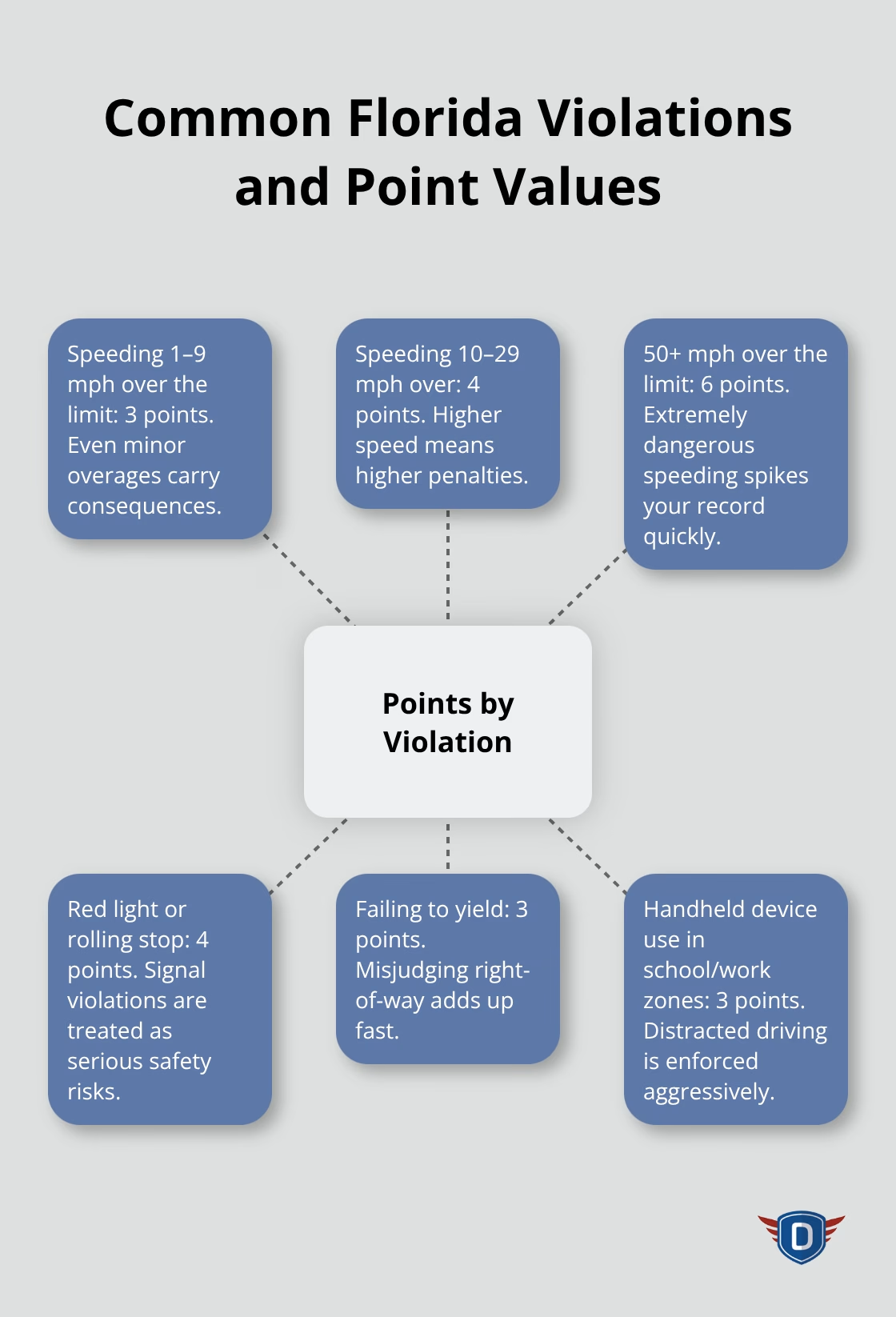
White arrows painted on the road dictate which lanes can turn or go straight, and you must follow your lane’s direction. Pedestrians always have pedestrian right-of-way in crosswalks, and failing to yield costs 3 points and increases your liability in a crash.
Treat every pedestrian as unpredictable-assume they’ll step into traffic without warning and slow down when you see them near a crosswalk or intersection. These violations aren’t random or unfair; they’re enforced because they cause crashes. Florida’s traffic fatality rate sits around 15.9 deaths per 100,000 people, making road safety enforcement a priority.
The common thread across all violations is that they’re preventable through deliberate, defensive driving habits. Understanding what triggers each violation is the first step, but knowing how to respond when you do receive a citation separates drivers who protect their record from those who watch their insurance costs climb.
How Traffic School Stops Points and Cuts Insurance Costs
Act Fast: The 30-Day Window That Protects Your Record
A state-approved traffic school course completed within 30 days of receiving a moving violation is your most effective defense against a damaged driving record. When you finish a Basic Driver Improvement course through an FLHSMV-approved provider, the points from that specific violation never attach to your license. Insurance companies check your record regularly, and points trigger premium increases directly. A 3-point violation typically raises your annual premium by 10 to 20 percent; a 4-point violation often jumps it 25 to 40 percent. Completing BDI eliminates that insurance spike entirely for that ticket.
You can take BDI once every 12 months and up to eight times in your lifetime, giving you a realistic tool to manage violations without watching your driving record deteriorate. The course itself takes only 4 hours and covers defensive driving techniques, right-of-way rules, speed management, and the real-world consequences of aggressive or distracted driving. Most importantly, you complete it entirely online at your own pace, so work or family obligations don’t prevent you from acting quickly.
Online Courses That Meet State Requirements
State-approved traffic school providers deliver courses entirely online, self-paced, and certificates post electronically to the FLHSMV within 24 to 72 hours after completion. This electronic submission meets all state compliance requirements without delays. You study from any device at your own convenience, and the curriculum blends clear explanations, engaging visuals, and real-life scenarios to make learning simple and effective.
The content covers Florida traffic laws, defensive driving techniques, safe following distances, right-of-way rules, and the dangers of aggressive or distracted driving. Special focus addresses impaired driving prevention, crash avoidance strategies, and how attitude and behavior affect decision-making behind the wheel.
Defensive Driving Knowledge Reduces Future Violations
The defensive driving knowledge you gain through traffic school directly reduces future violations because the curriculum focuses on situational awareness and decision-making rather than memorizing rules. You learn why speeding in school zones causes crashes, how to scan for disabled vehicles under Florida’s Move Over Law, and how to anticipate pedestrian movements before they happen. These aren’t theoretical concepts-they’re practical scenarios that mirror the violations you see on Florida roads daily.
For drivers who’ve received multiple citations, an Intermediate Driver Improvement course adds 8 hours of deeper instruction that reinforces safer habits and addresses behavioral patterns that lead to repeated violations. The curriculum updates regularly to reflect new Florida statutes and enforcement trends, so you learn current law rather than outdated material. When you understand how traffic laws evolve or how enforcement practices change, you make smarter decisions behind the wheel that keep you compliant.
Insurance Discounts for Mature Drivers
Drivers 55 and older can take a Mature Driver Course to refresh their knowledge and qualify for insurance discounts lasting approximately three years, provided they maintain a clean record. This 6-hour refresher improves safety awareness and helps older drivers stay current with modern traffic laws and roadway technologies.
Final Thoughts
Florida traffic laws education protects your driving record and keeps your insurance costs manageable for years to come. A single violation costs you thousands in fines, points, and premium increases that compound over five years on your record. The defensive driving knowledge you gain through traffic school prevents violations before they happen-you’ll recognize school zone speed traps, scan for disabled vehicles under the Move Over Law, and anticipate pedestrian movements that catch most drivers off guard.
If you’ve received a citation, act within 30 days and complete a state-approved traffic school course to stop points from attaching to your license. We at floridanewdriver.com offer Florida-approved Basic Driver Improvement and Intermediate Driver Improvement courses designed for drivers who want to protect their record and reduce violations. Our courses take 4 to 8 hours, complete entirely online at your own pace, and post certificates electronically to the FLHSMV within 24 to 72 hours.
Start today by taking a traffic school course through floridanewdriver.com and stop violations before they damage your driving record. Your insurance stays affordable and your license remains clean when you act fast and invest in traffic laws education Florida.