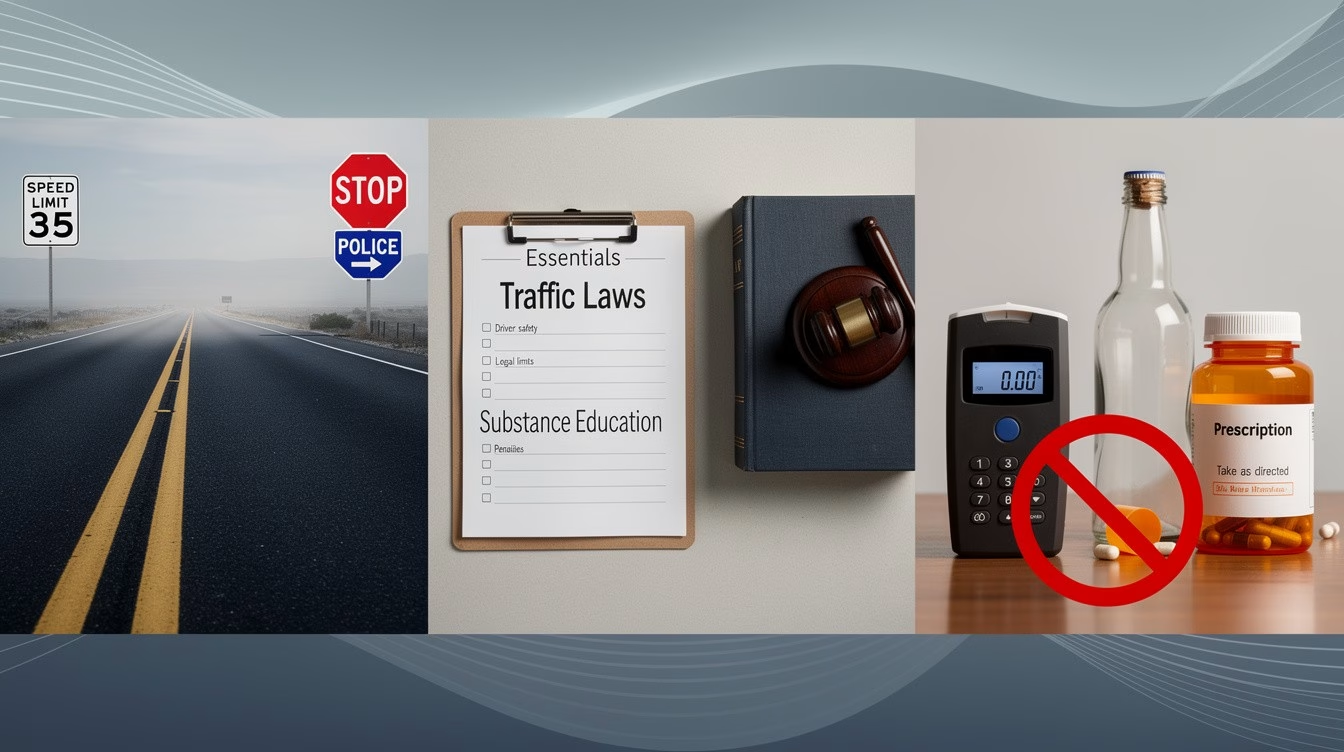
Traffic laws and substance education aren’t optional topics-they’re the foundation of staying alive on the road. Every year, thousands of drivers face penalties, license suspensions, and worse because they didn’t understand the rules or the risks.
At floridanewdriver.com, we’ve built this guide to give you the real facts about Florida traffic laws, impaired driving, and defensive techniques that actually work. The knowledge you gain here directly impacts your safety, your wallet, and your driving record.
Understanding Florida Traffic Laws and Point Consequences
How Florida’s Point System Works Against Your Driving Record
Florida’s point system transforms every traffic violation into a measurable threat to your driving privileges. A speeding ticket adds three points, running a red light costs four points, and reckless driving dumps six points on your record immediately. The state tracks these points carefully-accumulate 12 points within 12 months and the Florida Department of Highway Safety and Motor Vehicles suspends your license for 30 days. Hit 18 points in 18 months and you face a three-month suspension. Reach 24 points in 36 months and the state suspends your license for a full year.
These consequences directly impact your ability to work, drive to appointments, and maintain independence. Insurance companies increase premiums following moving violations. The financial damage extends far beyond the initial fine.
Taking Action Through Driver Improvement Courses
When you receive a citation in Florida, you have three options: pay the fine, contest the ticket in traffic court, or complete a state-approved driver improvement course. Many drivers misunderstand what traffic school accomplishes-completing the course prevents points from being added to your record, though it does not eliminate the violation itself. Our Florida-approved traffic school programs help drivers reduce points and protect their licenses through courses designed to meet FLHSMV standards.
Meeting Court-Ordered Requirements on Your Timeline
If the court orders you to take a course, you must enroll within a specific timeframe (typically 30 to 90 days depending on the charge). Failure to complete the course on time results in license suspension and additional fines. Our Intermediate Driver Improvement program serves drivers facing court-ordered requirements, covering defensive driving techniques, Florida traffic laws, and the behavioral factors that lead to violations. The course is fully online and self-paced, allowing you to complete it around work and family obligations.
Once you finish, your certificate is reported directly to the FLHSMV, confirming your compliance with court orders and protecting you from suspension. This direct reporting eliminates the burden of manually submitting proof to the state. Understanding how impaired driving affects your judgment and reaction time helps explain why Florida enforces these requirements so strictly.
How Alcohol and Drugs Impair Your Driving and What the Law Says
Alcohol’s Immediate Impact on Driving Performance
Alcohol hits your central nervous system within minutes of consumption, degrading the exact skills you need to drive safely. At a blood alcohol concentration of 0.05%, your ability to track moving objects declines and your steering becomes less precise.
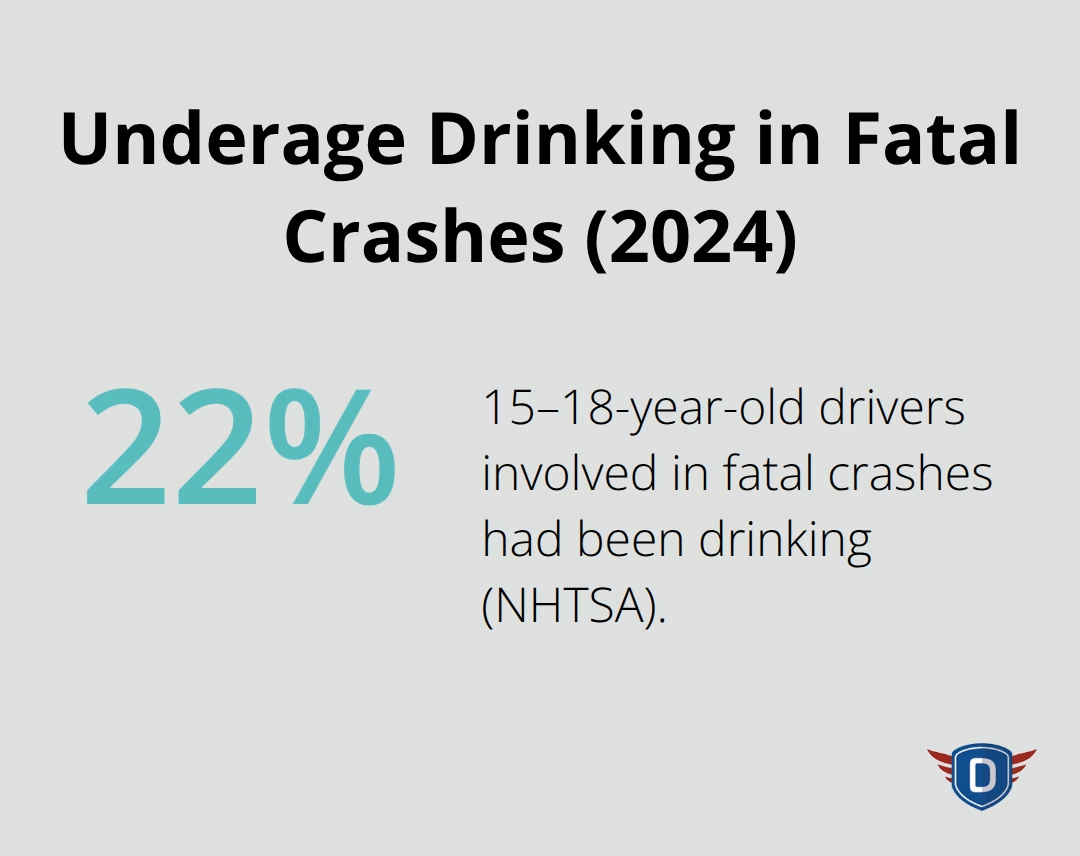
At 0.07%, alcohol significantly impairs driving performance. The National Highway Traffic Safety Administration reports that in 2024, approximately 22% of 15�18-year-old drivers involved in fatal crashes had been drinking. One drink affects your reaction time, and multiple drinks transform you into a hazard on the road.
Zero-Tolerance Laws for Underage Drivers
For drivers under 21, Florida enforces a zero-tolerance policy: any measurable BAC is illegal. This strict standard reflects the reality that teen drivers lack the experience to compensate for impairment. Young drivers with alcohol in their system face license suspension, fines, and mandatory substance abuse counseling. The law treats underage drinking and driving as a serious offense because teen crash risk already increases dramatically with passengers and distractions-adding alcohol multiplies that danger exponentially.
How Drugs Affect Your Ability to Drive
Drugs-whether illegal, prescription, or over-the-counter-create similar or worse impairment than alcohol. Marijuana slows reaction time and impairs judgment; prescription sedatives and pain medications reduce alertness; and stimulants can increase risky behavior. Florida law treats drug-impaired driving with the same severity as alcohol impairment. Law enforcement uses field sobriety tests and drug recognition evaluations to identify impaired drivers at roadside, and conviction carries penalties matching those for alcohol-related offenses.
DUI Penalties That Reshape Your Life
A first DUI offense costs $500 to $1,000 in fines, mandatory substance abuse counseling, a six-month license suspension, and installation of an ignition interlock device on your vehicle-a breathalyzer that prevents the car from starting if alcohol is detected. Your insurance premiums spike by 15% to 25% for three to five years. A second DUI within five years escalates to fines of $1,000 to $2,000, a mandatory minimum of ten days in jail, a 12-month license suspension, and longer interlock requirements. A third or subsequent offense within ten years becomes a felony, resulting in prison time, substantial fines, and permanent license revocation eligibility.
Beyond Legal Consequences: Employment and Housing Impact
A DUI conviction disqualifies you from certain employment, professional licenses, and housing opportunities. Employers conduct background checks, and a felony conviction eliminates you from positions requiring security clearances or professional credentials. Landlords reject applicants with DUI records. The financial and social fallout extends far beyond the courtroom, affecting your career trajectory and stability for years. Understanding these real consequences helps drivers recognize how impairment affects decision-making before getting behind the wheel-and why the choice to drive sober protects not just your future, but everyone sharing the road with you.
How to Master Safe Following Distance and Speed Control
The Two-Second Rule Saves Lives
The three-second rule isn’t a suggestion-it’s the minimum distance that keeps you safe when the driver ahead brakes suddenly. At 55 mph, your vehicle travels 80 feet per second, meaning you need roughly 120 feet of space to stop safely if the car in front hits the brakes. Most drivers tailgate because they underestimate stopping distance.
To measure your gap correctly, watch a fixed point on the road ahead like a sign or pavement mark, and count the seconds between when the vehicle in front passes it and when your car reaches it. Three seconds at highway speeds, three to four seconds in rain or darkness, and five seconds behind a semi-truck gives you the reaction time to avoid a collision.
Speed Management and Stopping Distance
Speed management ties directly to stopping distance-increase your speed by just 10 mph and your stopping distance increases significantly. Florida law requires you to drive at a safe speed for conditions, which means slowing down in rain, fog, or heavy traffic regardless of the posted limit.
Aggressive drivers who tailgate and speed create the conditions for rear-end collisions, which account for a significant portion of traffic accidents. You cannot control what other drivers do, but you control your following distance and speed, making these your most powerful tools for avoiding crashes.
Scan Ahead and Recognize Hazards Early
Hazard recognition separates drivers who crash from drivers who avoid them. Scan the road 12 to 15 seconds ahead instead of staring at the vehicle directly in front of you-this gives your brain time to process threats and plan an escape. Watch for brake lights flashing in heavy traffic, brake dust clouds indicating sudden stops, and vehicles drifting between lanes.
Intersections demand heightened attention because turning crashes are common and often severe. Check your mirrors and blind spots with a head check before changing lanes; relying only on mirrors leaves dangerous blind spots where other vehicles hide.
Managing Aggressive Drivers and Road Rage
When you encounter an aggressive driver who tailgates, flashes headlights, or honks, your only winning strategy is to let them pass and stay calm. Aggressive driving stems from anger and impatience, and engaging with hostile drivers escalates the situation into road rage that endangers everyone.
Pull over safely if needed, maintain composure, and never match their aggression with your own. Road rage incidents that turn violent or involve weapons happen when both drivers feed the conflict, so removing yourself from the interaction is the smartest decision you can make.
Final Thoughts
The knowledge you’ve gained about Florida traffic laws, substance education, and defensive driving protects your safety and your wallet. Safe driving habits reduce accident risk, lower insurance premiums, and keep your driving record clean. Drivers who complete traffic education courses report fewer violations and better decision-making on the road because they understand the real consequences of impaired driving, speeding, and aggressive behavior.
Continuous learning matters because driving conditions, vehicle technology, and traffic laws evolve. Insurance companies recognize your commitment to safety and offer discounts to drivers who complete approved traffic education programs, with typical savings ranging from 1% to 10% on premiums. A refresher course every few years keeps your skills sharp and your knowledge current.
At floridanewdriver.com, we offer Florida-approved traffic school courses that fit your schedule and situation. Our Basic Driver Improvement course takes four hours and helps drivers avoid points after a moving violation, while the Intermediate Driver Improvement program runs eight hours and serves drivers facing court-ordered requirements. Every course is fully online and self-paced, allowing you to study from any device at your own pace, with certificates issued electronically and reported directly to the Florida Department of Highway Safety and Motor Vehicles.