
A traffic ticket can feel like a setback, but it’s not the end of the road. Understanding the traffic ticket dismissal steps gives you a real chance to fight back in court and protect your driving record.
At floridanewdriver.com, we’ve seen drivers successfully challenge tickets by knowing exactly what to do. This guide walks you through the entire process, from gathering evidence to presenting your case before a judge.
Understanding Traffic Violations in Florida and Your Court Options
Moving Violations Versus Non-Moving Violations
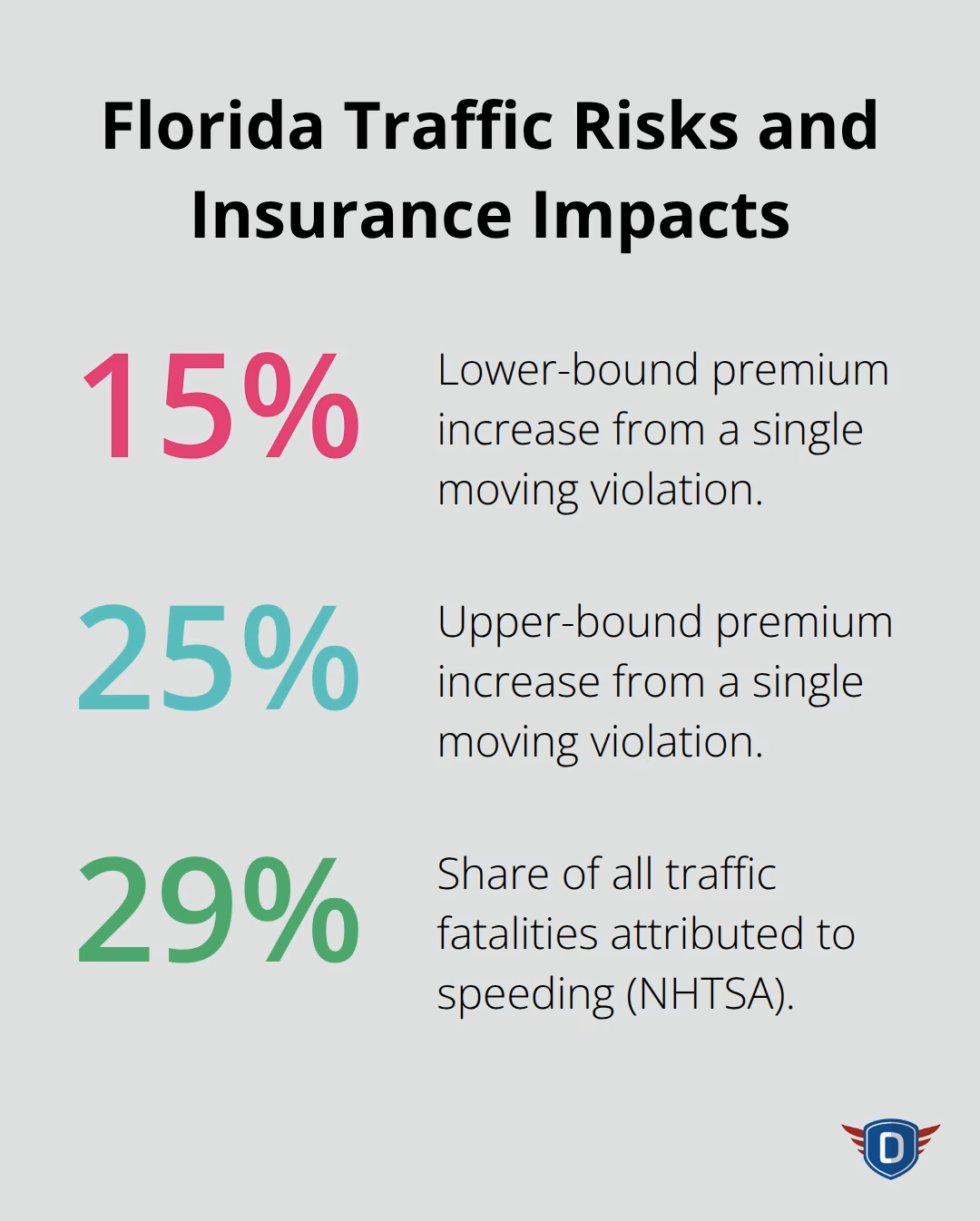
Florida divides traffic violations into two categories: moving violations and non-moving violations. Moving violations occur while you drive-speeding, running red lights, improper lane changes, following too closely, and distracted driving. Non-moving violations involve your vehicle’s condition or paperwork, such as expired registration or broken equipment. The distinction matters because moving violations carry steeper penalties. Florida’s point system assigns 3 to 6 points per moving violation, and accumulating 12 points within 12 months triggers an automatic license suspension of at least 30 days. A single moving violation raises your auto insurance premiums by 15 to 25 percent, while multiple violations may cause premiums to double or triple over three years. Speeding alone accounts for 29 percent of all traffic fatalities according to the National Highway Traffic Safety Administration, which explains why enforcement is aggressive and penalties are severe.
When Fighting Makes Financial Sense
The decision to contest or pay depends on the violation type, your driving history, and the financial impact. If you have a clean record and receive a single speeding ticket with a fine of $150 to $500, contesting might seem unnecessary. However, the long-term insurance costs tell a different story. A conviction lasting three years on your record costs far more than court fees or attorney fees. Dismissal rates for speeding tickets hover between 20 and 25 percent in contested cases, rising to 40 to 50 percent when you have legal representation. When the citing officer fails to appear-which happens in roughly 10 to 20 percent of scheduled court dates-dismissal rates approach 100 percent. If you have prior violations or face a license suspension risk, contesting becomes essential. For non-moving violations like equipment issues, dismissal rates reach 35 to 40 percent because these citations are often correctable (the violation disappears once you fix the problem and provide proof to the court).
How Florida Traffic Court Works
Florida traffic court operates in county courts, and you typically have about 30 days from the citation date to respond. Missing this deadline results in automatic conviction and additional penalties. You have three main options: pay the fine and accept guilt, contest the ticket in court, or request traffic school if you qualify. Traffic school offers certainty-Florida-approved programs reduce points and may prevent insurance increases entirely, with most courses completed within 60 days. If you choose to contest, the burden falls on the state to prove every element of the violation beyond a reasonable doubt. You can request discovery, which means obtaining the officer’s notes, dashcam footage, and radar or LIDAR calibration records. Many officers fail to maintain proper calibration logs-devices must be calibrated every six months-and missing documentation often leads to dismissal. Courts are heavily docketed in Florida, meaning cases move quickly but judges see dozens daily. Arrive early, dress professionally, and stay respectful during your appearance; these actions significantly influence outcomes. Some jurisdictions allow post-conviction traffic school if you lose in court, though this option isn’t universally available, so confirm with your specific court before your hearing date.
Building Your Defense Strategy
The path forward depends on which option you select. If you decide to contest the ticket, you need to act immediately to gather evidence and identify weaknesses in the citation itself. If you choose traffic school instead, you can complete your course and move forward without court involvement. Either way, understanding what happens next in the process helps you make the right choice for your situation.
Building Your Defense Strategy
Act Fast: Document the Stop Within 48 Hours
The moment you receive a ticket, your defense begins. Within 48 hours, document everything about the stop: the exact location, time of day, weather conditions, road surface, visibility, and how the officer behaved. Take photos of the intersection, road markings, traffic signals, and any obstructions that might have affected the officer’s line of sight. This immediate action creates a credible foundation for your defense because memory fades fast, but photographs don’t. Lighting conditions, vegetation, parked vehicles, or building structures can all obstruct an officer’s view-capture these details while they remain unchanged.
Check the Citation for Errors
Next, examine the citation itself for mistakes. Errors in your name, driver’s license number, vehicle information, violation code, or court date can lead to automatic dismissal. Courts take accuracy seriously, and a single error sometimes invalidates the entire ticket. Spend time comparing the citation against your actual documents and records. If discrepancies exist, note them and bring them to your attorney’s attention immediately.
Request Discovery and Challenge Equipment Records
Request discovery immediately, which gives you access to the officer’s notes, dashcam footage, and calibration records for any speed-detection equipment. Speed-detection equipment calibration standards require the system to perform a self-test at least once every 30 days. Missing documentation often leads to dismissal because the state cannot prove the radar or LIDAR equipment was functioning accurately. For speeding citations, ask specifically for calibration certificates, maintenance records, and the officer’s training documentation. Red light camera tickets require you to request high-resolution photos, embedded timing data, traffic engineering records showing signal timing, and maintenance logs. Equipment-related violations have dismissal rates around 35 to 40 percent because these citations are frequently correctable or based on faulty documentation.
Build Credible Witness Statements and Evidence
Witness statements carry significant weight in court, but they must be credible and specific. If someone saw the violation occur differently than the officer described, obtain their written statement immediately with their contact information. For speeding defenses, you might present evidence showing the officer’s line of sight was obstructed, or challenge whether the speed limit was absolute versus presumed. For red light violations, traffic engineers can testify about amber light timing and whether the duration met engineering standards. You don’t need a formal expert witness; sometimes a photograph showing an obscured stop line or hidden No Turn on Red sign defeats the charge without courtroom testimony. Focus your defense on proving that one or more elements of the violation were not satisfied. The state must prove every element beyond a reasonable doubt, and your job is to create doubt about at least one.
Organize Evidence and Prepare for Court Appearance
If the officer doesn’t appear in court, dismissal rates approach 100 percent, which happens in roughly 10 to 20 percent of scheduled cases. This possibility alone makes contesting worthwhile in many situations. Organize all your evidence into a clear, chronological narrative before your court date, and bring copies for the judge and prosecutor. Courts move quickly in Florida, and judges appreciate organized, concise presentations over rambling explanations. Your preparation directly influences how the judge perceives your credibility and the strength of your case. With solid evidence and a well-structured argument, you position yourself to present your case effectively when you step into the courtroom.
Presenting Your Case in Court
Master Your Courtroom Presence
Florida judges hear traffic cases with mechanical efficiency. You’ll have minutes, not hours, to present your defense. Arrive at least 15 minutes early, dress in business casual or professional clothing, and keep your phone silent. The courtroom operates under strict procedural rules, and judges notice when defendants show respect for the process. When the judge calls your case, stand immediately, make eye contact, and speak clearly without emotion or anger. Your tone matters as much as your words. Master Your Courtroom Presence research shows that how you deliver your defense influences judicial decision-making in legal proceedings.
Present Evidence Strategically
The prosecutor will present the officer’s version first, then you’ll have your opportunity. Don’t interrupt the officer’s testimony, even if you disagree strongly. Wait for your turn, then calmly present your evidence and challenge specific facts. If you’ve gathered photographs showing obstructed sightlines, bring them in a clear folder organized by location and timestamp. Hand copies to the judge and prosecutor before you start speaking. Courts move fast in Florida, and judges appreciate concise presentations. Present Evidence Strategically by using images to help the judge understand and retain information. For speeding citations, you might present calibration records showing the radar device wasn’t properly maintained. For red light violations, you might show photographs proving the stop line wasn’t visible from the officer’s position. The judge needs to understand exactly what element you’re contesting and why your evidence proves the officer’s testimony is incomplete or inaccurate.
Build Credibility Through Honesty
Your credibility determines the outcome more than perfect legal arguments. Speak truthfully about what you remember and admit when you’re uncertain about details. If you claim the weather was clear but the citation notes it was raining, you lose all credibility immediately. Don’t exaggerate or invent facts to strengthen your case. Instead, let your documented evidence speak. If the officer doesn’t appear, the judge will likely dismiss the case without hearing your defense, so don’t be surprised if your carefully prepared arguments never get delivered. Stay professional even if this happens, thank the judge, and leave quietly. Never argue with the judge’s decision, even if you believe it’s unfair.
Handle Questions and Responses Effectively
Keep your response brief when the judge asks questions, and avoid defensive answers. A simple yes or no followed by a brief explanation works better than lengthy justifications. If you lose, ask about your options for post-conviction traffic school or appeal procedures before you leave the courtroom. The judge may offer a reduction to a non-moving violation or allow you to attend traffic school after conviction in some Florida counties (get any offer in writing before you accept). When you finish presenting your case, thank the judge and step back from the podium. Your goal is to present organized, credible evidence that creates reasonable doubt about at least one element of the violation. If you accomplish that, dismissal becomes possible.
Final Thoughts
The traffic ticket dismissal steps you’ve followed throughout this guide lead to one of three outcomes: dismissal, conviction with reduction, or full conviction. If the judge dismisses your case, the violation disappears from your record entirely, and no points are assessed. Your insurance rates remain unaffected, and you avoid the three-year premium increase that typically follows a conviction. If the judge reduces the charge to a non-moving violation, you still benefit because non-moving violations carry no points and minimal insurance impact.
Even a full conviction doesn’t stop you from protecting your record. Some Florida counties allow post-conviction traffic school, which reduces points after the fact and may prevent future insurance increases. Rather than accepting the full penalty, you can enroll in a Florida-approved program to reduce points on your record and show insurance companies that you’re committed to safer driving. This approach gives you certainty and control over your outcome without additional court involvement.
The investment in traffic school costs far less than three years of elevated insurance premiums and protects your driving privileges from accumulating points. We at floridanewdriver.com offer a 4-hour online Basic Driver Improvement course designed specifically for drivers with moving violations, covering Florida traffic laws, defensive driving techniques, and behavioral changes that protect your record. You complete it entirely online at your own pace, and upon completion, your certificate reports directly to the Florida Department of Highway Safety and Motor Vehicles.