Right of way in Florida isn’t just a traffic rule-it’s the foundation of intersection safety. Every year, thousands of crashes happen because drivers misunderstand who has the legal right to proceed first.
We at floridanewdriver.com know that confusion about right of way laws costs lives. This guide breaks down Florida’s specific rules so you can navigate intersections with confidence and avoid costly mistakes.
What Right of Way Actually Means in Florida
The Legal Definition and Core Principle
Right of way in Florida isn’t about who deserves to go first or who’s more important on the road. It’s a legal obligation that tells you when you must yield to another vehicle or pedestrian. Florida Statute 316.121 defines this clearly: the driver of a vehicle approaching an intersection shall yield the right-of-way to a vehicle which has entered the intersection from a different highway. This rule exists because predictability prevents crashes-when every driver knows exactly who goes first, confusion disappears and split-second decisions become automatic.
How Florida Structures Right of Way Priority
The statute establishes a clear hierarchy. Vehicles already on a state-maintained road have priority over vehicles entering from other roads. Vehicles on paved roads take priority over those entering from unpaved roads. This hierarchy prevents the dangerous guessing games that happen when drivers don’t understand who has legal authority to proceed. The system removes ambiguity and forces drivers to act decisively rather than hesitate at critical moments.
Why Florida’s Approach Differs From Other States
Florida’s approach emphasizes the right-hand rule as a universal fallback. While other states sometimes use arrival time as the deciding factor at four-way stops, Florida keeps things simpler: if you’re on the left, you yield to traffic on the right. This consistency matters because Florida sees millions of drivers from other states each year, and uniform rules reduce the confusion that causes intersection collisions. Visitors and residents alike can rely on one predictable system.
The Real Cost of Violations
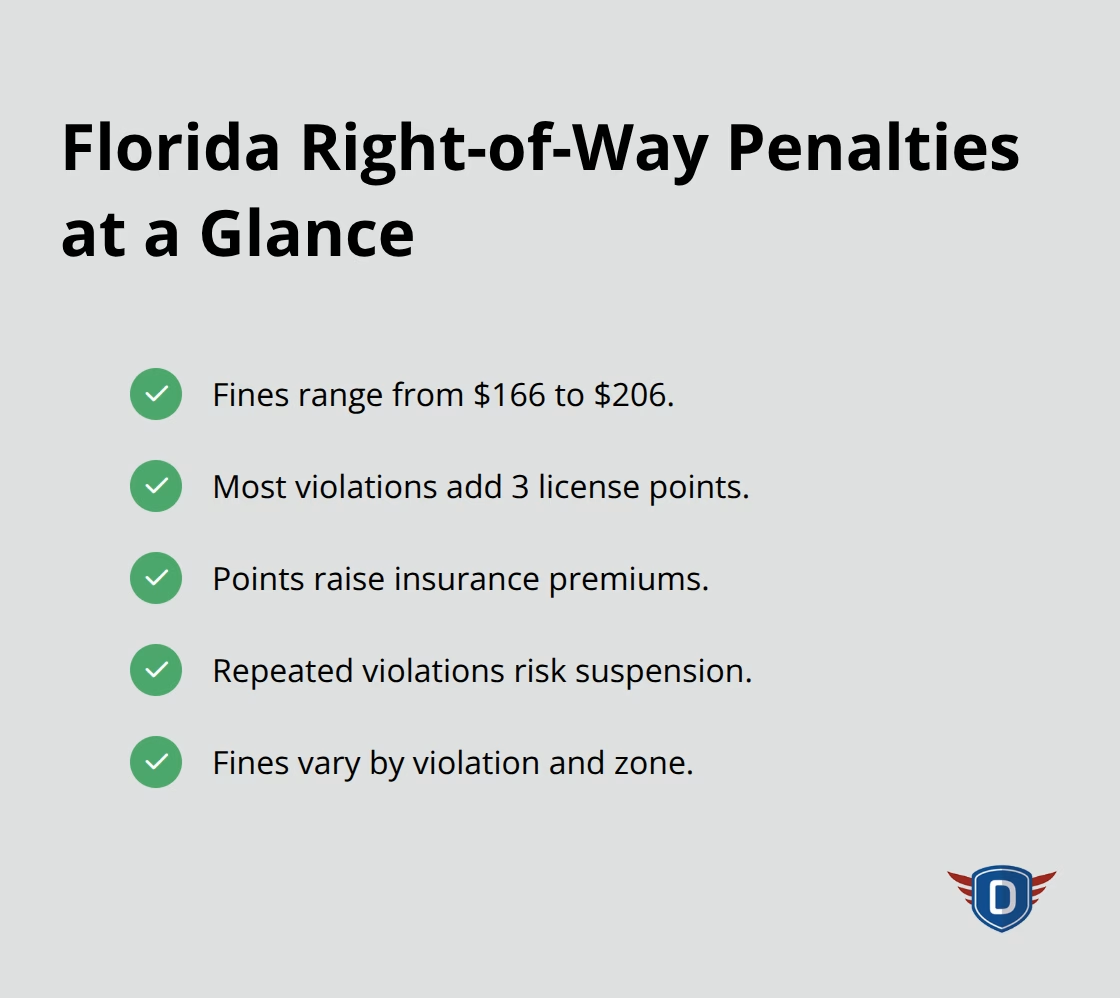
A violation of these right-of-way rules counts as a moving violation under Florida law, resulting in fines ranging from $166 to $206 depending on the specific violation and whether it occurs in a school or construction zone. More importantly, right-of-way violations typically add 3 points to your license, which directly impacts your insurance premiums and can lead to license suspension if you accumulate too many violations. Understanding these rules isn’t optional compliance-it’s the difference between arriving safely and becoming another intersection statistic.
The next section explores how these rules apply at specific intersection types, from traffic lights to stop signs to completely uncontrolled intersections.
How Right of Way Works at Florida Intersections
Uncontrolled Intersections and the Right-Hand Rule
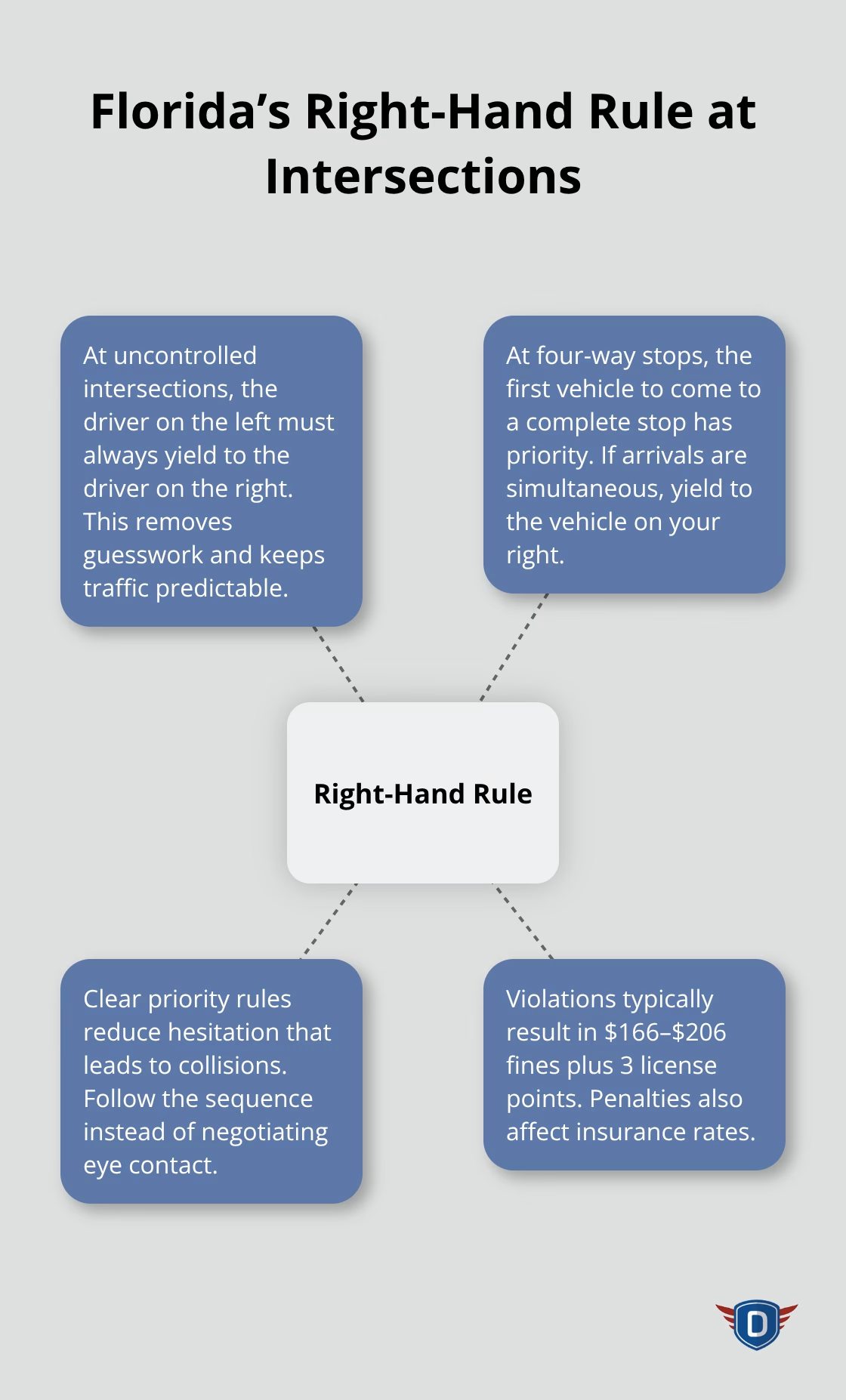
At uncontrolled intersections with no traffic signals or stop signs, Florida Statute 316.121 establishes a straightforward rule: the driver on the left yields to the driver on the right. This isn’t a suggestion or a courtesy-it’s a legal requirement that applies every single time two vehicles arrive simultaneously from different directions. If you approach from the left, you must wait. If you’re on the right, you proceed. This rule eliminates hesitation because drivers know exactly what to do without guessing or negotiating eye contact.
At four-way stops where vehicles arrive at the same time, the same right-hand priority applies, though the first vehicle to come to a complete stop technically has priority over later arrivals. Most drivers get this wrong by assuming arrival time matters equally-it doesn’t. What matters is who stopped first and, if timing is simultaneous, which vehicle is positioned to the right. Violations of these uncontrolled intersection rules typically result in fines between $166 and $206, plus 3 points on your license that directly impact insurance rates.
Traffic Light Intersections: Green Doesn’t Mean Go
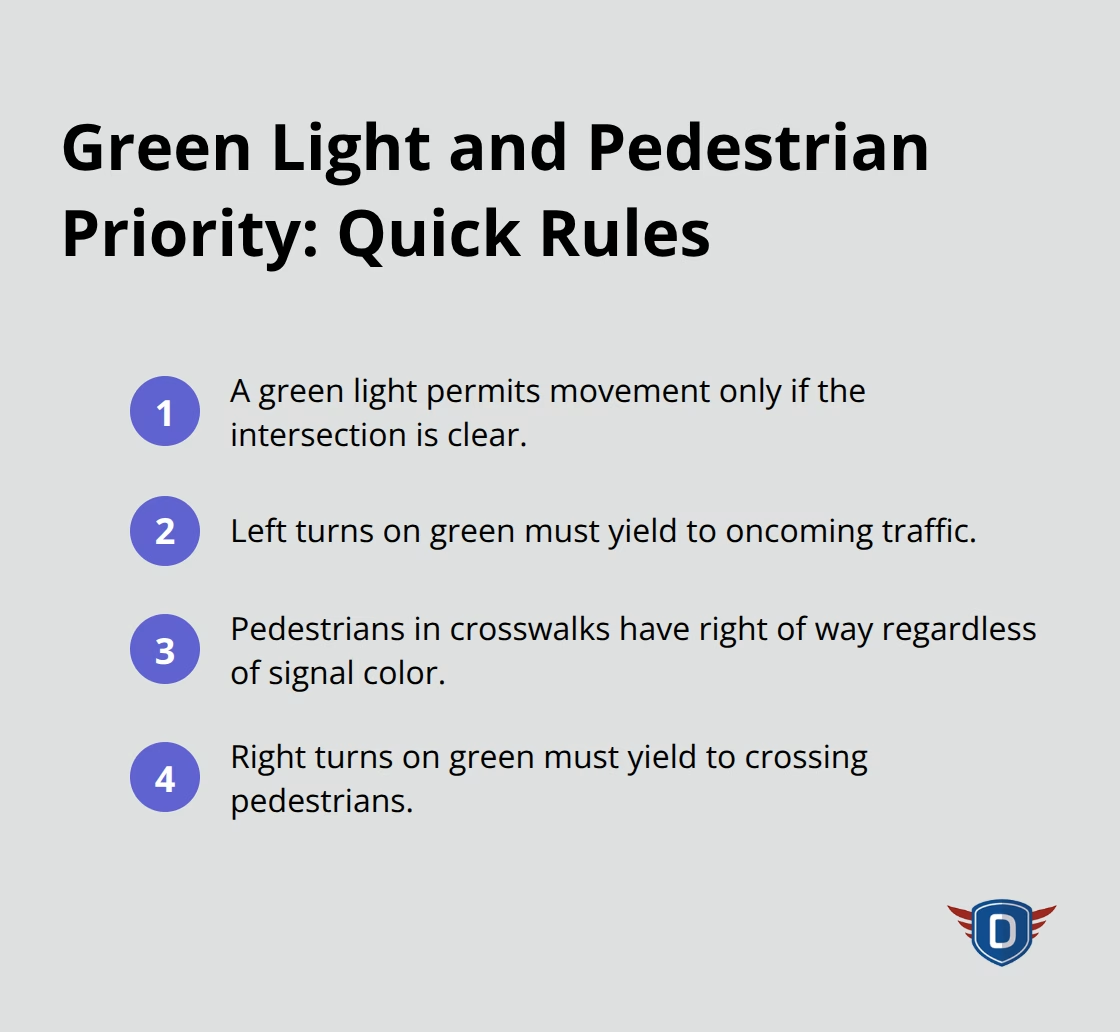
A green light does not give you the right of way-it only permits you to proceed if the intersection is clear and it’s safe to do so. This distinction matters enormously because drivers who assume a green light means they can proceed without checking for pedestrians, cyclists, or vehicles running red lights end up in crashes. When you turn left at a green light, oncoming traffic has priority over you, meaning you must yield to vehicles traveling straight through the intersection from the opposite direction.
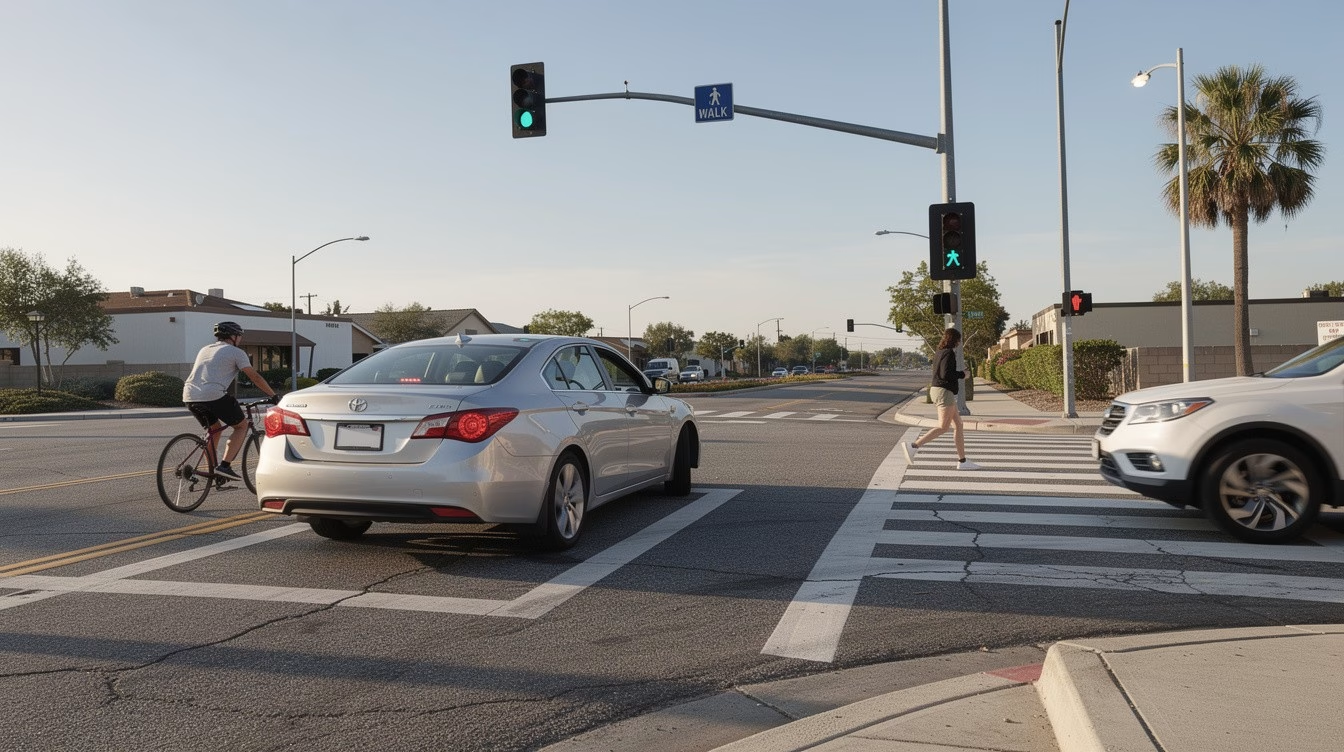
Pedestrians in crosswalks have the right of way when entering or crossing an intersection, regardless of traffic light status. This rule applies to both marked and unmarked crosswalks at intersections throughout Florida. Drivers who fail to yield to pedestrians face fines of $166 or higher, plus points that accumulate on their license.
Stop Sign Intersections and Complete Stops
Stop sign intersections require a complete stop with all wheels stationary before proceeding, and the same right-hand rule applies if multiple vehicles stop simultaneously. Drivers who treat stop signs as yield signs-rolling through without fully stopping-create dangerous situations and face fines of $206 or higher. The fundamental principle here is this: never assume any traffic control device automatically gives you priority.
Traffic lights and stop signs regulate the flow of traffic, but they don’t eliminate your responsibility to verify the intersection is actually clear before moving forward. Pedestrians, cyclists, and other vehicles may occupy the space you intend to enter, and your legal obligation to yield supersedes any signal or sign. Understanding these distinctions between what traffic control devices permit and what they guarantee transforms how you navigate intersections.
The next section examines the most common mistakes drivers make when interpreting these rules, revealing why so many intersection collisions occur despite clear legal guidelines.
Common Right of Way Mistakes Drivers Make
The Yield Sign Trap
The most dangerous mistake is treating a yield sign as optional. Many drivers slow down slightly rather than coming to a complete stop, then proceed if traffic looks light. Florida law requires a complete stop before yielding, meaning all wheels must be stationary before you assess whether it’s safe to proceed. A rolling yield creates a collision risk because other drivers cannot predict your movement, and law enforcement treats incomplete stops as violations worth $206 or more. At yield signs, stop first, then look-the order matters because it forces you to pause long enough to actually see what approaches rather than making a reactive guess while moving.
The Green Light Illusion
Green lights generate false confidence that destroys lives. Drivers assume a green signal grants them the right to proceed without verifying the intersection is clear, but traffic laws explicitly separate permission from safety. A green light permits you to proceed only if it is safe and legal to do so. When you turn left on a green light, oncoming traffic still has priority over you, meaning you must wait for that traffic to clear even though your signal is green. Pedestrians in crosswalks have absolute priority regardless of traffic light color. Drivers turning right on green must yield to pedestrians crossing in front of them. Violations of pedestrian right-of-way result in fines of $166 and up, plus points that compound insurance costs.
Treat every green light as permission to proceed only after confirming the intersection is physically empty.
Pedestrians and Cyclists: Legal Priority You Cannot Ignore
Pedestrians and cyclists occupy Florida roads with legal protections that drivers frequently ignore. Cyclists have the same rights and responsibilities as motor vehicles, meaning they can legally occupy a full traffic lane, and drivers must maintain at least three feet of distance when passing. Pedestrians have right-of-way in both marked and unmarked crosswalks at intersections, even when no pedestrian signal is present. Many drivers fail to recognize unmarked crosswalks at intersections, believing they only exist where painted lines appear. Florida law grants pedestrians priority in both situations, and drivers who strike pedestrians in unmarked crosswalks face liability even if no visible markings existed. You must assume any pedestrian movement near an intersection takes legal priority over your vehicle’s movement, regardless of traffic signals or road markings.
Final Thoughts
Right of way in Florida rules exist for one reason: to prevent crashes by making driver behavior predictable. When you understand that a green light doesn’t grant automatic passage, that pedestrians have priority in crosswalks regardless of markings, and that the right-hand rule governs simultaneous arrivals, you eliminate the hesitation and guessing that causes collisions. These aren’t arbitrary restrictions-they’re the legal framework that keeps intersections functioning safely.
Violations of right-of-way Florida regulations cost money and points that compound over time. A single violation adds 3 points to your license, triggering insurance increases that accumulate with each additional infraction. Multiple violations lead to license suspension, and more importantly, right-of-way mistakes kill people every year when drivers misunderstand who has legal priority at an intersection.
We at floridanewdriver.com provide Florida-approved traffic school courses that teach these rules in depth, helping drivers understand not just what the law requires but why these requirements exist. Our courses cover right-of-way scenarios, defensive driving techniques, and the decision-making skills that prevent collisions at intersections.