Distracted driving kills. The National Highway Traffic Safety Administration reports that distraction-affected crashes claimed over 3,500 lives in 2022 alone.
At floridanewdriver.com, we believe distracted driving awareness education is the foundation of safer roads. This guide walks you through the real risks, common distractions, and practical strategies to keep your focus where it belongs-on the road.
The True Cost of Distraction on Your Driving
Fatal Crashes and the Five-Second Rule
In 2023, the National Highway Traffic Safety Administration documented 3,275 deaths in crashes involving distracted drivers. That number represents real people, families, and communities shattered by preventable collisions. The data is stark, but what makes distraction particularly dangerous is how quickly it degrades your ability to drive safely. When you look away from the road for just five seconds at 55 mph, you travel the length of a football field with your eyes off the road. That’s not hyperbole-it’s basic physics. A Virginia Tech Transportation Institute study found that texting while driving increases your crash risk by approximately 23 times compared to undistracted driving.
How Distraction Damages Your Performance
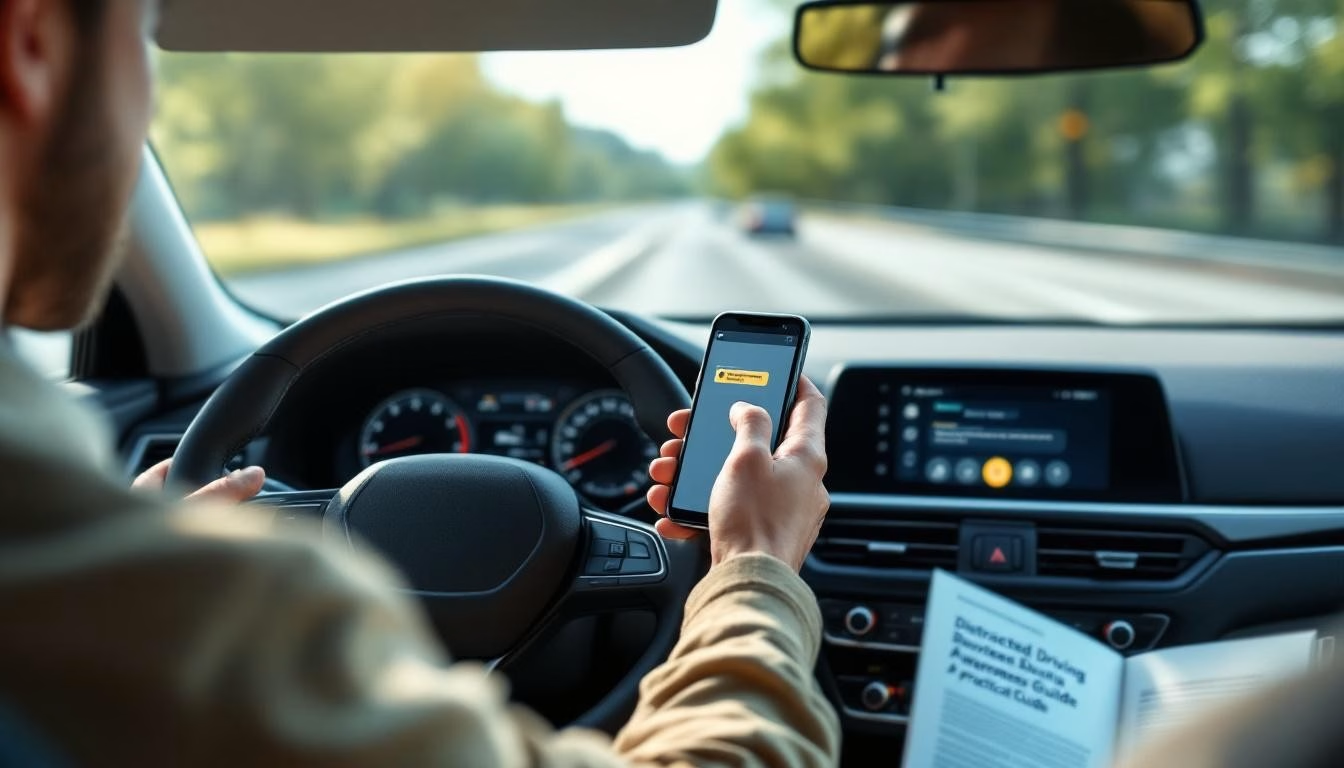
Visual distractions, manual distractions, and cognitive distractions each damage driving performance within seconds. The moment you reach for your phone, adjust the GPS, or mentally process a text message, your crash risk skyrockets. Mobile devices represent the most alarming source-texting, social media, messaging apps, and even hands-free voice controls create cognitive load that keeps your mind partially off the road.
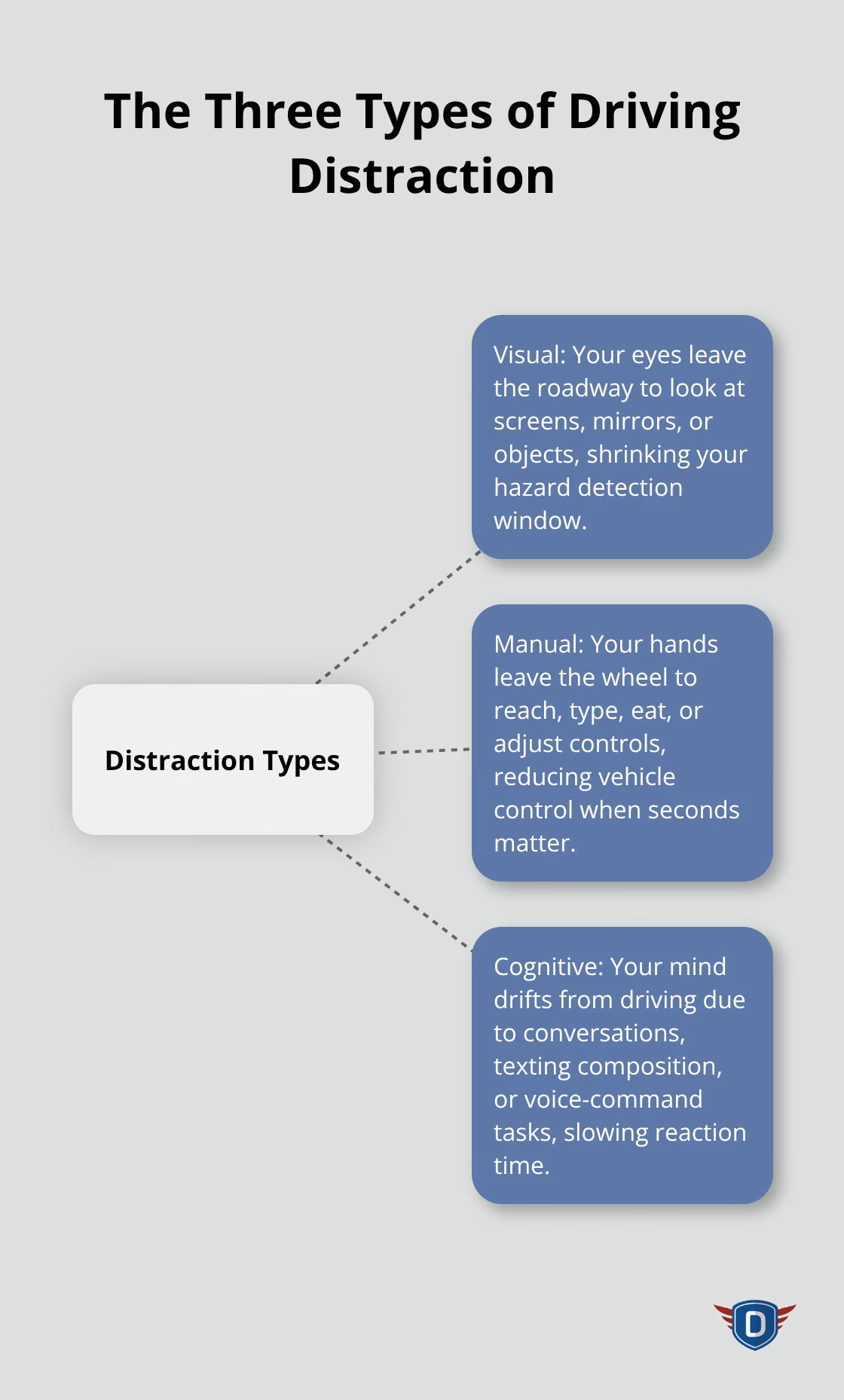
In-vehicle systems like navigation, entertainment, and climate controls demand manual and visual attention, especially when you adjust them while moving.
Secondary Tasks That Pull Your Focus
Eating, grooming, and reaching for objects in your vehicle pull your focus and hands away from driving. The National Safety Council emphasizes that reaction time and decision-making suffer dramatically under distraction. When your brain is divided between the road and another task, you miss hazards, misjudge distances, and respond more slowly to emergencies.
Why Teen Drivers Face Compounded Risk
Teen drivers face compounded risk because they’re still developing hazard detection skills. Adding distraction to an already challenging learning phase increases their crash rates substantially.
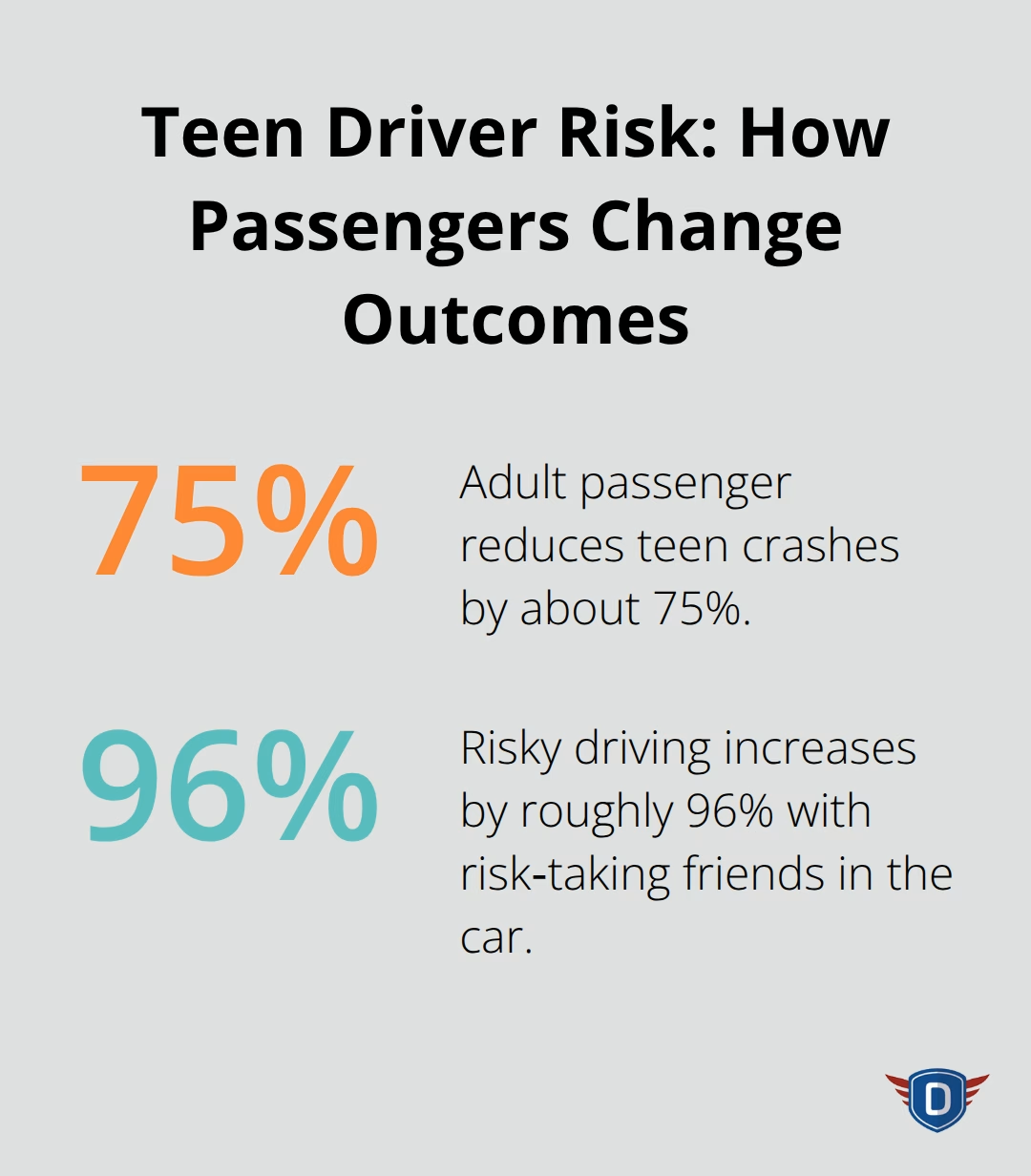
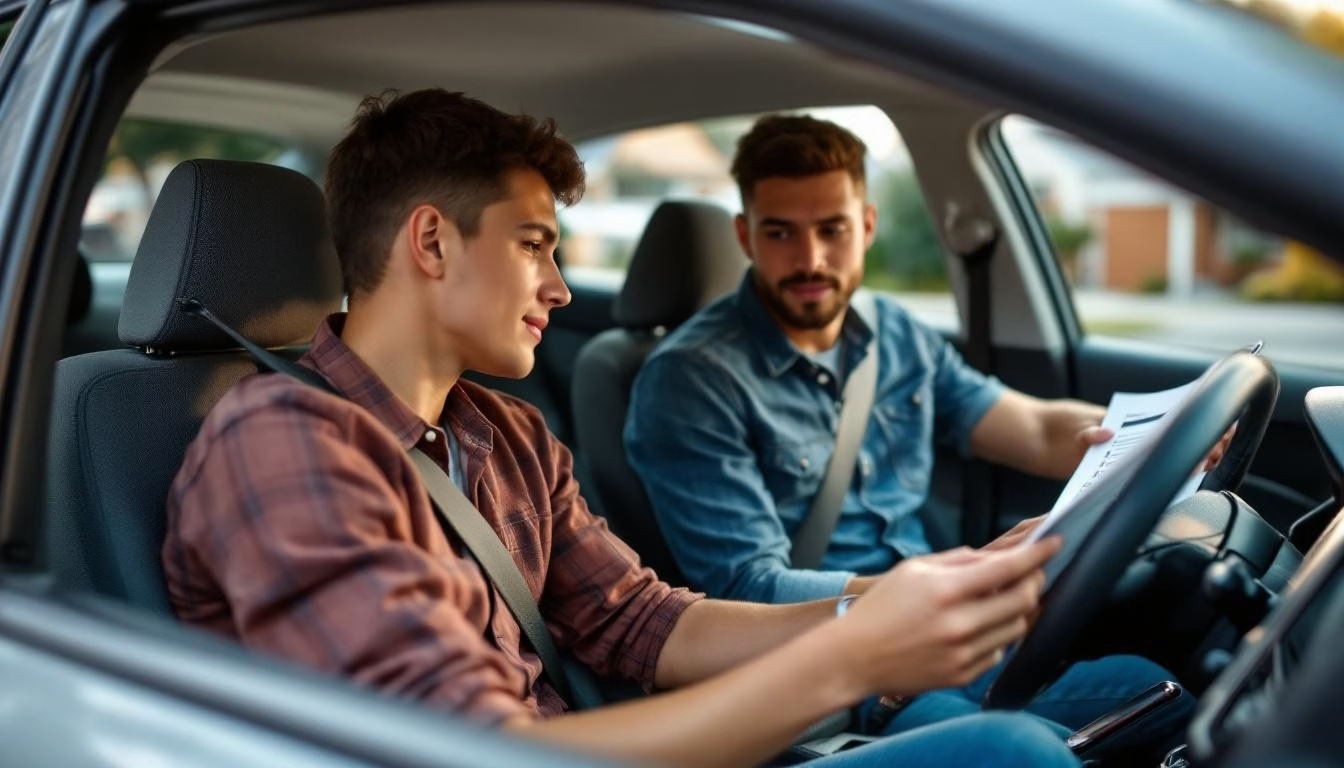
The presence of an adult passenger reduces teen crashes by about 75%, but that protection disappears when distractions enter the equation. When teens have risk-taking friends in the car, risky driving increases by roughly 96%, showing how peer influence amplifies the dangers of divided attention.
Understanding these risks sets the stage for practical action. The sources of distraction are everywhere, and they demand your immediate attention-not because they’re complicated, but because they’re so common that drivers often underestimate their impact. The next section explores the most prevalent distractions you’ll encounter and how to eliminate them before they compromise your safety.
What Actually Distracts Drivers Most
Mobile Devices: The Three-Layer Threat
Your phone creates three simultaneous dangers-your eyes leave the road, your hands release the wheel, and your brain splits focus between two competing tasks. The NHTSA reports that texting while driving increases crash risk by roughly 23 times, but that statistic undersells the actual threat. When you text, you don’t just look away for five seconds; you absorb yourself in composing a message, reading a response, and processing its meaning. Even hands-free voice controls fail to solve this problem. The AAA Foundation for Traffic Safety found that hands-free devices do not eliminate cognitive distraction; using voice controls still diverts attention from the road. Your brain cannot fully concentrate on highway merging while dictating a message to Siri.
Social media apps, messaging platforms, and email notifications create a psychological pull that most drivers underestimate. The solution demands brutal simplicity: your phone should not sit within arm’s reach while driving. Store it in the trunk, a closed glove compartment, or a bag in the back seat. Enable Do Not Disturb While Driving on your smartphone (both Apple and Google platforms offer this feature) and activate it before you start the engine. If you must respond to communications, pull over completely and safely before touching your device.
In-Vehicle Systems and Navigation
In-vehicle systems demand attention you cannot afford to give them while moving. Navigation systems, climate controls, and entertainment screens force you to take your eyes off the road and your hands off the wheel at the moment when full control matters most. Adjust your GPS route, select your music playlist, and set your temperature before you leave your driveway. The National Highway Traffic Safety Administration emphasizes this directly: plan ahead and set up GPS routes and playlists before you start driving to minimize on-road adjustments. This pre-drive preparation eliminates the temptation to fiddle with controls once you’re in motion.
Personal Activities and Vehicle Objects
Eating, grooming, and reaching for loose objects in your vehicle pull your attention downward and inward when it should stay forward and outward. Finish getting ready at home. Eat before or after your trip. Secure loose items so they cannot roll around and tempt you to retrieve them. If you have passengers, assign one person as your co-pilot to handle navigation, music selection, and communication. This simple delegation eliminates dozens of potential distractions and keeps your focus exactly where it belongs-on the road ahead and the hazards around you.
How to Actually Stop Reaching for Your Phone While Driving
Physical Separation Works Better Than Willpower
The smartphone in your pocket represents the single greatest distraction threat you face behind the wheel, and willpower alone will not solve it. You need a system that removes the opportunity for distraction before your brain even registers the urge to check a message. Place your phone in the trunk, a closed glove compartment, or a bag in the back seat where reaching it requires you to stop the vehicle completely. This friction matters more than you think. When your phone sits on the passenger seat or in a cup holder, your hand gravitates toward it automatically, especially during traffic jams or red lights. The National Highway Traffic Safety Administration specifically recommends keeping devices out of reach and relying on in-car systems or a trusted passenger for calls or messages.
Activate Your Phone’s Built-In Safety Features
Activate your phone’s “Do Not Disturb” feature, silence notifications, or put your phone away before you leave your driveway. This feature silences notifications and sends automatic replies to contacts, eliminating the psychological pull of incoming messages. If your vehicle has Bluetooth connectivity, pair your phone once and leave it paired. Incoming calls will route through your speakers without requiring you to touch anything, and you can decline calls with a steering wheel button or voice command. For text messages, do not respond while driving under any circumstances. Tell your contacts ahead of time that you will respond after you arrive. A message that waits thirty minutes for a reply is infinitely safer than a crash caused by reading it immediately.
Pre-Drive Preparation Eliminates In-Vehicle Distractions
Pre-drive preparation eliminates the second-most common source of distraction: in-vehicle systems and personal grooming. Spend three minutes before you start the engine adjusting everything you might otherwise adjust while moving. Set your GPS destination, confirm the route on the screen, and place your phone in its out-of-reach location. Select your music playlist or podcast, adjust your seat, mirrors, and climate controls, and finish any grooming tasks. Planning ahead by setting up GPS routes and playlists before you start driving minimizes on-road adjustments. Eat a meal or snack before you leave, not during your drive.
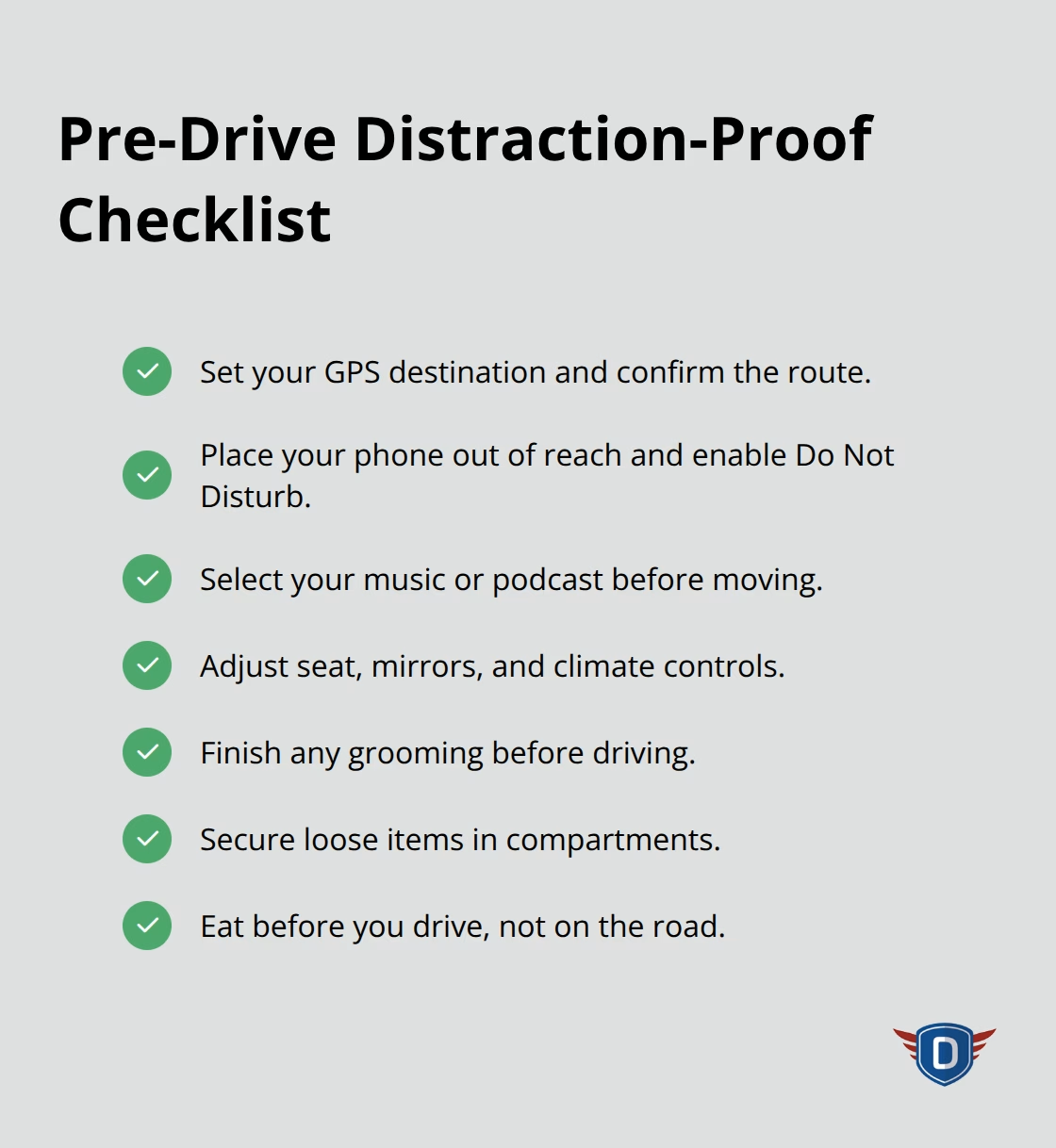
If hunger strikes mid-trip, pull over at a safe location, stop the vehicle completely, and eat then. Finish all personal preparation at home entirely-applying makeup, adjusting clothing, or combing your hair should happen in front of a mirror in your home, not while operating a vehicle. Create a pre-drive checklist and use it every single time you drive, even for short trips to the store. The habit will become automatic, and you will stop thinking about adjustments once you are in motion.
Organize Your Vehicle Environment for Safety
Your vehicle environment should support distraction-free driving. Secure all loose objects so they cannot roll around the floor or seats and tempt you to retrieve them. Store important items like sunglasses, tissues, and water bottles in fixed compartments within arm’s reach so you never need to look away from the road to find them. This simple organization prevents the cascade of small distractions that accumulate during a drive.
Delegate Secondary Tasks to a Co-Pilot
If you have passengers, designate one as your co-pilot to handle all secondary tasks. Your co-pilot manages navigation, selects music, answers phone calls on your behalf, and handles any communication that arrives while you drive. This delegation is not laziness; it is a proven safety strategy. Designating a co-pilot to manage navigation and messages reduces your cognitive load and keeps your attention exactly where it belongs-on the road ahead and the hazards around you.
Final Thoughts
Distracted driving kills thousands of people every year, and the statistics prove that prevention starts with awareness and action. The risks are real: 3,275 deaths in 2023 alone, crash risk multiplied by 23 when texting, and reaction times that collapse in seconds. Physical separation from your phone, pre-drive preparation, and delegation to a co-pilot eliminate the sources of distraction before they compromise your safety. These strategies work because they remove temptation and create systems that support focus rather than relying on willpower alone.
Education transforms awareness into habit, and distracted driving awareness education builds the connections between knowledge and behavior. When you understand how quickly distraction degrades your ability to respond to hazards, you stop treating phone checks as harmless. When you know that five seconds at highway speed equals a football field of blind driving, you stop adjusting the GPS while moving. When you recognize that your teen driver’s crash risk drops by 75 percent with adult supervision, you understand why your presence and guidance matter.
Safe driving depends on your full attention, and floridanewdriver.com provides the knowledge and strategies to protect yourself and others on the road. Our Florida-approved driver education programs address the dangers of distracted driving alongside defensive techniques, hazard recognition, and decision-making skills. Visit us today to explore our comprehensive courses and take the next step toward safer, more confident driving.