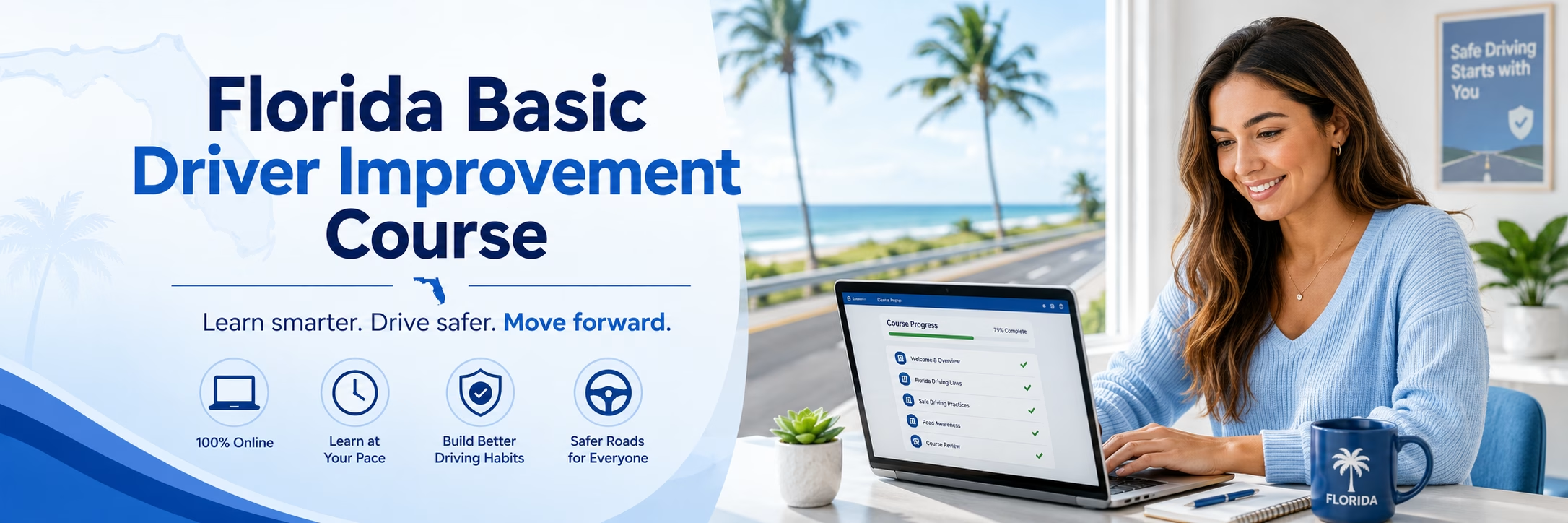

A course completion certificate is often the final document standing between you and your next step: applying for a learner’s permit, meeting a court deadline, restoring driving privileges, or qualifying for an insurance discount. These driver education completion examples show what valid proof commonly includes, when the format changes, and how to avoid sending the wrong document to the DMV, court, school, or insurer.
The key is not simply finishing an online course. You need completion records that match the requirement you were assigned. A certificate for a mature driver discount, for example, does not replace a state-required pre-licensing course. Likewise, a traffic school certificate may not satisfy a court order for an aggressive driver or substance abuse education program.
What a Driver Education Completion Certificate Should Show
A completion certificate is an official record confirming that a student completed a specific approved course. Exact designs vary by state, provider, and program, but the information should be easy for the receiving agency to verify.
Most accepted certificates include the student’s full legal name, course title, completion date, provider name, approval number or identification number when applicable, and a certificate or transaction number. Some also list the number of instructional hours, the student’s date of birth, a court case number, or a driver’s license number.
Before enrolling, compare the course title on your citation, DMV notice, insurance request, or licensing checklist with the course you plan to take. Small differences in course names can matter. If the requirement says “Traffic Law and Substance Abuse Education,” a general driver improvement course is usually not an equivalent substitute.
Example 1: First-Time Driver Education Completion
A pre-licensing driver education record commonly confirms that a new driver completed the required curriculum and instructional hours. Depending on the state, the provider may report completion electronically, issue a certificate for the student to present, or do both.
A typical record may read:
> Student Name: Jordan A. Smith > Course Completed: Driver Education and Traffic Safety > Completion Date: June 14, 2026 > Instructional Time: 32 Hours > Provider: Approved Online Driver Education Provider > Certificate Number: DETS-2684197
For a teen driver, the name on the course account should match the name used for DMV records. A nickname, a missing middle name, or a spelling error can create delays when the agency tries to locate or accept the completion record.
Example 2: Traffic Ticket or Court-Ordered Course Completion
Drivers completing a course after a citation should expect the proof to identify the exact program completed. Courts may require the certificate number, case number, citation number, or a filing deadline. In some locations, the school submits completion directly to the court or clerk. In others, the driver must submit the document personally.
A court-focused example may read:
> Student Name: Maria Lopez > Course Completed: Basic Driver Improvement > Completion Date: August 3, 2026 > Certificate Number: BDI-7318452 > Court Case Number: 2026-TR-018452 > Provider Approval: State-Approved Course Provider
Do not assume electronic reporting removes your responsibility. Keep a copy of the certificate and confirm the court received it before the deadline. If you must upload or email proof, use a clear, complete file that shows every certificate detail.
Example 3: TLSAE or Substance Abuse Education Completion
Some first-time licensing requirements combine traffic law education with alcohol and drug awareness training. A certificate for this type of course should identify the program clearly, not just state that the student completed “driver’s ed.”
An example may include:
> Student Name: Ethan Williams > Course Completed: Traffic Law and Substance Abuse Education > Completion Date: May 21, 2026 > Certificate Number: TLSAE-5942068 > Provider Name and Approval Information
This distinction matters because a licensing agency may be looking for a specific course-completion record. If your requirement is TLSAE, select that course by name and verify the provider is approved for your state before you begin.
Example 4: Mature Driver Insurance Discount Completion
A mature driver course certificate is usually sent to an insurance carrier, not a court or licensing office. It confirms that an eligible driver completed an approved defensive driving or accident-prevention course that may support an insurance discount.
A certificate can look like this:
> Student Name: Robert Chen > Course Completed: Mature Driver Insurance Discount Course > Completion Date: September 9, 2026 > Certificate Number: MD-4019873 > Provider Approval or Course Identification Number
The course itself does not guarantee a discount. Eligibility, discount amount, renewal period, and accepted course providers are determined by the insurer and applicable state rules. Contact your insurer before enrollment if you need to confirm its requirements.
Driver Education Completion Examples by Submission Method
The same completed course can produce different proof methods. Understanding the delivery process helps you plan for deadlines and prevents duplicate or incorrect submissions.
Electronic reporting means the course provider sends completion information to the DMV, court, or state database. This can be convenient, but processing time may still apply. Save your certificate number and completion confirmation in case the agency cannot immediately find the record.
Downloadable certificates are common for courses that require the student to submit proof. Download the file promptly, check that your name and course are correct, and store it where you can access it later. A screenshot may be useful for your records, but it is not always accepted in place of the full certificate.
Mailed certificates may be required by certain states, courts, or insurers. If a physical certificate is needed, allow enough time for printing and delivery. Do not wait until the final day of a deadline to complete the course.
Provider-issued confirmation emails can document completion, but they are not automatically the official certificate. Read the message carefully to see whether it includes the certificate itself, a certificate number, reporting details, or instructions for retrieving the final record.
How to Review Your Certificate Before Submitting It
Take two minutes to compare your certificate with the notice that required the course. This simple review can prevent rejected submissions and missed deadlines.
First, confirm your legal name and identifying information. Next, verify the course title matches the requirement. Then check the completion date, certificate number, and any case or citation number that must appear. Finally, make sure the certificate is being sent to the correct place.
If an error appears in your name or course record, contact the provider promptly. Do not edit a certificate yourself. Agencies may reject altered documents, even when the underlying course was completed correctly.
Common Problems With Course Completion Proof
The most common issue is choosing a course based on a broad description rather than the exact agency requirement. “Traffic school,” “defensive driving,” and “driver improvement” can describe different programs with different approval standards.
Another issue is missing the submission deadline. Finishing the course by the due date may not be enough if the court requires proof to be filed by that date. Electronic reporting may help, but drivers should still verify whether the receiving agency posted the completion.
A third problem is assuming one certificate works everywhere. A certificate issued for an insurance discount may not satisfy a DMV licensing condition. Use the certificate only for the purpose and jurisdiction it was approved to serve.
FAQs About Driver Education Completion Examples
What is a driver education completion certificate?
A driver education completion certificate is proof that you finished a specific driver training or traffic safety course. It usually includes your name, course title, completion date, provider information, and a certificate number.
Will my completion be reported automatically?
It depends on the course and state requirement. Some providers report electronically to the DMV or court, while other programs require you to submit the certificate yourself.
Can I use an online completion certificate for court?
Yes, if the court accepts an approved online course and the certificate meets its requirements. Confirm the required course type, filing method, and deadline with the court notice.
What should I do if my name is wrong on the certificate?
Contact the course provider immediately to request a correction. Do not change the document yourself, because altered certificates may be rejected.
How long should I keep my completion certificate?
Keep it until the DMV, court, or insurer confirms your requirement is satisfied. Retaining a digital copy for several years is also a practical safeguard.
The best completion record is one that leaves no questions for the person reviewing it: the right student, the right approved course, the right date, and the right submission method. When those details match your requirement, completing driver education becomes a clear step forward rather than another administrative hurdle.