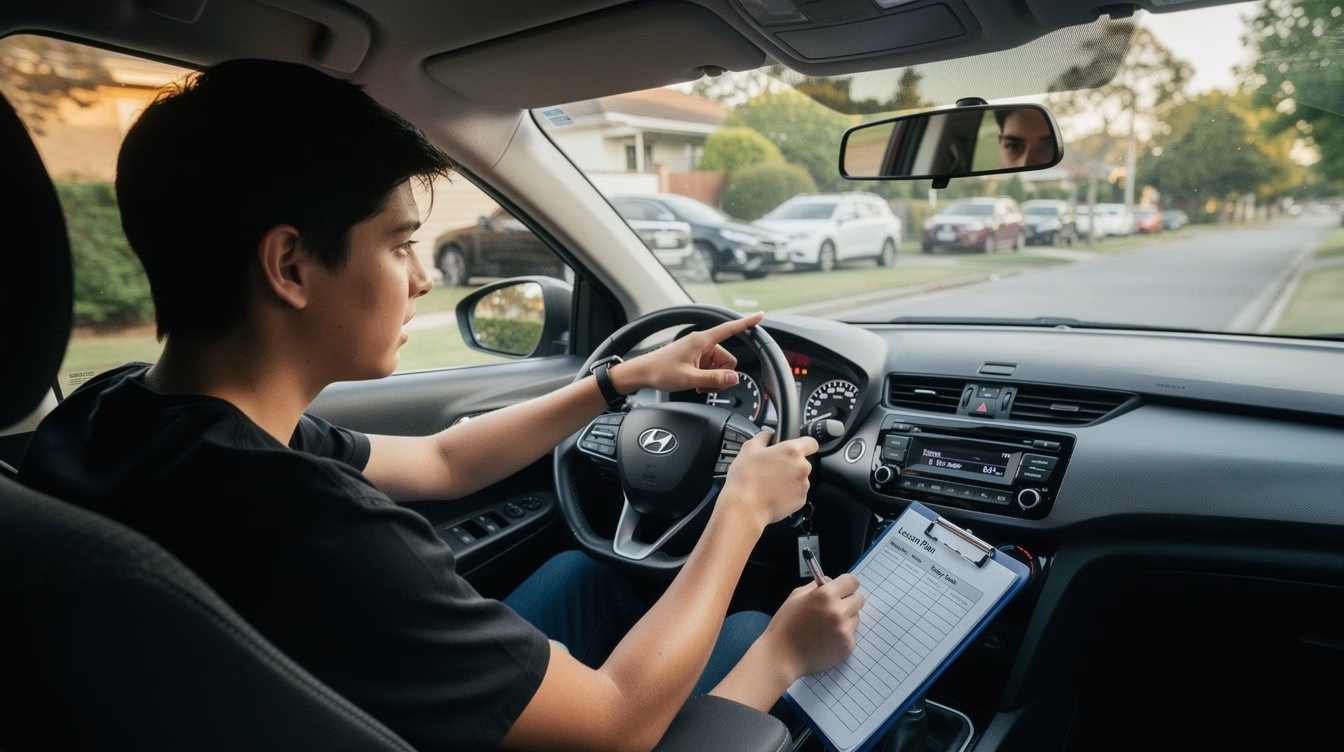
Your first driving lesson can feel overwhelming, but it doesn’t have to be. Nervousness is completely normal, and the right preparation makes all the difference.
At floridanewdriver.com, we’ve helped thousands of beginners turn anxiety into confidence. This guide gives you practical first driving lesson tips to walk in ready and focused.
What Happens in Your First Driving Lesson
Your Instructor Assesses Your Starting Point
Your first lesson starts with your instructor assessing where you actually are, not where you think you should be. They ask direct questions: Have you sat behind the wheel before? Do certain road types scare you? What’s your biggest worry right now? This initial assessment takes 10 to 15 minutes and shapes everything that follows. Your instructor builds a lesson plan that matches your actual skill level, not some generic beginner template.
You Learn Vehicle Controls While Stationary
Next comes vehicle familiarization, and this is where many nervous drivers find real relief. You spend time learning where every control sits before the car even moves. Seat adjustment, mirror positioning, steering wheel height, pedal layout, windshield wipers, lights, and the parking brake all get explained and practiced while stationary. Anxiety often stems from feeling lost in an unfamiliar environment. When you know exactly where the brake is and how it feels, when you’ve adjusted mirrors until they’re right, when you understand how much pressure the accelerator needs, the car stops feeling like a mystery machine.
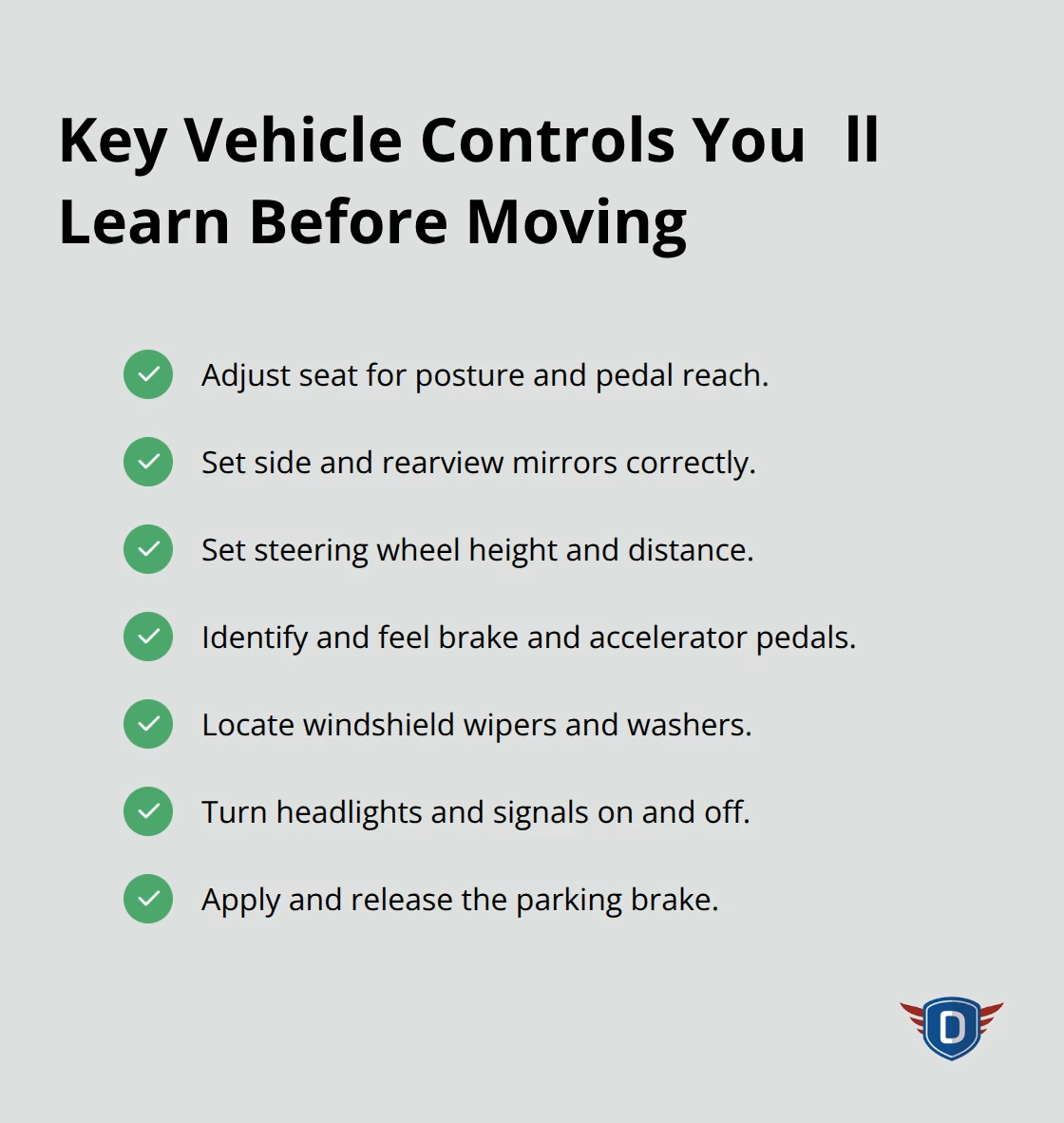
Many instructors have you sit in the driver’s seat for a few minutes to get comfortable with the space. Some let you practice pressing the pedals gently to feel their resistance. This isn’t wasted time; it’s confidence building disguised as mechanics.
Instructors Recognize and Manage Nervousness
Nervousness during your first lesson is expected, and instructors handle it differently depending on what triggers it. Some anxiety comes from fear of doing something wrong; your instructor will tell you upfront that this first lesson is purely exploratory and nothing you do will result in criticism or punishment. Other anxiety comes from sensory overload (traffic noise, other cars, your own racing thoughts). A skilled instructor starts on quiet residential streets where you focus on one thing at a time, not juggling ten decisions simultaneously. They often have you drive the same short route twice so the second time feels less overwhelming. If your breathing gets shallow or your hands shake, experienced instructors recognize these signs and may pull over for two minutes to let your nervous system reset. They understand that pushing through panic rarely helps; slowing down does.
Building Your Foundation for What’s Next
The goal of that first lesson isn’t to conquer highways or master parallel parking. It’s to prove to yourself that you can sit in the driver’s seat, start the engine, and move forward without everything falling apart. Once you’ve accomplished this, you’re ready to focus on the specific skills that will make you a safer, more confident driver. The next phase of your training introduces basic vehicle operation and steering techniques that form the foundation for all your future driving.
Essential Skills to Master Before Your Second Lesson
Coordinate Steering, Acceleration, and Braking
Your second lesson builds on what you learned while sitting stationary. Now the car moves, and you need to coordinate three separate actions: steering, acceleration, and braking. Most nervous drivers worry they’ll forget where the pedals are or that their hands will freeze on the wheel. Neither happens once you practice.
Start with steering in an empty parking lot where you can focus solely on hand position and turning radius. Keep your hands at 9 and 3 o’clock (not 10 and 2, which reduces control). Turn the wheel smoothly rather than jerking it. Practice gentle curves first, then sharper turns, so your body learns how much wheel input each angle requires.
After ten minutes of parking lot steering, you’ll stop thinking about it and start doing it automatically. Your instructor then moves to a quiet residential street where you combine steering with gentle acceleration and braking. The goal isn’t speed; it’s smooth coordination. Press the accelerator gradually (not suddenly) and release the brake slowly. Jerky movements spike anxiety and make passengers uncomfortable, so smooth inputs become your first habit to build.
Master Mirror Checks and Spatial Awareness
Mirrors and spatial awareness separate confident drivers from anxious ones. Before moving, adjust your side mirrors so you see a sliver of your vehicle’s side plus mostly road. Adjust your rearview mirror so the horizon sits in the middle.
Many nervous drivers neglect mirrors because they feel overwhelmed, but mirrors actually reduce anxiety by showing you what’s around you. Practice checking mirrors every five to ten seconds while driving slowly on residential streets. Blind spots exist where your mirrors can’t see, typically at your rear quarter panels. Turn your head slightly to check before changing lanes or merging, even on quiet streets where no traffic exists. This habit prevents panic later when traffic is heavy.
Build Muscle Memory for Smooth Braking
Your instructor has you practice stopping repeatedly on quiet streets to build muscle memory. Stop smoothly by easing off the accelerator first, then applying brake pressure gradually. Abrupt stops feel dangerous and reinforce nervousness.
After mastering stops on flat ground, practice on gentle slopes so you learn how gravity affects braking distance. These fundamentals take two to three lessons to feel natural, and that’s completely normal. Once you’ve developed these core skills, your confidence grows enough to handle the mental side of driving-the part where your mindset either holds you back or propels you forward.
Mental Preparation Strategies for Nervous Beginners
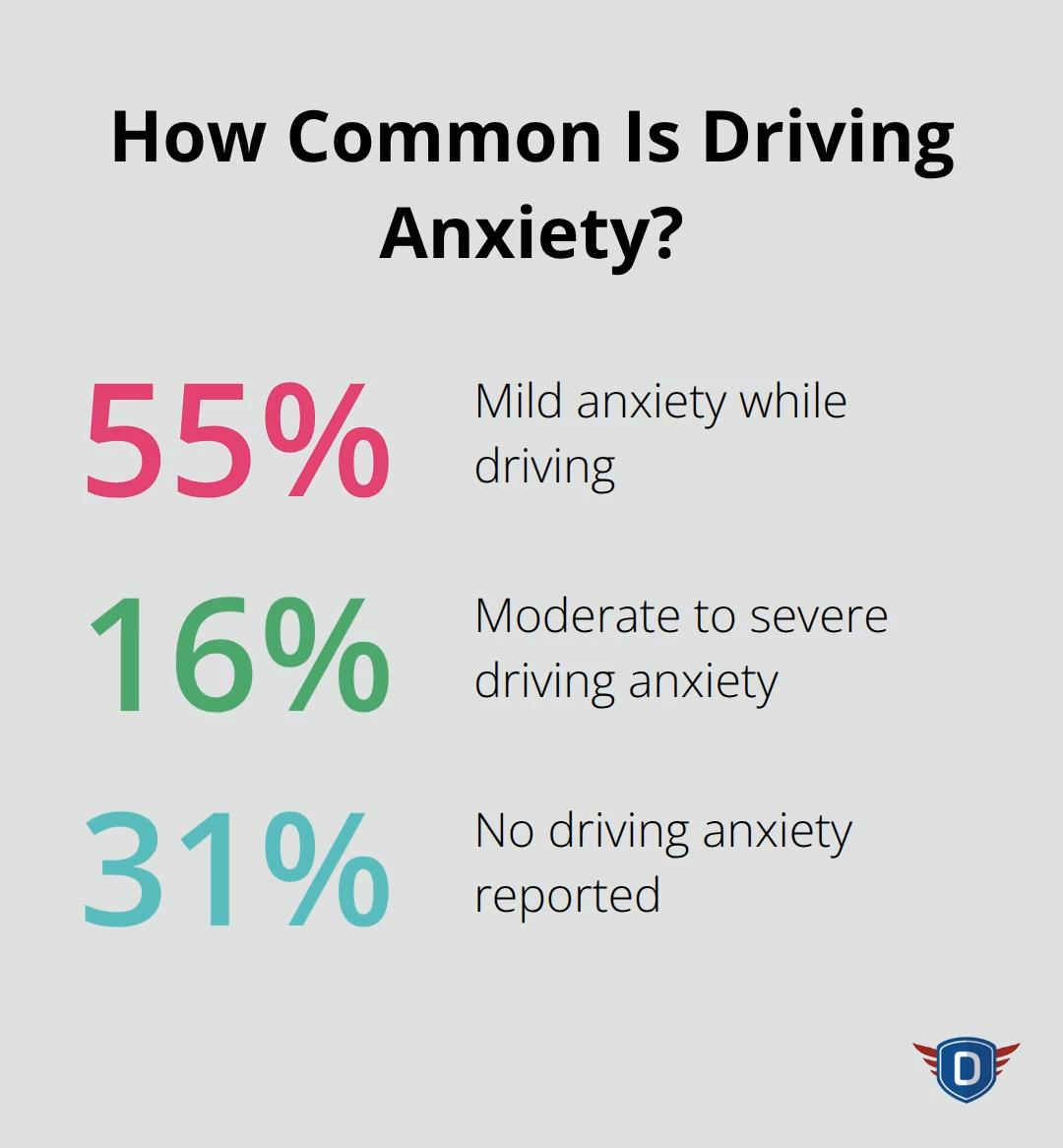
Your nervous system learns faster than your hands learn to steer. This is why mindset work matters as much as steering practice. Anxiety about driving isn’t a character flaw; it’s a protective mechanism your brain uses when facing unfamiliar situations. The problem arises when that protection becomes excessive, making you avoid driving entirely or panic during lessons. Research on driving anxiety shows that 55% of drivers experience mild forms of anxiety, with 16% experiencing moderate to severe anxiety, while 31% report no anxiety.
Common triggers include past accidents, fear of losing control, and overthinking worst-case scenarios. The good news is that structured exposure combined with specific mental techniques rewires your brain’s threat response faster than most nervous drivers expect.
Expose Yourself to Driving in Small, Predictable Steps
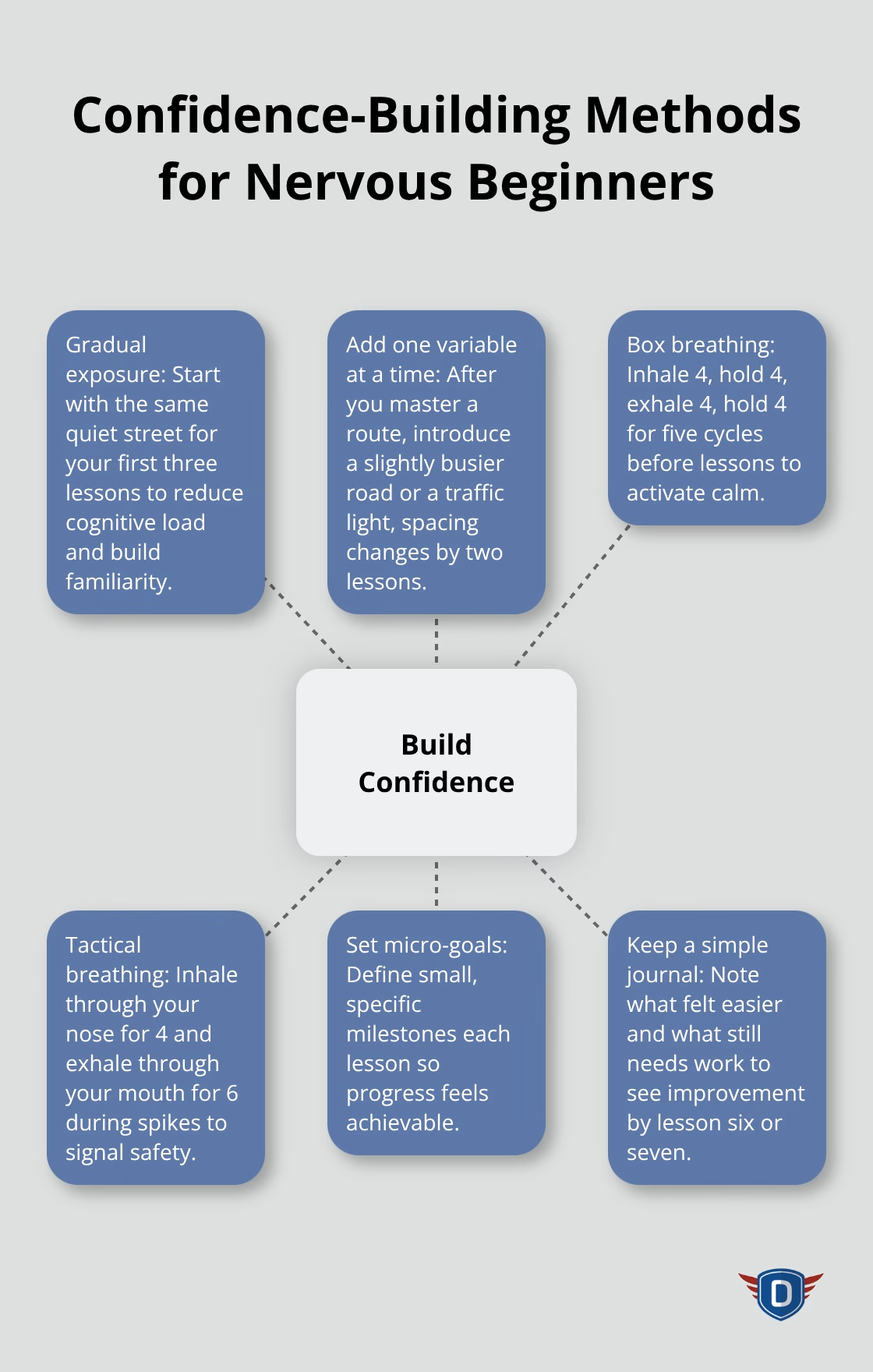
Gradual exposure works because it teaches your nervous system that driving is safe through repeated, manageable experiences rather than through reassurance alone. Start with the exact same quiet street for your first three lessons, not because you’re avoiding progress but because familiarity reduces cognitive load. Your brain can focus on steering technique instead of processing every new sight and sound. After mastering that street, add one new element: perhaps a slightly busier road with a few more cars. Wait two lessons before adding another variable like a traffic light. This progression prevents the overwhelm that makes nervous drivers quit. The timeline varies by person, but most nervous beginners feel noticeably calmer after five to seven lessons on familiar routes. You’re not stalling progress; you’re building the neural pathways that make complex driving feel automatic later.
Use Specific Breathing Techniques Before and During Driving
Shallow breathing during nervousness creates a feedback loop: anxiety makes you breathe shallowly, shallow breathing signals danger to your brain, and your brain increases anxiety further. Breaking this cycle requires deliberate breathing. Before your lesson starts, practice box breathing: inhale for four counts, hold for four counts, exhale for four counts, hold for four counts, then repeat five times. This activates your parasympathetic nervous system, which calms your body. During the lesson itself, if you notice tension rising, shift to tactical breathing: slow, deep inhales through your nose for four counts and exhales through your mouth for six counts. The longer exhale signals safety to your nervous system more effectively than equal-count breathing. Practice these breathing techniques at home before your first lesson so they feel natural when you need them in the car. Your hands won’t shake, your racing heart will slow, and your mind will clear enough to focus on the actual task.
Set a Realistic Timeline and Celebrate Small Wins
Nervous beginners often expect to feel comfortable driving within two weeks. That expectation sets you up for disappointment. Research on skill acquisition shows that many hours of practice are typically needed to achieve proficiency in complex motor tasks like driving. Your first lesson is hour one. This means expecting to feel confident after five or six lessons is unrealistic; expecting to feel less dread before driving is reasonable and achievable. Set micro-goals instead of broad ones. Your goal for lesson two isn’t to feel completely calm; it’s to complete the route without your hands shaking. Your goal for lesson four is to change lanes on a quiet street without checking your mirrors five times. These small wins accumulate and prove to your anxious brain that you’re becoming capable. Keep a simple journal noting what felt easier than expected and what still needs work. Reviewing this journal before lesson six or seven shows progress that your anxiety might otherwise convince you doesn’t exist.
Final Thoughts
Professional driving instruction accelerates your progress in ways self-teaching cannot match. A certified instructor recognizes anxiety patterns you might miss and adjusts pacing accordingly, preventing the frustration that causes many nervous beginners to quit. They’ve worked with hundreds of anxious drivers and know exactly which roads to use, which skills to prioritize, and when to push versus when to pause.
Structured instruction builds safe driving habits from day one instead of letting bad habits form and requiring correction later. Your instructor catches jerky steering inputs, excessive mirror checking, or rushed braking before these become ingrained patterns. They teach defensive driving techniques that reduce accident risk, not just help you pass a test. Research shows that drivers trained with structured curricula demonstrate better hazard recognition and faster reaction times than self-taught drivers.
The first driving lesson tips that work best come from instructors who understand that confidence builds through small, measurable progress. At floridanewdriver.com, we focus on creating a supportive learning environment where each lesson builds on the previous one, helping you develop both technical skills and the mental resilience needed for safe driving. Our certified instructors tailor every session to your pace, ensuring you’re neither bored nor overwhelmed.