
The Florida DETS course online is a 6-hour Driver Education Traffic Safety course that most first-time drivers under 18 must finish before applying for a Florida license. As a parent, you can help by confirming your teen’s eligibility, choosing an approved online provider, and setting a simple study schedule.
This checklist walks you through each step in order. It also covers what to gather first, common mistakes, and how to plan the permit steps that come next.
DriverEducators
Key Takeaways
- Florida requires first-time drivers under 18 to complete a 6-hour DETS course before applying for a license, unless a school-based option substitutes.
- Teens 18 and older take the TLSAE course instead, so confirm your teen’s age and history before you enroll.
- Plan for a signed, notarized Parental Consent Form and a 50-question Class E Knowledge Exam after the course.
- Spread the course over several short sessions, because course length is set by state rules and cannot be shortened.
- Start a driving log early: a learner’s license holder needs 50 supervised hours, 10 of them at night.
- Confirm every requirement with your school board or the Florida DMV before you enroll.
Table of Contents
- What do you need before your teen starts the DETS course online?
- Step 1: Does my teen need DETS or TLSAE?
- Step 2: How do I choose an approved online DETS course?
- Step 3: How do I set up a study schedule for the 6-hour course?
- Step 4: What happens after my teen finishes DETS?
- Step 5: How do I support my teen once they have a learner’s license?
- What common mistakes should parents avoid?
- How long does the process take?
- Our Perspective
- FAQ
- Sources
What do you need before your teen starts the DETS course online?
Before enrolling, gather your teen’s basic information and confirm they actually need DETS. The course is for first-time drivers under 18, so check age, license history, and whether a school driver education class already covers the requirement. A few minutes of checking now prevents a wasted course.
Here is a short list of what to have ready:
- Your teen’s legal name and date of birth, exactly as they will appear on license paperwork.
- A device with a reliable internet connection. Phones, tablets, and computers all work for a mobile-friendly course.
- A quiet block of time each day for the first week.
- A parent or legal guardian available to sign the consent form later.
For a deeper look at the course itself, read our guide to the DETS course in Florida for teens and parents.
Step 1: Does my teen need DETS or TLSAE?
Teens under 18 who have never held a license need DETS. As of August 1, 2025, an individual under 18 who has never held a driver license from any other state, country or jurisdiction must complete a 6-hour DETS course before applying for a license in Florida. Applicants 18 and older follow the separate Traffic Law and Substance Abuse Education (TLSAE) path.
Some teens are exempt or have another route. Florida Department of Education Traffic Safety Classroom 1900300 and 1900310 courses, and Driver Education Licensing Assistance Program (DELAP) courses offered by some county school boards, may substitute for this requirement. If your teen is in a high school driver education class, ask the school before buying anything.
The state also set a grandfathering rule. Teens under 18 who completed a TLSAE course before August 1, 2025 may use that certificate for one year after the completion date. A teen who finished TLSAE on or after that date generally needs DETS instead.
| Situation | Course to check |
|---|---|
| First-time driver, under 18 | DETS (6 hours) |
| First-time driver, 18 or older | TLSAE |
| Enrolled in a school DELAP or FDOE traffic safety class | Ask the school board whether it substitutes |
| Valid out-of-state license transferring to Florida | Not affected by the DETS change, per FLHSMV |
When in doubt, confirm with the Florida Department of Highway Safety and Motor Vehicles (FLHSMV) DETS page or your local school board.
Step 2: How do I choose an approved online DETS course?
Choose a provider that FLHSMV lists as authorized, and read what the course page says about format, languages, and support. Look for an online, self-paced format your teen can use on a phone or laptop. Confirm that the provider reports your teen’s completion electronically to the state.
That last point matters. The course provider electronically submits completion information to FLHSMV, and a physical copy of the certificate is not required when getting a license. So your teen does not need to carry paper to the license office.
The state also sets a minimum standard for providers. A DETS course must be at least 6 hours long, and its content must meet or exceed the Florida Department of Education course description. Course length is set by state rules, so any course promising a faster finish would not comply.
floridanewdriver.com is an Orlando-based provider of online traffic school and driver education courses, with courses that are self-paced, mobile-friendly, and offered in English, Spanish, and Portuguese. For a closer look, see Florida DETS course online for teens and the approved driver education course guide for Florida drivers.
Step 3: How do I set up a study schedule for the 6-hour course?
Break the course into short, regular sessions instead of one long day. A teen who studies 45 to 60 minutes at a time usually stays more focused than one who sits for six hours straight. Pick set times, put them on the family calendar, and keep phones out of reach during study.
Here is a simple plan to adapt:
- Choose three or four study days in the first week.
- Set a start time that does not collide with sports, work, or homework.
- Have your teen use a quiet spot and headphones if the course has audio.
- Check in briefly after each session and ask what surprised them.
- Leave a buffer day before any personal deadline, such as a 15th birthday appointment.
Because the course is online and self-paced, your teen can pause and return later. Support tools such as a read-along feature can help teens who learn better by listening and reading together.
Ask your teen to explain one rule from each session in their own words. That small habit turns reading into real understanding, which matters more than clicking through. For extra study ideas, see our online driving course for teens permit guide.
Step 4: What happens after my teen finishes DETS?
After DETS, your teen moves on to the learner’s license requirements. They must be at least 15, pass vision and hearing tests, and pass the Class E Knowledge Exam. A parent must also sign a Parental Consent Form, and your teen must bring identification documents.
The official list is short but strict. Teens must be at least 15 years old and, if under 18, have a signed and notarized Parental Consent Form; step-parents may not sign unless they have legally adopted the minor child. Check this early, because it affects blended families.
The knowledge exam is the next big task. It has 50 multiple-choice questions about Florida traffic laws, safe driving practices, and traffic controls, and a customer must answer 40 correctly, or score 80 percent, to pass. Your teen can prepare by studying the Official Florida Driver License Handbook.
There is also an online testing option. Applicants under 18 can take the exam online, but a Parent Proctoring Form is required and must be notarized or signed in front of a driver license examiner. There is a fee for the learner’s license credential, so check the current amount on the state site.
Our guides on teen driver licensing requirements in Florida and the online permit course explain these steps in more detail.
Step 5: How do I support my teen once they have a learner’s license?
Stay involved, because supervised practice is where most skills form. Florida requires your teen to drive with a licensed driver age 21 or older, log 50 hours of practice, and follow time limits. Set clear rules, practice in varied conditions, and keep sessions calm and short at first.
Know the learner’s license rules so you can enforce them. A learner’s license holder drives only in daylight for the first three months, until 10 p.m. after that, always with a licensed driver 21 or older, and needs 50 supervised hours, 10 of them at night. The teen must hold the license for at least 12 months or until age 18, whichever comes first.
Track hours from day one. A parent, guardian, or responsible adult over 21 must later certify the 50 hours of experience on the Certification of Minor Driving Experience Form. FLHSMV also offers a practice log sheet, so you do not need to invent your own system.
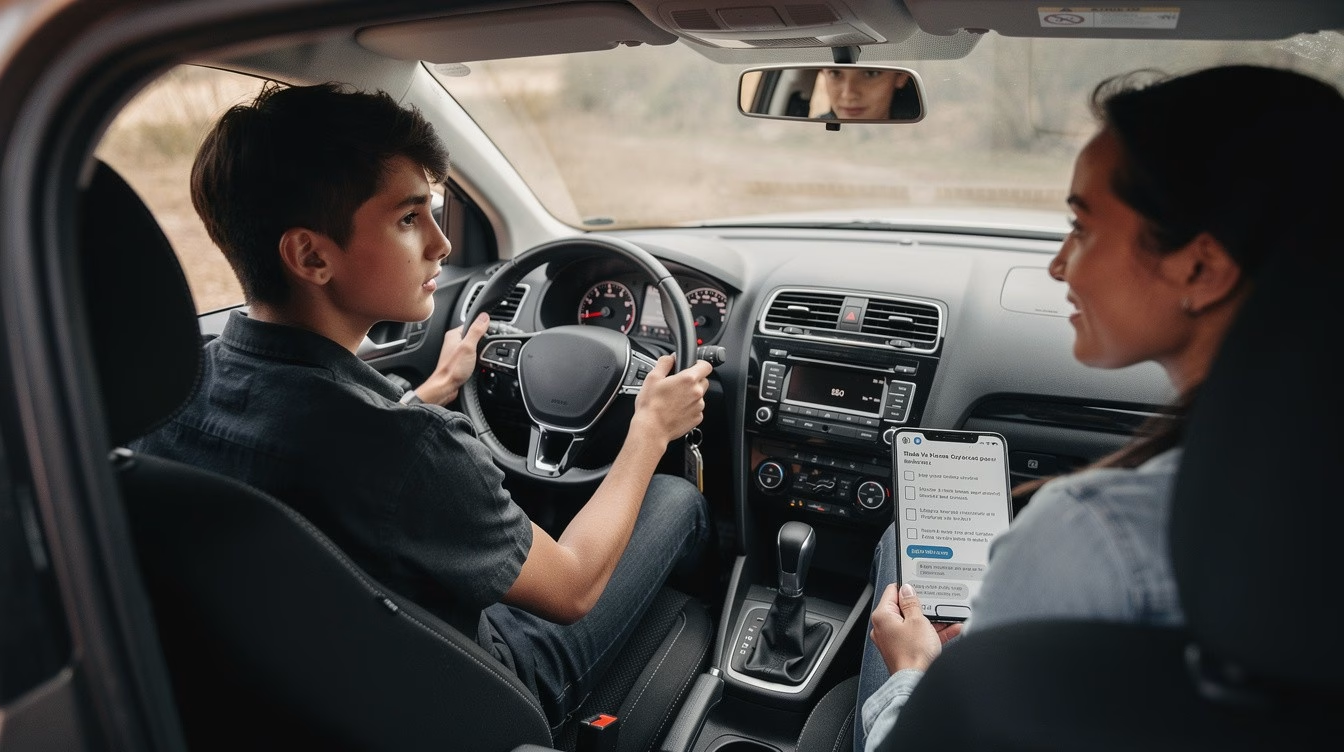
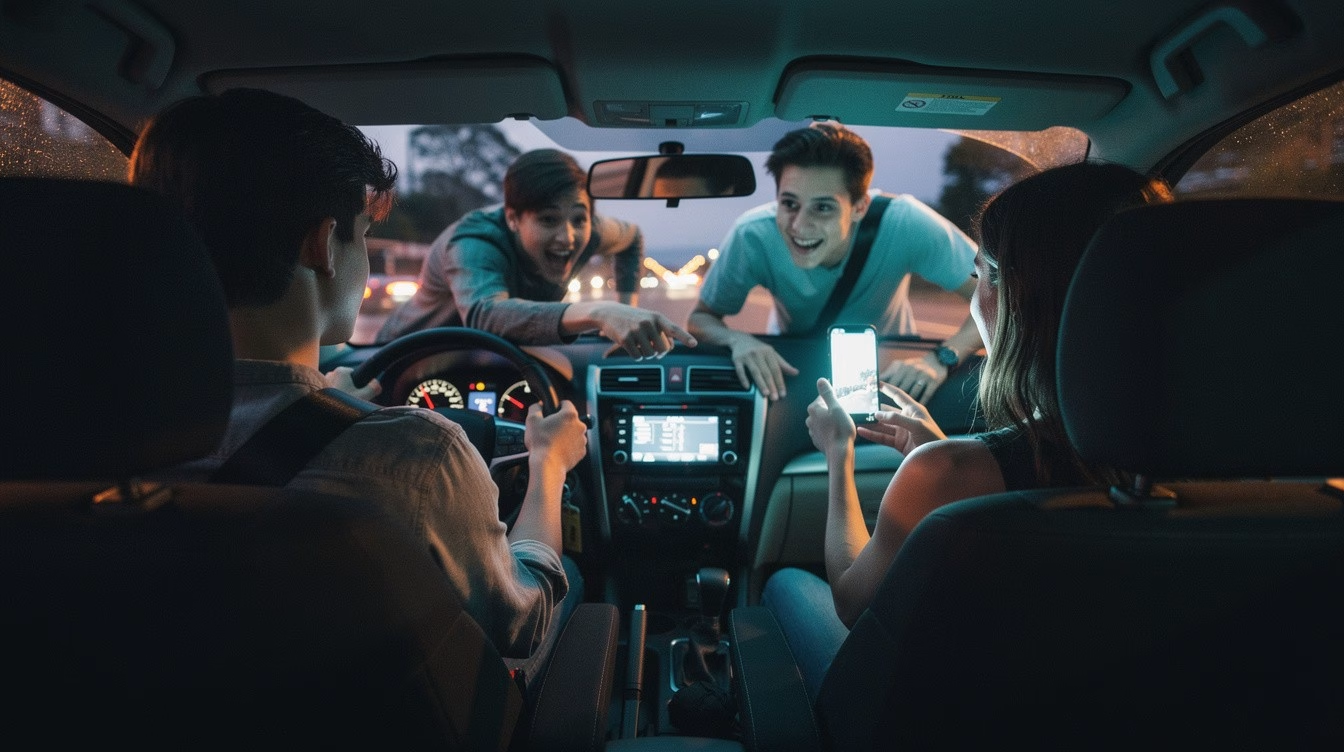
Research supports staying involved. Parents can provide supervised practice under varied conditions and set clear rules, such as always wearing a seat belt and carrying no teen or young adult passengers. A Parent-Teen Driving Agreement can help families agree on safe habits.
Practical tips for those first drives:
- Start in an empty parking lot, then move to quiet streets.
- Keep the radio off and phones put away so your teen can focus.
- Give one instruction at a time, in a calm voice.
- Practice at different times of day and in rain, not only on sunny afternoons.
- End each session with one thing that went well and one thing to improve.
More ideas are in our guides on teen driver supervision tips and parent-teen driving tips.

What common mistakes should parents avoid?
The most common mistakes are enrolling in the wrong course, waiting too long to gather paperwork, and rushing the material. Each one is easy to avoid with a little planning. Treat the course as the start of safe habits, not a box to check.
- Picking the wrong course. Teens under 18 need DETS, not TLSAE, unless a grandfathering or school exception applies.
- Ignoring the consent rules. The wrong signer can delay the permit visit.
- Doing it all in one sitting. Long sessions lead to skimming and poor recall.
- Skipping the log. Rebuilding 50 hours from memory is stressful and unreliable.
- Waiting on a paper certificate. The state receives completions electronically, so ask the provider how reporting works.
Also remember that your signature carries weight. The parent or guardian who signs the application agrees to take responsibility for the minor’s driving. Talk with your teen about that responsibility before you sign.
How long does the process take?
The DETS course itself is at least 6 hours, which most teens spread over several days. After that, the learner’s license visit and exam take extra time to schedule. The full path to a driver license takes at least a year, because of the learner’s license holding period.
Here is a rough timeline:
| Stage | What to expect |
|---|---|
| DETS course | 6-hour minimum, usually split into several sessions |
| Completion reporting | Allow 24 to 72 hours for completions to post, per FLHSMV |
| Knowledge exam and learner’s license | Depends on exam scheduling and your documents |
| Learner’s license holding period | At least 12 months, or until age 18 |
| Driver license | Age 16 or older, with the driving skills test |
The reporting window comes from the state: providers electronically report completions to FLHSMV, and the state asks drivers to allow 24 to 72 hours for them to post. Plan your permit appointment with that delay in mind.
Finally, check the rules again before each step, since requirements can change. Confirm details with your school board or the Florida DMV, and read the state page for refund information if you enroll.
Our Perspective
We talk with many parents who feel the DETS course is just paperwork their teen has to clear. We see it differently. The course is the first structured conversation your teen has about traffic laws, risk, and responsibility, and your interest in it sets the tone for everything that follows.
Our practical advice is simple. Confirm which course applies, split the hours into short sessions, and ask your teen to teach you one thing they learned. Then keep that conversation going once the learner’s license arrives, with a driving log, a calm voice, and clear family rules.
Finally, please check requirements with your school board, the Florida DMV, or your insurer before you enroll. Rules and fees can change, and the official pages are the final word.
� The DriverEducators team
Ready to complete your course online, on your own schedule? Find your state’s course on our courses page, see the Florida course options, or call 888-237-5669.
FAQ
What are the requirements to take a driver improvement course in Florida?
It depends on the course. For the Basic Driver Improvement (BDI) course, a driver with a non-criminal moving violation and no commercial license may elect school once every 12 months, up to eight times in a lifetime, and must elect within 30 days of the citation. For first-time teen drivers, the DETS course is the licensing requirement instead. Confirm your situation with the clerk of court or FLHSMV.
How do I sign up for a basic driver improvement course in Florida online?
First, contact the clerk of court in the county where the citation was issued within 30 days to elect the course. Then register with an FLHSMV-approved provider and finish within the court’s deadline. This article focuses on DETS for new teen drivers, so see our Florida driver improvement course online guide for BDI steps.
Which driver training course near me is best for a teen learning to drive in Florida?
The right choice depends on your teen’s age and your school. Start by checking whether your county school board offers a DELAP or traffic safety class that substitutes for DETS. If not, look for an FLHSMV-authorized provider with an online, self-paced format and electronic reporting. Behind-the-wheel practice with you is still essential.
Can my teen take the DETS course on a phone?
Many online courses are mobile-friendly, so a phone often works, though a tablet or laptop can be easier for longer sessions. FLHSMV says the course can be delivered in person or online. Check your provider’s page for device and language details before enrolling.
Sources
- Driver Education Traffic Safety (DETS) – FLHSMV
- DETS Course Frequently Asked Questions – FLHSMV
- Driver Improvement Schools – FLHSMV
- Licensing Requirements for Teens, Graduated Driver License Laws and Driving Curfews – FLHSMV
- Class E Knowledge Exam & Driving Skills Test – FLHSMV
- Required Forms for Teens – FLHSMV
- Traffic Citations – FLHSMV
- Reducing Risk for Teen Drivers – CDC