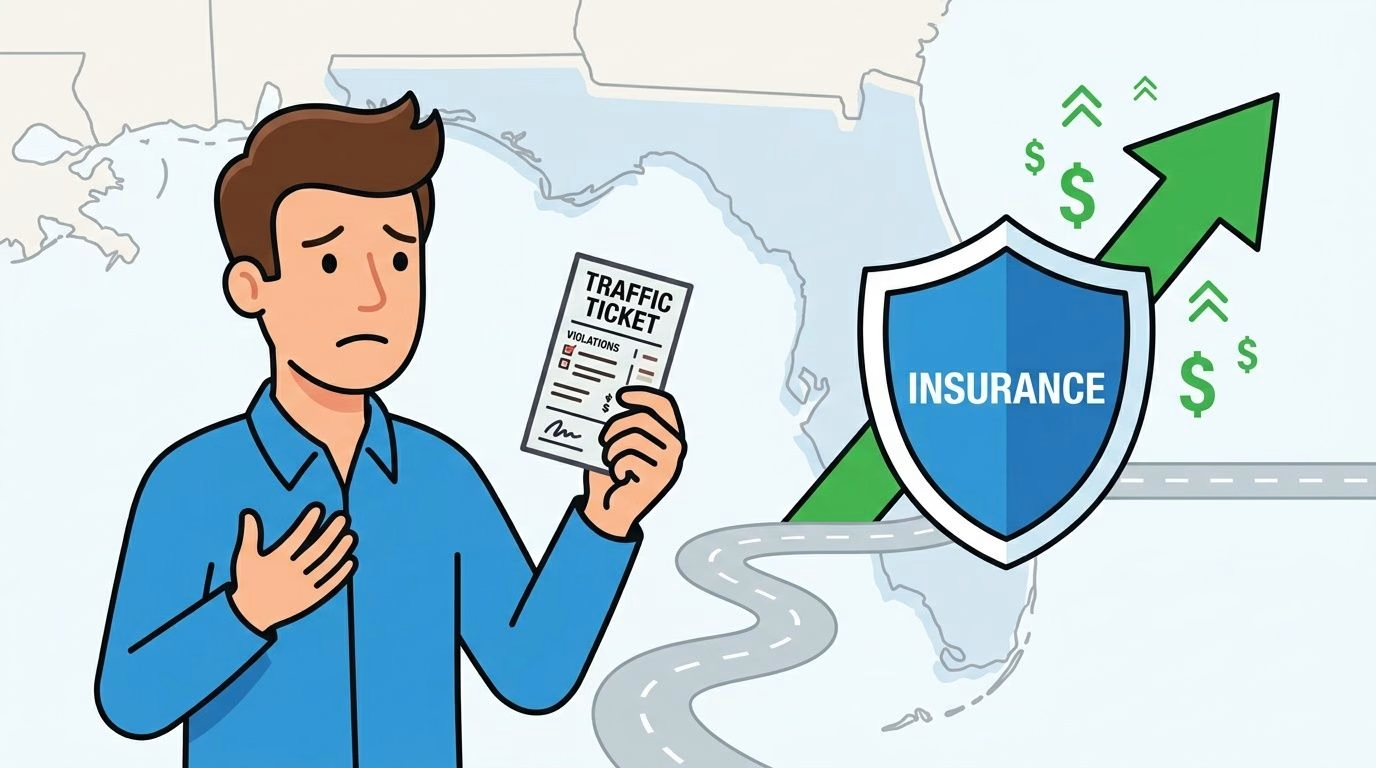
The Florida driver permit course you need depends on your age. If you are under 18, you take the 6-hour Driver Education Traffic Safety (DETS) course. If you are 18 or older, you take the 4-hour Traffic Law and Substance Abuse Education (TLSAE) course.
Either course comes before the learner’s license exam. This guide explains who must take which one, what exceptions apply, and the steps that follow. If you are an out-of-state or foreign license holder, check the exemption section below first.
BDI School
Key Takeaways
- Teens under 18 who have never held a license must take the 6-hour DETS course, while first-time drivers 18 and older take the 4-hour TLSAE course.
- Some county school board driver education classes, called DELAP, can replace the course, so ask your school first.
- The course provider reports your completion electronically to the Florida Department of Highway Safety and Motor Vehicles (FLHSMV), and paper certificates are not accepted.
- After the course, teens still need a parental consent form, vision and hearing tests, the Class E knowledge exam and proof of identity.
- Teens who completed the old 4-hour TLSAE before August 1, 2025 may have a limited window to use that certificate.
Table of Contents
- What is a Florida driver permit course?
- Which course do you need: DETS or TLSAE?
- Can you skip the course?
- What if you took the old 4-hour TLSAE as a teen?
- What are the steps after you finish the course?
- How does the course report to FLHSMV?
- What happens during the learner’s license phase?
- What should adult first-time drivers know?
- How do you choose an approved online course?
- Our Perspective
- FAQ
- Sources
What is a Florida driver permit course?
A Florida driver permit course is a state-approved education class that first-time drivers complete before getting a learner’s license or a first license. Teens take DETS. Adults take TLSAE. The course provider reports your completion to the state electronically.
Florida law says the Florida Department of Highway Safety and Motor Vehicles (FLHSMV, often called the Florida DMV) must approve these courses. The curriculum covers the effects of alcohol and drugs on drivers, Florida traffic laws, risky driver behaviors and the results of using electronic devices while driving (s. 322.095, Florida Statutes).
The course is not the knowledge exam. It is a requirement you finish first. You then pass the exam at an FLHSMV-approved location or through an approved provider.
Which course do you need: DETS or TLSAE?
It depends on your age. As of November 2026, FLHSMV says anyone under 18 who has never held a license anywhere must complete a 6-hour DETS course before applying. Adults 18 and older take the 4-hour TLSAE.
| Detail | DETS | TLSAE |
|---|---|---|
| Full name | Driver Education Traffic Safety | Traffic Law and Substance Abuse Education |
| Who takes it | First-time drivers under 18 | First-time drivers 18 and older |
| Length | 6 hours | 4 hours |
| Required for | Learner’s license | Learner’s or driver license |
| Legal basis | s. 322.1615, F.S. | s. 322.095, F.S. |
The law changed in 2025. Senate Bill 994 amended s. 322.095 so that the TLSAE requirement applies to applicants 18 or older. It also changed s. 322.1615 so that learner’s license applicants must complete a department-approved driver education course meeting the Department of Education Traffic Safety-Classroom 1900300 description. The act took effect July 1, 2025.
The 4-hour TLSAE still applies to adults. FLHSMV states that drivers over 18 who have never held a license from any state, country or jurisdiction must complete the 4-hour TLSAE before applying in Florida.
Can you skip the course?
Yes, in some cases. You may not need the course if you already hold a license from another jurisdiction, or if you complete an approved school-based class. A county school board program called DELAP can replace it. Confirm with your school board before you skip anything.
FLHSMV explains that a successful Driver Education Licensing Assistance Program (DELAP) student does not have to take DETS. DELAP classes are offered by some county school boards, usually through high school driver education.
The statute also gives an exemption for adults. Section 322.095 says an applicant 18 or older does not need the course if licensed in another jurisdiction or if they completed a Department of Education driver education course.
FLHSMV also lists groups the DETS change does not affect:
- Applicants under 18 who already hold a valid out-of-state license and are transferring it to Florida.
- People who already had a Florida learner’s license before August 1, 2025.
- People under 18 who completed the 4-hour TLSAE before August 1, 2025, within the allowed window.
If you hold an out-of-state or foreign license, remember that these education rules concern Florida licensing. They are separate from any Florida traffic ticket you may have received.
What if you took the old 4-hour TLSAE as a teen?
If you finished the 4-hour TLSAE before August 1, 2025, you may still use it for a limited time. If you finished it on or after that date and you are under 18, you generally need DETS instead. Check the dates on your certificate and ask FLHSMV when unsure.
FLHSMV’s FAQ states that those teens are grandfathered in and may use their TLSAE certificate for one year after the completion date. A teen who does not get a Florida license within that year must take DETS.
The same page says teens who take a TLSAE on or after August 1, 2025 need the DETS course, unless they are enrolled in a qualifying school-based class. Rules and dates can change, so read the current FLHSMV page before you buy a course.
What are the steps after you finish the course?
After the course, a teen applies for the learner’s license. You need parental consent if you are under 18, a vision and hearing test, a passing Class E knowledge exam and identity documents. The learner’s license then opens the supervised driving phase.
As of November 2026, FLHSMV lists these requirements for a teen’s learner’s license:
- Be at least 15 years old.
- If under 18, bring a signed and notarized Parental Consent Form. Step-parents may not sign unless they legally adopted the minor.
- Show proof of DETS completion.
- Pass the vision and hearing test at a service center.
- Pass the Class E knowledge exam. FLHSMV says it has 50 multiple-choice questions, and the passing score is 80 percent.
- Provide proof of identity, Social Security number and residential address.
You can study with the Official Florida Driver License Handbook. For approved ID documents, FLHSMV points to its What to Bring list on the same page.
FLHSMV also says that students under 18 may take the knowledge exam online, proctored by a parent or legal guardian. Students of any age may take it in person with an approved third-party provider.
How does the course report to FLHSMV?
Your course provider sends your completion to FLHSMV electronically. You do not carry a paper certificate to the license office. FLHSMV says completions can take time to post, so finish the course well before your appointment.
FLHSMV notes that providers report completions electronically, and that it may take 24 to 72 hours for completions to post. It also says the department does not accept paper certificates for any licensing purpose.
Florida law backs up the electronic process. Section 322.095 requires providers to submit completion information through the department’s Driver Improvement Certificate Issuance System within 5 days, free of charge to the student. Providers must also list all course fees during registration and cannot add unlisted fees. County fees and exam fees are separate from the course price and can change.
What happens during the learner’s license phase?
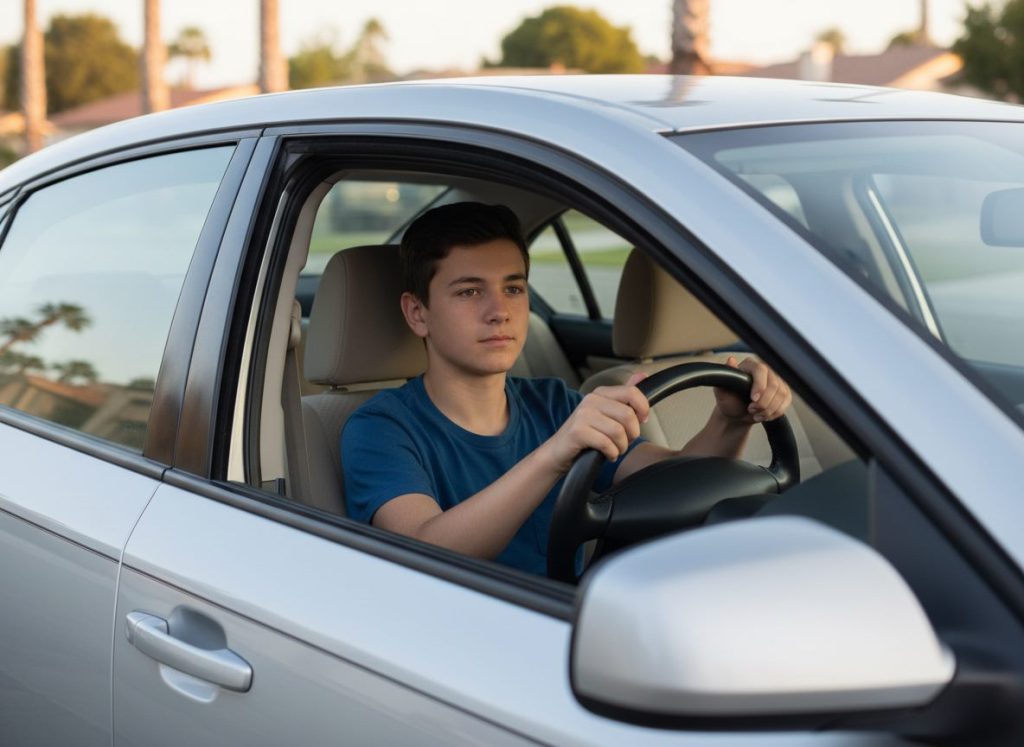
The learner’s license lets a teen practice driving with limits. A licensed driver 21 or older must ride along. Daytime driving only applies for the first three months. A teen must also log 50 supervised hours before applying for the full license.
According to FLHSMV, the learner’s license is held at least 12 months or until age 18, whichever comes first. The teen must drive with a licensed driver 21 or older. After the first three months of daylight-only driving, the teen may drive until 10 p.m.
The supervised driving rule is specific. A parent, guardian or responsible adult over 21 certifies 50 hours of driving, at least 10 of them at night. FLHSMV provides a driving log to track the time.
Moving violations matter too. FLHSMV says a teen must have no moving violation convictions for one year from the learner’s license issue date. A teen may have one if adjudication was withheld.
The Insurance Institute for Highway Safety (IIHS) lists Florida’s graduated licensing rules, including the 12-month learner’s period and 50 supervised hours in its state comparison table. For more on getting started, see our guide on how to get a driver’s permit in Florida.
What should adult first-time drivers know?
Adults 18 and older take the 4-hour TLSAE and skip parental consent. Even so, you still need the knowledge exam, vision test and ID documents. The course also teaches Florida traffic law and the effects of alcohol and drugs on driving.
Section 322.095 says the course must have a minimum of 4 hours of content, minus a maximum of 30 minutes for breaks. Online providers build timers and quizzes into the course for that reason.
If you recently moved to Florida and already hold a license from another state, you generally do not need the TLSAE. Confirm at a driver license office. Our first-time driver course guide and adult driver education course options cover the next steps in more detail.
How do you choose an approved online course?
Choose a course approved by FLHSMV, confirm it matches your age, and read the fee list before you pay. Check that the provider reports your completion to the state. Avoid any course that charges for something not shown at registration.
BDI School offers online DETS and TLSAE courses, self-paced and available in English, Spanish and Portuguese. Our approved driver education course guide explains what approval means. Parents of teens may also like our online driving course for teens overview.
Use this short checklist before you enroll:
- Your age matches the course: DETS under 18, TLSAE 18 and older.
- You are not already exempt through DELAP or an out-of-state license.
- The provider reports completion electronically to FLHSMV.
- All fees appear during registration.
- The course works on your phone, tablet or computer.
Our Perspective
We see the same confusion every week. Teens and parents often search for the old 4-hour course, and adults wonder if they need the longer 6-hour one. The answer follows age, so start there and confirm on the FLHSMV page before you pay.
Our practical advice is to finish the course early. Completions can take a few days to post, and a missed posting can delay a license office visit. If your school offers DELAP, ask it first, because that may already cover the requirement.
Finally, treat the course as the start, not the finish. The 50 supervised hours do the real teaching. Plan night drives, rain drives and highway drives with your teen, and keep the log current.
� The BDI School team
If you are 18 or older, or you are a parent helping a teen under 18, you can see the TLSAE and DETS courses at https://bdischool.com/courses/. Both are online, self-paced and available in English, Spanish or Portuguese.
FAQ
How long is the Florida driver permit course?
Teens under 18 take a 6-hour DETS course. Adults 18 and older take a 4-hour TLSAE course. Both are approved by FLHSMV, and some county school board DELAP classes can substitute.
Do I need the course if I already have an out-of-state license?
Generally no. Section 322.095 exempts applicants who have been licensed in another jurisdiction, and FLHSMV says the DETS change does not affect under-18 applicants transferring a valid out-of-state license. Confirm your situation with a Florida driver license office.
Can a teen take the knowledge exam online?
Yes, in some cases. FLHSMV says students under 18 may take the exam online through an approved third-party provider, with a parent or legal guardian proctoring. Students of any age may also test in person with an approved provider.
Does the permit course count toward traffic ticket points or insurance discounts?
No. The permit course is for first-time licensing only. Ticket courses such as Basic Driver Improvement work differently, and any insurance discount is your insurer’s decision, so ask your insurer. Our Florida traffic citation points guide explains those options.
Sources
- Driver Education Traffic Safety (DETS) – FLHSMV
- DETS Course Frequently Asked Questions – FLHSMV
- Driver Improvement Schools – FLHSMV
- What is TLSAE – FLHSMV
- Licensing Requirements for Teens – FLHSMV
- Learner’s License Driving Log – FLHSMV
- SB 994 (2025) Enrolled Bill Text – Florida Senate
- Section 322.095, 2025 Florida Statutes – Florida Senate
- Section 322.095, 2026 Florida Statutes
- Section 322.095, Florida Statutes – Florida Senate
- Graduated licensing laws – IIHS