Teen drivers cause about 1 in 5 fatal crashes for their age group, according to the CDC. A parent-teen driving contract is one of the most effective ways to reduce this risk by establishing clear expectations before your teen gets behind the wheel.
We at floridanewdriver.com know that written agreements work better than casual conversations. This guide walks you through creating a contract that actually sticks and keeps your teen safer on the road.
What Is a Parent-Teen Driving Contract
A parent-teen driving contract is a written agreement between you and your teen that sets specific rules for driving and outlines what happens when those rules are broken. It is not a legal document that holds up in court, but rather a family tool that clarifies expectations and creates accountability. The National Safety Council reports that teens aged 16 to 19 have a fatal crash rate among young drivers-significantly higher than drivers aged 20 and older. A written contract works because it removes ambiguity. When rules exist only in conversation, teens forget details or convince themselves that exceptions apply to them. When those same rules appear on a printed page that sits on the refrigerator, enforcement becomes consistent and predictable.
How Written Agreements Shape Safer Driving
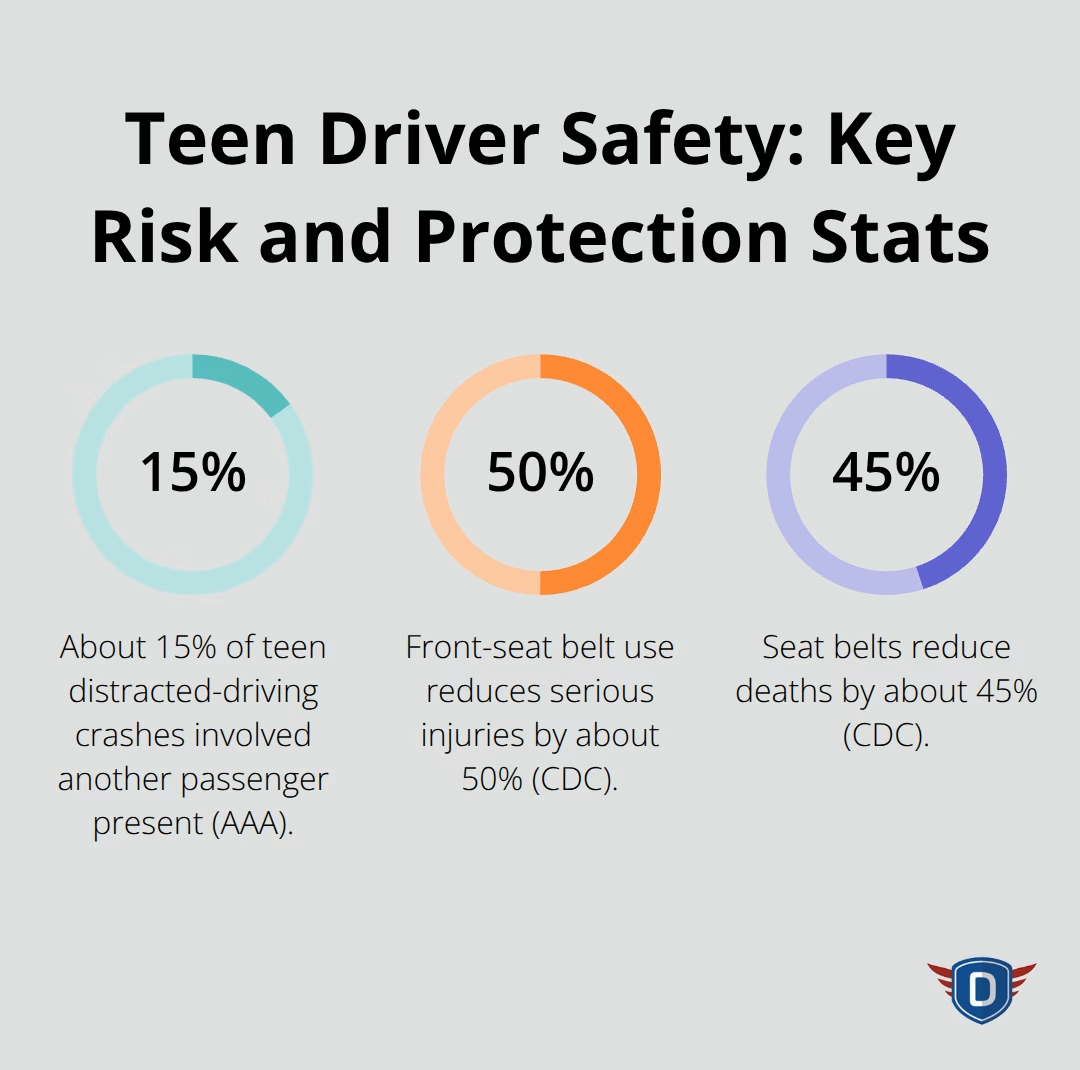
The CDC emphasizes that curfews matter significantly since fatal crashes for 16 to 19 year-olds occur four times more frequently at night than during daylight hours. Your contract can address this by establishing when your teen can drive and when they cannot. Similarly, passenger limits reduce distraction; AAA data show that about 15 percent of teen distracted-driving crashes involved another passenger present in the vehicle. A written agreement lets you start with zero teen passengers and gradually increase that number as your teen demonstrates responsibility over months of supervised practice.
Research from the American Academy of Pediatrics shows that teens who have a formal agreement with their parents are more likely to follow safety guidelines than those who rely on verbal reminders alone. The act of signing the contract creates psychological commitment; your teen has publicly acknowledged the rules and agreed to follow them. This matters because teen drivers are 33 percent more likely than other age groups to be involved in distracted-driving fatal crashes, according to NHTSA data. Your contract can prohibit cell phone use while driving, including hands-free calls, and specify that the phone stays in a bag or the trunk during drives. When your teen signs that rule, they own it.
Insurance and Legal Recognition
Insurance companies recognize the value of formal safety agreements. While the contract itself does not legally bind your teen, demonstrating that you have taken active steps to manage driving risk can influence how insurers view your family’s safety record. Some insurers offer modest discounts to families using graduated driver licensing principles or formal safety agreements. More importantly, if your teen causes a crash, evidence that you established clear rules and consequences shows you acted responsibly as a parent, which can matter in liability discussions.
Aligning Your Contract with State Requirements
Your contract works best when it ties directly to your state’s graduated driver licensing law. Washington State requires 50 hours of supervised driving, including 10 hours at night, before a teen can drive unsupervised. Your contract should mirror this structure by setting specific milestones your teen must reach before earning new privileges. For example, after 20 hours of supervised practice with no violations, your teen might earn permission to drive to school with a parent’s approval. After 40 hours with a clean record, they might drive to school and work. After 50 hours, they earn unsupervised daytime driving.
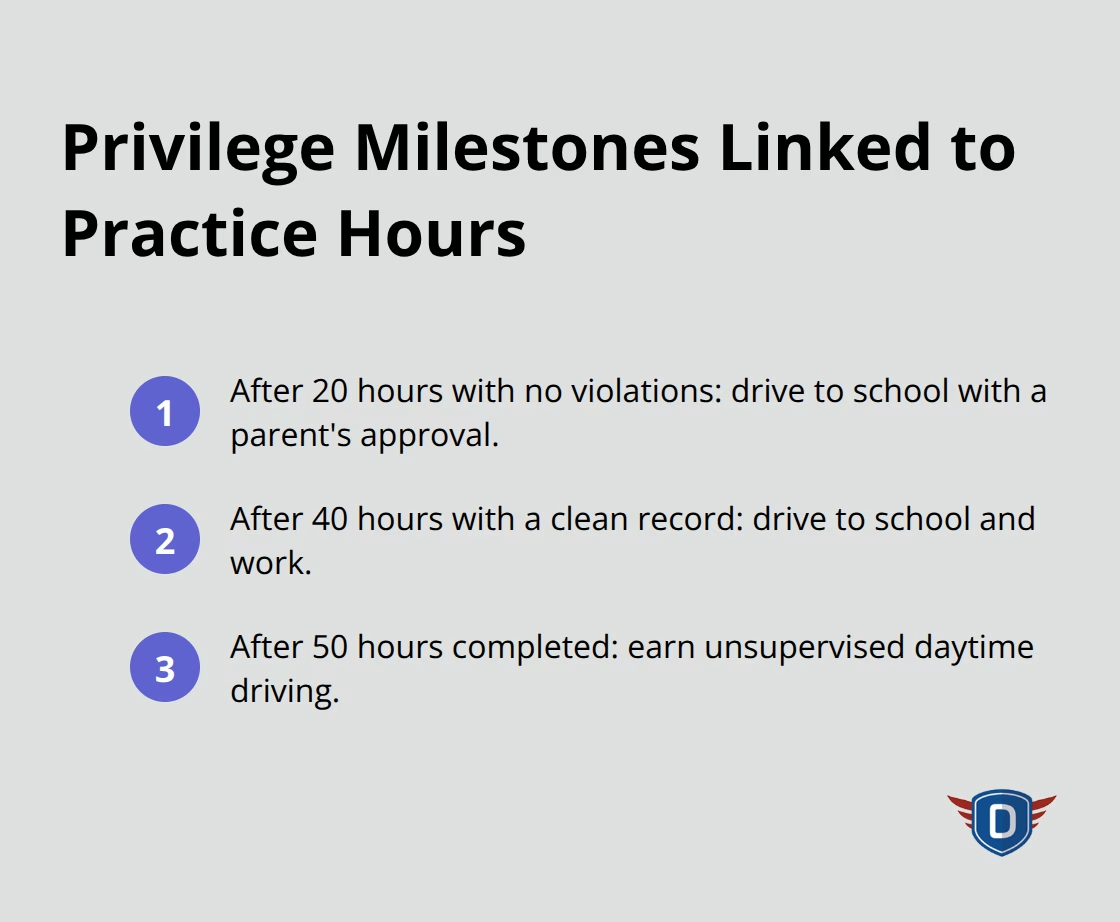
This progression prevents the common mistake of granting all privileges at once. It also gives you concrete checkpoints to discuss progress and adjust rules based on real performance rather than arbitrary timelines.
Establishing Nonnegotiable Safety Rules
The agreement should include nonnegotiable rules such as always wearing a seat belt in all seating positions, since the CDC notes that front-seat belt use reduces serious injuries by about 50 percent and deaths by about 45 percent. It should also require that your teen never drives after consuming alcohol or drugs, and never transports passengers who are impaired or under the influence. These rules protect your teen, their passengers, and other road users. With these foundational elements in place, you’re ready to identify the specific rules and consequences that will shape your family’s driving culture.
Rules That Actually Work
Curfews and Driving Restrictions
Fatal crashes for 16 to 19 year-olds occur about three times more frequently at night than during daylight hours, according to the CDC. This reality demands that your contract establish specific hours when your teen cannot drive unsupervised. Rather than impose a blanket nighttime ban, structure the restrictions progressively. During the first three months, prohibit all driving between 9 PM and 6 AM. After three months of violation-free driving, extend that window to 10 PM to 5 AM. This approach acknowledges that your teen will eventually need to drive at night, but you control when that happens based on demonstrated maturity.
Weekends often require different rules than weekdays; many families allow later driving on Fridays and Saturdays once the teen has proven nighttime competence. Geographic restrictions matter equally. Specify which roads your teen can drive and which are off-limits until they gain experience. Highway driving should come later, after your teen masters surface streets and intersections during daylight hours. Bad weather driving deserves its own restriction; prohibit driving in rain, fog, or snow until your teen has logged sufficient supervised hours in those conditions. These specific, measurable boundaries prevent the ambiguity that kills contracts. Your teen knows exactly which roads are allowed and which times are forbidden, making enforcement straightforward.
Passenger Limits and Phone Policies
Teen passengers create measurable risk. Start with zero teen passengers for the first month, regardless of your teen’s confidence level. This forces your teen to focus entirely on driving mechanics without social distraction. After one month of safe solo driving, allow one teen passenger. After three months, allow two. Each addition increases cognitive load, and your teen builds skills incrementally.
Phone use requires absolute clarity: the phone stays in the trunk or a locked glove box during all driving, not in a cup holder or pocket. NHTSA data show that 15 to 20 year-olds are 33 percent more likely than other age groups to be involved in distracted-driving fatal crashes. Your contract should prohibit hands-free calls, voice commands, and map checking while moving. If navigation is necessary, your teen should pull over safely or use a mounted GPS that was programmed before driving began.
Enforcing Consequences That Stick
Consequences for rule violations must be immediate and consistent to create real accountability. If your teen violates curfew by 15 minutes, enforce the penalty that same day or the next day, not weeks later when the violation feels abstract. Suspending driving privileges for one week works better than a fine because it directly impacts the behavior you want to change. For serious violations (like driving while impaired or texting behind the wheel), suspension should last at least two weeks.
Include a clause allowing your teen to earn back privileges early through demonstrated responsibility; this gives them agency and motivation. Document each violation in writing and discuss what led to the breach so your teen understands the connection between their choice and the consequence. Specific penalties for phone use violations might include losing driving privileges for one week on the first offense and two weeks on the second. This clarity transforms your contract from a general statement of values into an enforceable family agreement that your teen takes seriously.
With these rules in place, the next step involves the conversation itself-how you present this contract to your teen in a way that builds buy-in rather than resistance.
How to Start the Conversation About Driving Rules
The conversation with your teen about the contract matters more than the document itself. Most parents present the contract as a punishment or a list of restrictions imposed from above. Instead, frame it as a safety plan you’re building together because you want them to succeed and come home safely every day. Start the discussion with a question: what concerns them about driving? Many teens worry about highway merges, heavy traffic, or driving in rain. Acknowledging these fears shifts the conversation from rules to competence. Then explain that the contract helps them build skills gradually, with clear milestones they can actually achieve. Tell your teen that every rule in the contract connects directly to a real crash risk. When you set a curfew, reference CDC research showing that teen drivers aged 16�19 years are nearly three times more likely to be in a fatal crash than older drivers. Teens respond better to facts than to parental authority. They want to understand why a rule exists, not just obey it blindly.
Invite your teen to suggest rules or consequences they think are fair. If they propose a curfew of 10 PM on weeknights, you might counter with 9 PM but explain your reasoning. This negotiation builds ownership. When your teen helps shape the contract, they stop seeing it as something done to them and start seeing it as something they agreed to. Schedule this conversation when you’re both calm and have at least 30 minutes without distractions. Never introduce the contract during a conflict or when emotions are high. Many families schedule it over dinner or during a drive (when you’re not the one driving), where the environment feels less formal and your teen is more likely to listen openly.
Turning Vague Goals Into Measurable Milestones
Contracts fail when they contain vague language. Saying your teen must drive responsibly teaches nothing; specifying that they earn the right to drive unsupervised after 50 hours of supervised practice with zero violations creates clarity. Write every rule in measurable terms. Instead of no reckless driving, write no speeding above the posted limit on any road at any time. Instead of limited phone use, write the phone stays in the trunk during all driving. Instead of reasonable curfew, write no unsupervised driving between 9 PM and 6 AM for the first three months. This precision prevents your teen from finding loopholes or convincing themselves that exceptions apply.
Document violations in writing with the date, what happened, and what consequence applies. This record serves two purposes: it shows your teen that you enforce rules consistently, and it gives you concrete evidence when your teen argues that they were only five minutes late or that it was an emergency. Tie your contract directly to your state’s supervised driving framework. Set specific milestones: after 10 hours of supervised practice, your teen can drive on surface streets during daylight with a parent present. After 25 hours, they can drive on surface streets alone during daylight. After 40 hours, they can drive during daylight on highways with a parent present. After 50 hours, they earn unsupervised daytime driving privileges.
Print the contract and have both you and your teen sign it. The signature transforms it from a conversation into a commitment. Post it where your teen sees it regularly, not hidden in a drawer. Some families laminate it and tape it to the dashboard or refrigerator. The visibility keeps both of you accountable.
Reviewing and Adjusting as Skills Develop
The contract should not remain static. Set a specific date every month to review it together, perhaps the first Sunday of each month or on your teen’s driving practice day. During this review, discuss what went well, what violations occurred, and whether rules need adjustment. If your teen has driven violation-free for three months, they earn the next privilege level.
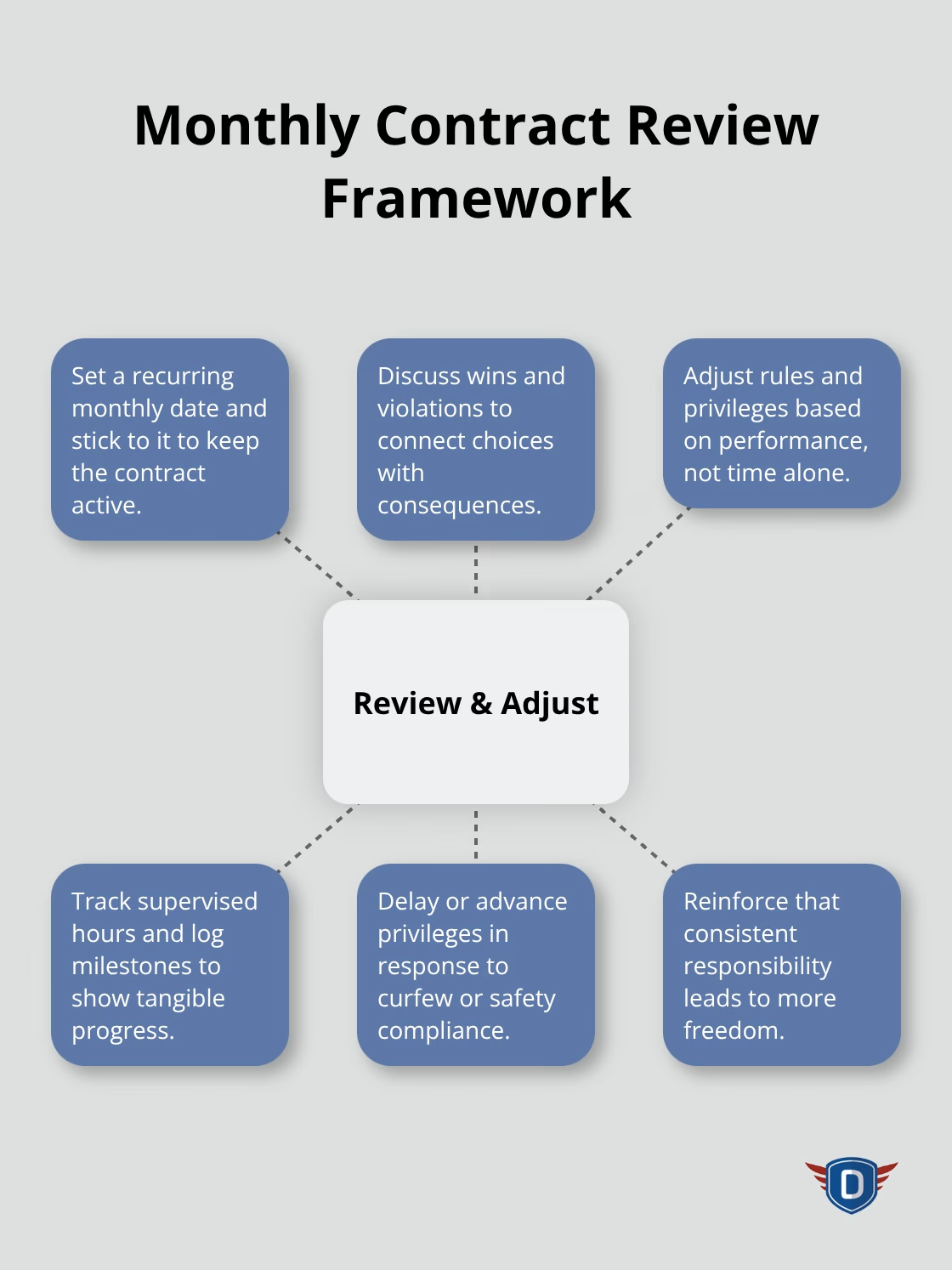
If they violated curfew twice in one month, that privilege gets delayed. This monthly check-in prevents the contract from becoming outdated and shows your teen that responsibility leads directly to more freedom.
Track hours of supervised driving in writing. Many families use a simple spreadsheet or app. When your teen completes 10 hours, mark it. When they reach 25 hours, acknowledge it and adjust their privileges. This tangible progress motivates teens far more than vague promises of future freedom. Adjust rules based on real performance, not on time alone. Some teens master highway driving after 35 hours; others need 50 hours. Your contract should allow for this variation. If your teen demonstrates calm decision-making and smooth vehicle control early, they earn earlier privilege increases. If they show hesitation or poor judgment, they practice longer before advancing. This flexibility keeps the contract fair and connected to actual competence.
Every three months, have a longer conversation about whether major rules need updating. As your teen gains experience and moves from a learner permit to an intermediate license to a full license, the contract should evolve. Rules that made sense for a 16 year-old with a learner permit may not fit a 17 year-old with six months of supervised driving. Update the contract in writing, have both of you sign the revision, and post the new version. This ongoing adjustment proves that the contract is about building competence, not about control.
Final Thoughts
A parent-teen driving contract transforms safety from an abstract goal into a concrete family commitment that both you and your teen actively shape together. The data proves this approach works: teens aged 16 to 19 experience fatal crash rates far higher than older drivers, yet written agreements with specific rules and consistent consequences measurably reduce that risk. When you create this contract with your teen rather than imposing it, you establish clear expectations, build their confidence through earned privileges, and create accountability that feels fair instead of arbitrary.
The contract works best when you treat it as a living document that evolves with your teen’s actual performance. Monthly reviews keep both of you engaged and allow you to adjust rules based on demonstrated responsibility rather than time alone. Your teen earns unsupervised daytime privileges after 50 hours of supervised driving with zero violations, and they advance to new conditions once they show calm decision-making in rain or heavy traffic. This progression prevents the mistake of granting all freedoms at once, which overwhelms new drivers and increases crash risk.
Start today by scheduling a calm conversation with your teen about creating your parent-teen driving contract together. Frame it as a safety plan that helps them succeed, reference CDC data about nighttime crash risk so they understand why each rule exists, and invite them to suggest rules they think are fair. We at floridanewdriver.com know that formal driver education combined with active parental involvement creates the safest outcomes, so pair your contract with professional instruction to give your teen the strongest foundation for a lifetime of safe driving.