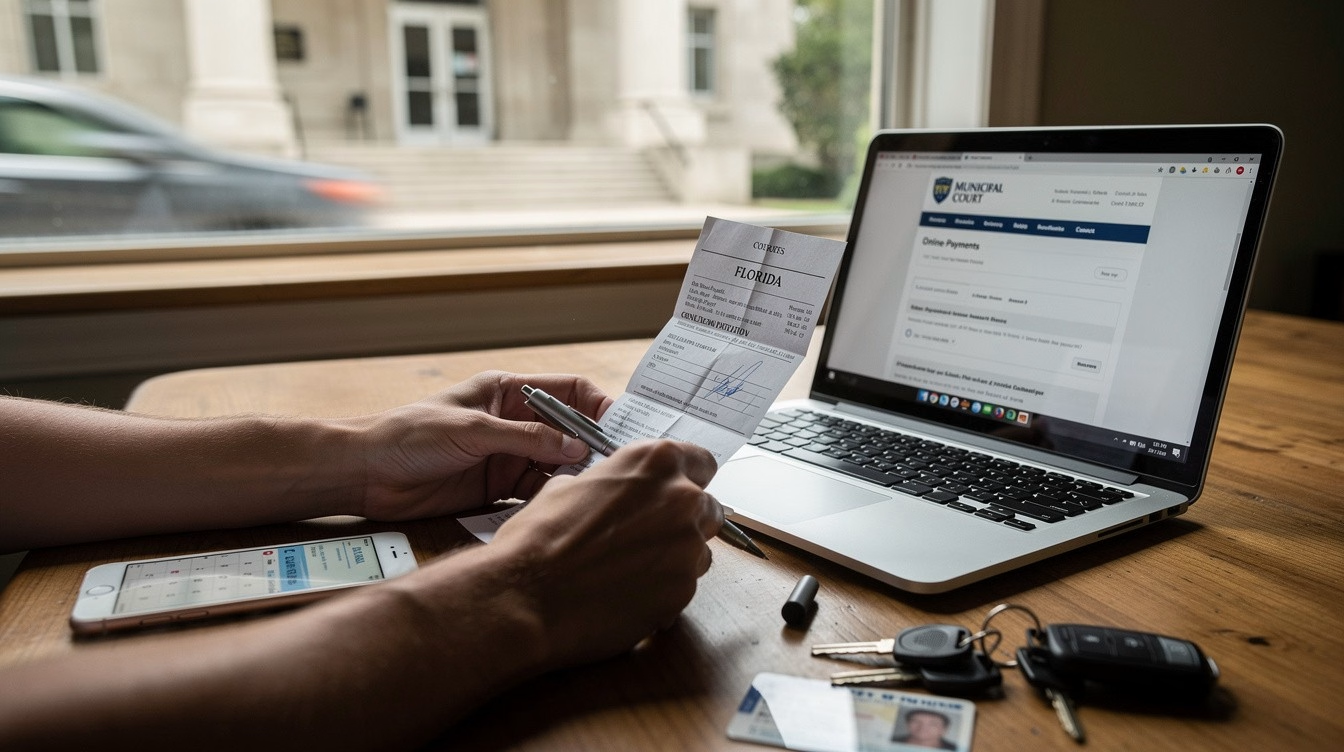
Getting a traffic ticket in Florida doesn’t mean you’re out of options. You have legitimate ways to fight the citation, and understanding your rights is the first step toward protecting your driving record and potentially avoiding insurance rate increases.
At floridanewdriver.com, we’ve outlined the practical steps for contesting a traffic ticket in Florida, from gathering evidence to presenting your case in court. Whether you choose to handle this alone or work with an attorney, knowing your options makes all the difference.
What’s Actually On Your Florida Traffic Ticket
The Essential Information Your Citation Contains
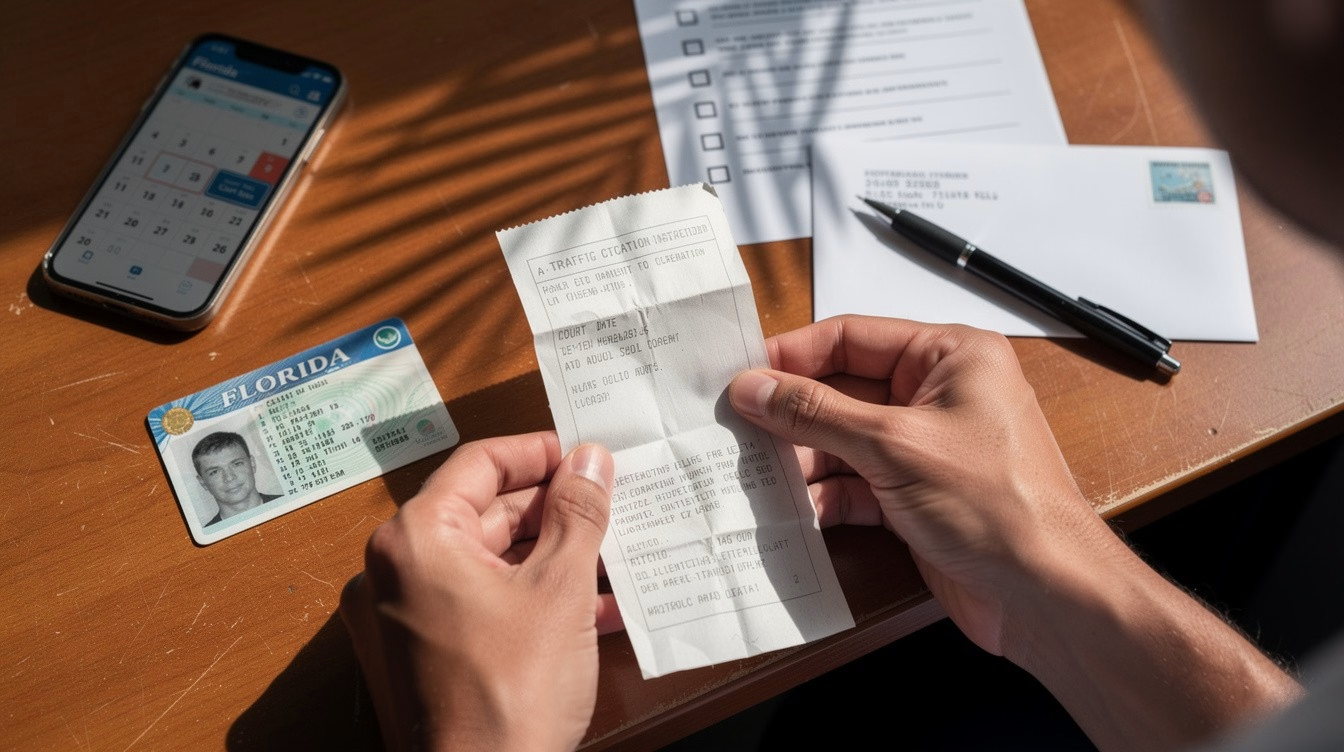
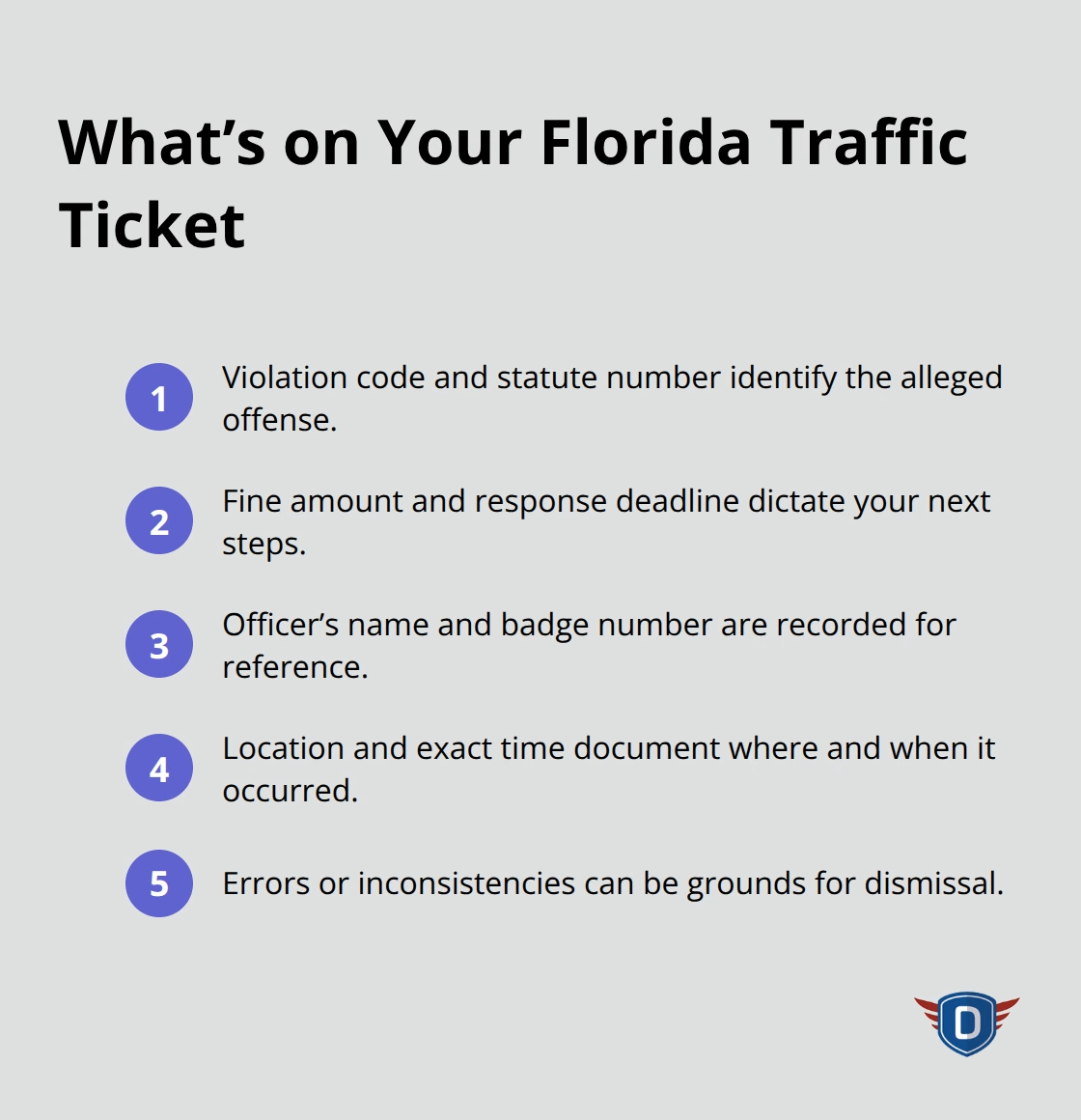
Florida traffic citations contain specific information that directly affects your ability to contest them effectively. The ticket itself is a legal document, and understanding what appears on it determines your next moves. Your citation displays the violation code, the statute number, the fine amount, and most importantly, the deadline to respond. The officer’s name, badge number, and the exact location and time of the violation also appear on the ticket. This information matters because inconsistencies or errors on the citation can become grounds for dismissal in court.
Your 30-Day Window Is Non-Negotiable
You have roughly 30 days from the ticket date to take action in Florida, and this deadline is non-negotiable. If you miss it, you lose your right to contest the ticket in traffic court, and the violation automatically goes on your driving record. The court will issue a suspension of your license if you ignore the citation entirely. Many drivers don’t realize that paying the fine online or through mail counts as a guilty plea, which means points get added to your record and your insurance rates increase. The 30-day window applies whether you plan to request a hearing, hire an attorney, or attend traffic school. Mark this date on your calendar immediately because missing it eliminates all your options.
Violation Codes Determine Your Fighting Strategy
Florida uses specific violation codes that categorize traffic infractions differently. A code for speeding differs legally from a code for reckless driving, and each carries different point values. Moving violations add points to your license, while non-moving violations typically don’t. Three points stay on your record for three years, four points for four years, and six points for five years. Understanding which category your violation falls into helps you decide whether contesting makes financial sense. If your violation carries six points, fighting it becomes more valuable because insurance companies scrutinize high-point violations heavily. The ticket shows the specific statute violated, and that statute number tells you exactly what the officer claims you did wrong.
How Point Values Affect Your Decision
The point value attached to your violation directly impacts whether you should contest it. Higher-point violations (four to six points) justify the time and potential cost of fighting the ticket because insurance rate increases can exceed $500 annually. Lower-point violations (two to three points) may not warrant legal action unless you’re close to license suspension thresholds. Florida’s points system accumulates violations over time, and 12 points in 12 months triggers a 30-day suspension. Your current point total matters-if you already have eight or more points, contesting a new violation becomes strategically important. The statute number on your ticket connects directly to the point value, so cross-reference it with Florida’s violation schedule to understand what you’re facing.
Understanding What Comes Next
The information on your ticket determines which legal options actually apply to your situation. Your violation code, point value, and deadline shape whether you should request a hearing, hire an attorney, or attend traffic school. Each path forward requires different preparation and carries different outcomes for your driving record and insurance rates.
Your Three Paths Forward
Traffic School: The Straightforward Option
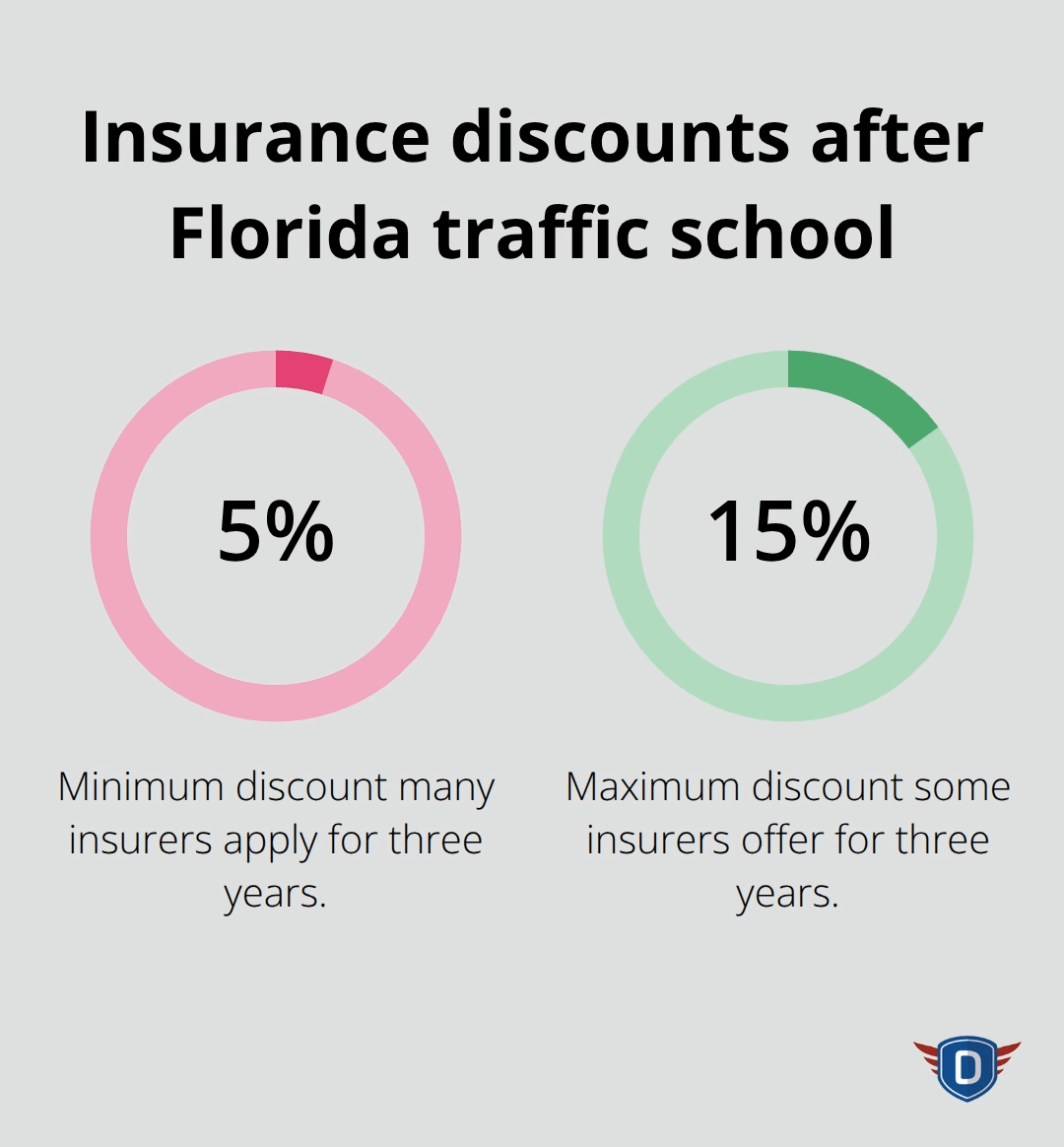
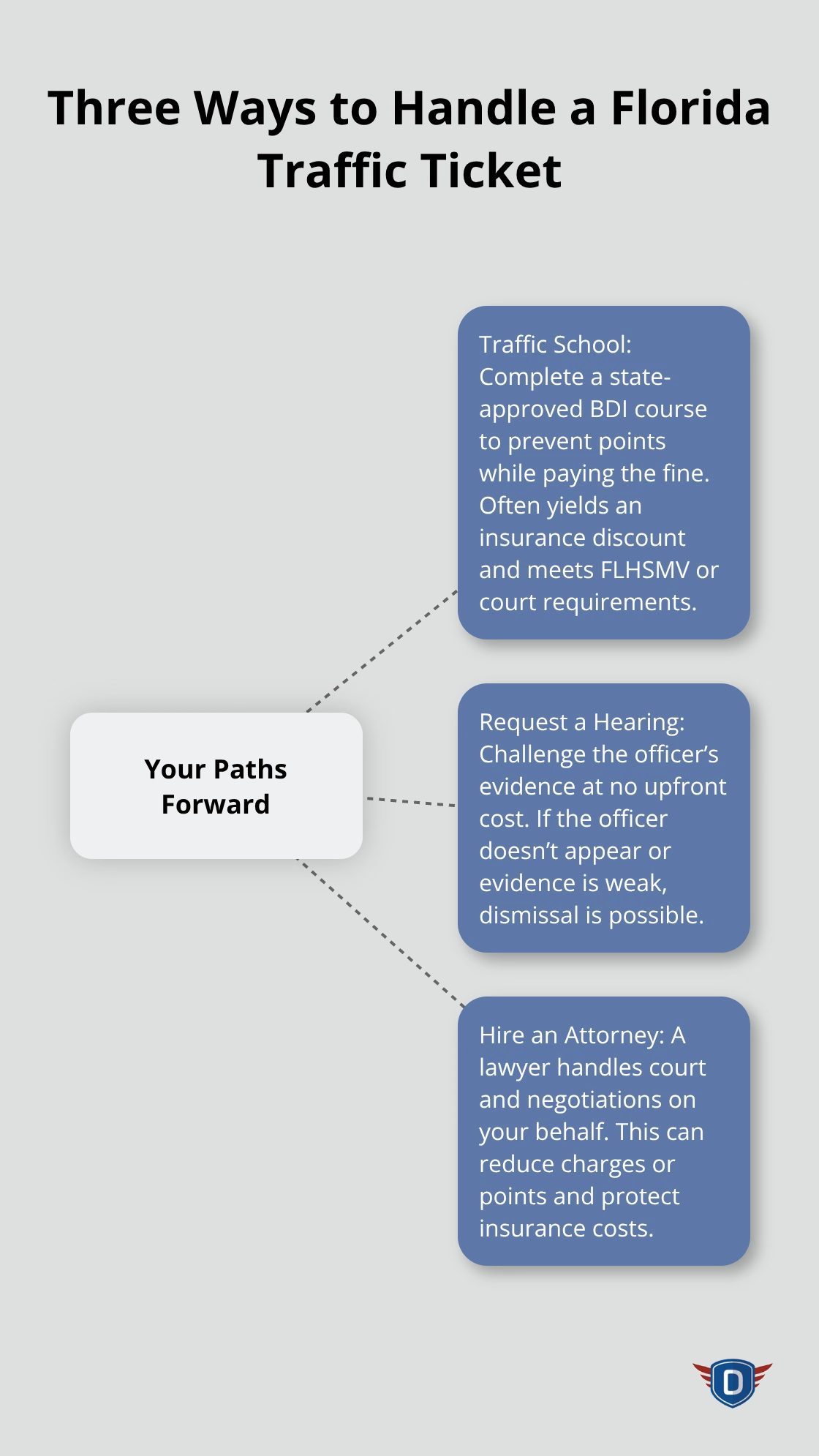
Traffic school attendance offers the most straightforward route for many Florida drivers, particularly those with lower-point violations or first-time offenders. A Florida-approved Basic Driver Improvement course is a 4-hour online program that allows you to avoid adding points to your license while still paying the fine. The state reports completion directly to FLHSMV, and insurance companies recognize this effort, often offering discounts ranging from 5 to 15 percent for three years following completion.
However, traffic school doesn’t erase the violation from your record-it simply prevents points from accumulating. If you’re already sitting at eight or more points, traffic school becomes less attractive because you need actual point reduction, not just point prevention. Florida law limits traffic school attendance to once every 12 months, so if you’ve already used this option recently, you’ll need to explore other defenses.
At floridanewdriver.com, our Florida-approved traffic school programs are designed to help drivers become safer, more responsible, and better informed about current traffic laws. Each course follows strict guidelines set by FLHSMV and provides the knowledge required to reduce points, meet court requirements, or qualify for insurance discounts. The curriculum blends clear explanations, engaging visuals, and real-life scenarios to make learning simple and effective.
Requesting a Hearing: The No-Cost Challenge
A hearing before a judge gives you a genuine chance to challenge the officer’s evidence and testimony. This option costs nothing upfront and forces the prosecution to prove their case beyond reasonable doubt in traffic court. The officer must appear and testify about what they observed, and if they don’t show up, the case gets dismissed automatically.
During your hearing, you can question the officer’s radar calibration, visibility conditions, or whether they actually witnessed the violation themselves. Many drivers win cases simply because officers fail to appear or provide vague testimony about the alleged infraction. The downside is that you must take time off work to attend court, and if you lose, you’ve used up your chance to attend traffic school as a backup plan.
Judges in Florida traffic court hear hundreds of cases monthly, so they spot weak defenses immediately-you need legitimate evidence of officer error or equipment malfunction, not just arguments that you weren’t speeding.
Hiring an Attorney: The Professional Route
A traffic attorney shifts the burden entirely and typically costs between $300 and $1,000 depending on violation severity and whether the case goes to trial. Attorneys know local judges’ tendencies, understand technical defenses around radar and lidar equipment, and can negotiate reduced charges or dismissals before court dates. For six-point violations, an attorney often pays for itself through insurance savings alone, especially if they secure a reduction to a non-moving violation that carries no points.
The trade-off is that you’re paying upfront for expertise rather than handling the case yourself. Your attorney handles all court appearances and communications with prosecutors, saving you time and stress. This approach makes sense when your violation carries high points or when you lack confidence presenting your own defense in court.
Choosing Your Strategy Based on Your Violation
Your violation’s point value and your current driving record determine which path makes the most financial sense. Lower-point violations (two to three points) may not warrant legal action unless you’re close to license suspension thresholds. Higher-point violations (four to six points) justify the time and potential cost of fighting the ticket because insurance rate increases can exceed $500 annually. Your current point total matters-if you already have eight or more points, contesting a new violation becomes strategically important to avoid suspension.
Each option requires different preparation and carries different outcomes for your driving record and insurance rates. Understanding which path fits your situation sets you up for the best possible result when you move forward with your defense strategy.
Building Your Case Before Court
Gather Evidence That Proves Officer Error
Winning in traffic court depends on preparation, not luck. Most drivers who lose their cases show up unprepared with vague arguments instead of documented evidence. You need concrete proof that the officer made an error, the equipment malfunctioned, or the citation contains factual mistakes. Request the officer’s dash camera footage and radar calibration records immediately-these documents often reveal inconsistencies that judges notice instantly. Florida courts require the prosecution to disclose evidence, so file a public records request within two weeks of your ticket date to access the officer’s citation notes, any video footage, and equipment maintenance logs. Many officers fail to maintain proper calibration records, and judges take this seriously because it undermines the reliability of speed measurements.
Document the Location and Conditions
The exact conditions where you received the ticket matter tremendously in court. Weather, visibility, road surface, traffic density, and any obstructions between you and the officer all affect how a judge evaluates the officer’s observations. Take photographs of the location during similar times of day and weather conditions-courts respect visual evidence of poor sightlines or confusing road markings. If weather played a role, pull historical weather data from NOAA for that specific date and time. Request your vehicle’s maintenance records to prove your speedometer works correctly if speed is disputed. Bring your insurance documents and driving history showing your clean record-judges consider context when deciding cases.
Prepare Your Personal Account and Evidence
Write down exactly what happened from your perspective within 24 hours while details are fresh, including the officer’s appearance, behavior, and what they said during the stop. Your written account becomes your testimony foundation, and consistency matters tremendously in court. This documentation (prepared early and reviewed before court) strengthens your credibility significantly. Organize all physical evidence in a folder or binder so you can reference it quickly during your hearing. Label each document clearly and number them in order of importance.
Present Yourself Professionally in Court
Arrive at court at least 15 minutes early to observe how the judge handles other cases-you’ll notice their patterns, what evidence they find convincing, and which arguments they dismiss quickly. Dress professionally in business casual or formal clothing because judges form impressions instantly, and appearance affects credibility. Speak clearly, answer only what’s asked, and avoid emotional language or accusations against the officer. If the officer doesn’t appear, the judge must dismiss your case-this happens in Fort Lauderdale and Miami-Dade Counties in Florida because officers juggle multiple jurisdictions and scheduling conflicts. Stay focused and professional throughout the hearing regardless of the outcome.
Final Thoughts
Contesting a traffic ticket in Florida puts you in control of your driving record and insurance costs. Your 30-day deadline remains absolute, your violation’s point value determines your strategy, and three legitimate paths exist to challenge your citation. Higher-point violations justify investing in legal defense because insurance increases can cost hundreds annually, while lower-point violations may not warrant the effort unless you approach suspension thresholds.
If the judge dismisses your case, the violation disappears from your record and no points attach to your license. If you lose, traffic school becomes your backup option if you haven’t used it within the past 12 months. A Florida-approved Basic Driver Improvement course prevents points from accumulating while you still pay the fine, and insurance companies typically offer 5 to 15 percent discounts for three years following completion.
At floridanewdriver.com, our 4-hour Basic Driver Improvement course helps drivers protect their records after traffic violations. The curriculum covers Florida traffic laws, defensive driving techniques, and crash avoidance strategies that make you a safer driver. You complete the course online at your own pace, and we report your certificate directly to FLHSMV, satisfying all state requirements.