
A lot of people start looking for new driver licensing education online only after they hit a deadline – a permit test is coming up, a parent asks for a course certificate, or the DMV website starts listing requirements that are not easy to decode. The good news is that online driver education can make the licensing process much more manageable, especially when you need flexibility and a course that fits around school, work, or family responsibilities.
For first-time drivers, the main question is usually simple: what do I actually need to complete before I can get licensed? The answer depends on your state, your age, and whether your state separates classroom instruction from behind-the-wheel training. That is where online education helps most. It gives you a clear way to complete the knowledge-based portion of driver training on your own schedule, while still meeting official requirements when the course is state approved.
How new driver licensing education online works
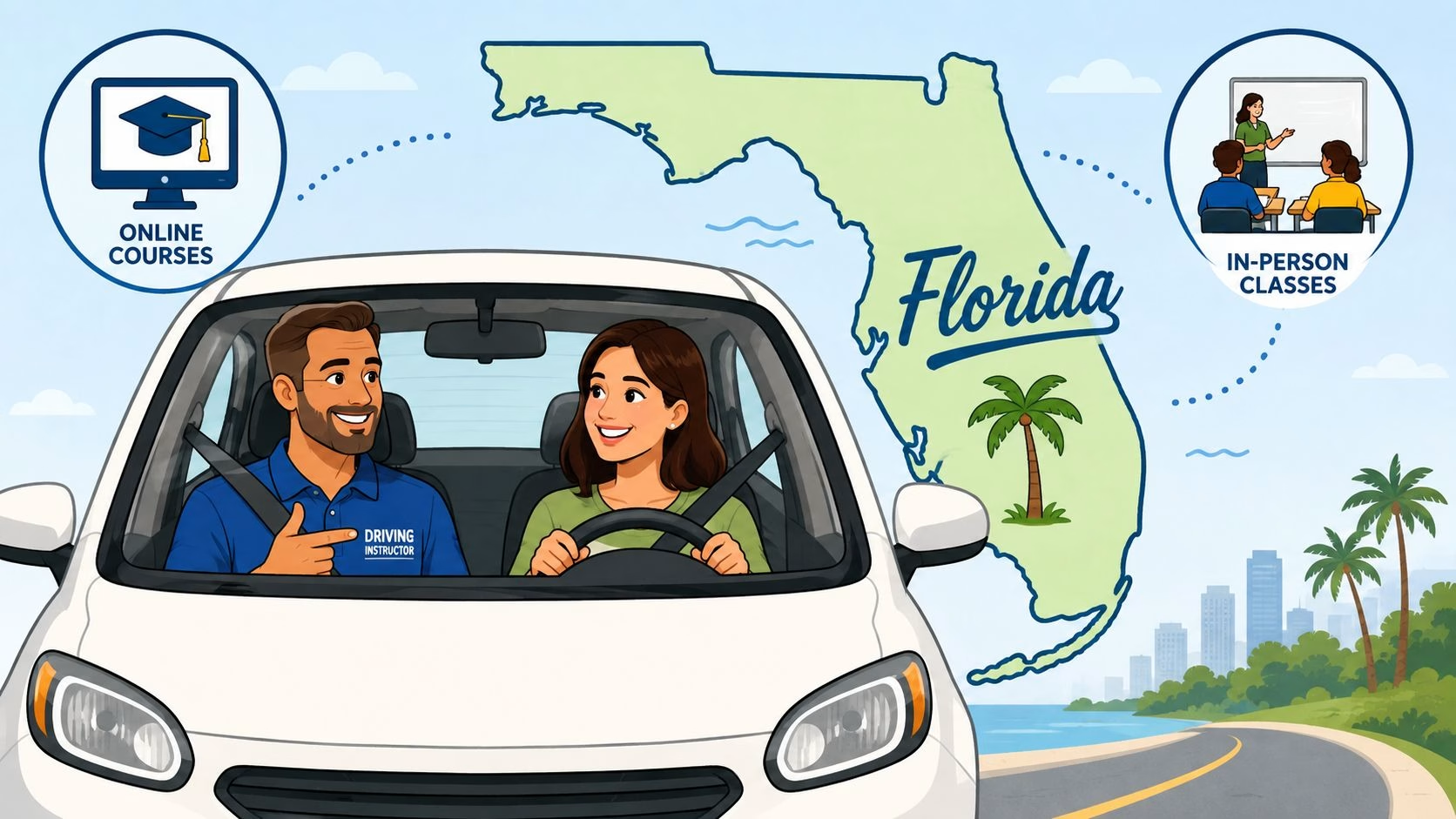
New driver licensing education online refers to the classroom or theory portion of driver education delivered through a web-based course. Instead of attending sessions in a physical classroom, students complete modules online that cover traffic laws, road signs, safe driving habits, defensive driving concepts, and the risks tied to impaired or distracted driving.
In many states, this course is part of the path to a learner’s permit or first license. In others, it may be recommended rather than required. Some states also require a separate substance abuse or traffic law course for new drivers, while others bundle those topics into a broader driver education program.
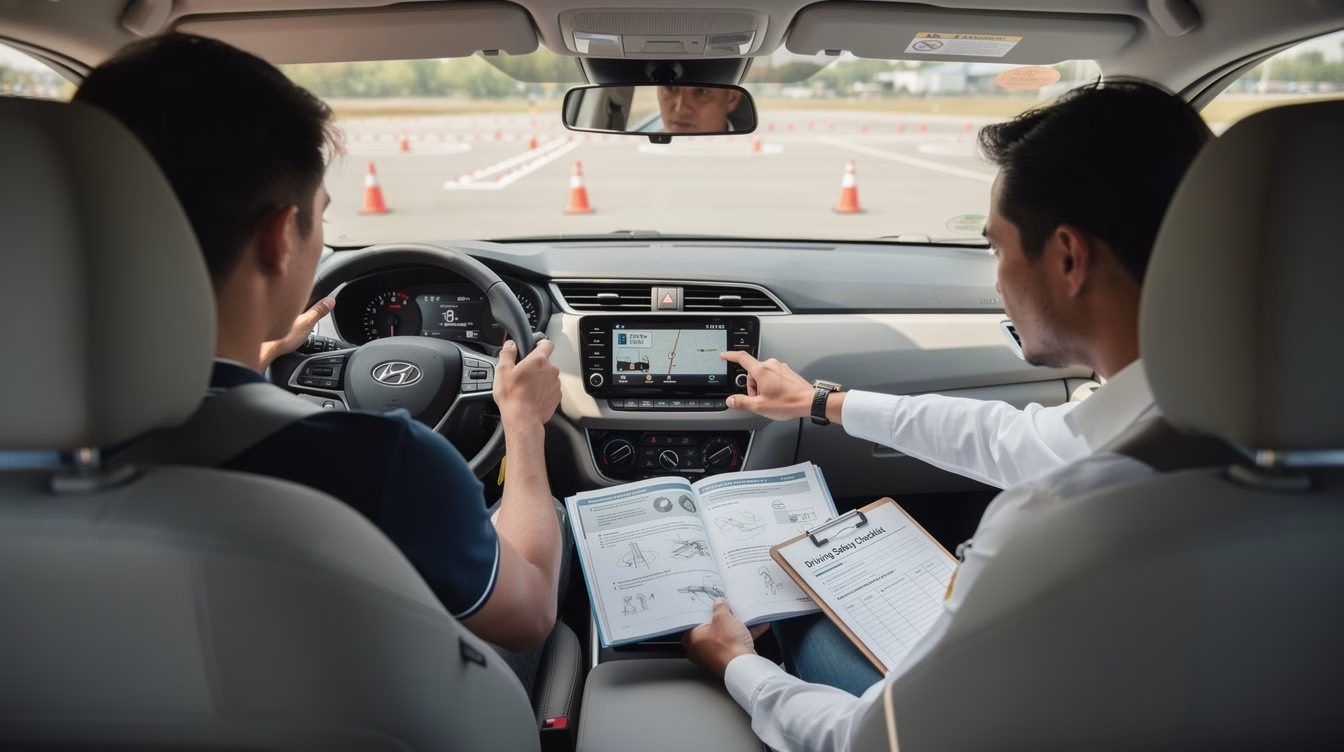
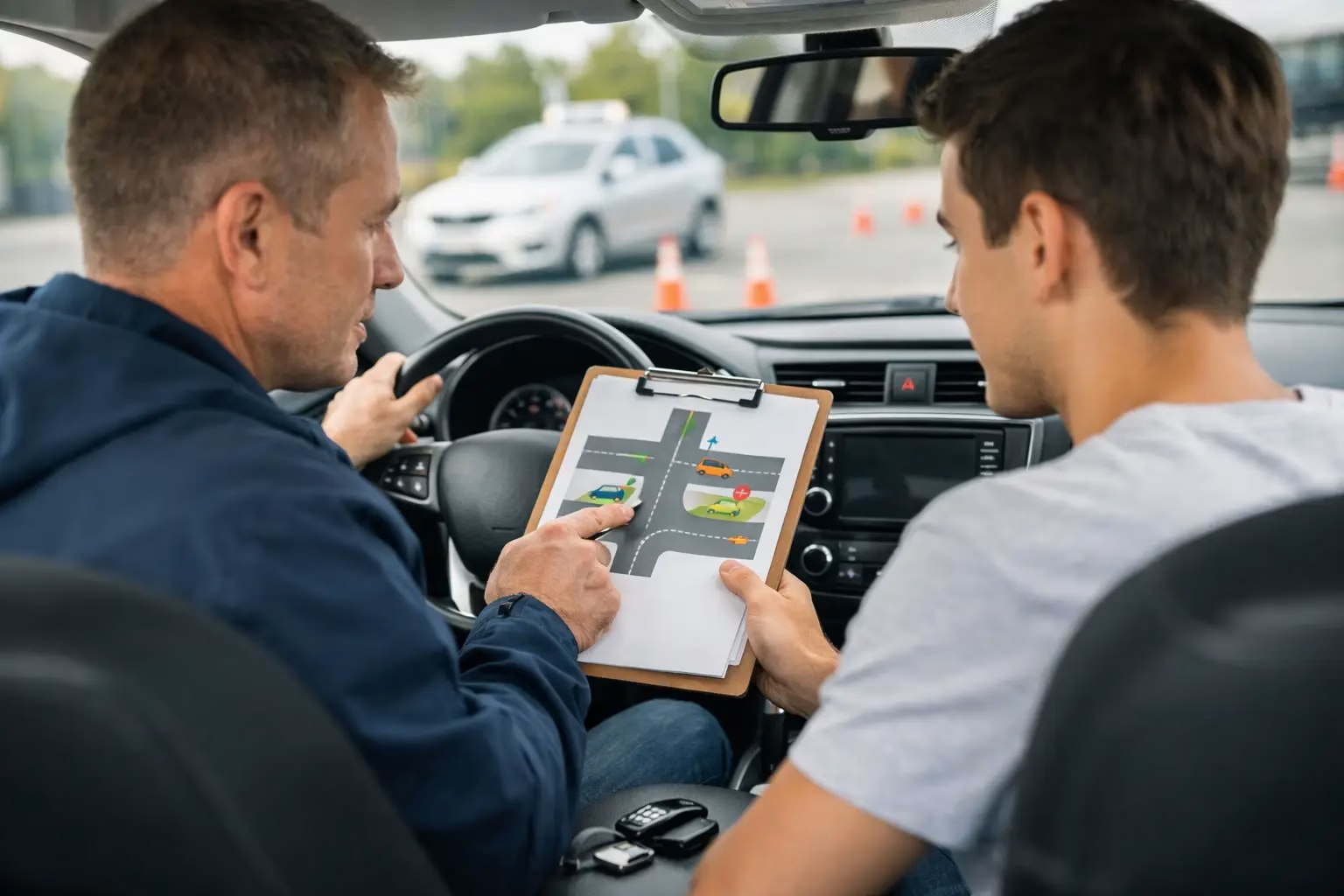
That distinction matters. An online course can satisfy one requirement without satisfying every requirement. For example, a student may finish the educational portion online but still need vision screening, a written knowledge exam, supervised driving hours, and an in-car skills test.
What to check before you enroll
The most important factor is approval status. If a course is not approved for your state or for your specific licensing purpose, finishing it may not help you move forward at all. Before enrolling, confirm that the course is accepted in your state and that it matches your age group and licensing stage.
It also helps to confirm what type of certificate or completion record you will receive. Some states require providers to report completion electronically. Others ask the student to print a certificate and bring it to the DMV or licensing office. A course can be convenient and affordable, but if the reporting method does not match your state’s process, it creates delay.
Course format is another practical issue. Self-paced courses work well for most students because they allow progress at any hour, on any device, and in shorter sessions. That said, some learners do better with stricter pacing or parent-supported study time. Convenience is valuable, but only if the student can realistically stay engaged and finish.
Why online learning makes sense for first-time drivers
For many families, online driver education solves a scheduling problem first. Teens have school, sports, jobs, and other obligations. Adults seeking a first license often balance work and childcare. A course available 24/7 removes the need to coordinate travel and classroom attendance.
There is also a comfort factor. New drivers often absorb information better when they can review lessons at their own speed. Road signs, right-of-way rules, stopping distances, and penalty laws all take repetition. Online courses make that repetition easier.
The trade-off is accountability. In-person settings create built-in structure. Online learning places more responsibility on the student to log in, focus, and complete each section honestly. That is not a flaw, but it is something families should plan for.
What new drivers usually learn in an online course
Most approved programs cover the same core safety topics, even when state rules vary. Students can expect instruction on traffic signs and signals, lane usage, speed laws, following distance, parking, sharing the road, and basic defensive driving techniques.
A strong course also explains why these rules matter in real life. Distracted driving, fatigue, weather conditions, and poor decision-making are not abstract risks. They are common factors in crashes involving new drivers. Good education does more than prepare a student to pass a test. It helps them recognize hazards before they become emergencies.
This practical focus is one reason many families choose online education from established providers. A legitimate course should not feel like filler. It should clearly connect legal requirements with safer driving behavior.
Choosing the right new driver licensing education online provider
Not all online courses are equal, even when both appear to meet the same requirement. The difference often comes down to reliability, support, and clarity.
Look for a provider that explains exactly who the course is for, what requirement it satisfies, how long it takes, and what happens after completion. Clear pricing matters too. Hidden fees for certificates, processing, or support can turn a low advertised price into a frustrating purchase.
Mobile access is another detail worth checking. Many students expect to complete lessons on a phone, tablet, or laptop depending on where they are. If a course is hard to navigate on mobile devices, completion becomes harder than it needs to be.
Support also matters more than people think. Licensing questions are often specific. A student might need help with login access, completion records, state reporting, or understanding whether a course fits a DMV or court requirement. Providers such as floridanewdriver.com are built around these practical needs, which can make the process feel much more straightforward.
Common mistakes that slow down licensing
One of the most common mistakes is assuming any driver education course will work for any state. Licensing rules are state-based, and sometimes age-based within the same state. Enrolling in the wrong course can mean paying twice and losing time.
Another issue is waiting too long to start. Even self-paced courses take time, and some states have minimum hour requirements that cannot be rushed. If a permit appointment or road test is already scheduled, last-minute enrollment may not leave enough room for completion and reporting.
Students also sometimes focus only on passing the written exam. That is understandable, but narrow test prep is not the same as driver education. The licensing process is about legal eligibility, but the real goal is safer decision-making once a new driver is on the road alone.
FAQ
Is new driver licensing education online accepted by the DMV?
Sometimes, yes. Acceptance depends on your state and the specific course approval.
Always verify that the provider and course are approved for your licensing requirement before enrolling.
Does an online course replace behind-the-wheel training?
No. Online education usually covers the classroom portion only.
Many states still require supervised driving hours or in-car instruction.
How long does an online driver education course take?
It depends on your state. Some courses have minimum hour requirements set by law.
Self-paced delivery helps, but required instructional time usually cannot be skipped.
Can I take the course on my phone?
Often, yes. Many providers offer mobile-friendly access.
Check device compatibility before you register so you can complete lessons without interruption.
Will I get a certificate after finishing?
Usually, yes. The certificate proves course completion.
Some states require electronic reporting instead of or in addition to a printed certificate.
Is the cheapest course the best option?
Not always. Low price does not always mean good value.
Approval status, support, reporting, mobile access, and transparent fees matter just as much.
What if I am an adult getting my first license?
You may still need a course. Adult first-time licensing rules vary by state.
Check whether your state requires driver education, a traffic law course, or another pre-licensing step.
The best online course is the one that meets the exact requirement you have right now, without adding confusion or unnecessary delays. When a provider is clear about approval, pricing, access, and support, getting licensed feels less like guesswork and more like progress.