Your sight line is the straight, imaginary line from your eyes to whatever you are looking at on the road. When something blocks that line, such as a truck, a hedge, a hill or fog, you lose time to spot hazards, and the fix is to slow down and change your position until you can see again. Driver education programs treat this as a core skill, and if you are a new driver in Florida, a state-approved course is the straightforward way to learn it and meet the licensing requirement at the same time.
Key Takeaways
- A sight line, also called a line of sight, is the imaginary line from your eyes to your point of focus. Your field of view is everything you can see at once.
- Parked cars, buildings, curves, hills, pedestrians and weather can all block it. Spot blockages as early as you can.
- When your sight line is blocked, adjust your speed and lane position before you enter the blind spot in the road, such as a blind intersection.
- Official guidance gives concrete scanning targets: at least 10 seconds ahead, and a distance that depends on whether you are in an urban, suburban or rural area.
- New Florida drivers under 18 must complete a six-hour DETS course before applying for a license, and it can be taken online.
Table of Contents
- What a sight line means when you drive
- What blocks your sight line on the road
- What to do when your sight line is blocked
- How far ahead should you look?
- Blind spots: the sight line you cannot see
- Low visibility: fog, glare and weather
- Learning the driving rules online
- Our perspective
- Take a state-approved course in Florida
- FAQ
- Sources
What a sight line means when you drive
In everyday English, a sight line is simply the direction in which you must look to see something. In driving, the idea gets practical. A Vermont driver education lesson defines line of sight as the imaginary line from your eyes to your point of focus. The same lesson uses the word �sightlines� when it talks about a blocked line of sight, so the two terms mean the same thing on the road.
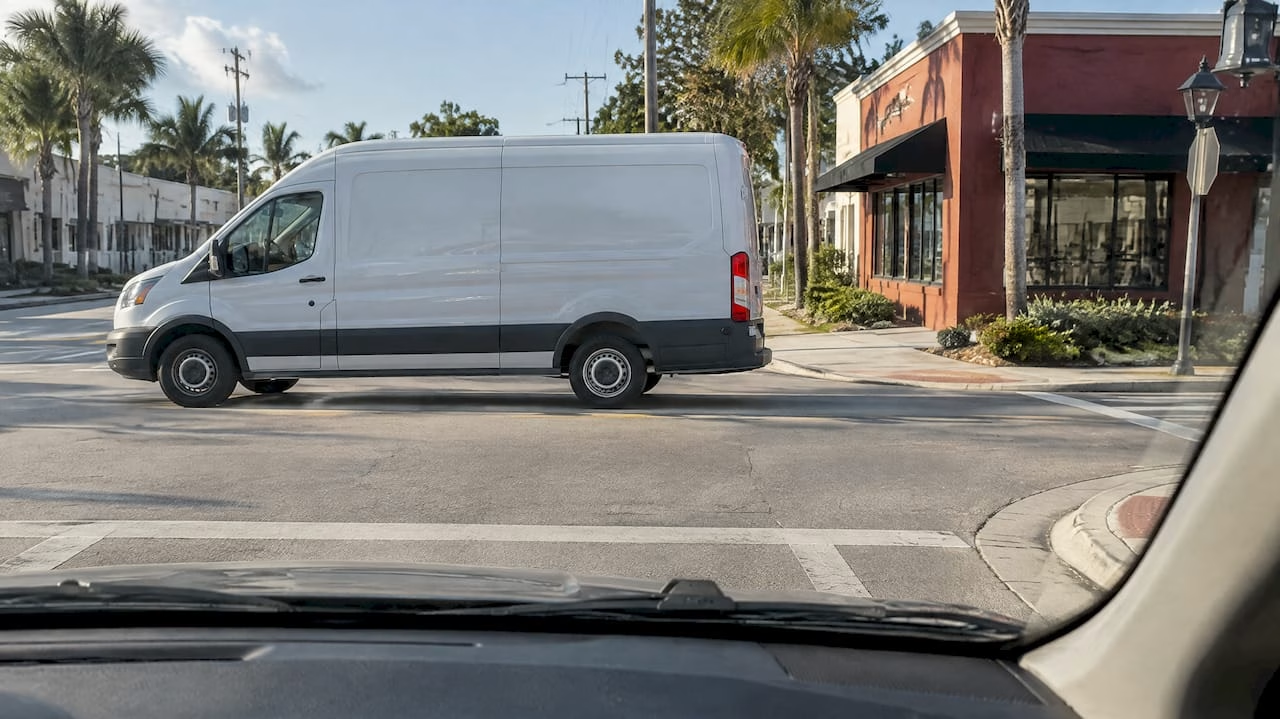
A simple example: you approach an intersection with a delivery van parked at the corner. You cannot see the cross street past the van. Your sight line to the crosswalk and the oncoming lane is cut off. A child on a bike or a car turning in could appear with almost no warning. That gap between what you need to see and what you can see is what safe driving training teaches you to manage.
Line of sight versus field of view
These two terms are often mixed up, and the difference helps.
- Line of sight is one line, from your eyes to the spot you are focused on.
- Field of view is the whole area of roadway and surroundings you can see at a given moment, as the Vermont lesson explains.
The same lesson says how well you can see depends on how far ahead and to the sides you can look. If you have ever heard �visual line,� �eye line� or �line of vision,� they all point at the same basic idea.
What blocks your sight line on the road
Blockages come in two kinds: things in the road environment and things in or on your own vehicle. Montana�s driver education material lists cars, pedestrians, buildings, curves and hills as examples of path-of-travel or line-of-sight blockages.
In practice, watch for these:
| Blockage | Where you meet it | What it hides |
|---|---|---|
| Parked vehicles or large trucks | Residential streets, corners, driveways | Pedestrians, cross traffic, cyclists |
| Buildings, fences, hedges | Corner lots, blind intersections | Vehicles approaching from the side |
| Curves and hills | Two-lane roads, rural highways | Oncoming traffic, stopped vehicles |
| Large vehicles ahead | Highways | Brake lights, lane closures, debris |
| Fog, heavy rain, glare | Early mornings, storms | Everything beyond a short distance |
The lesson from all of these is the same. Montana�s vision-control lesson advises you to spot blockages as far ahead as possible, because recognizing and understanding a hazard takes time. The earlier you notice the blockage, the more room you have to respond.
What to do when your sight line is blocked
A blocked sight line limits your ability to see the center of your path. The Vermont lesson recommends that you adjust speed and lane position before you proceed into blind intersections, and that you keep adjusting until the area is visible or the sight line is restored.
Here is a routine you can use:
- Notice the blockage early. Look well ahead for vans, corners, crests and curves rather than only at the car in front.
- Ease off the gas. Reduce speed before you reach the hidden area, not once you are inside it.
- Move to improve your view. If the lane and traffic allow, shift your position within the lane so you can see around the obstruction.
- Creep and look. At a blind intersection, move forward slowly in small increments, looking left, right and left again, until you can see clearly.
- Commit only when you can see. Proceed once the sight line is restored and no hazard is approaching.
- Leave yourself an exit. Keep space around your vehicle so you can brake or steer if something appears.
This is the heart of defensive driving: you assume that something may be hidden and you give yourself room to react. Our guide to defensive driving techniques goes deeper on that mindset, and our article on advanced defensive driving covers what comes next once the basics feel natural.
How far ahead should you look?
A short sight line is often a habit problem. Many drivers stare at the bumper in front of them, which shrinks their useful field of view. Official guidance gives numbers you can follow.
- California DMV says to scan the road at least 10 seconds ahead so you have time to react and avoid last-minute moves.
- NHTSA�s visual search guidance tells drivers to look ahead, to both sides and behind, scanning for hazards that may require a change in speed or position. It gives distances by setting: at least two blocks or traffic signals in urban areas, three in suburban areas and a quarter-mile in rural areas.
Ten seconds is about the time it takes to cross a city block at a moderate speed, and much more distance on a highway. You do not need to calculate it. Pick a fixed object far ahead, such as a signpost, and notice when you will reach it. If that is less than a few seconds away, you are probably looking too close.
Following distance protects your sight line
Tailgating shrinks your view. A truck�s rear fills the windshield, and you cannot see past it. Leaving more room lets you see around and over the vehicle ahead, and gives you time to react when it brakes. Our pages on safest following distances and safe following techniques show how to set that gap in different conditions.
Blind spots: the sight line you cannot see
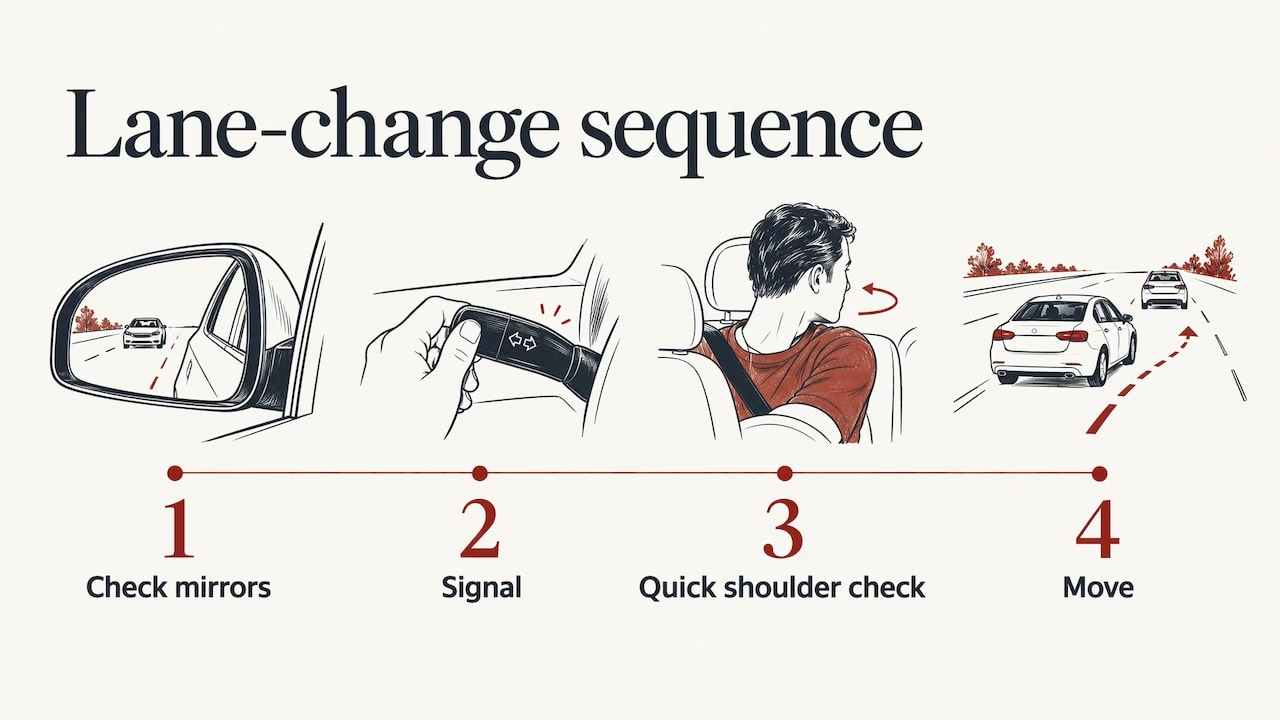
Your mirrors leave areas beside and behind the car that you cannot see. These are blind spots, and they are the one place where your line of sight is blocked by the car itself. The California DMV recommends looking over both shoulders to check blind spots before you change lanes, turn, merge, back up, or pull away from a parking space or curb.
Make it automatic: mirror, signal, quick shoulder check, then move. It takes a second and removes a large source of surprise.
Low visibility: fog, glare and weather
Weather shortens every sight line at once. Florida drivers know how fast morning fog can roll across a highway or a bridge. The National Weather Service fog driving guidance advises you to slow down, allow extra travel time and leave plenty of distance from the vehicle ahead.
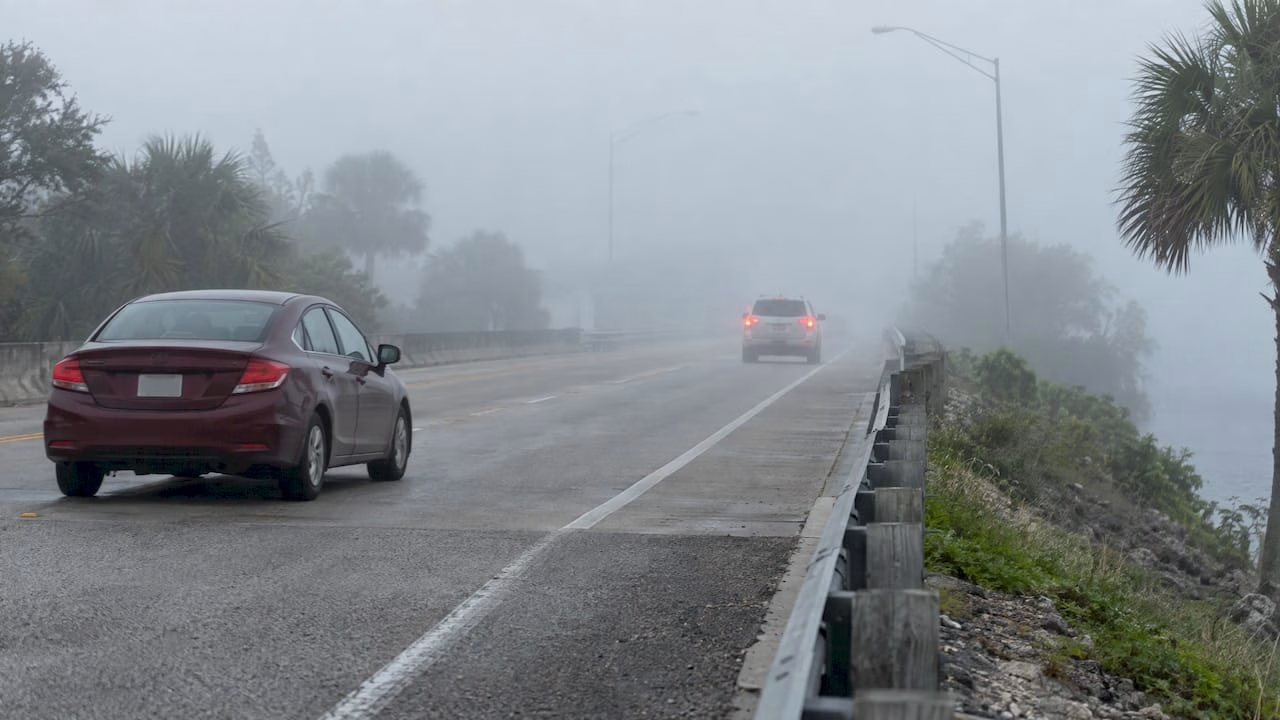
It also recommends low-beam headlights in fog, so your taillights are on and others can see you, and notes that high beams cause glare that makes it harder to see ahead. If you are unsure when to use each setting, read our guide to high beam and low beam headlights.
For a longer walk through low-visibility driving, we have several Florida-focused articles: 7 fog driving safety tips, how to drive safely in fog and safe driving in fog.
Learning the driving rules online
If you are new to driving, you do not need to piece this together from scattered tips. Start with your state�s official driver manual, which is free to read online. Iowa�s DOT, for example, offers its driver�s manual as a full book or in separate chapters, along with a 25-question practice quiz. Other states publish similar manuals, so look for your own state�s version.
One point worth knowing: the Oregon manual states that it summarizes selected rules and practices and is not a source of law. A manual teaches you what to do. A formal course is what satisfies a requirement.
Florida: the DETS requirement
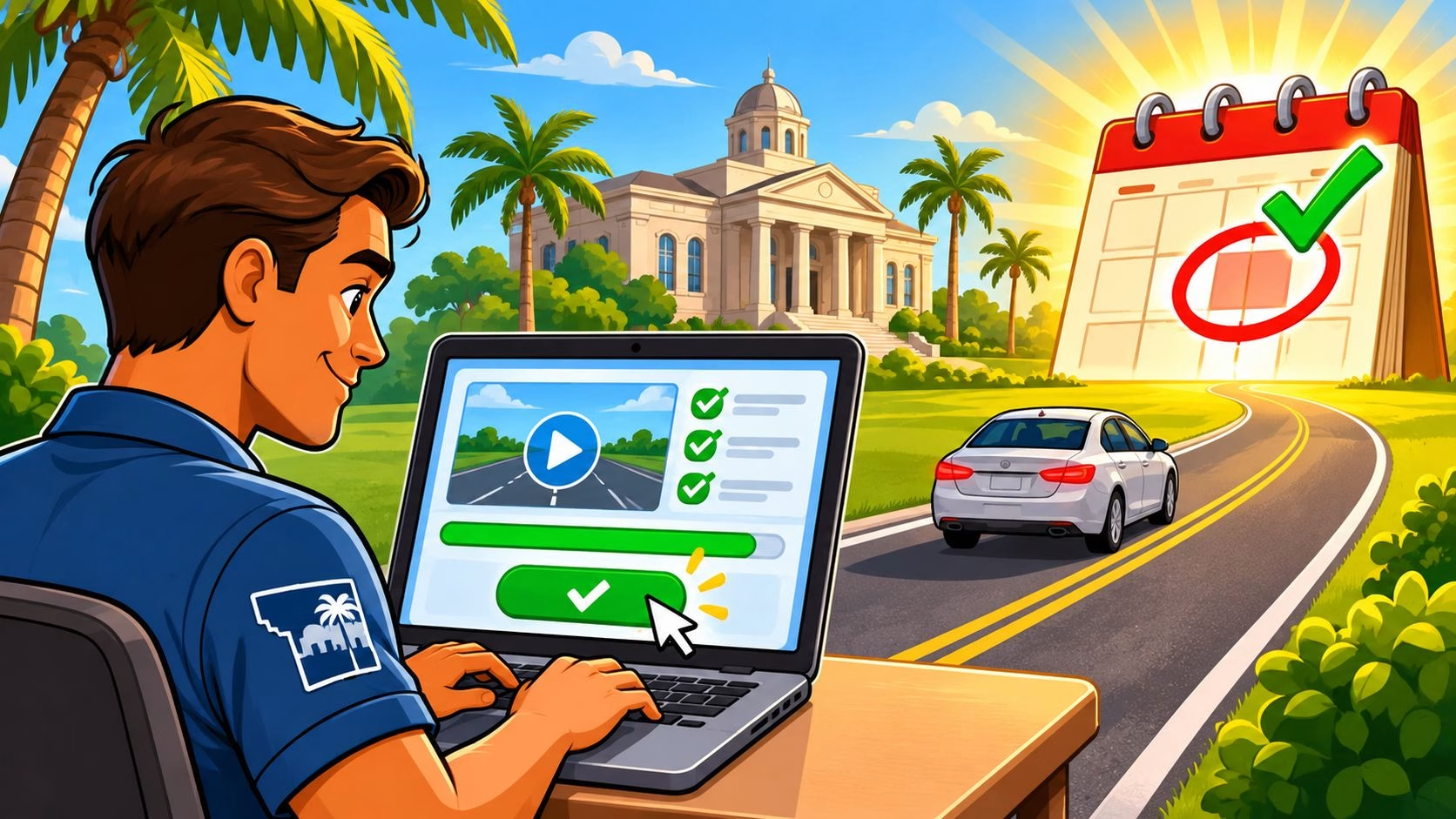
Florida sets a specific requirement. The Florida DHSMV states that from August 1, 2025, anyone under 18 who has never held a license from another jurisdiction must complete a six-hour DETS course before applying for a Florida license. The approved course may be online or in person.
DETS stands for Driver Education Traffic Safety. If you or your teen is about to apply, our pages explain what DETS offers and the steps for enrolling.
Our perspective
Drivers rarely get into trouble because they did not know what a sight line is. They get into trouble because they did not notice a blocked one soon enough. That is a habit, and habits are learned best in short sessions you can repeat.
That is why we build our courses in-house, with certified educators and safety specialists, and keep the content updated for statutory requirements and real-world safety. You study at your own pace on any device, including your phone, and our multilingual read-along feature helps when English is not your first language.
We also believe the price should be clear before you start. Our published course prices have no hidden fees, and we back every course with a money-back guarantee. Whether you are a new driver, a ticketed driver, or a mature driver looking for an insurance discount, you should know exactly what you are getting.
the author
Take a state-approved course in Florida
If you are a Florida driver, we offer state-approved online courses for the situations that bring most people to us:
- Florida Driver Education Traffic Safety Course (DETS): $29.90, the six-hour course for first-time drivers.
- Florida Basic Driver Improvement (BDI): $30, for drivers dealing with a traffic citation.
- Florida Traffic Laws Substance Abuse Education Course (TLSAE): $29.95.
- Florida Mature Driver Insurance Discount Course: $14.50.
- Florida Wireless Devices Distracted Driver Course: $24.50.
You can see every option on our Florida courses page. If you manage drivers for a business, we also build a custom fleet safety course.
FAQ
What does �sight line� mean?
A sight line is the direction in which you must look to see a particular object. On the road, it is the imaginary line from your eyes to your point of focus. It is also called a line of sight, and a blocked one is what driving lessons call a restricted sightline.
What is another word for line of sight?
Common alternatives include sightline, line of vision, eye line and visual line. Driver education materials, such as the Vermont lesson cited above, often use �sightlines� when they discuss a blocked view.
What should I do if a parked car blocks my view at an intersection?
Slow down before you reach it and adjust your position if the lane allows. Then move forward slowly, looking in every direction, until you can see clearly. Do not enter the intersection until the way is visible.
Can I learn the driving rules online?
Yes. Many state agencies publish their driver manuals online, and approved courses can be completed online as well. In Florida, the DHSMV says the six-hour DETS course for first-time drivers under 18 may be taken online or in person.
Should I use high beams in fog?
No. The National Weather Service recommends low beams in fog, because high beams cause glare that makes it harder to see ahead. Slow down and keep extra distance from the car in front.
Sources
- Vermont driver education: Unit 5 Vision and Space Management
- Montana Office of Public Instruction: Module 3.1 Effective Vision Control
- California DMV: Safe Driving
- NHTSA: Perception and visual search
- National Weather Service: Driving in Fog
- Iowa DOT: Driver�s Manual
- Oregon Driver Manual
- Florida DHSMV: DETS course frequently asked questions
Recommended
- Tips for Safe Night Driving: See and Be Seen
- A Definitive Guide on How to Check Blind Spot While Driving
- How to Avoid Overdriving Your Headlights at Night
This article is provided for general information and is not a professional advice.