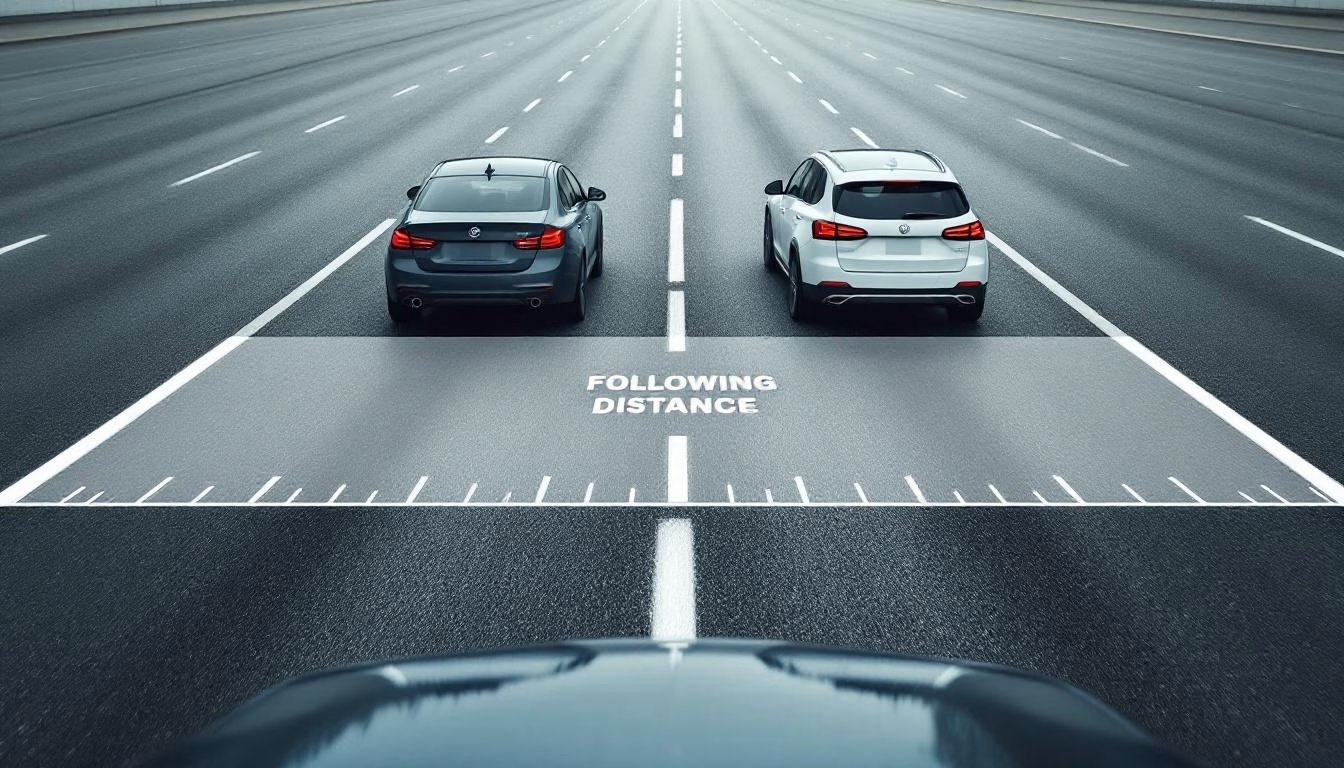
Rear-end collisions cause over 1.7 million accidents annually in the United States, and most are preventable with proper safe braking distance. Yet many drivers underestimate how much space they need between their vehicle and the one ahead.
At floridanewdriver.com, we’ve created this guide to help you master following distance rules and protect yourself on the road. Whether you’re navigating Florida highways or adjusting for rain and fog, understanding safe spacing is one of the fastest ways to reduce your accident risk.
What Following Distance Really Means
Time, Not Distance
Following distance is the space between your vehicle and the car ahead, measured in time rather than feet. Most drivers think in terms of car lengths, but that’s a dangerous mistake. At 55 mph, one car length vanishes in less than half a second. What actually matters is how many seconds of road you have ahead of you-typically measured from when the front of your vehicle reaches a fixed point until the front of the car ahead passes that same point. The National Highway Traffic Safety Administration emphasizes time-based measurement because it automatically adjusts for speed. At 35 mph you need roughly two seconds; at 55 mph you need three seconds; at 70 mph you need four seconds or more. This is why the three-second rule works across different speeds-it’s proportional to how fast you’re traveling.
Why Rear-End Collisions Happen
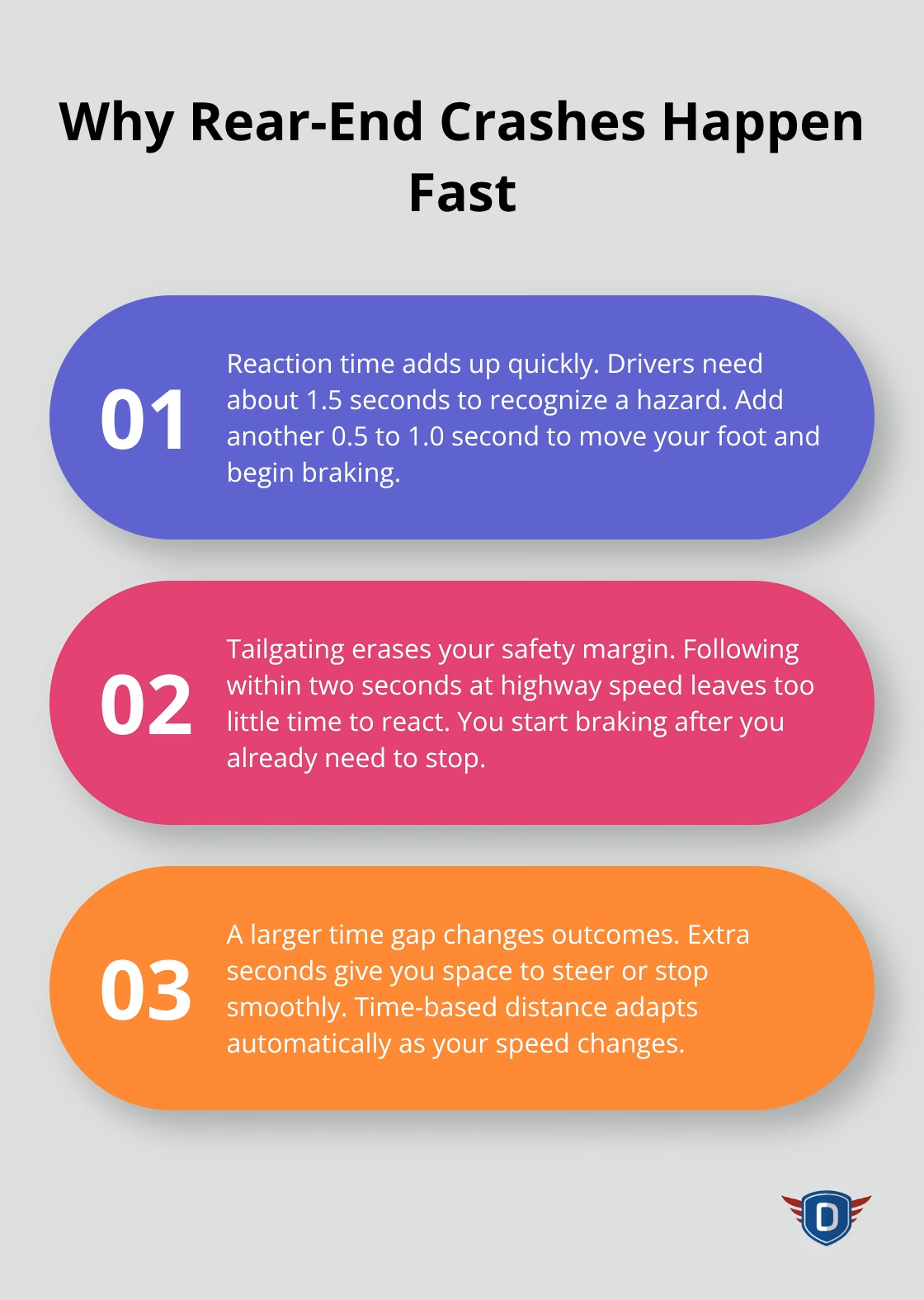
Rear-end collisions account for a significant portion of all traffic accidents, and the vast majority stem from following too closely. When you tailgate, you eliminate your reaction window. The average driver needs 1.5 seconds just to recognize a hazard and another 0.5 to 1 second to physically apply the brakes. If you follow within two seconds at highway speed, you’ve already lost before braking even begins.
The Physics of Stopping
A vehicle traveling at 60 mph covers 88 feet per second. Your brakes can decelerate at roughly 20 feet per second squared under ideal conditions, but that assumes dry pavement, good tires, and split-second reaction time. Rain, worn brakes, or distraction destroys these assumptions. Adequate following distance is your only real insurance against impact because it gives you space to stop or steer around obstacles.
Real Impact on Safety
Drivers who maintain proper spacing reduce their accident risk significantly, yet most people on Florida highways ignore this fundamental principle entirely. The consequences extend beyond just preventing crashes-they affect your insurance rates, your driving record, and your confidence behind the wheel. Understanding how to apply these spacing rules in real conditions is where most drivers struggle.
Florida’s Following Distance Standards
What the Law Actually Says
Florida Statute 316.0895 requires drivers to follow another vehicle at a reasonable and prudent distance. However, this statute describes minimum distance in feet, not the time-based measurement that actually protects you. The law’s flexibility allows law enforcement to determine what constitutes a safe distance based on road conditions, speed, and traffic. A vehicle at 60 mph travels 88 feet per second, and since most drivers need 1.5 seconds to react plus another second to brake, you’re already looking at 176 feet of required space before your brakes even engage. Florida’s statutory standard falls dangerously short of what you actually need to stop safely.
The state recognizes this gap by also requiring that drivers follow at a safe distance appropriate to road conditions, speed, and traffic. This requirement gives law enforcement flexibility to cite tailgating that endangers lives. Officers use this broader standard to enforce real safety rather than just statutory minimums.
Penalties That Hit Your Wallet and Record
Violating following distance laws in Florida carries real consequences that most drivers underestimate. A first offense for following too closely results in a citation that adds three points to your driving record under Florida’s point system. Three points might seem minor until you realize that six points in 12 months triggers a mandatory driver improvement course, while 12 points in 12 months leads to license suspension.
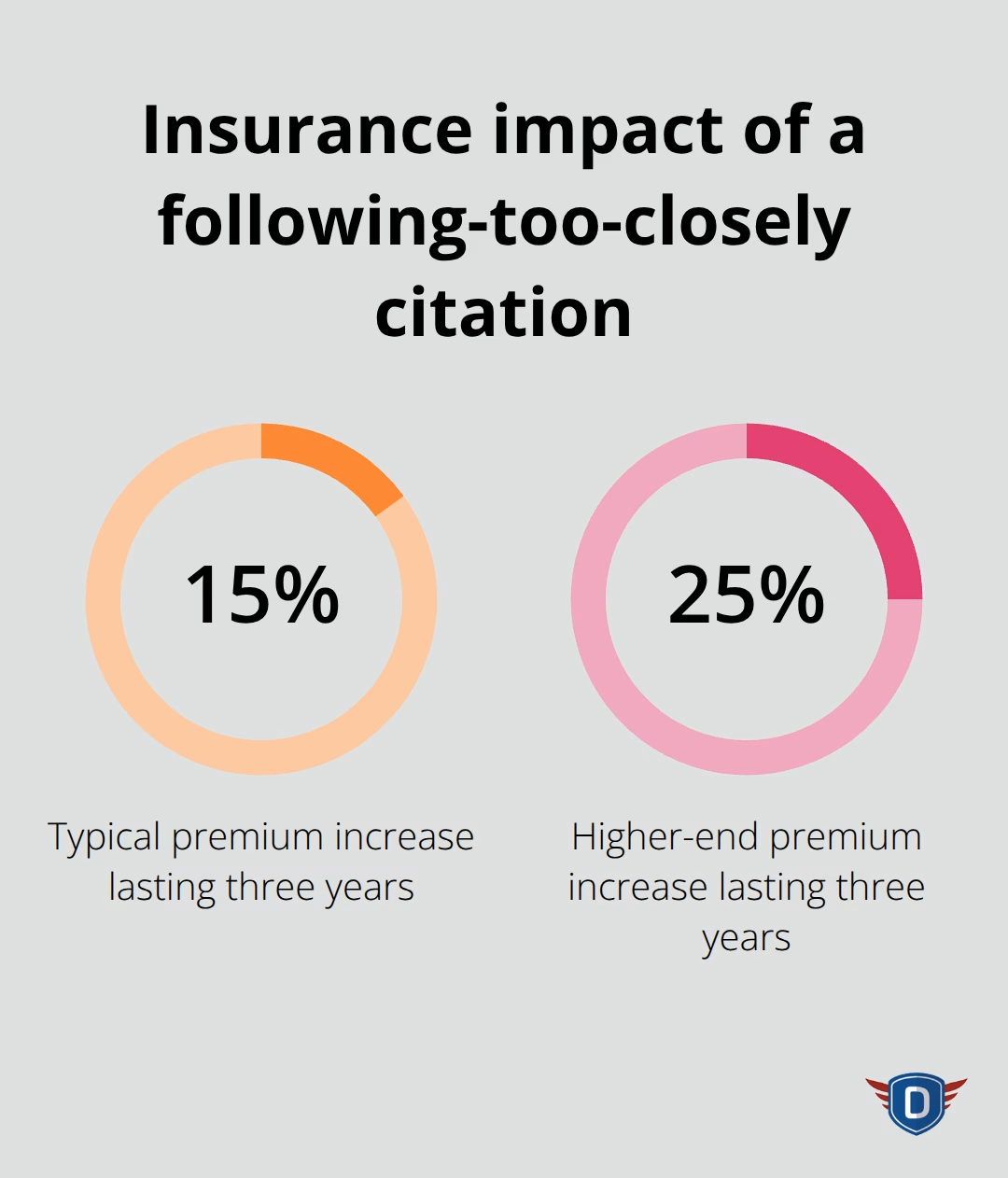
Insurance companies monitor your driving record aggressively, and a following distance violation typically increases your premium by 15 to 25 percent for three years. Court fines range from $100 to $300 for a basic following too closely citation, but if your tailgating causes an accident, you face reckless driving charges that carry fines up to $1,000 and potential jail time. Florida takes this seriously because rear-end collisions are among the most preventable crashes on the road.
How Florida Compares to Other States
Compared to other states, Florida’s approach mirrors most jurisdictions: California also uses a three-second minimum, Texas requires one car length per 10 mph, and New York enforces a similar safe distance standard. The real difference isn’t the law itself but enforcement patterns and insurance consequences, which in Florida are particularly strict due to high traffic density on major corridors like I-95 and I-75.
Understanding Florida’s legal framework matters, but knowing the law doesn’t automatically translate to safe driving habits. The gap between what the statute requires and what physics demands reveals why so many drivers still get cited-and why the next section focuses on practical techniques that actually work in real traffic conditions.
How to Actually Maintain Safe Following Distance
The Three-Second Rule Applied Correctly
The three-second rule works because it scales automatically with speed, yet most drivers apply it incorrectly or abandon it entirely when traffic tightens. Pick a fixed object ahead, like a road sign or tree, and count the seconds from when the rear of the car in front passes that object until your front bumper reaches it. One Mississippi, two Mississippi, three Mississippi. If you reach the object before finishing the count, you’re too close. Many drivers count too quickly or use vague landmarks, which destroys the entire point.
The National Highway Traffic Safety Administration confirms that this time-based approach works across all speeds because the faster you travel, the more ground you cover in those same three seconds, automatically creating the physical distance you need. In heavy traffic on Florida’s I-95 corridor, drivers often reduce this to two seconds out of impatience, which means at 65 mph you maintain only roughly 190 feet of space instead of 286 feet. That 96-foot gap is often the difference between stopping safely and rear-ending the vehicle ahead.
Adjusting for Weather and Road Surface
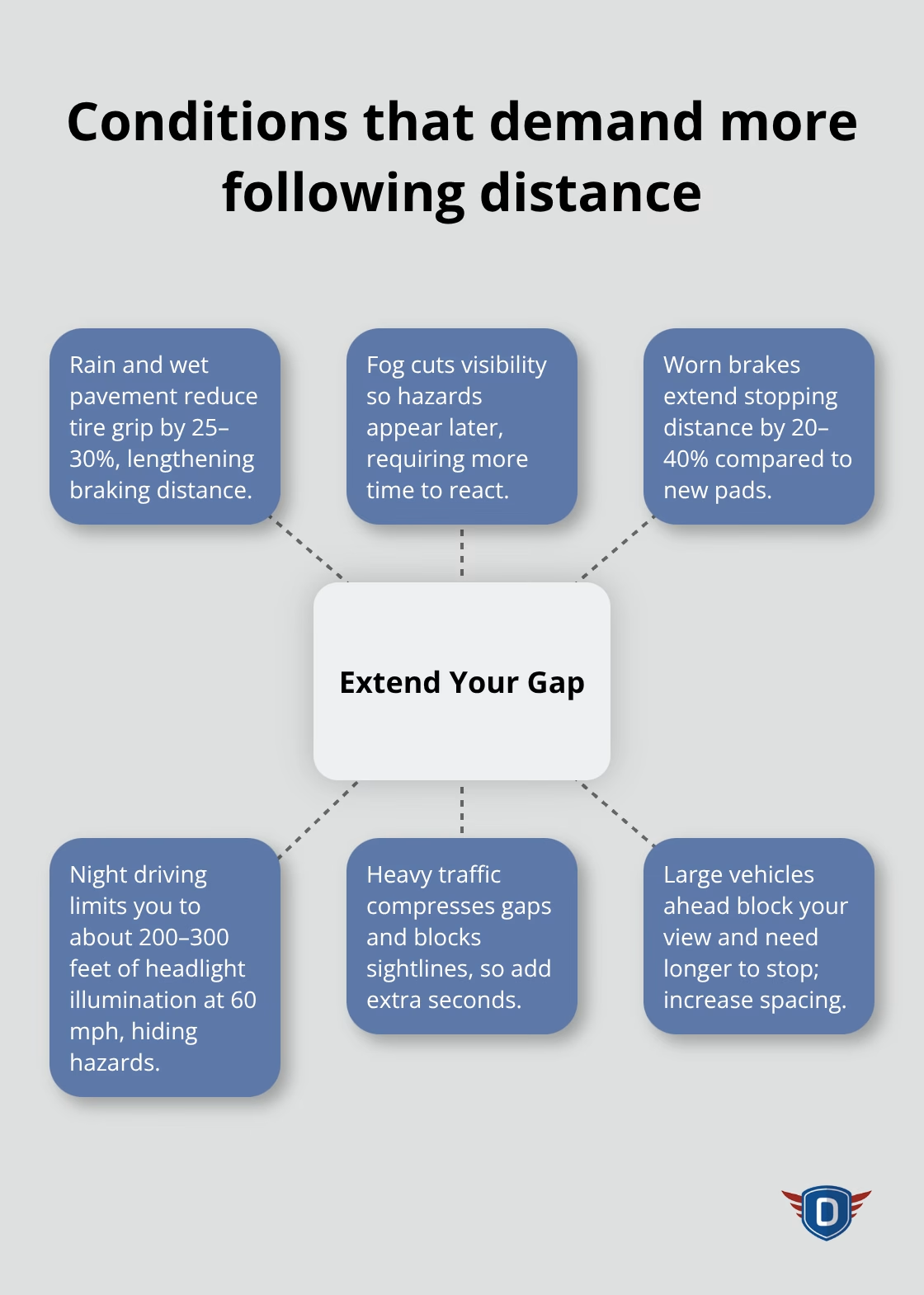
Weather conditions and road surface dramatically change your stopping ability, yet drivers rarely adjust their following distance accordingly. Rain reduces tire grip by 25 to 30 percent according to tire safety research, which means your braking distance increases significantly even though your reaction time stays the same. Wet pavement demands a four or five-second following distance, not three.
Fog compounds this problem by reducing your visibility, so even if you maintain proper spacing, you cannot see hazards far enough ahead to react. Worn brake pads extend stopping distance by 20 to 40 percent compared to new pads, and most drivers have no idea when their brakes are degrading. Night driving requires additional spacing because headlights only illuminate 200 to 300 feet ahead at 60 mph, leaving blind spots where hazards hide.
Accounting for Traffic Density and Vehicle Type
Highways with heavy truck traffic need extra distance because large vehicles block your forward view, making it impossible to see brake lights from cars several vehicles ahead. Trucks also require longer stopping distances than passenger vehicles, so the driver ahead of you may need more space than you initially estimate. Urban congestion on I-95 or the Turnpike creates additional pressure to tailgate, but this is precisely when proper spacing matters most.
The Real Cost of Proper Spacing
The mistake most drivers make is treating following distance as a fixed rule rather than a dynamic adjustment based on real conditions. Your spacing at 2 PM on dry asphalt through rural Florida looks completely different from your spacing at 6 PM in rain on a congested urban highway, yet drivers often maintain the same distance regardless. Conservative drivers who extend their following distance to four or five seconds in marginal conditions experience significantly fewer accidents, and their insurance companies recognize this pattern through lower claim histories. The cost of maintaining extra spacing is minimal compared to the cost of a single accident.
Final Thoughts
Proper following distance forms the foundation of accident prevention on Florida roads. The three-second rule, adjusted for weather and traffic conditions, provides the safe braking distance you need to stop without hitting the vehicle ahead. Drivers who maintain adequate spacing experience fewer accidents, lower insurance premiums, and cleaner driving records.
A tailgating violation costs you three points on your record, triggers insurance increases of 15 to 25 percent for three years, and results in fines between $100 and $300. If your tailgating causes an accident, you face reckless driving charges with fines up to $1,000 and potential jail time. Your insurance company will remember this incident for years, affecting your rates on every policy renewal.
We at floridanewdriver.com offer Florida-approved traffic school programs that teach defensive driving techniques, crash avoidance strategies, and the decision-making skills that keep you safe in real traffic situations. Our certified instructors guide you through practical scenarios that reinforce safe following distance and other essential skills. Apply the three-second rule today, adjust your spacing for weather conditions, and commit to the safe braking distance that protects your future on Florida’s roads.