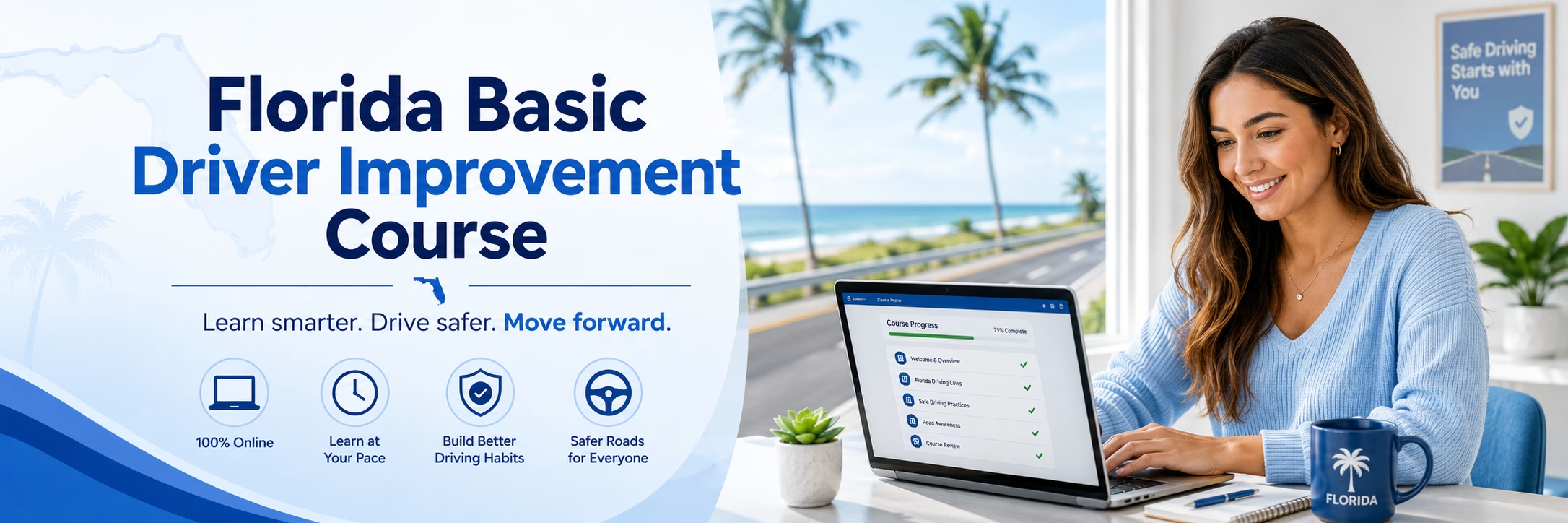

A traffic school deadline can arrive when your schedule is already full – between work, family obligations, appointments, and the hours you spend on the road. The top reasons to choose mobile traffic school come down to fitting a required course into real life without giving up the approval status, course quality, or support you need.
For drivers completing a court requirement, addressing a citation, seeking an insurance discount, or meeting a licensing requirement, mobile access changes the practical side of compliance. Instead of planning your day around a classroom location and fixed meeting time, you can complete eligible coursework from a phone or tablet when time is available.
Top Reasons to Choose Mobile Traffic School
Learn on the schedule you actually have
A mobile traffic school course lets you use smaller blocks of time productively. You may be able to work through a lesson before a shift, during a lunch break, while waiting for an appointment, or at home in the evening. That flexibility is especially useful when a court, DMV, employer, or insurer has given you a completion deadline.
Self-paced learning does not mean rushing. Approved programs may still have required instructional time, identity checks, quizzes, and completion standards. The difference is that you can often decide when to complete those requirements rather than being tied to a classroom calendar.
Avoid unnecessary travel and classroom scheduling
Traditional traffic school can require a commute, parking, a full-day attendance commitment, and time away from work or caregiving. For many drivers, the course itself is manageable, but arranging the day around it is the difficult part.
Mobile access removes much of that friction. You still need a reliable internet connection and a compatible device, but you can generally participate from a location that works for you. That can reduce missed work time and make it easier to meet an administrative requirement before the deadline.
Keep your place across devices
Life rarely happens in one location. A course that works on mobile devices can allow you to start a section on your phone and continue later from a tablet or computer, depending on the provider’s platform and course rules.
Progress tracking matters here. A properly designed online course saves your completed work so you do not have to repeat a lesson after stepping away. Before enrolling, confirm that the course supports the devices you use most and that your progress will be retained when you log back in.
Complete the right course for your requirement
Convenience only helps if the course is accepted for its intended purpose. A driver taking traffic school for ticket dismissal may need a different program than a new driver completing pre-licensing education, an adult seeking an insurance discount, or a driver assigned an aggressive driving course.
This is why approval status should come before enrollment. Requirements can vary by state, county, court, insurer, and reason for taking the course. Review your notice carefully, verify the required course type and length, and make sure the provider is approved where your completion will be submitted.
floridanewdriver.com offers online driver education and traffic safety programs designed for specific licensing, court, insurance, and driver improvement needs. The correct course is the one that matches your requirement, not simply the one with the fastest enrollment process.
Get practical safety education, not just a completion record
Traffic school can satisfy a requirement, but its safety value should not be overlooked. Strong coursework addresses decisions that contribute to collisions and violations, including distracted driving, speeding, impaired driving, following distance, roadway sharing, and hazard awareness.
Mobile learning can make these lessons easier to review. If a topic is especially relevant to your driving habits, such as safe phone use or right-of-way rules, you can revisit the material when you have time. The goal is not only to finish a module. It is to carry better judgment into your next drive.
See pricing and policies before you commit
Drivers often enroll because they need a course quickly. That is exactly when unclear pricing can create frustration. Look for a provider that explains the total course cost, any optional services, refund terms, and how completion documentation is handled before you pay.
No hidden fees and straightforward policies help you make a confident decision. If your requirement changes or you discover you selected the wrong course, a clear refund policy can matter as much as the advertised price.
Access help when you need it
An online course should not leave you on your own with a technical or administrative question. Support is valuable when you need help locating your course, confirming a certificate process, understanding a device issue, or determining whether a program fits the notice you received.
Before you enroll, check how customer support is available and what information the provider provides about course approval. Clear answers are a sign that the company understands the compliance concerns behind traffic school enrollment.
When Mobile Traffic School May Not Be the Best Fit
Mobile traffic school is a practical option for many drivers, but it depends on your circumstances. If you do not have consistent internet service, need in-person instruction as part of a specific requirement, or find it difficult to focus on a small screen, a desktop-based or classroom option may work better.
Some courses also include timed segments, proctored assessments, or identity verification steps that are easier to complete on a computer. Mobile compatibility gives you flexibility, but it does not eliminate the need to read instructions, meet participation requirements, and allow enough time to finish properly.
A good approach is to choose a provider that supports both mobile and desktop access. That way, you can use your phone for convenient progress and switch to a larger screen when a lesson or assessment calls for more focus.
What to Check Before You Enroll
The right mobile course should make compliance easier, not introduce uncertainty. Confirm these details before you begin:
- The course type matches your court, DMV, licensing, or insurance requirement.
- The course is approved or accepted in the state and jurisdiction that applies to you.
- Your phone, tablet, or computer meets the platform’s technical requirements.
- The provider explains pricing, refund terms, support options, and certificate reporting procedures.
- You understand the deadline and allow time for completion and any required reporting.
Do not assume a completion certificate automatically resolves every step. Some courts require you to submit proof yourself, while others receive completion information directly from an approved provider. Your citation, court notice, or agency instructions should tell you what is required.
Frequently Asked Questions About Mobile Traffic School
Is mobile traffic school approved by courts or the DMV?
It can be. Approval depends on the specific course, provider, state, court, or agency. Verify acceptance for your exact requirement before enrolling.
Can I take traffic school entirely on my phone?
Often, yes. Some programs are designed for mobile access, but certain assessments or verification steps may be easier or required on a desktop device.
Will a mobile traffic school course help dismiss my ticket?
It may help if your court or jurisdiction allows traffic school for ticket dismissal. Eligibility is set by the court, not by the course provider.
How long does mobile traffic school take?
Course length depends on the program and applicable state or court rules. Self-paced access lets you spread the required time across multiple sessions, but it does not remove required instructional hours.
Do I need to submit my certificate after finishing?
Sometimes. Some providers report completion electronically, while other courts or agencies require you to submit the certificate yourself. Follow the instructions on your notice.
Can I pause and resume an online traffic school course?
Usually, yes. A self-paced course typically saves your progress so you can return later, subject to the provider’s access policies and any enrollment deadline.
Choosing mobile traffic school is not just about using a phone instead of sitting in a classroom. It is about selecting an approved, clearly explained course that respects your time and helps you complete your requirement with confidence. Verify the details first, give yourself room before the deadline, and use the flexibility to build safer habits that last beyond the final certificate.