Not all driver education courses are created equal. State-approved education programs meet strict legal standards and give you real protections that unapproved courses simply don’t offer.
At floridanewdriver.com, we want you to understand exactly what state approval means for your driving record and your wallet. This guide walks you through the requirements, benefits, and how to verify that your course is legitimate.
What State Approval Actually Protects
State approval means your course meets Florida’s legal standards and counts toward licensing, court requirements, and insurance discounts. The Florida Department of Highway Safety and Motor Vehicles (FLHSMV) approval process validates courses through a rigorous examination of curriculum content, instructor qualifications, and how completions are reported to state records. When you enroll in an FLHSMV-approved course, the system submits your completion data electronically to FLHSMV within 24 to 72 hours, which is how the state tracks whether you’ve satisfied legal obligations. Unapproved courses offer no legal standing-courts won’t recognize them, insurers won’t credit them, and FLHSMV won’t record them. This distinction matters because Florida law requires first-time drivers under 18 to complete a 6-hour Driver Education Traffic Safety (DETS) course before applying for a license. If you take an unapproved course, you’ll still need to complete an approved one, wasting time and money.
Why Approval Protects Your Record
State-approved courses protect your driving record in concrete ways. If you receive a traffic citation and must complete Basic Driver Improvement (BDI), only an FLHSMV-approved BDI course counts toward point reduction-unapproved alternatives won’t help. Insurance companies rely on FLHSMV records to verify you completed a course; they won’t honor discounts without official documentation. Courts that order driver improvement courses specify FLHSMV approval as a requirement, and non-compliance means your license suspension remains active. When you choose an approved program, your completion registers immediately with state authorities, eliminating delays or disputes over eligibility.
How Approval Bodies Validate Quality
FLHSMV approval isn’t automatic-providers must submit detailed applications that describe curriculum, instructor training, testing procedures, and monitoring systems. The agency reviews whether courses meet the Florida Department of Education (FDOE) traffic safety curriculum standards, which cover hazard identification, defensive driving, distracted driving prevention, and impaired driving awareness. Instructors must complete pre-service and in-service training, and providers must document how they evaluate course quality and respond to student questions. FLHSMV has up to 90 days to approve applications and can deny or revoke approval if standards aren’t maintained. This oversight ensures every approved course meets the same baseline requirements statewide.
What Happens When You Enroll in an Approved Course
Your completion data flows directly into state systems once you finish an approved course. FLHSMV records your completion within 24 to 72 hours, making it immediately available to courts, insurers, and licensing offices. You won’t need to carry paper certificates or submit documentation yourself-the electronic submission handles everything. This automatic reporting protects you because it creates an official record that no one can dispute. Courts can verify your compliance without delays, and insurance companies can process your discount request without asking for proof.
The Real Cost of Choosing an Unapproved Provider
Taking an unapproved course leaves you vulnerable to serious consequences. If a court orders you to complete driver improvement and you choose an unapproved provider, your license suspension stays active even after you finish the course. Insurance companies won’t apply discounts based on unapproved completions, so you’ll pay full rates indefinitely. You may also face additional fines or legal complications if you can’t prove compliance with court orders. The money you save upfront on an unapproved course disappears quickly when you must enroll in an approved program anyway-plus deal with the fallout. Understanding these risks makes the choice clear: state approval isn’t optional, it’s the only path that actually protects your record and your finances.
Real Money You Save with State-Approved Courses
Insurance Discounts That Actually Apply
Insurance companies only recognize completions submitted through FLHSMV’s official system. When you finish an approved course, your completion registers electronically within 24 to 72 hours, and insurers receive proof they can trust. Many insurers offer measurable discounts after you complete approved defensive driving or basic driver improvement courses.
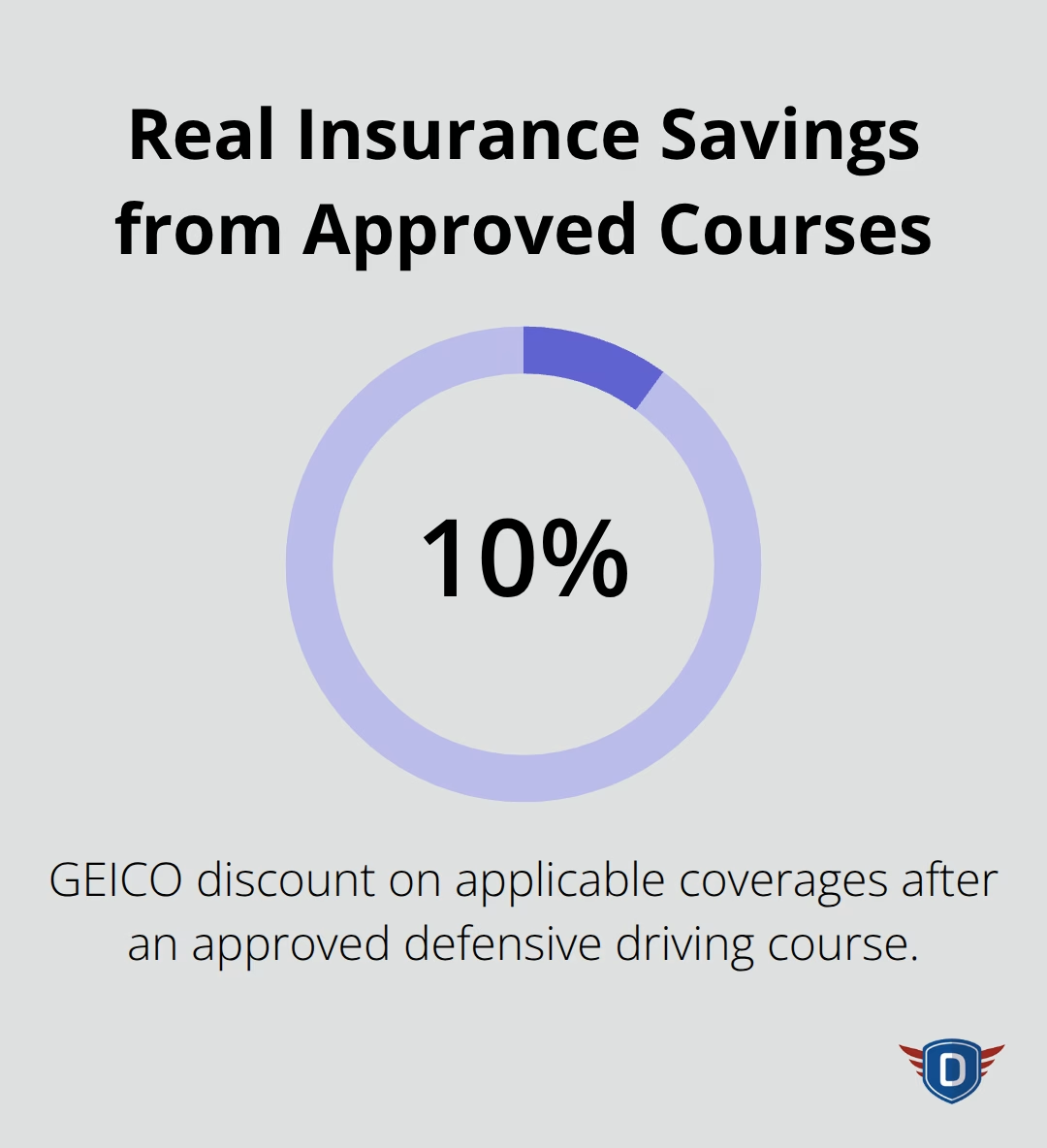
GEICO provides discounts up to 10% on applicable coverages for Florida drivers who complete an approved defensive driving course. These discounts apply directly to your policy renewal-not hypothetical savings, but real reductions in what you pay each month.
Court Requirements Demand Approval
Courts reject completions from unapproved providers outright. If a court orders you to complete basic driver improvement and you choose an unapproved provider, the court will reject your completion certificate, leaving your license suspension active regardless of what you finished. This creates a serious problem: you’ve already paid for and completed a course that doesn’t count, then you must enroll in an approved program anyway. Courts operate with zero flexibility on this requirement-approval status determines whether your completion satisfies the legal obligation.
Quality Standards Shape What You Learn
Approved providers must use curricula aligned with Florida’s Department of Education traffic safety standards, covering hazard identification, defensive driving techniques, distracted driving prevention, and impaired driving awareness. Instructors must complete pre-service training before teaching and ongoing in-service training to stay current with changing laws and safety research. This structure protects you because every approved course meets the same baseline-you won’t waste time in a poorly designed program with undertrained instructors. The curriculum quality directly affects how well you retain information and apply it on the road.
Point Reduction Only Works with Approval
Point reduction eligibility hinges entirely on approval status. Only completions from FLHSMV-approved basic driver improvement courses reduce points on your record. If you’re facing accumulating points that could trigger license suspension, an unapproved course offers zero protection. Florida’s point system requires 12 points within 12 months to trigger a 30-day suspension. A single approved BDI course can reduce up to four points from your record, directly preventing suspension. Without approval, you get no reduction and no relief from the accumulating penalties.
Electronic Reporting Protects Your Record
Your completion data flows directly into state systems once you finish an approved course. FLHSMV records your completion within 24 to 72 hours, making it immediately available to courts, insurers, and licensing offices. You won’t need to carry paper certificates or submit documentation yourself-the electronic submission handles everything. This automatic reporting protects you because it creates an official record that no one can dispute. Courts can verify your compliance without delays, and insurance companies can process your discount request without asking for proof. The next step in protecting your driving record involves understanding which specific course type matches your situation, whether you’re facing a citation, court order, or simply seeking insurance savings.
How to Verify a State-Approved Driver Course
Check the FLHSMV Approval Database First
The FLHSMV�lists every legitimate provider operating in Florida. Search the FLHSMV website for the course provider’s name-if they don’t appear in the database, they lack approval, period. This single step eliminates guesswork and protects you from wasting money on an illegitimate program. Approved providers display their FLHSMV approval number on their website and course materials; if you can’t find this number after a reasonable search, that’s a red flag. The approval number proves the provider submitted their curriculum, instructor qualifications, and testing procedures to FLHSMV and passed the agency’s review.
Demand the Approval Number
Without an approval number, the provider may operate illegally or may have lost approval due to compliance failures. Many unapproved providers deliberately hide this information because they know customers would reject them instantly. When you contact a provider directly, ask for their approval number and verification method-legitimate providers answer this question immediately without hesitation. This conversation takes seconds and reveals whether the provider operates above board. Providers who dodge the question or claim they’ll send it later are signaling that approval status is questionable.
Understand Certificate Standards
Approved providers issue certificates that route through the Driver Improvement Certificate Issuance System (DICIS), which submits your completion data to FLHSMV electronically. Your completion then appears in official state records accessible to courts and insurance companies. Unapproved providers issue paper certificates or digital files that carry zero legal standing-courts won’t recognize them, insurers won’t credit them, and FLHSMV won’t record them. Some unapproved operators promise faster completion times or lower prices by cutting corners on curriculum rigor or instructor training, but these savings vanish the moment you face a court requirement or insurance verification.
Recognize Red Flags in Provider Claims
Providers that claim they can bypass FLHSMV requirements or offer “equivalent” courses outside the approval system are operating illegally. If a provider suggests their unapproved course will satisfy a court order or insurance requirement, that’s a false promise that will cost you later. Legitimate providers never make these claims because they understand Florida law. Verify approval status before enrolling, not after, because switching courses mid-way costs you time and money while leaving your legal obligations unfulfilled.
Act on What You Find
Once you confirm approval status through the FLHSMV database and the provider’s approval number, you can enroll with confidence that your completion will register with state authorities and protect your driving record.
Final Thoughts
State-approved education protects your driving record, your wallet, and your legal standing in ways that unapproved courses simply cannot match. Throughout this guide, we’ve shown you exactly what approval means: your course meets Florida’s legal standards, your completion registers with FLHSMV within 24 to 72 hours, and courts and insurance companies recognize your achievement immediately. Without approval, courts reject your certificate, insurers deny your discount, and license suspensions remain active even after you finish a course that doesn’t count.
The choice is straightforward because approved courses cost the same or less than unapproved alternatives when you factor in real consequences. A single FLHSMV-approved Basic Driver Improvement course reduces up to four points from your record, directly preventing suspension, while insurance companies like GEICO offer measurable discounts only for approved completions. Verifying approval takes minutes-search the FLHSMV database, confirm the provider’s approval number, and check that they use the Driver Improvement Certificate Issuance System for electronic reporting.
When you’re ready to enroll, floridanewdriver.com offers FLHSMV-approved courses designed to help you reduce points, meet court requirements, or qualify for insurance discounts. Our curriculum covers Florida traffic laws, defensive driving techniques, and safe decision-making on the road, with certificates issued electronically and reported directly to FLHSMV. Start protecting your driving record today by choosing state-approved education.